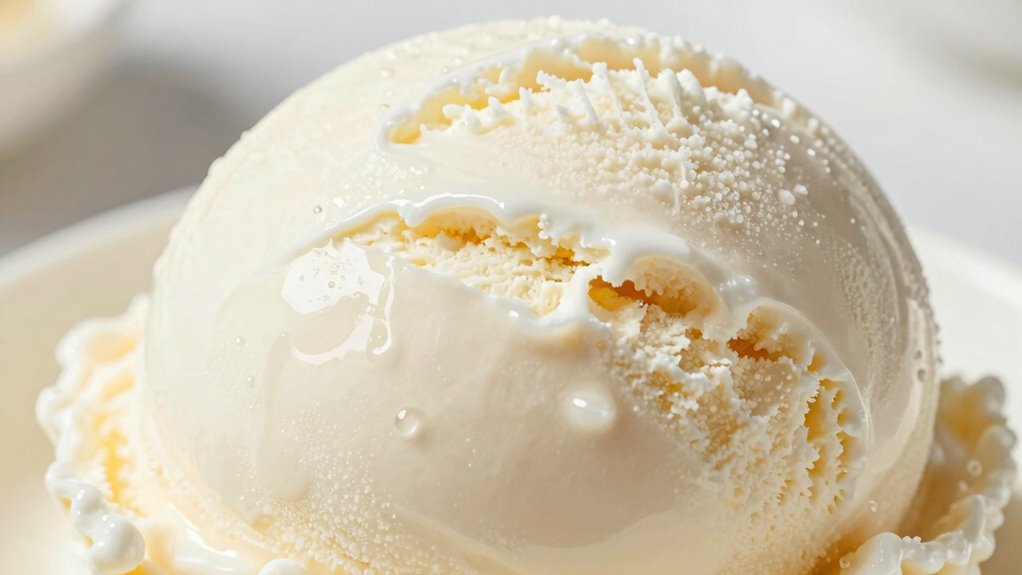

To keep your scoop round and avoid crumbly chunks, make sure your ice cream is at the right temperature—slightly soft between 6°F to 10°F—so it handles easily. Warm your scoop briefly in hot water before scooping for smooth results, and work quickly to prevent melting. Use sturdy, well-maintained tools, and practice gentle, steady pressure. If you want the best tips for perfect scoops, continue exploring how to master your technique and tools.

Get baking supplies delivered free with Prime
- Fast, free delivery on millions of items
- Prime Video, Amazon Music and more included
- Member-only deals all year
Key Takeaways
- Warm your scoop in hot water before each use for smoother, rounder ice cream servings.
- Keep the ice cream at proper temperature (6°F to 10°F) to prevent crumbling and maintain shape.
- Use the correct ergonomic scoop with a sharp, well-maintained edge for precise, rounded portions.
- Work quickly and apply steady, gentle pressure to shape the scoop before melting occurs.
- Regularly clean and sharpen your scoop to ensure smooth, consistent results every time.
As an affiliate, we earn on qualifying purchases.
Why a Perfectly Rounded Scoop Looks More Appealing

A perfectly rounded scoop instantly catches the eye because it looks smooth and well-crafted. This shape enhances the visual appeal, making your ice cream look more inviting and appetizing. When the scoop maintains a smooth finish, it signals quality and care, encouraging others to indulge. A rounded shape also demonstrates skill and attention to detail, elevating the overall presentation. People are naturally drawn to symmetry and clean lines, so a neatly formed scoop stands out on any dessert plate or cone. Plus, a smooth finish on the scoop ensures a more uniform texture, which can enhance the eating experience. Achieving a perfect round shape often involves understanding proper technique, which can help you create consistently appealing scoops. Using the right tools and mastering scoop handling are essential for precision. Developing an eye for presentation skills can further improve the visual impact of your dessert. Overall, a perfectly rounded scoop doesn’t just look good—it makes your treat more tempting and enjoyable.
How to Chill Ice Cream Properly Before Scooping

Ever wondered why your ice cream becomes difficult to scoop when it’s too warm? Proper chilling is key to keeping it round and smooth. Before scooping, transfer your ice cream from the freezer to a colder spot for 10-15 minutes. This helps prevent melting and crumbly chunks, ensuring ideal ice cream storage and flavor preservation. Maintaining the proper storage temperature is essential for optimal texture and taste. Additionally, understanding how temperature control impacts texture can help you achieve the perfect scoop every time. For example, knowing the ideal serving temperature can make a significant difference in scoopability and flavor experience. Using a food-safe thermometer to monitor your freezer’s temperature can help you maintain consistent conditions and improve your ice cream’s texture. Keeping your freezer at the correct temperature also helps prevent ice crystal formation, which can negatively affect texture. Use these guidelines to handle your ice cream gently, maintaining its perfect texture and flavor integrity. Proper chilling makes all the difference!
Choosing the Best Tools for a Perfect Scoop

Choosing the right tools makes a big difference in getting perfect scoops every time. You should pick a scoop that’s comfortable to handle and suited to your ice cream’s texture. Make sure the material of your scoop matches your freezer’s conditions to prevent melting or sticking. Additionally, selecting a scoop with a proper material compatibility can help maintain its performance and longevity over time. Incorporating high-tech vaping innovations into your scoop selection can also ensure more precise and consistent servings, especially if you prefer gadgets that enhance your overall experience. Modern automation features can further streamline the process, making scooping easier and more efficient. Considering ergonomic design can also reduce hand fatigue during extended use, ensuring more consistent results. Using antibacterial coatings on your scoop can help maintain hygiene and prevent bacterial buildup during frequent use.
Proper Tool Selection
Selecting the right tools is essential for achieving a perfect scoop every time. Focus on scoop ergonomics to ensure your hand stays comfortable and steady during use. An ergonomically designed scoop reduces fatigue and provides better control, helping you maintain a round shape. Pay attention to the tool material; stainless steel is durable, easy to clean, and maintains shape well, while plastic options are lightweight but may flex or wear over time. The right combination of ergonomics and material helps you scoop smoothly without crumbling or deforming your product. Choosing tools that fit well in your hand and are made from quality materials makes the process easier and more consistent. Additionally, understanding proper tool selection can significantly improve your results by matching your tools to your specific task and ensuring optimal performance. Paying attention to tool maintenance also helps preserve tool integrity and performance over time, ensuring consistent results in your woodworking projects. Incorporating ergonomic design principles into your tool choice can further enhance comfort and control during your scooping tasks. Selecting tools with appropriate grip textures can also improve your hold and reduce slipping during use.
Material Compatibility
The material of your scoop plays a vital role in achieving a perfect, round shape. You want a material with high durability to withstand regular use without warping or breaking, guaranteeing consistent results. Metal scoops, like stainless steel, are sturdy and long-lasting, making them ideal for precision and maintaining shape. Silicone or plastic scoops can be gentle on delicate surfaces and easier to handle, especially if you need a softer touch. Your scoop design also matters; a smooth, well-formed edge helps you mold the material evenly and avoid crumbs or uneven lumps. Choosing a scoop made from a durable, compatible material ensures you can maintain a smooth, round shape with ease, making your scooping process more efficient and satisfying. Additionally, selecting a scoop with material compatibility ensures it works well with different substances and prevents accidental damage or deformation. Using a material that is heat resistant can also be beneficial if you’re working with hot or temperature-sensitive ingredients. Incorporating a material that resists warping can help maintain the scoop’s shape over time and under various conditions. Opting for materials with dimensional stability further guarantees your scoop retains its shape during repeated use.
How to Warm Your Scoop for a Cleaner, Easier Serve

Ever wondered how to make scooping ice cream smoother and less messy? Scoop warming is your secret weapon. When your scoop is slightly warmed, it glides effortlessly through the ice cream, reducing resistance caused by ice cream texture variations. To warm your scoop, run it under hot water for a few seconds or dip it in warm water and wipe it dry. This quick warming technique keeps the scoop at the ideal temperature, preventing sticking and crumbly chunks. A warmed scoop produces cleaner, more precise servings, reducing drips and uneven rounds. Just be careful not to overheat it, as too much warmth can melt the ice cream or make the scoop difficult to handle. Proper scoop warming ensures a smooth, consistent, and mess-free ice cream experience. Maintaining the right temperature also helps prevent crumbly chunks from forming during serving. Additionally, understanding the ideal serving temperature for ice cream can enhance your overall experience and presentation. Knowing how to manage texture variations in ice cream can also help you achieve better results during serving.
How to Scoop Ice Cream for a Perfect Round Shape

To get perfectly round scoops, start by ensuring your ice cream is at the right temperature—not too soft or too hard. Use the correct scoop designed for ice cream to help shape it smoothly. When these elements are in place, you’ll achieve clean, round servings every time.
Proper Ice Cream Temperature
Have you ever noticed how difficult it is to scoop perfectly round ice cream? The key is proper ice cream temperature. When ice cream is too cold, it becomes hard and crumbly, making it tough to shape smoothly. Slightly softer ice cream, around 6°F to 10°F, allows your scoop to glide effortlessly, creating a neat, round ball. This is especially important when working with complex ice cream flavor combinations, as you want the scoop to hold its shape without cracking. Also, consider the serving vessel styles—whether a cone or bowl—since warmer scoops tend to melt faster on warmer dishes. Keeping ice cream at the right temperature guarantees each scoop maintains that perfect round shape, enhancing presentation and making serving easier.
Use the Correct Scoop
Choosing the right scoop makes all the difference when aiming for a perfectly round ice cream ball. A scoop with good ergonomics fits comfortably in your hand, reducing fatigue and giving you better control. The right scoop also matches the ice cream’s consistency; softer ice cream requires a scoop that can glide smoothly, while firmer ice cream needs a sturdier tool.
Consider these tips:
- Select a scoop with a comfortable handle to improve ergonomics and ease scooping.
- Use a scoop that’s designed for your ice cream’s texture to prevent crumbling.
- Keep the scoop slightly warmed or chilled, depending on the consistency, for a cleaner, rounder shape.
Properly choosing your scoop ensures a smooth, round, and attractive ice cream presentation.
What Are the Ideal Temperatures for Serving Ice Cream?

Ever wonder what temperature makes ice cream taste its best? The ideal serving temperature is around 6°F to 10°F (-14°C to -12°C). At this range, your ice cream maintains the perfect balance between firmness and scoopability. If it’s too cold, the ice cream becomes too hard, making it difficult to scoop smoothly and affecting its texture. If it’s too warm, it melts quickly and loses its shape, ruining the presentation. Keeping your ice cream within this temperature range enhances its creamy texture and prevents it from becoming crumbly or overly soft. Using a chilled scoop and storing your ice cream appropriately helps you serve at the perfect temperature, ensuring every scoop is smooth, round, and delightful.
Troubleshooting Crumbly or Misshapen Scoops

If your ice cream scoops are crumbly or misshapen, the issue often stems from improper temperature or handling. To fix this, focus on keeping your ice cream at the right consistency and handling it gently. Here are some tips:
- Warm your scoop in hot water before scooping to create a smooth, round shape, improving the serving presentation.
- Adjust the temperature of your ice cream; slightly softer ice cream yields better scoops, especially for creative flavor combinations.
- Work quickly to prevent melting and maintain a uniform shape, which enhances the visual appeal and flavor presentation.
Troubleshooting these issues ensures your scoops stay round, look professional, and taste great, whether you’re serving classic vanilla or unique flavor combinations.
Tips to Maintain Your Scooping Tools and Improve Technique

Maintaining your scooping tools and honing your technique are essential for achieving perfect, round ice cream scoops every time. Regularly clean and sharpen your scoop to prevent melting and sticking, which can affect scoop size and shape. Use a scoop with a comfortable handle that matches the size you prefer for different ice cream flavors—smaller scoops work well for delicate flavors, while larger ones are great for hearty servings. Dip your scoop in warm water before each use to make scooping easier and maintain a smooth, round shape. Practice your technique by applying steady pressure and lifting smoothly. Over time, these small adjustments will improve your control, ensuring each scoop remains consistent, attractive, and perfectly round.
Frequently Asked Questions
Can the Type of Ice Cream Affect Scoop Shape?
Yes, the type of ice cream affects scoop shape because ice cream composition influences its texture and firmness. Denser, higher-fat ice cream holds its shape better, making scooping easier and resulting in a rounder scoop. Temperature control also plays a vital role; if it’s too warm, the scoop becomes crumbly, while too cold makes it hard to shape. Adjusting both factors helps you achieve a perfect, round scoop every time.
How Does Humidity Impact Ice Cream Scooping?
Did you know that high humidity can increase ice cream’s melting rate by 20%? Humidity effects make your scoop less consistent, causing it to soften and become difficult to shape. When humidity rises, the ice cream absorbs moisture from the air, leading to a sticky, less manageable scoop. To maintain a perfect round shape, work quickly and keep your ice cream cold, reducing the moisture absorption that ruins scoop consistency.
Is There a Difference Between Metal and Plastic Scoops?
Yes, there’s a difference between metal and plastic scoops. Metal scoops are generally more durable and resistant to bending, making them ideal for heavy use. Plastic scoops may be lighter and easier to handle but can have durability concerns, especially with prolonged use or exposure to cold temperatures. Your choice depends on how often you scoop and your preference for weight and longevity, with metal often lasting longer.
How Often Should I Sharpen or Replace My Scooping Tool?
Like a car needing tune-ups, your scooping tool requires regular care. You should sharpen or replace your scoop when it becomes dull or shows signs of wear, usually every few months or as needed. Regular scoop maintenance keeps it effective and prevents crumbs or chunks. Tool replacement frequency depends on usage, but inspecting it monthly guarantees you catch issues early. Keeping your scoop sharp and in good condition makes scooping smoother and more efficient.
What Are Common Mistakes That Cause Crumbly Scoops?
You often cause crumbly scoops by using ice cream that’s too warm or cold, which affects its texture. Also, poor scooping technique, like pressing too hard or twisting the scoop, can break the ice cream apart. To keep your scoop round, make certain the ice cream is at the right temperature—slightly softer but not melting—and use a gentle, smooth motion. Proper temperature and technique help maintain a firm, round scoop.
Conclusion
Mastering the art of a perfectly rounded scoop is like wielding Excalibur—requires patience, technique, and the right tools. Keep your ice cream at ideal temperatures, warm your scoop if needed, and handle with care, just as a skilled knight tends their sword. With practice, you’ll serve up dessert that looks as tempting as a jewel, proving that even in simplicity, there’s a touch of magic. Your perfect scoop awaits—embrace the craft.
Halloween Picks
halloween
As an affiliate, we earn on qualifying purchases.