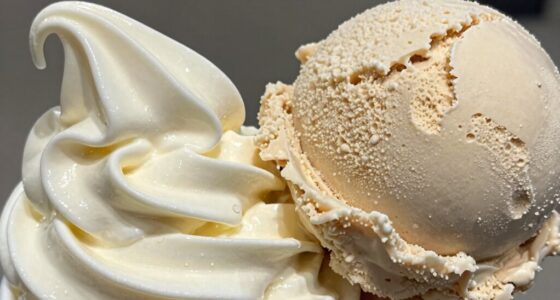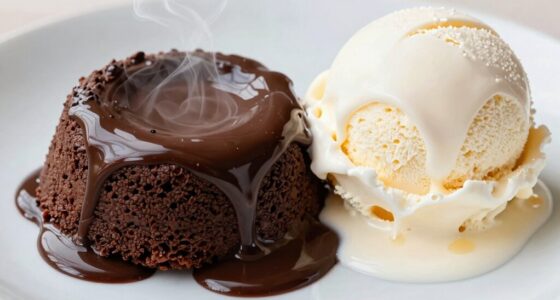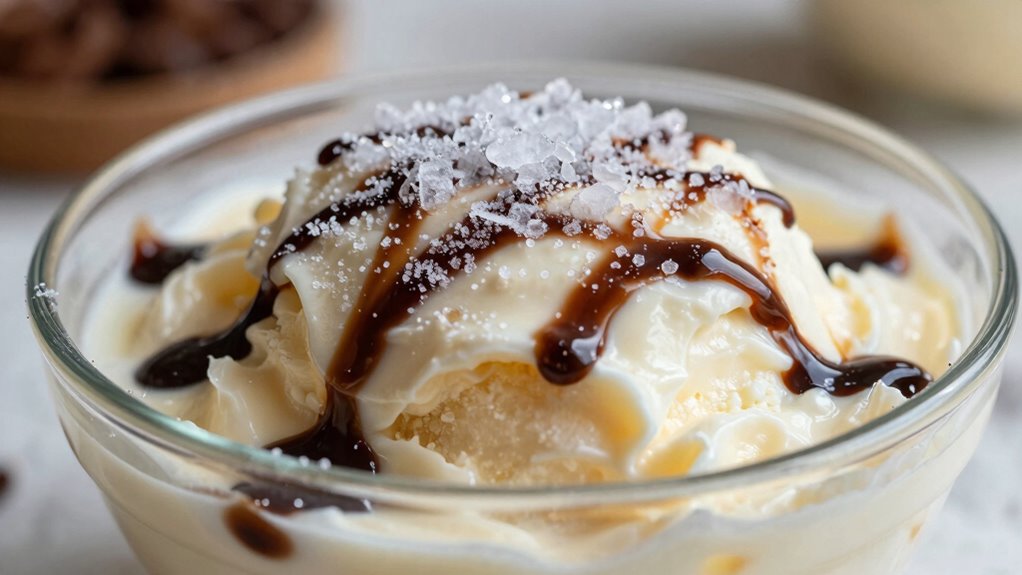
Bitter notes in frozen desserts can make them taste less sweet because the bitterness overpowers the palate, disrupting the intended flavor balance. When bitter flavors are present—often from overripe ingredients or improper storage—they dominate your taste buds, making the sweetness seem diminished. Texture issues like ice crystals can also amplify bitter notes. If you want to discover how to prevent this and keep your desserts perfectly balanced, there’s more to uncover below.

Get baking supplies delivered free with Prime
- Fast, free delivery on millions of items
- Prime Video, Amazon Music and more included
- Member-only deals all year
Key Takeaways
- Bitter flavors can clash with sweetness, reducing the overall perception of sweetness in frozen desserts.
- Overripe or improperly stored ingredients may develop bitter compounds that overshadow sweet flavors.
- Bitterness from ingredients like dark chocolate or coffee can dominate, making desserts taste less sweet.
- Texture issues like ice crystals or grittiness can amplify bitter notes, diminishing perceived sweetness.
- Temperature fluctuations and poor storage can increase bitterness, impacting the dessert’s overall sweetness perception.
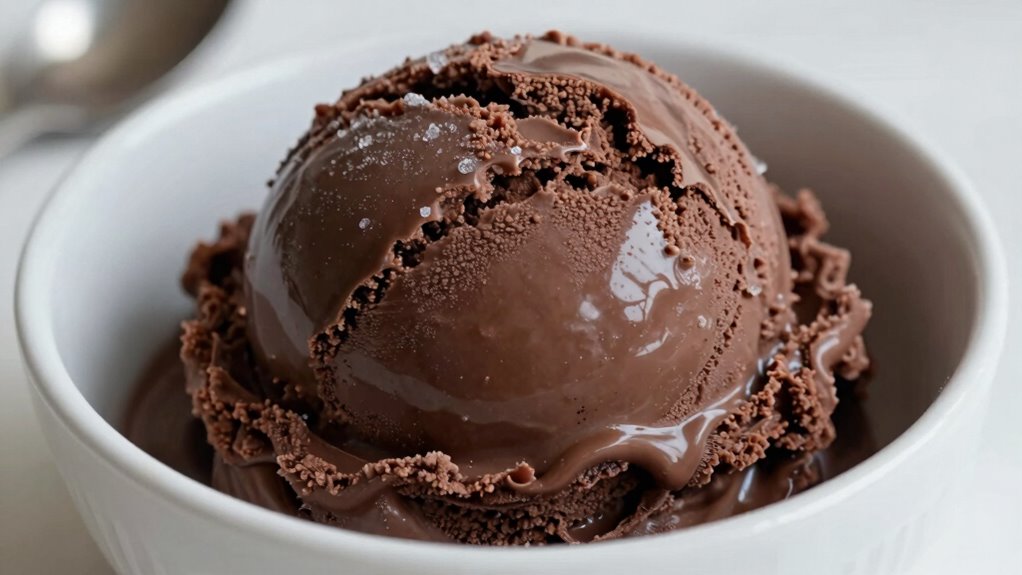
Frozen desserts are generally enjoyed for their sweet, creamy flavors, but sometimes you might notice a bitter note that disrupts your experience. This unexpected bitterness can make the dessert taste less sweet and even less appealing. The reason for this often lies in how flavors interact and the overall texture contrast within the treat. Understanding these factors can help you better appreciate what’s happening when bitterness appears and how it affects the perceived sweetness.
Flavor pairing plays a significant role in how you perceive the taste of frozen desserts. When bitter notes are present, they can clash with the sweet flavors, making the dessert seem less sweet than intended. For example, if a fruit-based sorbet contains unintended bitter compounds from overripe or improperly stored fruit, those bitter elements can overpower the natural sugars. Similarly, certain ingredients, like dark chocolate or coffee in ice creams, can introduce bitterness if not balanced correctly with sweet or creamy elements. When these bitter flavors dominate, your palate registers less sweetness overall, altering your perception of the dessert’s intended flavor profile.
Bitter flavors can clash with sweetness, making frozen desserts taste less sweet and more off-balance.
Texture contrast also influences how bitterness impacts your enjoyment. Many frozen desserts rely on a delicate balance between smooth, creamy textures and occasional crunchy or chewy components to enhance flavor perception. If the texture becomes uneven—say, icy crystals or gritty bits—it can amplify bitter notes or make them more noticeable. For instance, ice crystals can cause a rough mouthfeel that heightens the sensation of bitterness, making the dessert seem less sweet. Conversely, a well-blended, smooth texture can mask minor bitter undertones, allowing the sweet flavors to shine through more clearly. When the texture is inconsistent, your brain might interpret the bitter notes more intensely, reducing the perception of overall sweetness. Additionally, temperature control can prevent bitterness from becoming more pronounced, maintaining a balanced flavor profile. Proper storage methods are also crucial in preventing the development of bitter flavors from ingredient degradation. Furthermore, ensuring ingredients are fresh and high-quality plays a vital role in preventing unwanted bitterness from spoilage or oxidation over time.
frozen dessert storage containers
As an affiliate, we earn on qualifying purchases.
As an affiliate, we earn on qualifying purchases.
Frequently Asked Questions
How Do Bitter Notes Develop During Freezing?
Bitter notes develop during freezing as chemical reactions occur, intensifying certain flavors while others mellow. You might notice this because ice crystals can alter texture, affecting how flavors are perceived, and flavor pairing strategies can influence bitterness’s prominence. As the dessert freezes, bitterness can become more apparent, making the overall taste less sweet. By understanding these processes, you can modify texture and incorporate complementary ingredients to balance bitter notes effectively.
Can Adding Bitter Ingredients Improve Dessert Flavor Balance?
Yes, adding bitter ingredients can improve your dessert’s flavor balance by creating a more complex taste profile. You can experiment with flavor pairing, such as incorporating dark chocolate or coffee, to enhance depth. Alternatively, ingredient substitution—replacing overly sweet components with bitter elements—can cut sweetness and add contrast. Just make certain the bitterness complements your dessert’s overall flavor, and taste as you go to achieve harmony.
Are Certain Flavors More Prone to Bitterness When Frozen?
Certain flavors, like citrus zest or dark chocolate, are more prone to bitterness when frozen. You might find that their bitterness intensifies, making your dessert taste more complex but less sweet. To combat this, use smart flavor pairing and texture enhancement techniques, like adding sweet syrups or creamy elements, which can soften the bitterness. This way, you create a harmonious balance that keeps your frozen treat deliciously enjoyable.
Does Temperature Affect the Perception of Bitterness?
Yes, temperature affects how you perceive bitterness. When colder, your taste buds experience flavor enhancement, making bitter notes less prominent. As you eat frozen desserts, sensory adaptation occurs, so your taste buds become less sensitive to bitterness over time. This shift can make the dessert seem less bitter and more balanced, especially at lower temperatures. So, keeping treats cold can help mask bitterness and improve overall flavor perception.
How Can I Reduce Bitterness in Frozen Desserts?
Imagine you’re in a 1920s speakeasy, trying to sweeten a bitter frozen dessert. To reduce bitterness, try flavor pairing with sweeter ingredients like honey or fruit purees. You can also substitute ingredients—swap out bitter chocolate for milk chocolate or use a milder vanilla. These tweaks balance the flavors, making your dessert taste sweeter and more enjoyable without overpowering bitterness.
Conclusion
Understanding how bitter notes influence the perception of sweetness helps you appreciate frozen desserts more deeply. Notably, studies show that adding a small amount of bitterness can actually enhance the overall flavor experience, making desserts seem less overly sweet. So, next time you enjoy a frozen treat, consider how subtle bitter flavors might be balancing the sweetness, creating a more complex and satisfying taste. Embracing these nuances can elevate your dessert experience to a whole new level.
Fall Picks
fall essentials
As an affiliate, we earn on qualifying purchases.