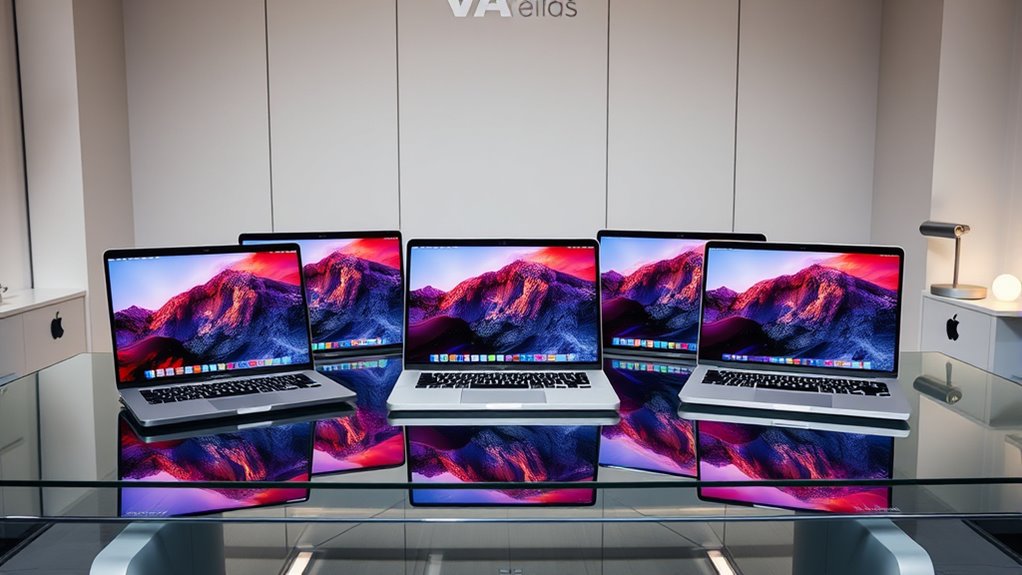

For demanding video, 3D, and software workloads, the 16.2-inch MacBook Pro with M5 Max, 64GB memory, and 2TB SSD is my best overall pick among these options, pairing a powerful chip with a roomy display and storage. The 14-inch M5 Max with 4TB SSD stands out for buyers who need substantial local project space in a more portable chassis, while the 16-inch M5 Pro with 64GB is a sensible alternative when GPU demands are less intense. The main tradeoffs are screen size versus portability, M5 Max graphics capability versus M5 Pro efficiency, and the lower cost potential of renewed older models versus newer hardware. One listed M5 Pro configuration has 48GB rather than 64GB, so it does not meet the exact memory target. Continue reading for the full comparison and help matching a configuration to your workload.

Get baking supplies delivered free with Prime
- Fast, free delivery on millions of items
- Prime Video, Amazon Music and more included
- Member-only deals all year
Complete the kit


Key Takeaways
- The 16.2-inch M5 Max with 64GB and 2TB is the strongest all-round fit in this list for demanding work that benefits from both high graphics capability and a large built-in display.
- The 14-inch M5 Max with 4TB prioritizes portability and internal project capacity; its smaller screen is the main compromise against the 16-inch models.
- The 16-inch M5 Pro with 64GB shows that 64GB memory does not automatically require the Max chip: it suits memory-heavy work that does not depend on the highest GPU tier.
- The renewed M1 Max models offer a lower-generation alternative, but their age and renewed status make condition, battery health, warranty, and seller terms especially important.
- One M5 Pro listing has 48GB, not 64GB, so buyers searching for an exact 64GB configuration should verify the memory specification before purchase.





| macbook pro with 64gb unified memory | Display | Memory | Graphics | Storage |
|---|---|---|---|---|
| Apple 2021 MacBook Pro with M1 | 14-inch Retina, 2560 × 1600 | 64GB | 24-core GPU | 2TB SSD |
| Apple MacBook Pro Laptop with | 16.2-inch Liquid Retina XDR, nano-texture | 64GB | 40-core GPU | 2TB SSD |
| Apple MacBook Pro Laptop with | 16.2-inch Liquid Retina XDR | 64GB | Integrated Apple GPU | 2TB SSD |
| Apple 2023 MacBook Pro 16.2-in | 16.2-inch Liquid Retina XDR | 64GB unified memory | — | 1TB SSD |
| Apple 2026 MacBook Pro Laptop | 16.2-inch Liquid Retina XDR | 48GB unified memory | 20-core GPU | 1TB SSD |
| Apple MacBook Pro Laptop with | 14.2-inch Liquid Retina XDR | 64GB | 40-core GPU | 2TB SSD |
| Apple MacBook Pro 16" M5 Pro w | 16.2-inch Liquid Retina XDR, 3456 × 2234, 120Hz | 64GB unified memory | 20-core GPU | 1TB SSD |
| MacBook Pro 16-Inch | 16-inch Retina, 3456 × 2234 | 64GB | Apple M1 Max integrated graphics | 1TB SSD |
| Apple MacBook Pro 14-inch with | 14-inch Liquid Retina XDR | 64GB | 40-core GPU | — |
| Apple 14-inch MacBook Pro with | 14.2-inch, 3024 × 1964 | 64GB RAM (listed as DDR3) | 40-core GPU | 4TB SSD |
More Details on Our Top Picks
Apple 2021 MacBook Pro with M1 Max Chip, 14-inch, 64GB RAM, 2TB SSD, Silver (Renewed)
This is the older-generation, refurbished choice for buyers who want 64GB of memory and 2TB of storage in a 14-inch MacBook Pro. Its M1 Max has a 10-core CPU and 24-core GPU, making it a better fit for substantial multitasking and creative projects than a lower-spec everyday laptop. Compared with the newer M5 Max 16.2-inch model, though, it gives up newer hardware and a larger workspace; its appeal is the smaller footprint and ample onboard storage, not matching that machine’s latest-generation performance. The renewed condition also adds uncertainty: the listing says battery capacity exceeds 80%, but the warranty is limited to 90 days and accessories may not be original. I’d choose it for a portable, memory-heavy setup only if those refurb tradeoffs are acceptable.
Pros:- 64GB of memory supports demanding multitasking
- 2TB SSD provides substantial local project storage
- 14-inch form factor is more compact than the 16.2-inch options
- M1 Max includes a 10-core CPU and 24-core GPU
Cons:- Renewed condition means battery health and cosmetic condition may vary
- 90-day limited warranty is shorter than many buyers may prefer
- Older M1 Max generation trails the newer M5 Max models
Best for: Creative professionals who want a 14-inch MacBook Pro with 64GB of memory and 2TB of local storage, and are comfortable buying a renewed computer.
Not ideal for: Buyers who need a new device, a longer warranty, or the latest chip generation; the 90-day limited warranty and refurbished condition bring added uncertainty.
- Model year:2021
- Condition:Renewed
- Chip:Apple M1 Max, 10-core CPU
- Graphics:24-core GPU
- Display:14-inch Retina, 2560 × 1600
- Memory:64GB
- Storage:2TB SSD
- Battery condition:Capacity exceeds 80% of original
- Warranty:90-day limited
Our verdict“Choose this renewed 14-inch model if compact size, 64GB of memory, and 2TB storage matter more than newer hardware and a longer warranty.”
Apple MacBook Pro Laptop with M5 Max, 18-core CPU, 40-core GPU, 16.2-inch Nano-Texture Display, 64GB Memory, 2TB SSD, Space Black
This configuration pairs 64GB of memory with an M5 Max, an 18-core CPU, and a 40-core GPU, giving demanding creative and AI workloads a stronger hardware base than the renewed M3 Max and M1 Max options here. The 16.2-inch Liquid Retina XDR display also offers more working room than the 14-inch M1 Max, while the 2TB SSD leaves room for large projects without relying as heavily on external storage. Its Thunderbolt 5, HDMI, and SDXC connections make it a capable workstation setup, though buyers with many peripherals may still need adapters. The main compromise is mobility: at 7.4 pounds, it is substantially heavier than a compact laptop, and its premium positioning may be more machine than memory-focused buyers need. I’d rank it first for professionals who can use both the memory and GPU headroom.
Pros:- M5 Max combines an 18-core CPU with a 40-core GPU
- 64GB of memory suits demanding professional workloads
- 2TB SSD gives large projects more local storage
- 16.2-inch XDR display and a broad built-in port selection
Cons:- 7.4-pound weight makes it less convenient to carry daily
- High-end chip may be unnecessary for memory-heavy but GPU-light work
- Some multi-peripheral setups may still require adapters
Best for: Video editors, 3D artists, and AI practitioners who need 64GB of memory, a high-core-count GPU, a large display, and 2TB of storage.
Not ideal for: Frequent travelers or buyers whose workloads do not benefit from an M5 Max GPU; the 7.4-pound weight and high-end configuration add bulk and cost.
- Processor:M5 Max, 18-core CPU
- Graphics:40-core GPU
- Display:16.2-inch Liquid Retina XDR, nano-texture
- Memory:64GB
- Storage:2TB SSD
- Weight:7.4 pounds
- Ports:Three Thunderbolt 5, MagSafe 3, SDXC, HDMI, headphone jack
- Wireless:Wi-Fi 7, Bluetooth 6
- Color:Space Black
Our verdict“Pick this M5 Max configuration for demanding creative work that can use its GPU, large display, 64GB memory, and 2TB SSD.”
Apple MacBook Pro Laptop with M5 Max, 16.2-inch Display, 64GB RAM, 2TB SSD, Space Black
This M5 Max model has the core configuration many demanding users seek: 64GB of memory, a 16.2-inch XDR display, and a 2TB SSD. That combination suits people handling large creative projects who want workspace and storage built into the laptop. It shares the M5 Max generation and 40-core GPU positioning of the other M5 Max 16.2-inch option, but its listed weight is 8.5 pounds, heavier than that model’s 7.4 pounds. The listing also describes the graphics as an integrated Apple GPU rather than giving a specific core count, so buyers who need precise GPU configuration details should check before ordering. Compared with the renewed M3 Max, this is the newer-chip route, but it lacks the same explicit battery-life figure. I’d shortlist it for a mostly desk-based workflow, after verifying the configuration and weight.
Pros:- 64GB of memory paired with 2TB SSD storage
- 16.2-inch Liquid Retina XDR display offers ample workspace
- M5 Max chip targets demanding professional workloads
- Includes Thunderbolt 5, HDMI, SDXC, and MagSafe 3
Cons:- Listed 8.5-pound weight is notably high for a portable computer
- GPU is listed without a core count, leaving configuration details unclear
- Battery life is described only as all-day, without a specific figure
Best for: Studio-based editors and developers who want a large display, 64GB of memory, and 2TB of storage, and who rarely carry their laptop far.
Not ideal for: Commuters or buyers who prioritize clearly specified GPU details and a lighter 16-inch-class machine; the listing gives an 8.5-pound weight and no GPU core count.
- Processor:Apple M5 Max
- Graphics:Integrated Apple GPU
- Display:16.2-inch Liquid Retina XDR
- Memory:64GB
- Storage:2TB SSD
- Weight:8.5 pounds
- Dimensions:14.01 × 9.77 × 0.66 inches
- Ports:Three Thunderbolt 5, MagSafe 3, SDXC, HDMI, headphone jack
- Wireless:Wi-Fi 7, Bluetooth 6
Our verdict“Choose this for a mostly stationary workflow needing a large XDR screen and 64GB memory, but confirm the GPU configuration and weight first.”
Apple 2023 MacBook Pro 16.2-inch with M3 Max, 16-core CPU, 40-core GPU, 64GB RAM, and 1TB SSD (Renewed, Space Black)
This renewed 2023 model offers a clear middle ground between the older M1 Max and the newer M5 Max configurations: 64GB of unified memory, an M3 Max with a 16-core CPU and 40-core GPU, and a large 16.2-inch XDR screen. That GPU specification is explicit, unlike the other M5 Max 16.2-inch listing, whose product data does not state a core count. Its 1TB SSD is half the capacity of the 2TB M5 Max options, so large media libraries may need external storage. Apple lists battery life up to 22 hours, but renewed condition means the current battery state can vary; the 90-day limited warranty is another tradeoff. Compared with the renewed 14-inch M1 Max, this provides a newer chip and a larger display, but gives up portability. It suits buyers who want a defined high-end GPU configuration and accept refurbished ownership.
Pros:- M3 Max has a specified 16-core CPU and 40-core GPU
- 64GB unified memory supports large creative workloads
- 16.2-inch Liquid Retina XDR display
- Listed battery life is up to 22 hours
Cons:- Renewed condition can mean variable battery and cosmetic condition
- 1TB SSD offers less local storage than the 2TB M5 Max options
- 90-day limited warranty and listed 8.4-pound weight are drawbacks
Best for: Video editors and 3D professionals seeking 64GB memory and a specified 40-core GPU in a renewed 16-inch-class MacBook Pro.
Not ideal for: Buyers who need a new laptop, a longer warranty, 2TB of built-in storage, or a lighter machine for regular travel.
- Model year:2023
- Condition:Renewed
- Chip:Apple M3 Max
- CPU:16-core
- GPU:40-core
- Display:16.2-inch Liquid Retina XDR
- Memory:64GB unified memory
- Storage:1TB SSD
- Battery life:Up to 22 hours
Our verdict“Choose this renewed M3 Max if you want a clearly specified 40-core GPU with 64GB memory and can accept 1TB storage and refurbishing risks.”
Apple 2026 MacBook Pro Laptop with M5 Pro Chip, 16.2-inch Liquid Retina XDR Display, 48GB RAM, 1TB SSD, Wi-Fi 7, Silver
This is the outlier in a roundup focused on 64GB of unified memory: it has 48GB, not 64GB. I include it as a near-match for professionals who want a newer M5 Pro platform and can work within a smaller memory ceiling. Its 18-core CPU, 20-core GPU, and 16.2-inch XDR display make it a capable option for substantial creative and professional tasks, while the M5 Max models above offer more GPU resources and the target 64GB capacity. The 1TB SSD also gives less local room than their 2TB configurations. On the other hand, its listed 4.71-pound weight is much lower than the 7.4- and 8.5-pound figures attached to those M5 Max options. I’d pick it only when portability and newer Pro-series hardware matter more than reaching 64GB.
Pros:- M5 Pro chip pairs an 18-core CPU with a 20-core GPU
- 16.2-inch Liquid Retina XDR display
- Listed weight of 4.71 pounds is lower than the M5 Max alternatives
- Wi-Fi 7, Thunderbolt 5, HDMI, and SDXC connectivity
Cons:- 48GB memory does not meet the roundup’s 64GB target
- 1TB SSD is less spacious than the 2TB options
- M5 Pro has a 20-core GPU, fewer graphics cores than the listed M5 Max models
Best for: Creative professionals and developers whose projects fit within 48GB and who want a lighter 16.2-inch MacBook Pro with a recent M5 Pro chip.
Not ideal for: Buyers with a firm 64GB memory requirement, memory-hungry AI workloads, or large local project libraries; this has 48GB and a 1TB SSD.
- Processor:Apple M5 Pro, 18-core CPU
- Graphics:20-core GPU
- Display:16.2-inch Liquid Retina XDR
- Memory:48GB unified memory
- Storage:1TB SSD
- Weight:4.71 pounds
- Wireless:Wi-Fi 7, Bluetooth 6
- Ports:Three Thunderbolt 5, MagSafe 3, SDXC, HDMI, headphone jack
- Camera:12MP Center Stage
Our verdict“Choose this only if 48GB is enough for your workload and lighter carry weight matters more than a strict 64GB requirement.”
Apple MacBook Pro Laptop with M5 Max, 18-core CPU, 40-core GPU, 14.2-inch Display, 64GB RAM, 2TB SSD, Silver
This configuration pairs 64GB memory with the M5 Max’s 18-core CPU and 40-core GPU, giving demanding creative and AI workflows ample processing capacity in a 14.2-inch laptop. The 2TB SSD also provides more working room than the 1TB drive in the 16-inch M5 Pro MacBook Pro, while the smaller display makes this a better fit for frequent travel than that larger model. Its Liquid Retina XDR screen and broad mix of Thunderbolt 5, HDMI, SDXC, and MagSafe connections support a capable mobile setup without relying entirely on dongles. The tradeoff is that the listing gives a notably heavy 5.5-pound weight for a 14-inch model, so its compact screen size does not translate into especially light carry. Choose it for Max-class power on a smaller display, not for the easiest everyday commute.
Pros:- M5 Max combines an 18-core CPU and 40-core GPU for demanding creative and AI workloads.
- 64GB memory supports large projects and heavy multitasking.
- 2TB SSD offers more local project space than the 1TB 16-inch M5 Pro model.
- Thunderbolt 5, HDMI, SDXC, and MagSafe 3 provide useful connection options.
Cons:- Listed weight of 5.5 pounds is substantial for a 14.2-inch laptop.
- The 14.2-inch screen gives less workspace than the 16.2-inch M5 Pro option.
- M5 Max-level hardware may be unnecessary for general office and browsing tasks.
Best for: Creative professionals who need M5 Max graphics performance and 2TB of storage but prefer a 14.2-inch screen to a 16-inch laptop.
Not ideal for: Frequent commuters prioritizing low carry weight, or buyers whose workloads do not need the M5 Max GPU and could use a less powerful configuration.
- Processor:M5 Max, 18-core CPU
- Graphics:40-core GPU
- Memory:64GB
- Storage:2TB SSD
- Display:14.2-inch Liquid Retina XDR
- Ports:Three Thunderbolt 5, MagSafe 3, SDXC, HDMI, headphone jack
- Wireless:Wi-Fi 7, Bluetooth 6
- Weight:5.5 pounds
Our verdict“Choose this model if you want M5 Max performance, 64GB memory, and 2TB storage in a smaller-screen configuration and can accept its listed weight.”
Apple MacBook Pro 16″ M5 Pro with 18-Core CPU, 20-Core GPU, 64GB RAM, 1TB SSD
The 16.2-inch Liquid Retina XDR display is the main reason to choose this configuration: its 3456 × 2234 resolution and 120Hz refresh rate give editors and multitaskers more room to work than the 14.2-inch M5 Max models. It keeps 64GB unified memory for large projects, but its M5 Pro chip has a 20-core GPU rather than the 40-core GPU in the M5 Max options. That makes it a more measured choice for CPU-heavy professional work and screen-focused workflows than GPU-intensive rendering. The 1TB SSD is also half the capacity of the 2TB M5 Max model listed here, so large media libraries may need external storage. Its bigger chassis is less convenient to carry, but the listed 140W adapter and large display suit a desk-to-studio routine.
Pros:- 16.2-inch Liquid Retina XDR display provides more workspace than the 14.2-inch models.
- 64GB unified memory supports demanding multitasking and large projects.
- 18-core CPU is suited to substantial professional workloads.
- 120Hz refresh rate supports smooth scrolling and timeline interaction.
Cons:- 20-core GPU is less capable on paper than the 40-core GPU in the M5 Max configurations.
- 1TB SSD offers less storage than the 2TB and 4TB alternatives.
- The 16-inch chassis is less convenient for buyers who travel frequently.
Best for: Video editors, developers, and other professionals who want a large high-resolution display and 64GB memory but do not need an M5 Max GPU.
Not ideal for: GPU-heavy 3D artists or users with large local media libraries who would benefit from the M5 Max models’ 40-core GPU or more than 1TB of storage.
- Processor:M5 Pro, 18-core CPU
- Graphics:20-core GPU
- Memory:64GB unified memory
- Storage:1TB SSD
- Display:16.2-inch Liquid Retina XDR, 3456 × 2234, 120Hz
- Color:Space Black
- Camera:12MP Center Stage
- Power adapter:140W USB-C
Our verdict“Pick this model for a spacious display and 64GB memory when your work benefits more from screen area than M5 Max graphics performance.”
MacBook Pro 16-Inch (2021) with M1 Max, 64 GB RAM, 1 TB SSD – Space Gray (Renewed)
This renewed 2021 MacBook Pro offers a 16-inch, 3456 × 2234 display and 64GB memory for buyers who need substantial capacity but are open to older hardware. Its M1 Max is a generation behind the M5 Pro and M5 Max configurations in this roundup, so it is harder to recommend for buyers seeking the newest platform or the strongest current graphics setup. Still, the listed 1TB SSD and broad-use laptop form factor can suit established professional workflows that do not depend on the latest chip. Compared with the 16-inch M5 Pro model, this option also comes with renewed-condition uncertainty and a stated 5.9-pound weight. Warranty coverage may be reduced, making condition and seller terms part of the buying decision rather than a footnote.
Pros:- 64GB memory supports demanding multitasking and sizable creative projects.
- 16-inch display has a sharp 3456 × 2234 resolution.
- 1TB SSD provides local storage for applications and active work.
- Listed ports include USB connections, HDMI, and a headphone jack.
Cons:- M1 Max is an older chip than the M5 Pro and M5 Max models in this roundup.
- Renewed condition can mean more uncertainty about device condition and warranty coverage.
- At 5.9 pounds, it is heavy for frequent travel.
Best for: Budget-conscious creative professionals who specifically need 64GB memory and a 16-inch display, and are comfortable buying a renewed older-generation MacBook.
Not ideal for: Buyers who need current-generation performance, predictable warranty coverage, or a lighter machine for regular travel.
- Processor:Apple M1 Max
- Memory:64GB
- Storage:1TB SSD
- Display:16-inch Retina, 3456 × 2234
- Graphics:Apple M1 Max integrated graphics
- Battery capacity:99.6Wh
- Ports:Three USB ports, HDMI, headphone jack
- Weight:5.9 pounds
Our verdict“Consider this renewed model only if 64GB memory and a large screen matter more than newer-chip performance and full-condition certainty.”
Apple MacBook Pro 14-inch with M5 Max Chip
With an M5 Max 18-core CPU, 40-core GPU, and 64GB memory, this 14-inch MacBook Pro is built for projects that can use serious processing and graphics capacity. Its six-speaker system with Spatial Audio and Dolby Atmos gives audio and video creators a stronger built-in listening setup than the listed 16-inch M5 Pro, while the 12MP Center Stage camera adds a practical benefit for calls and presentations. It shares the M5 Max core configuration of the silver 2TB model, but this listing does not specify a storage capacity, so buyers cannot compare local space as confidently. The 14-inch display is easier to fit into a mobile setup than a 16-inch screen, though high-performance hardware does not make it a lightweight choice. Clarify the SSD configuration before choosing it over the 2TB alternative.
Pros:- M5 Max pairs an 18-core CPU with a 40-core GPU for demanding creative workloads.
- 64GB memory supports larger projects and heavier multitasking.
- Six-speaker system supports Spatial Audio and Dolby Atmos.
- 12MP Center Stage camera and a broad set of ports support calls and peripherals.
Cons:- The listed product data does not specify an exact SSD capacity.
- 14-inch display provides less workspace than the 16-inch M5 Pro option.
- M5 Max hardware may be excessive for everyday productivity use.
Best for: Audio and video creators who want M5 Max graphics, 64GB memory, strong built-in speakers, and a 14-inch display.
Not ideal for: Buyers who need a clearly specified high-capacity SSD or prefer a larger display for editing timelines and side-by-side work.
- Processor:M5 Max, 18-core CPU
- Graphics:40-core GPU
- Memory:64GB
- Display:14-inch Liquid Retina XDR
- Camera:12MP Center Stage with Desk View
- Audio:Six-speaker system with Spatial Audio and Dolby Atmos
- Connectivity:Three Thunderbolt ports, HDMI, MagSafe 3, SDXC slot, headphone jack
Our verdict“Choose this model for a compact M5 Max creative setup with capable built-in audio, but confirm the SSD capacity before buying.”
Apple 14-inch MacBook Pro with M5 Max chip, 18-core CPU, 40-core GPU, 64 GB RAM, 4 TB SSD, Space Black, 96W
The standout here is the combination of 64GB memory and a 4TB SSD: it gives professionals room to keep more active footage, datasets, and project files on the laptop than the 2TB silver M5 Max model. The M5 Max 18-core CPU and 40-core GPU match that model’s stated chip configuration, so the larger drive—not a different listed processor—is the clearest reason to choose this one. Its 14.2-inch Liquid Retina XDR display is specified at 3024 × 1964 with up to 1600 nits peak brightness, making it a capable compact workstation display. The listed battery claim is up to 24 hours, though real runtime depends on workload. One specification lists memory as DDR3 rather than unified memory, so buyers should verify the exact configuration; like the other models, its components are not user-upgradable.
Pros:- 4TB SSD provides the largest stated internal storage among the 14-inch M5 Max models here.
- M5 Max includes an 18-core CPU and 40-core GPU.
- 14.2-inch display lists 3024 × 1964 resolution and up to 1600 nits peak brightness.
- Battery life is listed as up to 24 hours.
Cons:- The memory is listed as DDR3, so the stated memory type should be confirmed before purchase.
- Internal components are not user-upgradable.
- A 4TB SSD may be unnecessary for buyers whose work lives mainly in cloud or external storage.
Best for: Video professionals, researchers, and developers who need 64GB-class capacity and want to keep large working files on a 4TB internal SSD.
Not ideal for: Buyers who do not need extensive local storage, want upgradeable components, or need a lightweight laptop for daily commuting.
- Processor:Apple M5 Max, 18-core CPU
- Graphics:40-core GPU
- Memory:64GB RAM (listed as DDR3)
- Storage:4TB SSD
- Display:14.2-inch, 3024 × 1964
- Peak brightness:Up to 1600 nits
- Battery life:Up to 24 hours
- Power adapter:96W
Our verdict“Choose this configuration if you need the M5 Max platform and want 4TB of built-in storage, after confirming the memory specification.”

How We Picked
I ranked these configurations around the needs implied by 64GB unified memory: sustained professional workloads, room for demanding applications, and the ability to keep large working sets available without relying as heavily on storage. I weighed chip tier and listed CPU/GPU configuration alongside display size, SSD capacity, portability, and whether the product actually matches the stated memory target. The M5 Max configurations rise for buyers whose work uses substantial graphics performance; the M5 Pro model remains relevant for memory-intensive tasks that do not need the same GPU headroom.
I also accounted for practical ownership tradeoffs. A 16-inch display is easier to work on away from an external monitor, while a 14-inch model is easier to carry; larger SSDs reduce pressure to manage active projects but do not replace a backup plan. Renewed M1 Max models rank behind newer options because they involve an older generation and added condition uncertainty, not because 64GB is inherently insufficient. The 48GB M5 Pro listing is included for comparison but is not treated as a direct match for the target configuration.
| macbook pro with 64gb unified memory | Processor | Ports |
|---|---|---|
| Apple 2021 MacBook Pro with M1 | — | — |
| Apple MacBook Pro Laptop with | M5 Max, 18-core CPU | Three Thunderbolt 5, MagSafe 3, SDXC, HDMI, headphone jack |
| Apple MacBook Pro Laptop with | Apple M5 Max | Three Thunderbolt 5, MagSafe 3, SDXC, HDMI, headphone jack |
| Apple 2023 MacBook Pro 16.2-in | — | — |
| Apple 2026 MacBook Pro Laptop | Apple M5 Pro, 18-core CPU | Three Thunderbolt 5, MagSafe 3, SDXC, HDMI, headphone jack |
| Apple MacBook Pro Laptop with | M5 Max, 18-core CPU | Three Thunderbolt 5, MagSafe 3, SDXC, HDMI, headphone jack |
| Apple MacBook Pro 16" M5 Pro w | M5 Pro, 18-core CPU | — |
| MacBook Pro 16-Inch | Apple M1 Max | Three USB ports, HDMI, headphone jack |
| Apple MacBook Pro 14-inch with | M5 Max, 18-core CPU | — |
| Apple 14-inch MacBook Pro with | Apple M5 Max, 18-core CPU | — |
Factors to Consider When Choosing Macbook Pro With 64gb Unified Memory
Choosing a MacBook Pro with 64GB unified memory is less about maximizing every specification and more about avoiding a costly mismatch between workload and configuration. I would start with the kind of work that pushes memory, then weigh graphics needs, portability, and storage against how you actually work day to day.
Match Memory Capacity to Your Workload
Memory capacity matters most when your applications keep large projects, assets, or data sets active at once. Video editors, 3D artists, developers running multiple tools, and people working with large creative files may benefit more than buyers whose work is mostly documents and browser tabs. A common mistake is buying 64GB simply because it is the largest listed configuration, without checking whether the software and projects use it. Also distinguish unified memory from SSD capacity: storage holds files, while memory supports active work. If your usual workload does not approach the limits of a lower-memory machine, the money and attention may be better spent on display, storage, or a more suitable chip tier.
Choose M5 Max or M5 Pro by GPU Demand
Memory capacity and graphics performance solve different problems, so 64GB does not automatically make an M5 Max the right choice. The Max configurations in this roundup pair 64GB with substantially specified graphics hardware, which better fits GPU-heavy rendering, effects, and visual computing. The 16-inch M5 Pro option may be a better match when the work is memory-intensive but does not gain much from the highest GPU tier. Before paying for Max, identify whether your main applications can use that extra graphics capacity. Buyers focused on office work or lighter creative use may get little practical benefit from prioritizing the stronger GPU.
Treat Screen Size as a Workstyle Choice
The 14-inch models make more sense for frequent travel, compact desks, and workflows built around an external monitor. A 16.2-inch display gives more room for timelines, code, layered projects, and side-by-side windows when working away from a desk setup. The tradeoff is a larger laptop to carry, so screen area should be judged against how often the computer leaves the workspace. Do not select the smaller model solely because it looks more portable if it will spend most days open on a desk. Likewise, a large screen may be unnecessary if a reliable external display is central to your routine.
Estimate SSD Needs From Active Projects
Internal storage affects how much material you can keep available without moving projects to external drives. The 4TB option is attractive for large local libraries and active media work, while 1TB configurations ask for more frequent archiving or external storage. A frequent mistake is to treat more SSD capacity as a substitute for memory or as a complete backup. Consider the size of current projects, how many you keep active, and whether your work depends on fast access while traveling. If you already use a dependable external storage workflow, a smaller internal drive can be a deliberate choice rather than a limitation.
Assess Renewed Models Beyond the Chip Name
A renewed M1 Max can still be relevant when a buyer needs 64GB memory and a capable professional configuration, but its older generation changes the ownership calculation. Check the seller’s description of cosmetic condition, battery health, included accessories, return window, and warranty before deciding. A renewed listing can also vary from another listing of the same model, so the product title alone does not settle the condition question. Compare the complete package with newer options rather than assuming the older model is a better value. If reliability and a longer expected service life matter more than initial savings, a newer configuration may be the safer fit.
Verify the Exact Configuration Before Buying
MacBook Pro product names can conceal meaningful differences in memory, SSD size, chip cores, and screen finish. This roundup includes an M5 Pro listing with 48GB RAM, which falls short of a strict 64GB requirement even though it is a useful nearby comparison. Confirm the memory and storage on the product detail page and checkout configuration, not just in a shortened title or search result. Check whether the stated display size and finish match your preference as well. This quick verification is especially useful when comparing similar M5 Max listings that differ mainly in screen size or SSD capacity.
Frequently Asked Questions
Is the 48GB M5 Pro configuration a suitable substitute for a 64GB MacBook Pro?
It can be suitable if your workload fits within 48GB and you prefer the M5 Pro configuration, but it is not a match for a strict 64GB requirement. Memory limits are most relevant when several large projects or demanding applications must stay active together. Check the needs of your own software and typical project sizes rather than assuming a smaller difference will never matter. If you already know that a workflow needs 64GB, choose a listing that explicitly states 64GB. In this roundup, the 48GB model is a comparison point, not a direct substitute.
Should I choose a 14-inch M5 Max or a 16.2-inch M5 Max?
Choose the 14-inch model if carrying the computer often matters more than having a large built-in workspace. The 16.2-inch version gives more room for timelines, code, and creative panels when you work away from an external monitor. Both sizes can suit demanding work, so the decision is mainly about daily ergonomics and portability rather than memory capacity. Also compare the exact storage configuration: the 4TB 14-inch listing may appeal to buyers who need substantial local capacity. If the laptop mostly stays at a desk, the larger screen is likely easier to work on.
Is an M5 Max worth choosing over the 16-inch M5 Pro with 64GB?
The M5 Max is a stronger match when your applications make sustained use of graphics performance, such as demanding 3D or video workloads. The M5 Pro with 64GB can make more sense when your main requirement is memory capacity and your work does not depend heavily on the highest GPU tier. Buying the Max without a workload that uses its graphics headroom may add capability you rarely call on. Check how your key applications scale with GPU resources before choosing. The memory amount alone does not determine which chip tier is the better fit.
What should I check before buying a renewed M1 Max MacBook Pro?
Read the specific seller’s condition notes and confirm the return and warranty terms before ordering. Ask or check for battery health information, since battery wear can affect portable work even when the computer otherwise suits your applications. Verify the exact screen size, SSD capacity, and included accessories; the two renewed M1 Max listings here differ in storage and finish. Compare the complete condition and support package with a newer model rather than judging only by the M1 Max name. A renewed option is best for buyers comfortable checking those details and accepting an older generation.
Do I need 4TB of internal storage if I already have 64GB memory?
No: memory and storage serve different roles, and one does not replace the other. 64GB supports active applications and working data, while a 4TB SSD gives you more room for files and projects on the laptop. If you keep large libraries locally or work on the move without external drives, greater internal capacity can reduce file shuffling. If you already have a dependable external storage and backup routine, a smaller SSD may be enough. Decide based on the size of active projects and how much you need available offline.
Conclusion
For most buyers who need 64GB and want a capable all-round professional setup, I recommend the 16.2-inch M5 Max with 2TB SSD as the best overall choice. The best value direction is the renewed M1 Max, but only for shoppers who verify condition, battery, and support terms and are comfortable with an older generation. My best premium pick for local project capacity is the 14-inch M5 Max with 4TB; choose it when storage and portability outweigh screen size. For beginners moving into demanding creative work, the 16-inch M5 Pro with 64GB is the more measured fit if their software does not call for Max-level graphics. For GPU-heavy projects, choose an M5 Max; for maximum on-the-go screen space, favor a 16-inch model. Skip the 48GB M5 Pro listing if 64GB is a firm requirement.