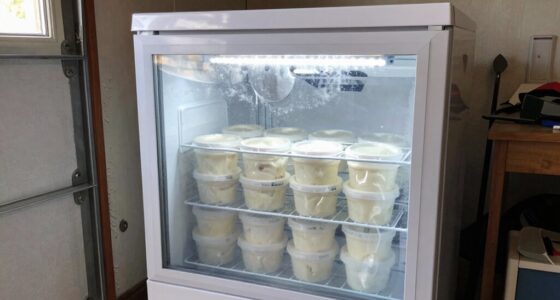
Your freezer smells because odor molecules get absorbed into its interior surfaces, trapped debris, and even foods like ice cream. Poor ventilation, blocked vents, and ice build-up make it worse, letting these smells linger and transfer to your frozen items. Ice cream’s semi-frozen state makes it especially prone to absorbing odors, causing it to taste and smell stale. Keep exploring to discover how proper cleaning and ventilation can restore fresh air to your freezer.
Key Takeaways
- Odors in freezers are absorbed by interior surfaces and foods, especially ice cream, due to trapped odor molecules settling inside.
- Poor ventilation caused by blocked vents or ice buildup prevents odor dissipation, making smells linger.
- Regular cleaning and airing out the freezer remove residue and improve airflow, reducing odor absorption.
- Using airtight containers limits odor transfer to foods like ice cream, preventing them from absorbing smells.
- Baking soda absorbs odors effectively when placed inside the freezer, especially with proper ventilation, keeping it smelling fresh.

If your freezer has started to emit a strange or unpleasant odor, you might think it’s due to spoiled food or a buildup of ice. However, often the real culprit isn’t visible rotting items but something less obvious—odor absorption. Freezers are designed to keep everything cold, but they can also trap and hold onto smells from various sources. When you open the door, these odors can linger and become embedded in the appliance’s interior surfaces, including the freezer’s walls and shelves. This is especially problematic because these smells don’t just stay put; they can cling to items stored inside, most notably ice cream. Ice cream is particularly susceptible because it’s stored in a semi-frozen state, which can absorb odors more readily than other foods. The result? That delicious treat might taste like last week’s leftovers or stale air.
To combat this, proper freezer ventilation plays an imperative role. When a freezer isn’t ventilated well, air can become stagnant, trapping odor molecules inside. Without adequate airflow, these smells don’t dissipate; instead, they settle into the freezer’s surfaces and your frozen foods. Ensuring your freezer has proper ventilation involves checking the vents are clear of ice build-up or debris. If the vents are blocked, it hampers airflow and causes odors to concentrate. Regularly defrosting your freezer can improve ventilation and help eliminate trapped smells. Also, consider placing an open box of baking soda inside—its porous structure absorbs many odors, reducing their presence. Keep in mind, though, that baking soda works best when the environment is well-ventilated, allowing it to trap and neutralize odor molecules more efficiently. Additionally, understanding how sound absorption in appliances impacts odor retention can help you better manage your freezer’s environment. Another step you can take is to regularly clean your freezer with a mixture of mild soap and water or a solution of vinegar. This not only removes spills and residues but also helps reduce odor absorption by cleaning the surfaces where smells can cling. If you notice persistent odors, removing all items, unplugging the freezer, and leaving the door open for a few hours can help air it out and restore proper ventilation. Make sure you dry everything thoroughly before restocking. Also, consider storing foods in airtight containers to prevent odors from transferring to other items, especially ice cream, which can easily absorb and hold on to smells. By focusing on proper odor absorption management and ensuring good freezer ventilation, you can keep your freezer smelling fresh and your ice cream tasting as sweet as it should.
As an affiliate, we earn on qualifying purchases.
Frequently Asked Questions
Can Certain Foods Cause Freezer Odors More Than Others?
Yes, certain foods cause freezer odors more than others because of food odor transfer and plastic scent absorption. Foods like fish, onions, and strong spices release odors that cling to plastic wrap or containers, spreading throughout your freezer. Ice cream can absorb these smells, making it taste off. To prevent this, store pungent foods tightly sealed and keep your freezer organized, minimizing odor transfer and plastic scent absorption.
How Often Should I Clean My Freezer to Prevent Smells?
You should clean your freezer every 3 to 4 months to prevent odors. Regularly wipe down shelves with a mixture of water and baking soda, which acts as an odor barrier. Always store foods in airtight storage containers to prevent smells from spreading. Also, check for spoiled items and remove them promptly. Proper cleaning and storage habits keep your freezer fresh and odor-free, ensuring your ice cream stays delicious.
Does the Type of Plastic Storage Affect Odor Absorption?
You might think all plastics absorb odors equally, but the type of plastic storage really matters. Some plastics, like polyethylene and polypropylene, resist odor absorption better than others, such as PVC or polystyrene. This means choosing the right plastic type can help prevent your freezer from trapping and transferring odors. When you select containers, opt for those designed to be odor-resistant, and you’ll keep your freezer smelling fresher longer.
Can Using Baking Soda Eliminate Freezer Smells Permanently?
Using baking soda can effectively neutralize freezer smells, but it’s not a permanent solution. Its odor neutralizing methods absorb and mask smells temporarily, so you’ll need to replace it regularly for continued freshness. To keep your freezer odor-free long-term, combine baking soda with proper cleaning, airtight storage, and good ventilation. This approach guarantees your freezer stays smelling fresh and your ice cream remains uncontaminated.
Are There Natural Remedies to Keep the Freezer Smelling Fresh?
Yes, you can use natural remedies to keep your freezer smelling fresh. Try making homemade deodorizers with ingredients like lemon slices, baking soda, or activated charcoal. You can also use natural air purifiers such as coffee grounds or vinegar placed in an open container to absorb odors. Regularly cleaning and airing out your freezer helps maintain a fresh scent without relying on artificial products.
Conclusion
Think of your freezer as a quiet, secret garden where unseen weeds can grow if left unchecked. Just like weeds can spread and taint the beauty of your garden, odors can hide and seep into your ice cream, spoiling its sweetness. Regular cleaning and proper storage are your gardening tools, keeping your freezer fresh and your treats tasting perfect. Tend to your freezer like a gardener tending a cherished plot, and enjoy the clean, delicious surprises inside.