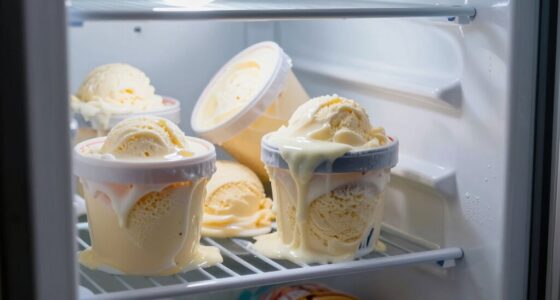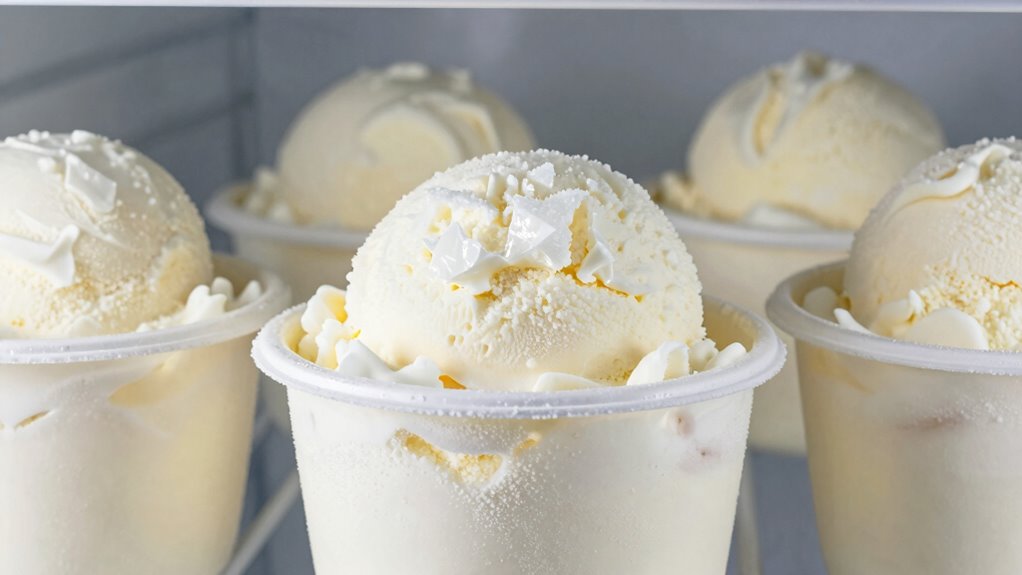

If your ice cream gets rock-hard, the main culprits are freezer temperature and airflow, not the brand. When your freezer is set below 0°F (-18°C), the ice cream stiffens too much, making it hard to scoop. Poor airflow from overpacking or blocked vents can cause uneven cooling, leading to inconsistent texture. Frequent door openings and temperature fluctuations worsen the problem. Keep these factors in check, and you’ll better understand how to keep your ice cream perfectly scoopable.
Key Takeaways
- Inconsistent freezer temperatures cause ice crystals to grow, making ice cream hard and difficult to scoop.
- Poor freezer airflow from overpacking or blocked vents leads to uneven cooling and ice cream hardness.
- Frequent door openings introduce warm air, causing temperature fluctuations that harden ice cream.
- Long storage durations with temperature fluctuations promote ice crystal growth, resulting in a rock-hard texture.
- Excessively cold freezer temperatures turn ice cream into a solid block, reducing softness regardless of brand.

When you store ice cream in your freezer, it’s vital to understand how it hardens and what affects its texture. One of the main factors is storage temperature. If your freezer isn’t set cold enough, the ice cream can become excessively hard, making it difficult to scoop and enjoy. Ideally, the temperature should be at or below 0°F (-18°C). When the temperature is too warm, ice cream remains soft or melts quickly, but if it’s too cold, it turns rock-hard. Maintaining a consistent, proper storage temperature guarantees that your ice cream stays at the perfect firmness—not too soft and not frozen solid. Proper airflow within the freezer also plays a crucial role in ensuring even cooling and preventing localized hardness.
Another essential aspect often overlooked is freezer airflow. Proper airflow within your freezer helps distribute cold air evenly around all stored items. When airflow is restricted, perhaps by overpacking or blocking vents, certain sections of the freezer may be colder than others. This uneven cooling can cause your ice cream to freeze too hard in some areas, making it difficult to scoop without defrosting or chipping away at it. Conversely, if airflow is restricted, parts of your freezer might not reach the ideal temperature, leading to inconsistent texture and quality. To prevent this, avoid overstuffing your freezer and keep vents clear so cold air circulates freely.
Ensure even freezer airflow by avoiding overpacking and keeping vents clear for consistent ice cream texture.
Temperature fluctuations also play a role. If you frequently open and close your freezer door, warm air enters, causing temporary temperature rises. When the freezer works harder to compensate, it can lead to uneven freezing. This cycle can make ice cream harden more than necessary, especially if the temperature spikes above the perfect range. To minimize this, try to open the freezer door less often and for shorter durations, especially during times when you’re storing or retrieving ice cream. Additionally, understanding freezer cycling and how it impacts temperature consistency can help maintain optimal ice cream texture over time.
Additionally, how long ice cream stays in the freezer matters. The longer it’s stored, the more likely it is to become rock-hard, especially if the temperature isn’t ideal or if the freezer airflow isn’t perfect. Over time, ice crystals form and grow, contributing to a tougher texture. To keep your ice cream at the right consistency, consume it within a reasonable period and guarantee your freezer maintains a steady, cold environment.

2 Pack Refrigerator Thermometer, 30-30°C/20-80°F, Classic Fridge Thermometer Large Dial with Red Indicator Thermometer for Freezer Refrigerator Cooler
- Versatile Use: Suitable for refrigerators, freezers, and insulated boxes
- Easy to Read: Large dial with clear color indicators
- Wide Temperature Range: -20°F to 80°F / -30°C to 30°C
As an affiliate, we earn on qualifying purchases.
As an affiliate, we earn on qualifying purchases.
Frequently Asked Questions
Can the Shape of Ice Cream Affect Its Hardness?
Yes, the shape of ice cream can affect its hardness. Packaging design influences how evenly the ice cream freezes, impacting its texture. A larger or thicker shape may take longer to freeze thoroughly, making it harder when stored at certain temperatures. Storage temperature also plays a role; colder temps cause ice crystals to form more quickly, increasing hardness. Choose packaging that promotes even freezing and keep your freezer at the right temperature for softer ice cream.
Does Ice Cream Flavor Impact How Hard It Gets?
Flavor impact definitely influences how hard your ice cream gets, mainly due to ingredients like fats and sugars. Richer flavors with higher fat content tend to stay softer longer, but storage temperature plays a bigger role overall. If your freezer is too cold, even the flavor impact won’t prevent it from becoming rock-hard. Keep your freezer at the right temperature to maintain ideal softness, regardless of the flavor you choose.
How Does the Age of the Ice Cream Influence Its Texture?
As the ice cream ages, its texture can change, becoming icier or harder. You’ll notice this if you keep it too long in the freezer, especially at cold temperatures. The longer storage duration and colder freezer temperature cause ice crystals to grow, making the ice cream less smooth. To keep it creamy, consume it within a few months and maintain a consistent freezer temperature around 0°F.
Are There Specific Ingredients That Cause Ice Cream to Harden More?
You’ll notice that ingredients like high sugar content and lower fat percentage can make ice cream harden more. When sugar levels are low, there’s less sweetness to inhibit ice crystal formation, leading to a firmer texture. Similarly, less fat means fewer molecules to soften the ice cream. So, if you want softer ice cream, look for options with higher sugar and fat content—these help keep it creamy and scoopable.
Can Adding Alcohol Prevent Ice Cream From Becoming Too Hard?
Adding alcohol can help prevent ice cream from becoming too hard because alcohol’s effect lowers the freezing point, making the ice cream softer. However, you need to be mindful of your freezer temperature; a colder freezer can still cause hardness despite the alcohol. Usually, a small amount of alcohol, like liqueur or spirits, improves the texture, but too much can alter flavor and consistency.
Conclusion
So next time your ice cream turns to a stubborn rock, remember it’s not the brand’s fault. Think of your freezer as a silent gardener, shaping your treat with cold roots and icy roots. The real secret lies in how it’s stored—like a delicate dance of temperature and timing. By understanding this, you become the artist, coaxing your ice cream to stay creamy and inviting, instead of frozen in time like a forgotten relic.