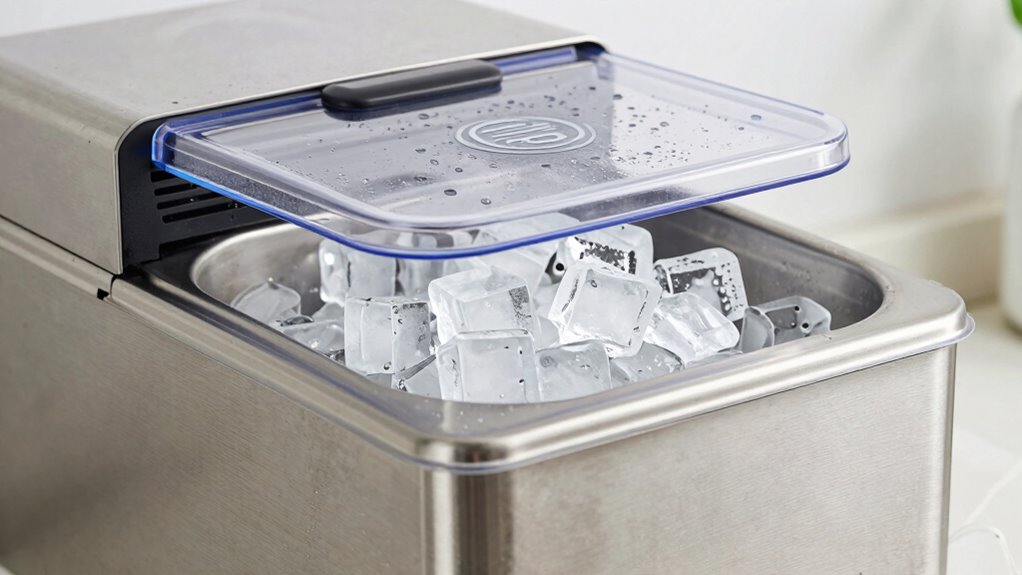

To keep your ice maker bin food safe, regularly clean and disinfect it weekly to prevent bacteria, mold, and residue buildup. Remove the ice, wash the bin with warm water and mild detergent, then apply a food-safe disinfectant, ensuring all surfaces are covered and left to sit as recommended. Rinse thoroughly afterward to eliminate chemical traces. Good hygiene practices preserve fresh, clear ice and protect your health—discover more tips to maintain ideal ice safety.

Get baking supplies delivered free with Prime
- Fast, free delivery on millions of items
- Prime Video, Amazon Music and more included
- Member-only deals all year
Key Takeaways
- Regularly clean and disinfect the ice maker bin weekly to prevent bacteria, mold, and mineral buildup.
- Rinse the bin thoroughly after cleaning to remove chemical residues and ensure safe ice storage.
- Use food-safe disinfectants and follow manufacturer instructions for effective sanitization.
- Promptly remove and discard old or cloudy ice to maintain freshness and prevent contamination.
- Maintain consistent hygiene routines to ensure ice remains visually clear, safe, and free from harmful germs.

Have you ever considered how clean your ice maker bin really is? It’s easy to assume that since the ice is frozen, it’s automatically safe and clean. But the truth is, the bin where your ice is stored can harbor bacteria, mold, and other contaminants if not properly maintained. Regular ice mold cleaning is essential to prevent these issues. When you clean the ice mold, you ensure that any residual slime, mineral buildup, or mold spores are removed, which helps keep your ice fresh and safe to consume. Don’t forget that disinfecting the bin itself is equally important. Bin disinfecting involves using appropriate cleaning agents to kill germs and prevent their spread. By thoroughly disinfecting the bin regularly, you eliminate bacteria that can thrive in damp, dark environments, especially if the bin isn’t emptied or cleaned often enough.
Additionally, using appropriate cleaning agents designed specifically for appliances can enhance the effectiveness of your cleaning routine. Start by removing any ice from the bin and rinsing it with warm water. Use a mild detergent or a specialized cleaner designed for appliances to scrub away any residue or buildup. Pay close attention to corners and crevices where grime can hide. Once you’ve scrubbed and rinsed, it’s vital to disinfect the bin. Use a solution of water and a food-safe disinfectant, or follow the manufacturer’s recommendations for cleaning agents. Apply the disinfectant generously, making sure to coat all surfaces, and let it sit for the recommended contact time to effectively kill germs. After disinfecting, rinse the bin thoroughly with clean water to remove any leftover chemicals, which could contaminate your ice.
Maintaining a routine of ice mold cleaning and bin disinfecting can drastically reduce the risk of bacteria growth and mold development. It’s best to establish a weekly cleaning schedule, especially if your ice maker is used frequently or if you notice any foul odors or cloudy ice. Remember, the goal isn’t just to keep the ice looking clear but to ensure it’s genuinely food safe. Proper hygiene practices help prevent illnesses caused by contaminated ice, which can be especially important in households with children, elderly members, or immune-compromised individuals. Keep an eye on your ice production, and don’t skip routine cleaning. Your ice maker isn’t just about convenience; it’s about safety. Regularly scheduled ice mold cleaning and bin disinfecting are your best defenses for maintaining hygienic, fresh ice that’s truly safe to enjoy.
As an affiliate, we earn on qualifying purchases.
Frequently Asked Questions
How Often Should I Replace the Ice Maker Bin?
You should replace the ice bin during regular ice bin maintenance, ideally every 6 to 12 months. This replacement schedule helps prevent bacterial buildup and keeps your ice safe to consume. Keep an eye out for cracks, mold, or odors, which indicate it’s time for a new bin. Regular cleaning and timely replacement ensure your ice remains clean and hygienic, maintaining ideal food safety standards.
Can Mold Grow in the Ice Maker Bin?
Think of your ice maker bin as a tiny garden—without proper care, mold can take root. Yes, mold can grow in the bin if hygiene practices slip or if it stays damp. To prevent mold, regularly clean the bin, keep it dry, and use mold prevention techniques. Good hygiene practices guarantee your ice remains safe, and your ice maker stays a healthy, mold-free environment.
Is It Safe to Use Cleaning Chemicals in the Bin?
It’s safe to use cleaning chemicals in your ice maker bin if you follow proper chemical safety guidelines. Always choose food-safe, approved cleaners and rinse thoroughly to remove any residue. Regular cleaning frequency—at least once a month—helps prevent mold and bacteria growth. Avoid harsh chemicals that aren’t labeled for food-contact surfaces, and make sure you rinse well to keep your ice safe and clean for consumption.
How Do I Remove Odors From the Ice Bin?
To remove odors from the ice bin, start with thorough bin deodorizing by filling it with a mixture of equal parts water and white vinegar. Let it sit for 15-20 minutes, then scrub with a soft brush or cloth. Rinse thoroughly with clean water, ensuring no vinegar smell remains. Regular odor removal and bin deodorizing help keep your ice fresh and free from unwanted smells.
What Signs Indicate the Bin Needs Professional Cleaning?
You should call a professional if you notice bin discoloration or water pooling inside the ice bin. Discoloration can signal mold or bacteria buildup, while water pooling indicates drainage issues or excessive moisture, both compromising ice safety. These signs suggest that a thorough cleaning and inspection are needed to prevent contamination and guarantee your ice remains clean and safe for use. Don’t delay if you see these issues.
Conclusion
Keeping your ice maker bin clean might seem tedious, but it’s essential for food safety. Regularly sanitizing the bin prevents bacteria and mold buildup, ensuring your ice stays safe to use. Some might think it’s unnecessary or time-consuming, but a quick weekly wipe can save you from potential health risks and costly repairs later. Prioritize hygiene now, and enjoy crystal-clear, safe ice for all your drinks without worry.
Halloween Picks
halloween
As an affiliate, we earn on qualifying purchases.