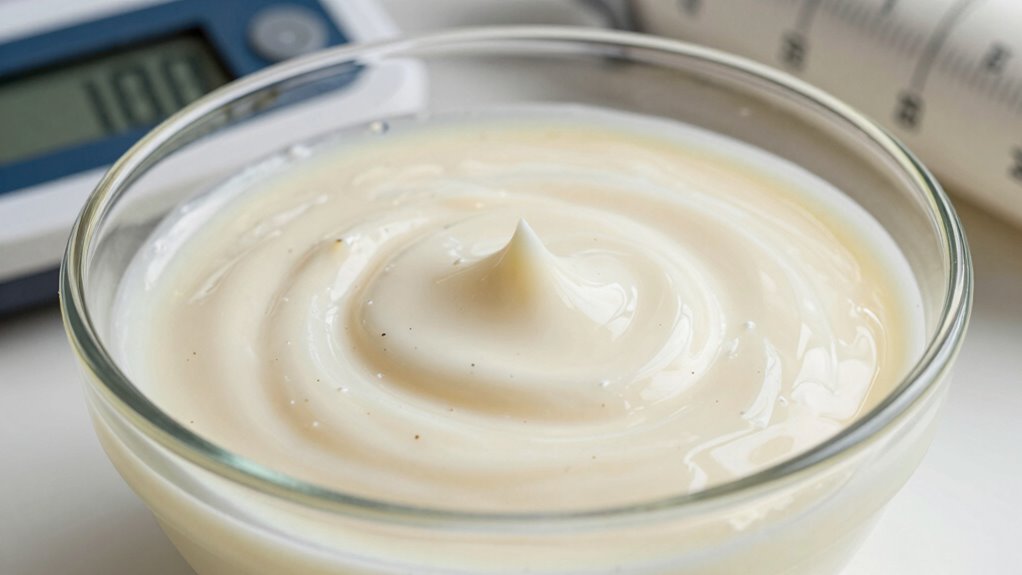

Total solids in dairy products include all dissolved and suspended substances like fats, proteins, lactose, and minerals, excluding water. Higher levels of total solids make dairy products creamier, richer, and more flavorful because they increase thickness and mouthfeel. The amount of total solids can be adjusted by producers to improve texture and stability. Understanding this helps you see how quality and creaminess are controlled—if you want to find out more, there’s more to learn ahead.
Key Takeaways
- Total solids refer to all dissolved and suspended substances in dairy excluding water, including fats, proteins, lactose, minerals, and vitamins.
- Higher total solids indicate a richer, creamier dairy product with improved texture, flavor, and mouthfeel.
- Increased solids enhance stability, moisture retention, and visual appeal of dairy products.
- Variations in total solids are influenced by breed, diet, processing methods, and environmental factors.
- Controlling total solids through processing adjustments allows producers to predict and optimize product creaminess.

Misco PA203X-003-098-105-466 Digital Dairy Refractometer, Colostrum, Serum Total Protein, Milk Solids, Hydration
Digital Dairy Refractometer – Colostrum – Serum Total Protein – Milk Solids – Hydration – MISCO DD-3 Refractometer
As an affiliate, we earn on qualifying purchases.
As an affiliate, we earn on qualifying purchases.
What Are Total Solids in Dairy Products?
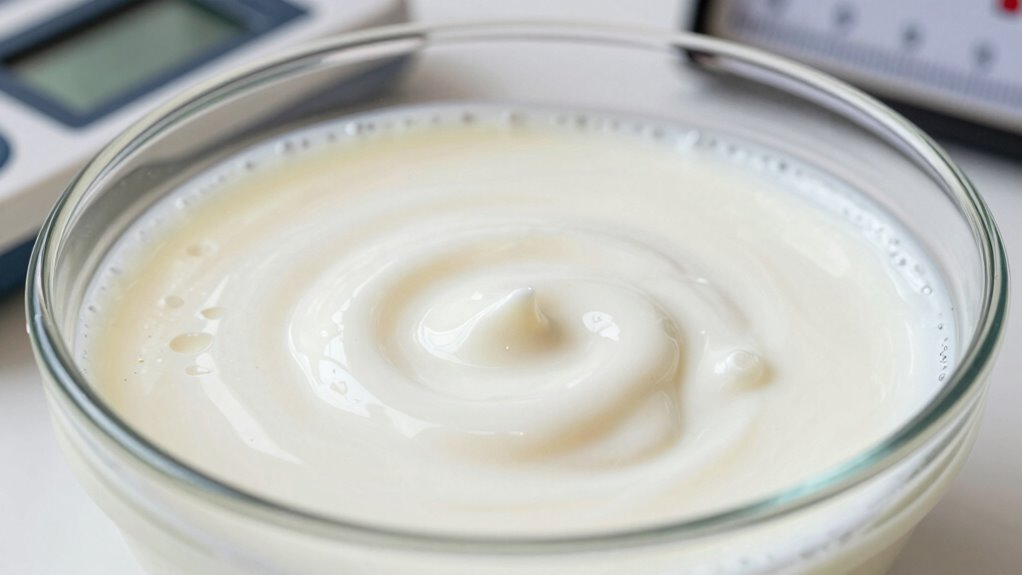
Total solids refer to all the dissolved and suspended substances in dairy products, excluding water. These substances are a key part of dairy composition, influencing texture, flavor, and quality. When you look at dairy, the solids concentration tells you how much of these solids are present relative to water. The main components include proteins, fats, lactose, minerals, and vitamins, which together define the product’s characteristics. Higher total solids usually mean a richer, creamier dairy product, while lower solids can result in a thinner texture. Understanding total solids helps producers control consistency and quality. It’s an important measure because it impacts how dairy products behave during processing and storage, ultimately affecting the final product’s taste and mouthfeel.

3-in-1 Animal Clinical Refractometer, Measuring Animal's Health Index of Urine Specific Gravity and Serum Protein, Ideal for Veterinary and Pet Owner
Animal clinical refractometer for testing the health index of urine specific gravity and serum or plasma protein for…
As an affiliate, we earn on qualifying purchases.
As an affiliate, we earn on qualifying purchases.
How Do You Measure Total Solids in Milk and Cream?
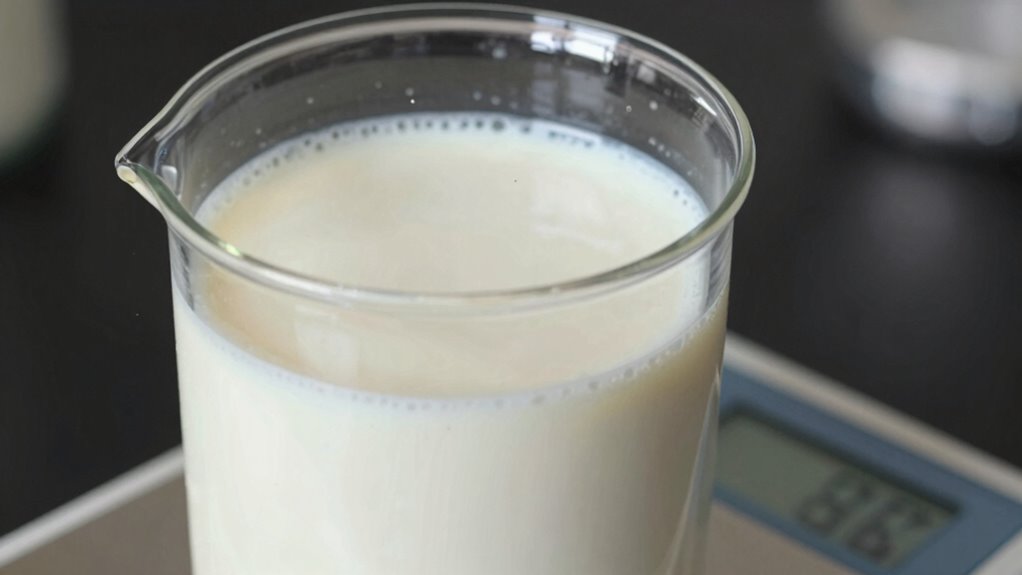
To measure total solids in milk and cream, you start with proper sampling techniques to guarantee accuracy. Then, laboratory testing methods like drying or refractometry help determine the solids content. Additionally, understanding the testing equipment’s resolution capabilities ensures more precise and reliable measurements. The odor characteristics of the sample can sometimes indicate contamination or spoilage, which may affect the total solids measurement. For example, sensor technology can be employed to monitor real-time sample quality during testing processes. Moreover, calibrating the testing instruments regularly ensures consistent results and helps maintain measurement accuracy. Finally, you calculate the total solids percentage based on the test results to assess the product’s quality.
Sampling Techniques Overview
Measuring total solids in milk and cream requires careful sampling to guarantee accurate results. Proper collection protocols are essential to maintain sampling accuracy, preventing contamination or inconsistencies. To achieve reliable measurements, follow standardized procedures for sample collection, storage, and handling. Use clean, dry containers and avoid exposing samples to extreme temperatures or sunlight. The table below summarizes key sampling steps:
| Step | Description | Tips |
|---|---|---|
| Sample Collection | Gather representative sample | Use sterile equipment |
| Sample Storage | Keep samples cold until testing | Use airtight containers |
| Sample Mixing | Mix thoroughly before testing | Avoid introducing air |
| Sample Volume | Collect sufficient quantity | Follow lab guidelines |
| Documentation | Record sampling details | Note date, time, conditions |
Additionally, ensuring proper sampling techniques can greatly improve the accuracy of total solids measurements and reduce variability between tests. Following these steps guarantees accurate, reproducible total solids measurements. Additionally, understanding Gold IRA Markets can provide insight into how investment options might influence financial planning related to assets like precious metals.
Laboratory Testing Methods
Laboratory testing methods for determining total solids involve a series of precise procedures that convert a liquid sample into a measurable form. You typically start by drying a known volume of milk or cream to evaporate water content. This process reveals the remaining solids, which are then weighed to calculate total solids percentage. Pasteurization effects can influence measurements, as heat treatment may alter certain components, impacting shelf life and solids composition. To guarantee accuracy, labs often use techniques like gravimetric analysis or infrared spectroscopy. These methods provide reliable data essential for quality control and product consistency. Standardization procedures ensure that measurements are consistent across different laboratories and testing conditions. Accurate measurement of total solids is essential for product quality and helps predict creaminess and shelf life, ensuring products meet desired standards and consumer expectations. Additionally, understanding the composition of solids aids in optimizing processing techniques for better product quality. The testing methods are crucial for ensuring that dairy products maintain their desired properties throughout production and storage.
Calculation of Total Solids
Calculating total solids in milk and cream involves a straightforward process that quantifies all non-water components. You start by removing the water content through drying or evaporation, leaving behind the solids. These solids include fats, proteins, lactose, minerals, and other nutrients that determine nutrient concentration. Accurate measurement often involves laboratory techniques like oven drying or refractometry, which provide precise results. In dairy fermentation, monitoring total solids helps ensure proper nutrient levels and product consistency. By knowing the total solids, you can assess the creaminess and texture potential of your dairy products. Understanding the importance of total solids is vital for quality control, optimizing processing parameters, and maintaining the desired attributes in milk and cream products. Additionally, total solids measurement is crucial for regulatory compliance and product labeling accuracy. Proper sampling methods are essential to obtain representative results, ensuring consistency and accuracy in your measurements.

Raw Milk Antibiotic Residue Test Kit – β-Lactam Screening, 5-Minute Results, Test Kit for Dairy Quality Control 12Tests/Kit
Fast 5–10 Minute Results: Visual interpretation for rapid decision-making in dairy operations.
As an affiliate, we earn on qualifying purchases.
As an affiliate, we earn on qualifying purchases.
Why Do Total Solids Matter for Dairy Creaminess?
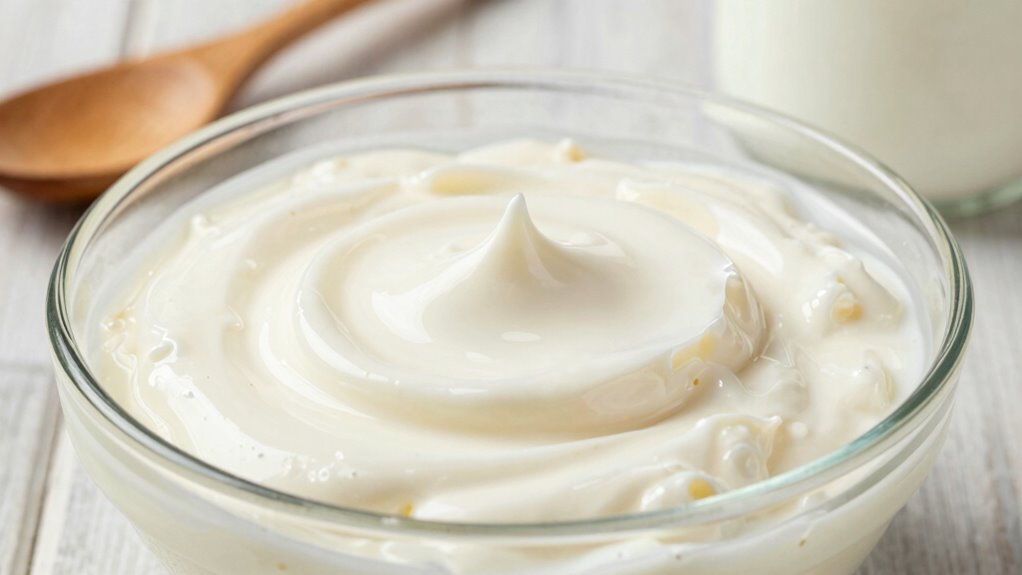
Total solids play a crucial role in determining the creaminess of dairy products because they directly influence the texture and mouthfeel. Higher total solids create a richer, thicker consistency that feels smooth and satisfying. This impacts not only the dairy flavor but also the nutritional value, as more solids mean more proteins, fats, and minerals that enhance taste and health benefits. When total solids increase, you’ll notice improved body and stability, making products appear more appealing. Additionally, they help retain moisture, preventing separation and spoilage. Key factors include:
- Enhanced mouthfeel and richness
- Better flavor concentration
- Increased nutritional content
- Improved product stability

VTSYIQI Milk and Dairy Component Analyser with USB Interface and Thermal Printer for Testing Fat, Solids, Density, Added Water, Lactose and Protein Enabling On-site Milk Testing Anywhere
Dairy Analyzer Milk analysers are instruments and equipment designed for multi-indicator analysis and testing of physical and chemical…
As an affiliate, we earn on qualifying purchases.
As an affiliate, we earn on qualifying purchases.
What Factors Influence the Total Solids Content in Dairy?

Your dairy’s total solids content depends on factors like the milk source, which varies between animals and breeds. Processing methods, such as pasteurization and filtration, also influence the solids level. Understanding these factors helps you predict and control the creaminess of your dairy products. Additionally, milk composition can change based on environmental conditions and feeding practices, further affecting solids content. Variations in nutritional factors can also impact the overall solids, making it essential to monitor and adjust production processes accordingly. Moreover, standardization techniques are often used to achieve consistent solids levels in dairy processing.
Milk Source Variations
The source of milk plays a significant role in determining its total solids content, as different breeds, feeding practices, and environmental conditions can cause notable variations. These factors directly influence milk composition, affecting the balance of fat, protein, and lactose, which in turn impacts dairy flavor and creaminess. For example, Jersey cows tend to produce milk with higher solids than Holsteins. Additionally, grazing versus grain-fed animals alter the nutrient profile. Climate and season also affect the water content and solids concentration. Breed-specific traits shape overall milk composition and influence the nutritional profile of the final product. Moreover, the feeding regimen can significantly modify the solids content, with certain diets promoting richer, creamier milk. Understanding these environmental influences helps producers optimize milk quality for specific dairy products.
Processing Methods Impact
Processing methods considerably influence the total solids content in dairy products by altering the milk’s natural composition. Techniques like evaporation, concentration, or filtration can increase solids, leading to creamier textures. For example, ultrafiltration removes water, boosting solids without affecting flavor. Pasteurization may cause minor changes in protein structures, impacting solids slightly. These processing impacts often require formulation adjustments to maintain desired consistency and quality. If you aim for a higher solids content, you might need to modify ingredient ratios or processing parameters. Conversely, reducing solids for lighter products involves different techniques. Understanding how processing affects total solids helps you control the final product’s texture and mouthfeel, ensuring that the desired creaminess and stability are achieved through precise formulation adjustments tailored to each method. Additionally, processing techniques play a critical role in maintaining the balance between solids and liquids to optimize product quality. Recognizing the impact of temperature on solids can help in fine-tuning processing conditions to achieve specific textures and stability. Moreover, processing parameters such as pressure and duration significantly influence the final solids content, enabling better control over product consistency.
How Do Dairy Producers Adjust Total Solids to Achieve the Desired Texture?
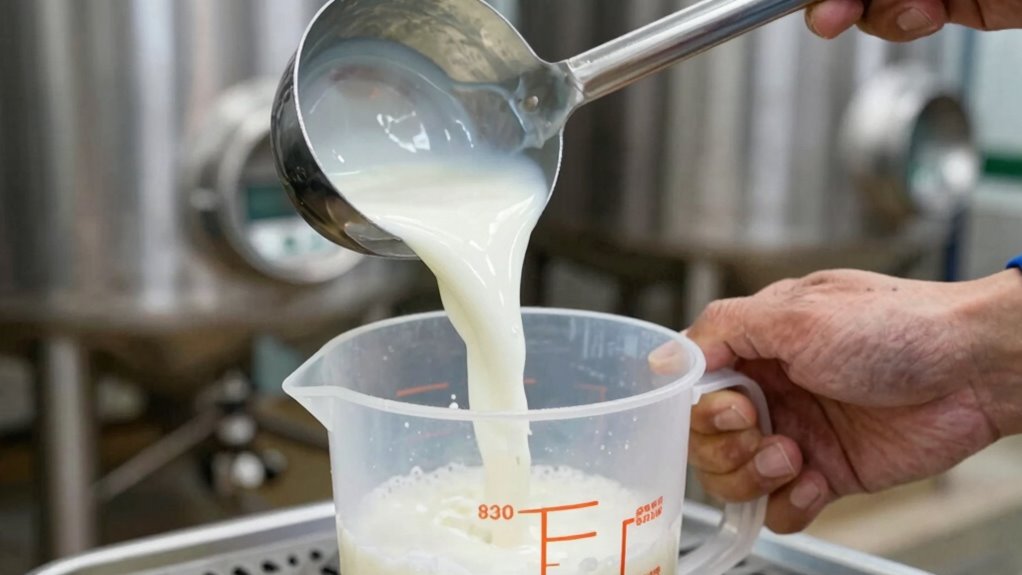
Dairy producers carefully adjust total solids to fine-tune the texture of their products by adding or removing ingredients like milk solids, sugar, or stabilizers. This adjustment influences not only creaminess but also dairy fermentation and flavor development. To increase total solids, they might add concentrated milk proteins or powders, enhancing richness and body. Conversely, reducing solids can create lighter textures for beverages. They also control moisture content through evaporation or addition, impacting viscosity. Additionally, stabilizers and thickeners are used to improve mouthfeel and prevent separation. These adjustments help achieve consistent quality and desired consistency, ensuring the product’s final texture aligns with consumer expectations. Precise control over total solids directly shapes the creamy, smooth qualities that predict a dairy product’s appeal.
What Should Consumers Know About Total Solids and Dairy Quality?

Have you ever wondered what total solids mean for the quality of your dairy products? Understanding this helps you make informed choices. Total solids indicate the amount of fat, protein, lactose, and minerals in dairy, directly affecting taste, texture, and nutritional value. Consumer transparency is essential—look at nutritional labeling to see the total solids content and assess product quality. Higher total solids usually mean creamier, richer dairy, while lower levels might suggest a thinner product. Being aware of these details allows you to select products that match your preferences and dietary needs. Manufacturers are increasingly providing clearer information, so you can easily compare items. Ultimately, knowing about total solids empowers you to choose dairy products that deliver better flavor, consistency, and nutritional benefits.
Frequently Asked Questions
How Does Total Solids Content Affect Dairy Shelf Life?
Higher total solids content in your dairy products increases milk concentration, which in turn boosts shelf stability. When there’s more solids, harmful bacteria find it harder to grow, extending shelf life. You’ll notice your dairy stays fresh longer because the increased solids slow down spoilage processes. So, by adjusting total solids, you effectively improve the product’s durability and maintain quality during storage, giving you better control over dairy shelf life.
Are There Health Implications Related to High Total Solids in Dairy?
High total solids in dairy can raise nutritional concerns if you’re watching your calorie, fat, or sugar intake. For those with dietary restrictions, consuming products with elevated solids might lead to overconsumption of certain nutrients or additives. Always check labels to guarantee it fits your dietary needs. While generally safe, excessive intake could impact your health, especially if you have specific health conditions or are sensitive to certain dairy components.
Can Consumers Determine Total Solids at Home?
You can’t accurately determine total solids at home through homemade testing or visual assessment. While you might notice creaminess or thickness, these are just rough indicators. To get precise measurements, you’d need specialized equipment or lab analysis. Relying solely on visual cues can be misleading, so if you need exact data, consider sending samples to a lab or using commercial testing kits designed for home use.
Do Organic Dairy Products Have Different Total Solids Levels?
Think of organic dairy products as a handcrafted painting, where each brushstroke reflects unique organic differences. These differences in dairy processing can lead to slightly varied total solids levels compared to conventional options. Organic dairy often has higher total solids, giving it a richer, creamier texture. So, when choosing organic, you’re often getting a product with a more concentrated composition, thanks to careful processing that preserves natural nutrients and flavors.
How Does Geographic Origin Influence Total Solids in Dairy Products?
You’ll find that geographic variation influences total solids in dairy products because regional standards and local farming practices differ. In some regions, higher pasture quality and specific feeding methods boost solids content, while others may have lower levels due to climate or traditional processing methods. These differences shape the creaminess and overall quality of dairy, so understanding regional standards helps you predict and appreciate the nuances in dairy products from various areas.
Conclusion
Understanding total solids is like holding the secret recipe to perfect dairy creaminess. When you know how it influences texture, you can appreciate why some products feel richer and smoother. Think of total solids as the backbone of dairy quality—without it, everything falls apart. So next time you enjoy your favorite cream, remember, it’s the hidden magic of total solids that makes every sip and bite delightfully indulgent.