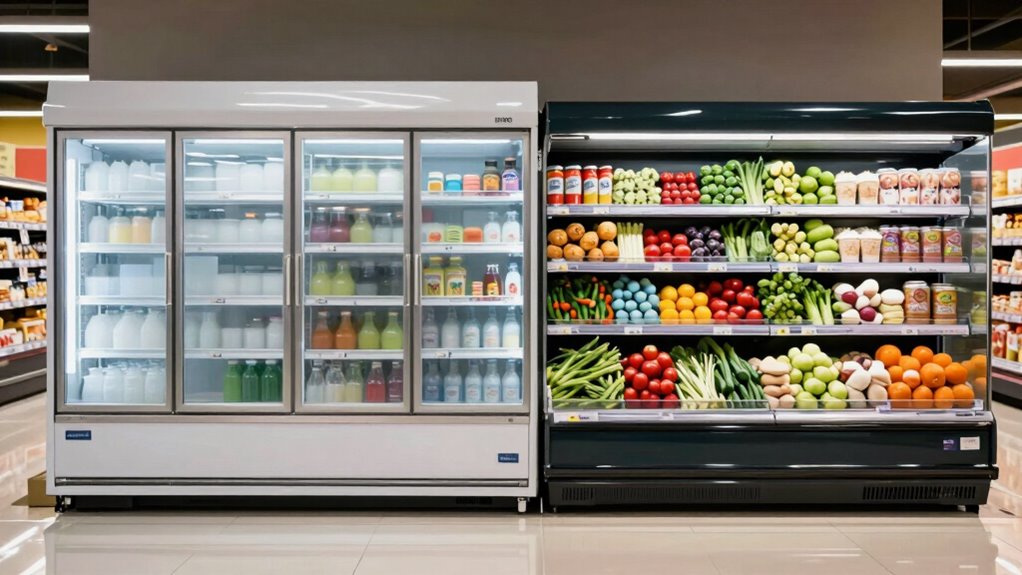

Separating holding and merchandising freezers helps you optimize energy use, maintain product quality, and improve inventory management. Holding freezers are designed for storage, operating at lower temperatures and reducing visual clutter. Merchandising freezers showcase products effectively, ensuring temperature stability and freshness. Proper separation reduces system overload, conserves energy, and makes managing stock easier. Keep these points in mind, and you’ll discover how proper freezer organization benefits your business even more if you explore further.
Key Takeaways
- Separate freezers optimize energy efficiency by operating at their ideal temperatures without overloading the system.
- Dedicated holding freezers reduce visual clutter and improve inventory organization in less visible areas.
- Merchandising freezers maintain stable temperatures, preserving product quality and enhancing customer appeal.
- Separation minimizes system overload, reducing temperature fluctuations and energy waste.
- Proper division of freezers supports sustainable practices and lowers overall operational costs.

Have you ever wondered how stores keep frozen products at the perfect temperature while guaranteeing they remain appealing to customers? The secret lies in the strategic use of holding and merchandising freezers. These two types of freezers serve distinct functions, and separating them can substantially improve overall efficiency. When you have dedicated holding freezers, you create a space optimized solely for storage, allowing for better temperature control and energy efficiency. By not overcrowding your merchandising freezers, you reduce the workload on their compressors, helping them run more efficiently and maintain consistent temperatures. This separation ensures that your products stay frozen without constantly overworking the system, which can lead to energy waste and temperature fluctuations.
Holding freezers are designed to be energy-efficient because they operate at lower temperatures, primarily focusing on preserving stock rather than display. They’re often located in less visible areas or back rooms where customers don’t see them, so they don’t need to be as visually appealing. Because these freezers aren’t constantly opened and closed, they don’t experience the temperature swings that merchandising freezers do. This stability in temperature control is vital for preserving the quality of your inventory and reducing energy consumption. When you allocate storage to dedicated holding freezers, you also simplify your inventory management, as you can keep stock organized and easily accessible without cluttering the display units. Proper freezer organization further enhances energy efficiency and inventory management. Additionally, maintaining a clear separation can help with temperature consistency, which is crucial for product quality. Incorporating energy-efficient practices in freezer management can lead to significant cost savings over time. Furthermore, understanding the distinct functions of each freezer type helps optimize overall freezer system performance. Properly managing these systems can also contribute to more effective energy conservation efforts, reducing operational costs and environmental impact.

Commercial Cool 11.1 Cu. Ft. Convertible Freezer Refrigerator, Upright Fridge with Glass Shelves, Reversible Door, ENERGY STAR rated, Auto Defrost, CCUC1110GS, Stainless Look
- Convertible Design: Easily switches between refrigerator and freezer
- Ample Storage Capacity: 11.1 cu. ft. for large food storage
- Electronic Temperature Control: Precise temperature management for both modes
As an affiliate, we earn on qualifying purchases.
As an affiliate, we earn on qualifying purchases.
Frequently Asked Questions
How Do Separate Freezers Impact Energy Efficiency?
Separate freezers improve energy efficiency by maintaining better temperature consistency, reducing the workload on each unit. When freezers are dedicated, they don’t have to work as hard to keep the right temperature, which cuts down on energy consumption. You’ll notice lower energy bills and less strain on your equipment, as each freezer operates most effectively without competing with others for cooling. This setup ultimately saves you money and extends your freezer’s lifespan.
What Are the Initial Costs of Separate Freezers?
Initial costs for separate freezers typically range from $3,000 to $10,000 each, depending on size and features. You’ll need to take into account the price of units that offer precise temperature control and placement flexibility. While upfront expenses are significant, investing in dedicated units can improve efficiency and reduce long-term energy costs. Proper planning guarantees you select the right freezers that fit your space and operational needs.
Can Separate Freezers Improve Inventory Management?
Yes, separate freezers can improve your inventory management. They make it easier to track inventory accurately because you can assign specific items to each freezer, enhancing inventory tracking. Additionally, by keeping different products separate, you improve storage organization, reducing spoilage and waste. This setup allows you to quickly identify stock levels and access items efficiently, ultimately streamlining your operations and minimizing errors in inventory control.
Are There Size Restrictions for Separate Freezer Units?
You can find separate freezer units in various sizes, so size restrictions are quite flexible. This allows you to choose a freezer with the right capacity for your needs, giving you more storage flexibility. Keep in mind, larger freezers require more space and power, but they can hold more inventory, making it easier to manage stock efficiently. Don’t put all your eggs in one basket—select a unit that fits your operation perfectly.
How Do Maintenance Needs Differ Between Freezer Types?
You’ll find maintenance needs differ between freezer types mainly in temperature regulation and defrosting procedures. Holding freezers require consistent temperature checks to prevent spoilage, often needing regular calibration. Merchandising freezers, on the other hand, need frequent defrosting to maintain visibility and efficiency. Both types demand routine cleaning and servicing, but holding freezers focus more on precise temperature control, while merchandising units emphasize ease of access and visual appeal.
Conclusion
By keeping your holding and merchandising freezers separate, you’re fundamentally giving each one a dedicated stage to shine. It’s like having a well-orchestrated symphony where every instrument plays its part without drowning out the others. This clear division helps maintain ideal temperatures, streamline operations, and prolong product freshness. In the end, separating them isn’t just a smart choice—it’s the secret ingredient that guarantees your frozen goods stay as perfect as a masterful melody.