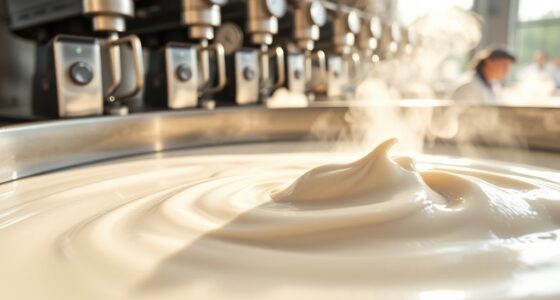
When choosing ice cream colorants, you have natural and artificial options. Natural dyes, like beet juice and turmeric, offer softer hues that appeal to health-conscious consumers, supporting a natural brand image. Artificial dyes provide bold, consistent colors that grab attention and create eye-catching visuals, perfect for vibrant branding. Your choice impacts not only appearance but also how customers perceive your product’s quality. Keep exploring to discover more about how each type can influence your ice cream presentation.
Key Takeaways
- Natural dyes offer subtle, organic hues, while artificial dyes provide bold, vibrant, and consistent colors.
- Natural colorants are perceived as healthier and align with organic branding trends.
- Artificial dyes produce striking, eye-catching colors that enhance visual appeal and product differentiation.
- Natural dyes may have limitations in color intensity and stability compared to artificial options.
- Consumer preferences influence dye choice, with health-conscious buyers favoring natural options over artificial dyes.
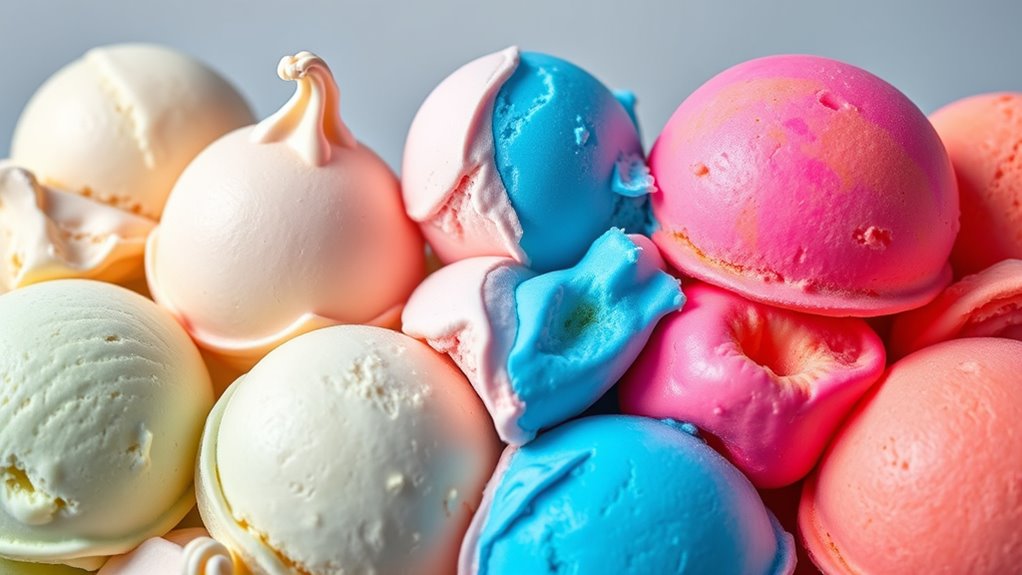
Ice cream colorants play a essential role in making desserts visually appealing and enticing. When you’re aiming to create a captivating treat, the colors you choose can make all the difference in attracting eyes and stimulating taste buds. Whether you’re crafting a nostalgic strawberry or a vibrant neon blue, selecting the right dye impacts not only appearance but also the overall perception of quality. Natural and artificial dyes each bring unique advantages and challenges, and understanding their impact on your ice cream can help you make better choices.
Ice cream colorants enhance visual appeal and influence perceived quality through natural or artificial choices.
If your ice cream features gelatin-based flavors, the coloring process becomes even more crucial. Gelatin offers a smooth, glossy finish that enhances the visual appeal, but the dye you incorporate must complement its transparency and texture. Natural colorants, like beet juice or turmeric, blend well with gelatin-based recipes, providing subtle hues that enhance the dessert’s natural look. These choices often give your ice cream a softer, more organic appearance, aligning with a health-conscious or artisanal branding. On the other hand, artificial dyes tend to produce bold, vibrant colors that stand out sharply against the translucent gelatin base. If you’re aiming for a striking, eye-catching presentation—think bright reds or electric blues—artificial dyes might be your best option, especially when consistency is essential.
Your packaging color schemes also influence how your ice cream is perceived. Bright, colorful packaging can amplify the impact of artificial dyes, making your product seem more fun and energetic. If your ice cream’s visual identity leans toward a natural or organic vibe, then using natural colorants can help you maintain consistency between your product and packaging. For example, earth tones or pastel shades suggest purity and simplicity, resonating with consumers seeking wholesome treats. Conversely, packaging with bold, contrasting colors can make your product pop on the shelf, drawing attention to vibrant artificial colors inside. If you’re marketing to parents or health-conscious buyers, emphasizing the natural aspect of your dyes in your packaging can build trust, while vivid artificial colors might appeal to kids craving bright, playful treats.
Ultimately, the choice between natural and artificial dyes depends on your branding, target audience, and desired aesthetic. Natural colorants often provide a more subdued, authentic appearance that aligns with health trends, but they may lack the intensity and consistency of artificial dyes. Artificial dyes can deliver eye-popping colors that guarantee uniformity, but some consumers may shy away due to health concerns or preferences for natural ingredients. When you’re making your selection, consider how the colors will look in your gelatin-based flavors and how they fit with your overall packaging strategy. Thoughtful color choices not only elevate your product’s visual appeal but also reinforce your brand’s message. Additionally, advances in AI in Education are fostering innovative approaches to creative industries, including food design and presentation.

Ninja CREAMi Deluxe Ice Cream Maker | 11-in-1 Create Frozen Desserts, Sorbet, Milkshakes, Yogurt & More | Includes 2 Dishwasher Safe XL 24 Oz. Tubs with storage lids | Silver | NC501
11 ONE-TOUCH PROGRAMS FOR EVERY FROZEN TREAT: Unlock a full lineup of CREAMi creations with 11programs — including...
As an affiliate, we earn on qualifying purchases.
Frequently Asked Questions
Are Natural Dyes More Allergenic Than Artificial Ones?
Natural dyes are generally less allergenic than artificial ones, but allergy prevalence varies based on individual sensitivities. Some natural ingredients contain allergenic compounds, which can trigger reactions in sensitive people. Artificial dyes, while often considered less allergenic, can still cause allergies in certain individuals. You should check labels carefully and consider personal allergy history to avoid reactions, regardless of whether dyes are natural or artificial.
How Long Do Natural Colorants Last in Ice Cream?
Natural colorants generally last in ice cream for about 1 to 2 months, but their color stability can vary based on storage conditions. You might notice some fading over time, which can also affect flavor impact subtly. To maximize their lifespan, keep your ice cream frozen and protected from light and air. Regularly check the color and flavor, and consider using fresh natural dyes for the best appearance and taste.
Do Artificial Dyes Affect Ice Cream Shelf Life?
Artificial dyes generally don’t substantially affect ice cream’s shelf stability, but they can influence color fading over time. You might notice artificial colors retain their vibrancy longer than natural ones, but exposure to light and air can still cause fading. So, while they don’t spoil the ice cream, their appearance might diminish, impacting visual appeal. Proper packaging and storage help maintain color integrity regardless of dye type.
Can Natural Dyes Cause Inconsistent Coloring?
Yes, natural dyes can cause inconsistent coloring because of color consistency issues and seasonal variations. You might notice that the hue changes depending on the season’s harvest or the natural source’s quality. Unlike artificial dyes, which provide uniform color, natural dyes can vary, making it tricky to achieve a consistent appearance in your ice cream. To minimize this, carefully select high-quality sources and control processing conditions.
Are There Regulatory Differences Between Natural and Artificial Dyes?
Think of regulatory standards like traffic lights guiding your choices. Natural dyes often face stricter regulations and clearer labeling requirements, ensuring transparency and safety. Artificial dyes, on the other hand, are usually less scrutinized but still require compliance with food additive regulations. You need to follow specific labeling requirements for both, but natural dyes might be more transparent, helping you build trust with customers.

Oplace 2.1 Qt Countertop Ice Cream Maker – Make Gelato, Sorbet & Frozen Yogurt in as Little as 20–30 Minutes, Fast Cooling, Visible Feeding Port, Easy 3-Button Control (Gray)
Bottom-Mix Motor – Creamy in Minutes:This ice cream maker for home uses a bottom-mixing motor to churn from...
As an affiliate, we earn on qualifying purchases.
Conclusion
Choosing between natural and artificial ice cream colorants is like deciding whether to ride a unicorn or a rocket to flavor heaven. Natural dyes bring vibrant, wholesome hues, but sometimes they’re shy and hide their true colors. Artificial dyes, on the other hand, explode with eye-popping brilliance, turning your ice cream into a rainbow of joy in seconds. Whichever you pick, just remember: your taste buds are about to set out on an epic, color-filled adventure they’ll never forget!

Dash Soft Serve Ice Cream Maker - Frozen Yogurt, Sorbet, and Gelato - Countertop Ice Cream Machine for Home with Freezer Bowl, Ingredient Chute, & Dispensing Lever - Includes 4 Serving Cups & Spoons
Soft Serve Ice Cream Maker for Home: Churn creamy soft serve, frozen yogurt, sorbet, and dairy-free frozen treats...
As an affiliate, we earn on qualifying purchases.

Dash My Mug Ice Cream Maker - Makes Single Serving of Gelato, Frozen Yogurt, Sorbet & More - Easy to Clean & Use - Aqua, 2 Bowls
Ice & Easy: The Dash My Mug Ice Cream Maker lets you create single-serve, parlor-quality ice cream at...
As an affiliate, we earn on qualifying purchases.