
You’ll notice that sorbet is made from fruit puree or juice, sugar, and water, offering a bold, pure fruit flavor, while sherbet adds a touch of dairy, giving it a creamier texture but still keeping a light, invigorating taste. Historically, both evolved as fruit-based frozen treats, with sherbet originating in Middle Eastern and European cuisines. If you keep exploring, you’ll discover how their unique differences shape their traditional roles and modern uses in desserts.

Get baking supplies delivered free with Prime
- Fast, free delivery on millions of items
- Prime Video, Amazon Music and more included
- Member-only deals all year
Key Takeaways
- Sorbet originated in Italy during the Renaissance, emphasizing fruit and ice without dairy, for a pure, refreshing taste.
- Sherbet’s history dates back to Persia and India, incorporating dairy to create a creamier, slightly tangy frozen dessert.
- The distinction between sorbet and sherbet developed over time as dairy use became more common in frozen treats.
- Both desserts gained popularity in Europe and America, evolving with local ingredients and cultural preferences.
- Today, sorbet and sherbet are recognized as distinct, versatile frozen desserts with rich historical roots and global influence.
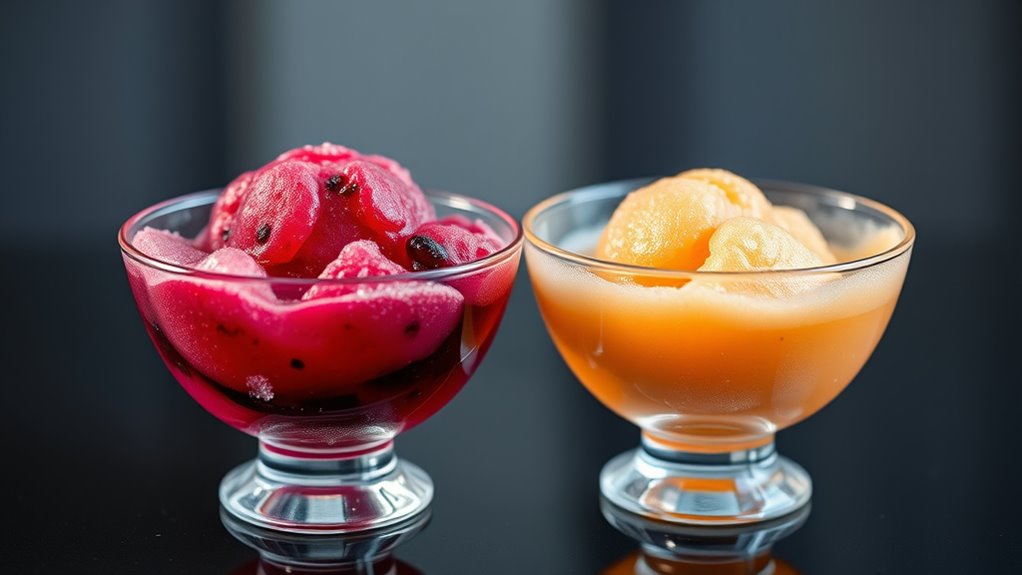
Ever wondered what sets sorbet apart from sherbet? While they both offer an invigorating, fruity experience, their differences run deeper than just ingredients. Sorbet is typically made from fruit juice or puree, combined with sugar and water, and churned into a smooth, icy treat. Sherbet, on the other hand, contains a small amount of dairy—usually milk or buttermilk—which gives it a creamier texture without the richness of ice cream. This subtle difference influences not only their flavor profiles but also how you might serve and enjoy them. The texture of each dessert plays a significant role in how they are perceived and enjoyed by different palates.
When it comes to flavor pairings, sorbet shines because of its intense fruitiness. Its clean, vibrant taste pairs beautifully with a variety of desserts and beverages. Think of serving lemon sorbet alongside a rich chocolate cake or pairing raspberry sorbet with a crisp prosecco. The sharp, tangy notes of sorbet can cut through heavier dishes, providing a lively contrast. Sherbet’s mild creaminess makes it versatile as well, but it often complements softer, more delicate flavors. For example, orange sherbet can be delightful with a slice of pound cake, or pineapple sherbet can serve as a cooling palate cleanser between courses.
Serving suggestions are equally important in showcasing these icy treats. Sorbet is perfect when served in a simple, elegant dish or a small bowl, especially after a meal, to cleanse the palate. Its pure fruit flavor makes it an excellent choice for a light, revitalizing dessert on a hot day. You can also elevate your presentation by serving sorbet in a champagne flute or atop a fruit tart. Sherbet, with its slight dairy content, lends itself well to more decorative presentations. It can be scooped into a sundae or used as a topping for fruit salads, adding a touch of creaminess and color. You might also consider using sherbet to make a creamy float by combining it with sparkling water or soda, creating a fun, fizzy treat.
In essence, your choice between sorbet and sherbet depends on the flavor experience you’re after. If you crave bold, pure fruit taste with a crisp finish, sorbet is your go-to. If you prefer a slightly richer, creamier texture that still keeps things light, sherbet will serve you well. Both can be beautifully incorporated into your dessert repertoire with the right flavor pairings and serving ideas, making each a versatile addition to any warm-weather gathering or casual treat.
As an affiliate, we earn on qualifying purchases.
Frequently Asked Questions
What Are the Health Benefits of Sorbet and Sherbet?
You might think sorbet and sherbet are just tasty treats, but they also offer some health benefits. Generally, they have lower calorie counts and less sugar content compared to ice cream, making them better options if you’re watching your intake. Plus, they often contain fruit, providing vitamins and antioxidants. Just keep an eye on portion sizes to enjoy these benefits without overdoing it!
How Do Sorbet and Sherbet Differ in Texture?
You’ll notice that sorbet and sherbet differ markedly in texture comparison. Sorbet has a smooth, icy, and often more granular texture because it’s made mainly from fruit juice or puree, with no dairy. Sherbet, however, contains a small amount of dairy or milk, giving it a creamier, slightly softer texture. The ingredient differences, especially the dairy content, directly influence how each treat feels when you enjoy it.
Are Sorbet and Sherbet Suitable for Vegans?
Oh, the irony—who knew that a sweet treat like sorbet or sherbet could be so inclusive? If you’re vegan or dairy-free, you’ll love that both are natural vegan alternatives, especially since sorbet is typically dairy-free. Sherbet usually contains a small amount of dairy, but many brands now offer vegan options. So yes, you can enjoy fruity, icy delights without compromising your dietary choices.
What Are Traditional Flavor Pairings for Each?
When exploring traditional flavor pairings for sorbet and sherbet, you’ll find delightful fruit combinations. For sorbet, classic fruit pairings include lemon with raspberry or mango with coconut, highlighting its intense fruit flavor. Sherbet often pairs citrus fruits with berry or peach accents, balancing sweetness with a hint of creaminess. These flavor combinations create invigorating desserts that showcase the natural flavors of the fruit, making each bite vibrant and satisfying.
How Long Do Homemade Sorbet and Sherbet Typically Last?
Ever wondered how long your homemade frozen treats stay fresh? Typically, sorbet and sherbet last about 1-2 weeks in your freezer if stored properly. Use airtight containers and proper freezing techniques to prevent ice crystals and flavor loss. For best quality, consume within this timeframe, but always check for freezer burn or off smells before enjoying. How you store them can make all the difference!
Conclusion
Now that you know their origins, you can see sorbet and sherbet as more than just fruity treats—they’re like the sun and the rainbow after a storm, each shining in its own way. Whether you crave the pure clarity of sorbet or the gentle warmth of sherbet, you hold the power to choose your colorful symbol of refreshment. So next time you indulge, remember: these icy cousins remind you that life’s sweetest moments come in vibrant, unexpected hues.
Halloween Picks
halloween
As an affiliate, we earn on qualifying purchases.