Before freezers, the ice trade was a crucial global industry. People harvested ice from frozen lakes and ponds in colder climates, carefully cutting and storing large blocks in insulated ice houses. This ice was then shipped worldwide, even to tropical colonies, enabling food preservation and trade long before modern refrigeration. As technology evolved, artificial ice production replaced natural harvesting. To uncover more about this fascinating industry’s history and impact, explore further details below.

Get baking supplies delivered free with Prime
- Fast, free delivery on millions of items
- Prime Video, Amazon Music and more included
- Member-only deals all year
Key Takeaways
- Historically, ice was harvested from natural frozen lakes and stored in insulated ice houses for long-term preservation.
- The ice trade developed extensively in the 19th century, shipping ice worldwide to tropical regions and urban centers.
- Traditional harvesting involved cutting large ice blocks and careful extraction to prevent damage, often requiring skilled labor.
- Innovations in artificial ice production and refrigeration eventually replaced natural harvesting, transforming the global ice industry.
- The ice trade played a crucial role in food preservation, transportation, and supporting industries before the advent of modern freezers.
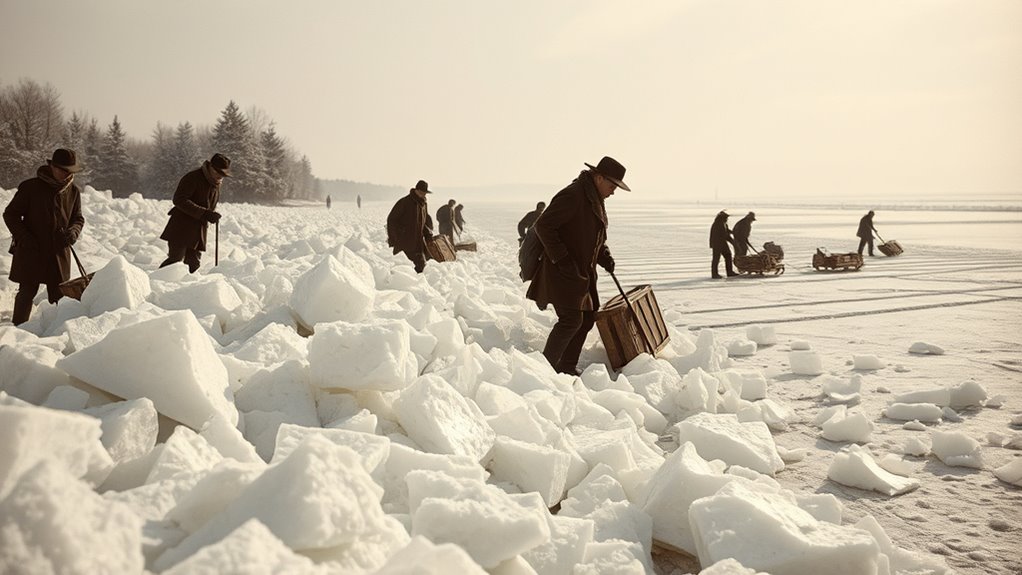
Have you ever wondered how ice was harvested before modern refrigeration? Long before the advent of electric freezers, people relied on traditional methods to gather and store ice, making it a crucial commodity for preserving food and transporting perishables. These historical techniques involved understanding the natural environment and using simple tools. In colder regions, workers would wait for winter to let lakes and ponds freeze solid. They then cut large blocks of ice from the surface using saws or chisels, carefully extracting chunks without damaging the surrounding ice. Once harvested, the ice blocks were stored in insulated ice houses—structures built with thick walls and packed with straw or sawdust to insulate against melting. These ice houses could keep ice intact for months, even into the summer, enabling trade and preservation far from the frozen lakes.
Before modern refrigeration, people harvested and stored ice from frozen lakes using simple tools and insulated ice houses.
In warmer climates, where natural freezing was less reliable, people devised creative methods to produce ice. In some cases, they’d use underground pits or specially designed cooling chambers to promote ice formation during winter, then store it for year-round use. This ingenuity allowed ice to become a traded commodity, especially in regions where natural ice was scarce. The trade of harvested ice grew into a significant industry, especially in places like the northeastern United States and parts of Europe, where ice was shipped across oceans to tropical colonies. The process was labor-intensive, requiring skilled workers to cut, transport, and store the ice efficiently. Understanding natural resources played a key role in the development of these early techniques.
Fast forward to today, and modern refrigeration has transformed how we handle ice. Instead of relying solely on natural freezing or manual harvesting, we now produce ice in controlled environments, making it instantly available whenever needed. Commercial ice machines and refrigeration units allow for quick, consistent ice production, eliminating the need for large storage areas or seasonal harvesting. This technological shift has drastically reduced the labor involved and expanded the global trade of ice and ice-related products. Now, ice is a standard commodity, used everywhere from restaurants and hospitals to transportation and entertainment industries.
Despite these advances, the history of ice harvesting reminds us of human ingenuity and the importance of natural resources long before modern technology. You can appreciate how past societies understood and manipulated their environment to meet their needs, laying the groundwork for today’s sophisticated refrigeration systems. The shift from natural ice and simple tools to the high-tech processes we use now showcases a remarkable evolution—one driven by necessity, innovation, and the desire to preserve and share the simple, yet crucial, resource of ice.
As an affiliate, we earn on qualifying purchases.
Frequently Asked Questions
How Did Ice Trade Influence Global Economic Development?
The ice trade boosted global economic development by expanding markets and creating jobs, especially in colder regions. As climate change affected local supplies, demand grew internationally, fostering trade routes and industries. You’d see how ice held cultural significance, too, as it preserved food and shaped social customs. This trade’s growth interconnected economies, paving the way for modern refrigeration, and highlighting how technological advancements can influence global commerce and cultural practices.
What Were the Main Tools Used by Early Ice Harvesters?
You use simple tools and techniques for ice harvesting, mainly an axe, saw, and shovels, to carefully cut and pry the ice from frozen lakes. Harvesting methods involve selecting thick ice, scoring it in sections, and then lifting it out with sledges or carts. These tools and techniques allowed early ice harvesters to efficiently collect large blocks of ice, essential for trade and storage before refrigeration technology improved.
How Was Ice Transported Before Refrigeration Technology?
A wise man once said, “Necessity is the mother of invention.” Before refrigeration tech, you’d transport ice by carefully harvesting it using traditional techniques like cutting and packing it in sawdust or straw for insulation. You’d store it in icehouses, which kept it cold longer. This method relied on ice storage and skilled harvesting techniques to keep ice intact during long journeys, ensuring it reached markets far and wide.
Did Ice Harvesting Have Environmental Impacts?
Yes, ice harvesting impacted the environment by contributing to climate change and ecosystem disruption. When you harvest large quantities of ice from lakes and rivers, you’re removing significant natural resources that help regulate local temperatures and support aquatic life. This activity can accelerate climate change by reducing reflective ice surfaces and disturb ecosystems, leading to habitat loss and altered water cycles, ultimately harming the environment you’re trying to utilize sustainably.
Which Countries Were the Leading Exporters of Harvested Ice?
You should know that the leading exporters of harvested ice were primarily the United States, Canada, and parts of Europe. These countries relied on ice storage to maintain supply, which influenced ice pricing. Their advanced harvesting techniques allowed them to produce and export large quantities, meeting global demand. If you’re interested in historical trade patterns, understanding these key players helps explain how ice was distributed worldwide before modern refrigeration.
Conclusion
You can see how ice harvesting once shaped global trade like a frozen river flowing through history. Before freezers, this chilly industry kept food fresh and markets thriving across continents. It’s a reminder that innovations often melt into the background, quietly powering progress. So, next time you reach for ice, think of the icy giants who carved a path through time, turning frozen water into a essential trade wind that fueled the world’s growth.
Halloween Picks
halloween
As an affiliate, we earn on qualifying purchases.