TL;DR

Get baking supplies delivered free with Prime
- Fast, free delivery on millions of items
- Prime Video, Amazon Music and more included
- Member-only deals all year
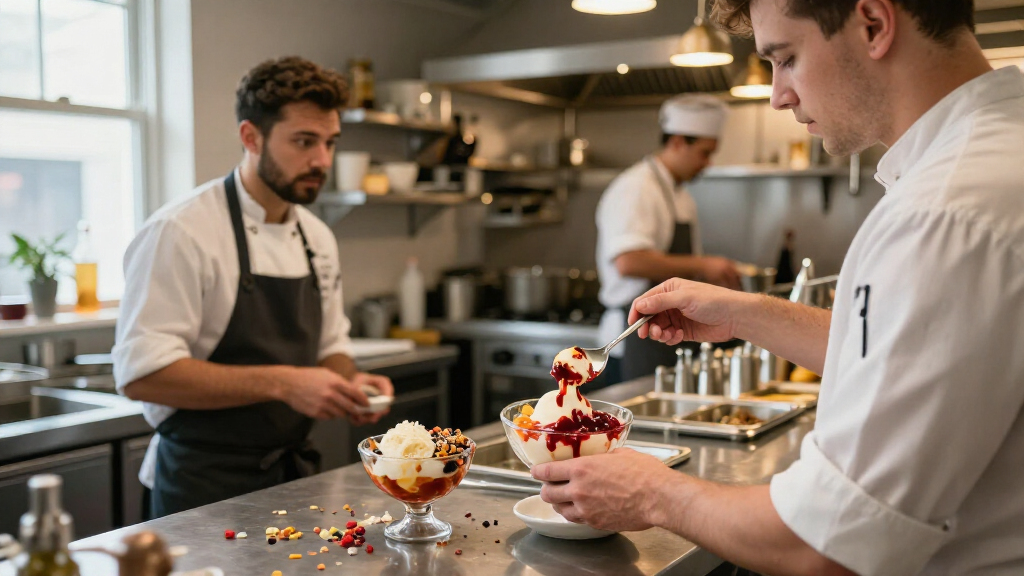
VinePair published accounts from 10 chefs about unusual customer requests, including deep-fried steaks, a well-done steak tartare and a sandwich prepared without frying. The recollections show how kitchens handle requests that range from personal preferences to modifications that may be impractical or conflict with a dish’s usual preparation.
VinePair has published a collection of 10 chefs’ accounts of unusual restaurant modification requests, including marshmallow fluff on steak, a steak tartare requested well-done and an oyster mushroom sandwich prepared without frying. The report records chefs’ recollections rather than independently documented customer orders, offering a look at the unusual demands that can reach a restaurant kitchen and the limits of accommodating them.
The examples range from combinations that chefs found strange to requests that presented practical challenges. Mark Bucher, co-owner of Medium Rare, recalled a family bringing marshmallow fluff and asking staff to put it on the children’s food, including steak, fries and salad. He also described customers asking for steak cooked in a deep fryer. Those are Bucher’s accounts as presented by VinePair; the article does not identify when the incidents happened.
Other chefs described attempts to alter dishes while keeping their defining ingredients or preparation. Adam Plitt, executive chef of Delmonico’s Hospitality Group, said a guest asked for steak tartare to be cooked well-done. He told VinePair the team tried to capture the dish’s flavors, while noting that cooking the meat changes what the dish traditionally is. Haley Duren, executive chef of Long Count, recalled a customer who wanted a fried oyster mushroom sandwich with no fried components. Duren said the kitchen roasted the ingredients instead, taking about 30 minutes rather than the usual less-than-three-minute preparation.
The roundup also includes requests shaped by allergies, preferences and exact specifications. Clinton Snowling of Parched Hospitality Group recalled a customer who asked to inspect ingredient packaging because of stated citrus and greens allergies, while requesting a ribeye-ground burger and a salad instead of fries. Aarthi Sampath of Drāvida said her kitchen accommodated a guest who avoided ginger, garlic, onion and cilantro by preparing dishes from scratch and using leeks in place of onions. Mikey Miller recalled a guest who wanted one flat iron steak half rare and half well-done, but did not want it cut in half.
When Custom Orders Test a Kitchen
The stories illustrate the difference between a straightforward preference and an order that changes a dish’s identity, adds substantial preparation time or raises questions about what a kitchen can safely serve. A request to remove an ingredient may be manageable; asking for raw-style tartare cooked through or for a fried sandwich with no frying can require a different preparation altogether. The chefs’ accounts show that accommodating customers can involve more than simply passing a change to the cook.
For diners, the practical takeaway is that a restaurant may not be able to honor every modification, especially when allergies are involved or a requested dish depends on a specific method. Snowling’s account describes a kitchen trying multiple ways to respond to a customer’s stated allergies before saying some requests could not be fulfilled safely or reasonably. The roundup does not establish a general policy for restaurants, but it makes clear that chefs may have to weigh a guest’s wishes against ingredients, equipment, timing and food safety.
As an affiliate, we earn on qualifying purchases.
VinePair frames the article around the routine role of modifications in restaurant service. It notes that guests commonly ask for changes such as a different burger temperature or onions removed from a salad, and that staff also need to flag allergies and meet other practical needs. The 10 accounts are presented as exceptions that chefs remembered because they were especially unusual.
The examples span different kinds of restaurants and approaches to cooking. Some involved combining existing menu items, such as the guest at Millstone who asked for a smoked prime rib sandwich and farmhouse salad to be chopped together and dressed with horseradish aioli. Others changed a core component or method, including deep-frying a steak or preparing a normally fried sandwich without frying. VinePair’s material is a collection of chef interviews, not a survey of restaurants or a record of how often such requests occur.
““We did it, and it was the most disgusting thing I’ve ever seen.””
— Mark Bucher, co-owner of Medium Rare
What the Anecdotes Do Not Establish
VinePair’s report is based on chefs’ recollections, and it does not provide dates, customer identities or independent verification for the individual incidents. The source also does not say whether the restaurants still serve the dishes described, whether the customers ultimately ate them, or how frequently similar requests occur across the industry. Several accounts are excerpts, and the supplied material ends partway through another chef’s response about an egg-white omelet, so that example’s full context is unavailable here.
The stories should not be read as evidence that diners’ unusual requests are generally unsafe or unreasonable. In the allergy account, Snowling relayed the customer’s stated allergies and the kitchen’s efforts; the report does not independently verify the allergies or explain the restaurant’s ingredient-handling procedures. Beyond the individual anecdotes, the material offers no broader data about allergy practices, kitchen workload or customer behavior.
No Follow-Up Is Specified
The source presents the chefs’ stories as a roundup and does not announce a policy change, investigation or scheduled follow-up. The next step for readers is to treat the examples as individual recollections, not as a measure of how common such orders are. For diners requesting changes, the accounts suggest stating allergies clearly and asking staff what the kitchen can prepare, while recognizing that a restaurant may decline a modification it cannot safely or practically make.
Key Questions
What is the news in this report?
VinePair published a roundup of 10 chefs’ recollections about unusually specific or challenging restaurant modification requests. It is a report of anecdotes, not a new restaurant rule or industry survey.
What were some of the strangest requests?
The chefs recalled requests including marshmallow fluff on steak and salad, a steak cooked in a deep fryer, well-done steak tartare, and a fried oyster mushroom sandwich made without frying.
Did the kitchens accommodate the requests?
Some chefs said they tried to accommodate them. Aarthi Sampath described preparing dishes without ginger, garlic, onion or cilantro, while Haley Duren said her kitchen roasted the ingredients for a sandwich a customer wanted without fried food. The accounts also include requests that chefs said they could not safely or reasonably fulfill.
Does the article show how common these requests are?
No. The report shares 10 chefs’ individual recollections and gives no industry-wide data, frequency estimates or comparison with ordinary customer modifications.
Source: rss
Halloween Picks
halloween
As an affiliate, we earn on qualifying purchases.