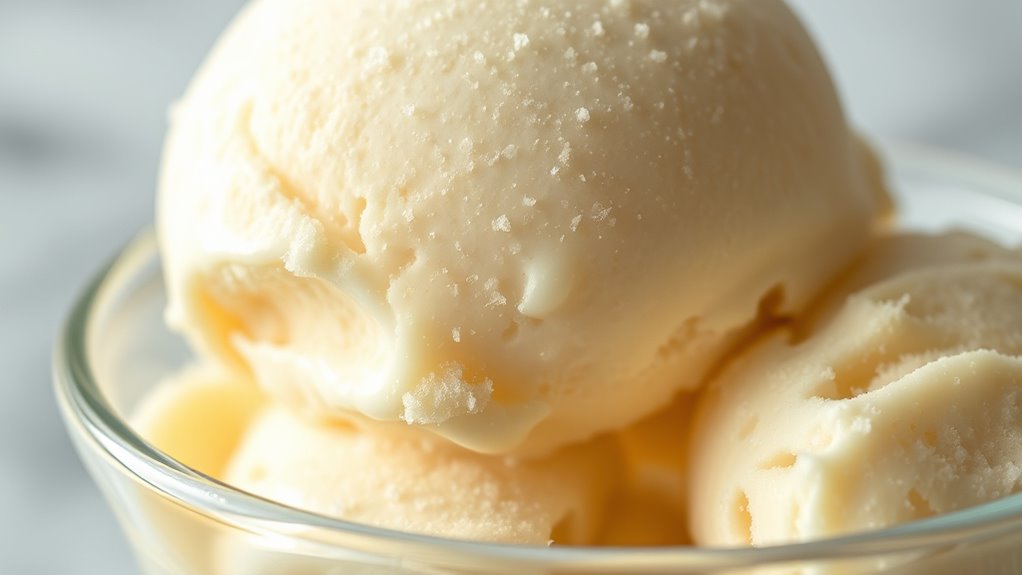

Sugar keeps ice cream soft by lowering its freezing point through a process called freezing point depression. When you add sugar, it disrupts water molecules from forming large ice crystals, resulting in a smoother, velvety texture. This prevents the ice cream from becoming too hard or icy, ensuring it stays scoopable for longer. If you want to discover more about how precise sugar levels influence perfect ice cream, keep exploring these fascinating science principles.
Key Takeaways
- Sugar lowers the water’s freezing point in ice cream through freezing point depression.
- It disrupts ice crystal formation, resulting in smaller, smoother crystals for a softer texture.
- By interfering with water molecules, sugar prevents large, gritty ice crystals from forming.
- Proper sugar levels maintain scoopability and prevent ice cream from becoming overly hard or icy.
- Sugar’s impact on freezing point helps keep ice cream semi-liquid and pleasant to eat after freezing.
Have you ever wondered what sugar does to your body? Well, in the world of ice cream, sugar plays a vital role beyond just adding sweetness. It influences the texture and how soft or firm your favorite frozen treat remains. When you take a bite of ice cream, your taste buds experience sweetness perception, which is partly affected by the amount of sugar present. But there’s more happening beneath the surface: sugar’s ability to depress the freezing point of water is key to keeping ice cream smooth and scoopable.
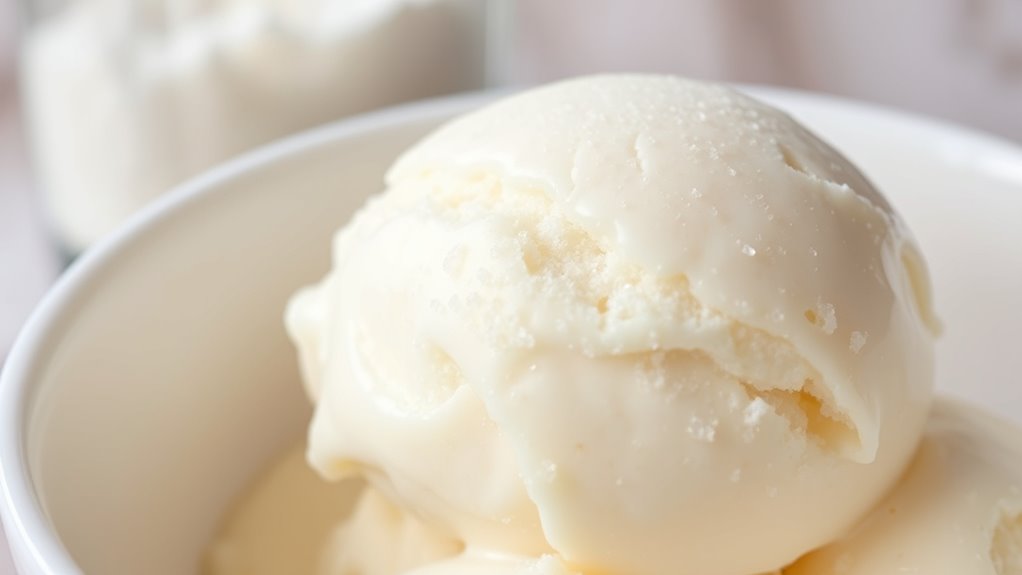
At the molecular level, sugar interferes with the formation of ice crystals. Normally, when water freezes, it forms a solid structure through sugar crystallization, which can lead to a gritty or icy texture. However, when you add sugar to the mixture, it reduces the likelihood of these large ice crystals forming. This process, known as freezing point depression, occurs because sugar molecules disrupt the orderly arrangement of water molecules trying to freeze. As a result, the mixture remains semi-liquid at temperatures where pure water would be solid. This is why ice cream stays soft and easy to scoop, even after being frozen for hours.
Sugar disrupts ice crystal formation, keeping ice cream smooth and scoopable through freezing point depression.
Understanding how sugar crystallization influences the texture is essential. When the sugar concentration is just right, it prevents the growth of large ice crystals that create a coarse mouthfeel. Instead, the crystals that do form are tiny, giving your ice cream that smooth, velvety consistency you love. The key is balancing sugar content: too little, and the ice cream becomes icy and hard; too much, and it can become overly sweet or overly soft. This delicate balance ensures that your ice cream maintains that perfect scoopability over time.
Additionally, sugar’s impact on sweetness perception is quite significant. The more sugar you add, the more your taste buds perceive sweetness, which can sometimes mask subtle flavors in the ice cream. But beyond flavor, sugar’s role in controlling crystallization and freezing point depression is what truly defines the texture. It’s a clever chemical trick that keeps your frozen dessert from turning into a solid block of ice. Recognizing the scientific principles behind this process helps in crafting the ideal ice cream texture.
Frequently Asked Questions
How Does Sugar Affect Ice Cream’s Texture Over Time?
You wonder how sugar impacts ice cream’s texture over time. As you store it, sugar helps prevent sugar crystallization, which can make ice cream gritty. It also maintains texture stability by lowering the freezing point, keeping the ice cream smooth and soft. Without enough sugar, ice crystals grow larger, making the ice cream less creamy. So, sugar plays a crucial role in preserving that desirable, velvety consistency you enjoy.
Can Alternative Sweeteners Mimic Sugar’S Freezing Point Depression?
They say, “Imitation is the sincerest form of flattery,” and it’s true with sweeteners. You can use alternative sweeteners to mimic sugar’s effect on freezing point, but not all do it equally. Some, like erythritol, lower the freezing point similarly, keeping ice cream soft. Others may not, resulting in a different texture. So, choose your sweetener wisely if you want that perfect, creamy consistency.
Does Sugar Impact the Nutritional Value of Ice Cream?
You might wonder if sugar affects ice cream’s nutritional value. While sugar adds sweetness, it also influences the nutritional content by increasing calories and offering little in terms of health benefits. Consuming too much sugar can have negative health implications, like weight gain and increased risk of chronic diseases. So, yes, sugar impacts both the nutritional profile and potential health effects of ice cream, making moderation important.
How Does Sugar Concentration Influence Ice Cream Hardness?
Imagine a fortress where sugar acts like a master builder, softening the walls. As you increase sugar concentration, sugar viscosity rises, like thickening mortar, which modulates the freezing point. This freezing point modulation prevents ice crystals from forming hard, jagged walls, keeping your ice cream soft. So, higher sugar levels mean less rigidity, making your treat smoother and more enjoyable with each scoop.
Are There Health Risks Associated With High Sugar Levels in Ice Cream?
You might wonder if high sugar levels in ice cream pose health concerns. Consuming too much sugar can lead to issues like weight gain, increased risk of diabetes, and dental problems. To manage your sugar intake, enjoy ice cream in moderation and choose options with lower sugar content when possible. Being mindful of your overall diet helps reduce health risks associated with excessive sugar consumption.
Conclusion
Think of sugar as the magic wand that keeps ice cream soft, turning a frozen block into a creamy dream. By lowering the freezing point, sugar gently whispers to ice crystals to stay small and soft, so you get that perfect scoop every time. Without sugar’s secret touch, your favorite treat would be as hard as a rock. So next time you enjoy ice cream, remember it’s sugar’s quiet magic making every bite delightfully smooth.