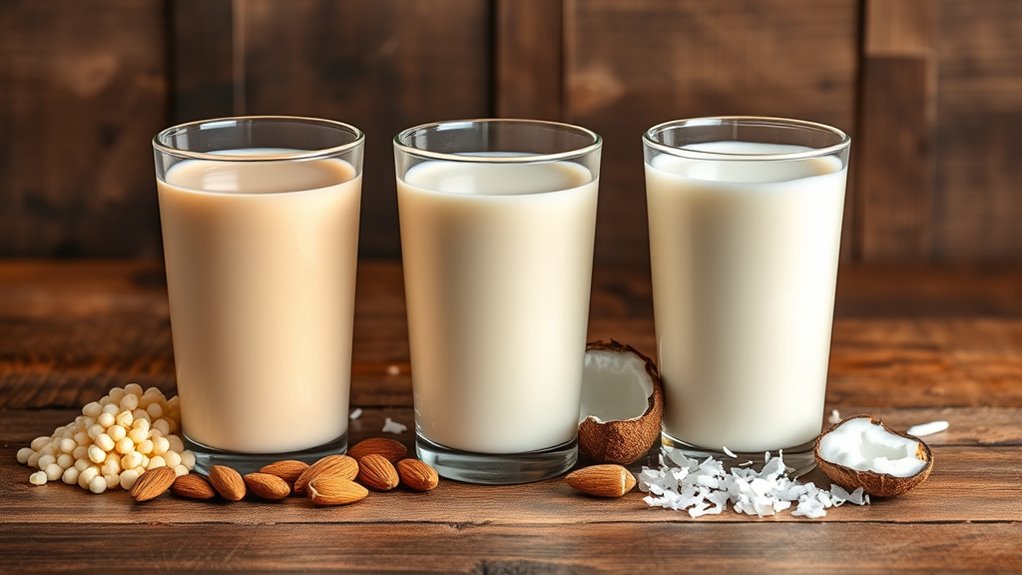

If you compare soy, almond, and coconut bases, you’ll find that soy provides a complete protein with essential amino acids, making it ideal for muscle support and satiety. Almond offers healthy fats and moderate protein, great for heart health, while coconut supplies mostly healthy fats with lower protein. Each base has unique benefits and potential allergens. Keep exploring to discover which suits your dietary needs and preferences best.

Get baking supplies delivered free — and shop member deals
- Fast, free delivery on millions of items
- Access to Prime Big Deal Days deals on October 6–7
- Prime Video, Amazon Music and more included
Key Takeaways
- Soy provides a complete protein with all essential amino acids, supporting muscle health and satiety.
- Almond protein offers healthy monounsaturated fats and flavor but lacks complete amino acids, requiring blending.
- Coconut proteins are lower in protein, mainly adding healthy fats and subtle sweetness, suitable for allergen-sensitive individuals.
- Soy and almond allergens may restrict use for sensitive individuals, while coconut is generally hypoallergenic.
- Selection depends on nutritional goals, allergen considerations, and taste preferences, with soy ideal for high protein needs.
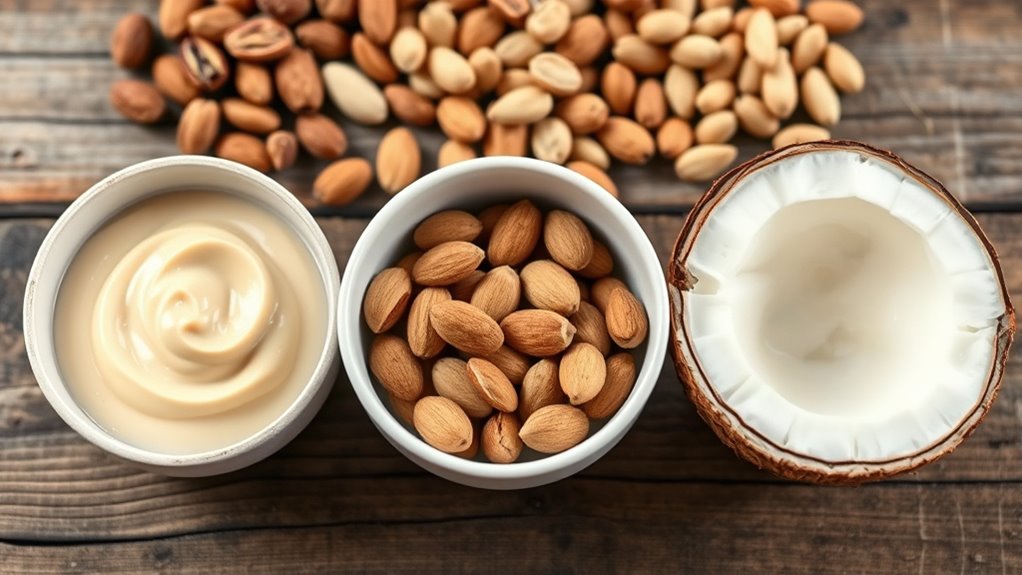
Plant protein bases are transforming the way we think about nutrition and sustainable eating. When choosing between soy, almond, and coconut bases, it’s essential to understand their nutritional profiles and allergen considerations. Each offers unique benefits and challenges, so your choice depends on your dietary needs and health priorities.
Soy protein is widely recognized for its impressive nutritional profile. It’s a complete protein, meaning it contains all nine essential amino acids your body needs, making it an excellent option for plant-based diets. Soy also provides a good amount of fiber, vitamins, and minerals like iron and calcium. Its high protein content supports muscle maintenance and satiety, helping you feel full longer. However, allergen considerations are vital here. Soy is one of the most common food allergens, especially for children, and can cause reactions ranging from mild discomfort to severe allergic responses. If you have soy allergies or sensitivities, this base isn’t suitable, and you should look for alternatives.
Soy protein offers a complete amino acid profile and essential nutrients but poses allergen risks for sensitive individuals.
Almond-based plant proteins bring a different set of advantages. They’re known for their rich flavor and healthy fat content, primarily monounsaturated fats that support heart health. Almond protein is often lower in calories compared to soy, making it appealing if you’re watching your intake. While they don’t provide a complete amino acid profile, combining almond protein with other plant proteins can help fill in nutritional gaps. From an allergen standpoint, almonds are a common allergen as well, particularly for those with tree nut allergies. If you have nut sensitivities or allergies, almond-based proteins could pose risks, and you should be cautious or opt for nut-free options.
Coconut-based plant proteins are gaining popularity for their unique flavor and ease of digestion. They’re generally lower in protein than soy or almonds but can add valuable healthy fats and a subtle sweetness to your meals. Coconut proteins are also prized for being hypoallergenic, making them a good choice for those with nut or legume allergies. Their nutritional profile is more about fats and calories, with less emphasis on protein content. If you’re seeking a plant protein that’s gentle on allergies and adds flavor, coconut bases are worth considering. However, if your focus is on high protein intake, they might need to be supplemented with other sources.
plant-based protein powder soy almond coconut
As an affiliate, we earn on qualifying purchases.
As an affiliate, we earn on qualifying purchases.
Frequently Asked Questions
Which Plant Base Has the Highest Protein Content per Serving?
You’ll find soy-based products have the highest protein density per serving, making them a great choice if you want more protein in your diet. With a typical serving size, soy provides markedly more protein compared to almond or coconut bases. This means you get a more substantial protein boost for your nutritional needs. If maximizing protein intake is your goal, soy-based options are your best bet for a satisfying, nutritious serving.
Are There Any Allergens Specific to Soy, Almond, or Coconut Bases?
Yes, each base has specific allergens you should be aware of. If you have a soy allergy, avoid soy-based products, as they can trigger severe reactions. Almond sensitivity means you should steer clear of almond-based options, which could cause allergic responses. Coconut allergies are less common but still possible. Always check labels and consult with a healthcare professional if you’re uncertain, to prevent any allergic reactions.
How Do Plant Bases Impact Environmental Sustainability?
Imagine lush fields thriving with sustainable farming practices, where water conservation efforts guarantee minimal waste. Plant bases like soy, almond, and coconut greatly reduce environmental impact compared to animal products. They require less land, produce fewer greenhouse gases, and conserve water. By choosing these options, you support eco-friendly agriculture, helping combat climate change and preserve natural resources for future generations. Your choices directly influence a healthier planet.
Can Plant-Based Proteins Be Used in Baking and Cooking?
Yes, plant-based proteins are highly versatile in baking and cooking. You can easily incorporate them into recipes, enhancing flavor integration and texture. Use soy, almond, or coconut-based proteins to create dairy-free milks, meat substitutes, or protein-rich baked goods. Their adaptability allows you to experiment with different dishes, making your meals nutritious and delicious. With plant-based versatility, you can seamlessly replace traditional ingredients without sacrificing taste or quality.
What Are the Best Storage Methods for Plant Protein Products?
To maximize shelf life, store your plant protein products in airtight containers in a cool, dry place away from sunlight. Proper storage prevents moisture and heat from degrading quality. Use resealable storage containers or glass jars to keep out air and contaminants. Check labels for specific shelf life recommendations, and always reseal tightly after each use. This way, your plant proteins stay fresh and maintain their nutritional value longer.
Conclusion
When choosing between soy, almond, and coconut bases, remember no one size fits all. Each brings unique benefits and flavors to the table, so pick what suits your taste and needs best. Don’t put all your eggs in one basket—try different options to see what works best for you. By exploring these plant proteins, you can find your perfect match and stay ahead of the game in making healthier, more sustainable choices.
Fall Picks
fall essentials
As an affiliate, we earn on qualifying purchases.