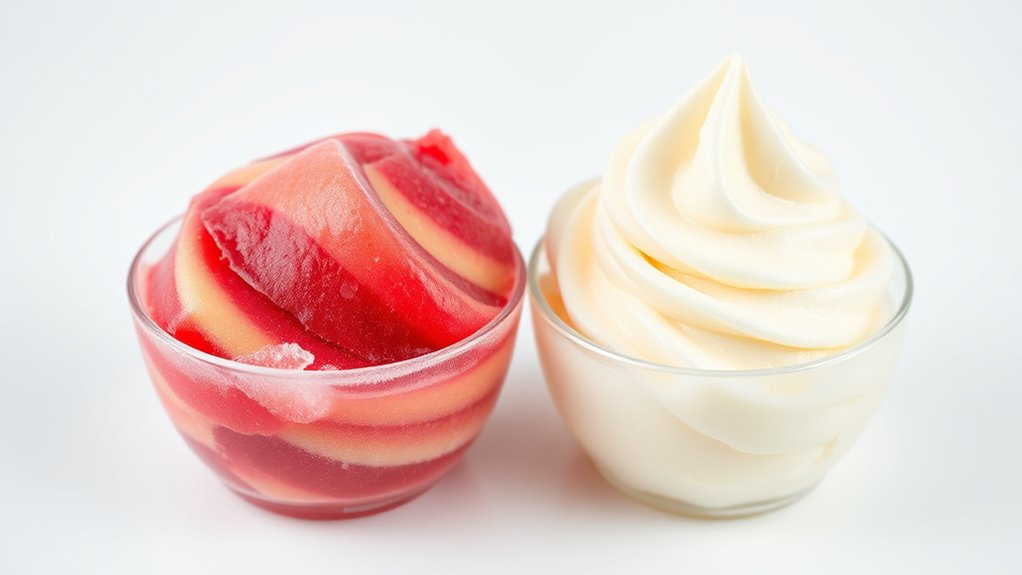

When choosing between natural and synthetic colors for frozen desserts, you’ll find that natural pigments tend to fade or shift more quickly, especially over time, due to sensitivity to light, oxygen, and temperature changes. Synthetic dyes are formulated for better stability, keeping vibrant colors longer during storage. To maintain an appealing look, proper storage is key for both types. If you want to discover tips for preserving color and ensuring your desserts look their best, keep exploring more.

Get baking supplies delivered free — and shop member deals
- Fast, free delivery on millions of items
- Access to Prime Big Deal Days deals on October 6–7
- Prime Video, Amazon Music and more included
Key Takeaways
- Natural pigments degrade over time due to light, oxygen, and temperature, causing colors to fade or shift in frozen desserts.
- Synthetic dyes are formulated for enhanced stability, maintaining vibrant colors longer during storage.
- Proper storage conditions, such as sealing and temperature control, significantly improve color retention for both natural and synthetic pigments.
- Natural colors tend to be less stable and more prone to fading than synthetic dyes in frozen desserts.
- The choice between natural and synthetic pigments depends on balancing natural ingredient appeal with desired color longevity.
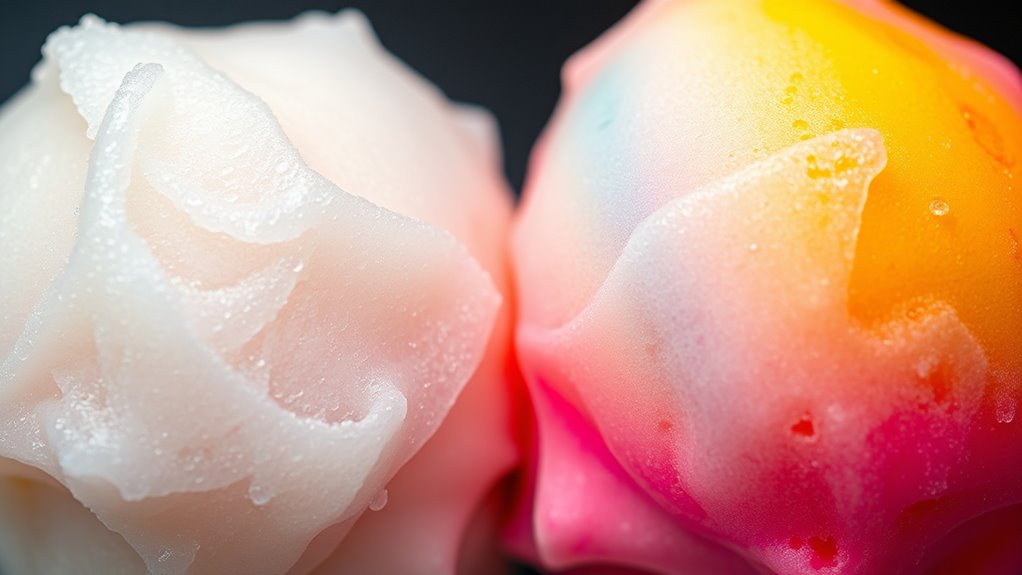
Frozen desserts are popular treats, but maintaining their vibrant colors can be challenging. When you’re serving a beautifully colored ice cream or sorbet, you want that bright hue to stay intact from the moment it leaves the freezer until it reaches your mouth. Unfortunately, color stability isn’t guaranteed, especially when it comes to natural pigments versus synthetic dyes. Understanding how these pigments behave during freezing, storage, and serving can help you choose the best options for appealing desserts.
Natural pigments, derived from fruits, vegetables, and other plant sources, tend to be less stable than their synthetic counterparts. Over time, you’ll notice natural pigment degradation, which causes the colors to fade or shift. This process happens because natural dyes are sensitive to factors like light, oxygen, and temperature fluctuations. When exposed to these elements, the pigment molecules break down, leading to duller, less vibrant colors. For example, anthocyanins from berries may turn dull or brownish after prolonged storage, and chlorophyll can fade or develop an unappetizing hue. This degradation isn’t usually immediate but occurs gradually, especially if the frozen desserts aren’t stored properly or are exposed to temperature fluctuations during transport and display.
Natural pigments in frozen desserts fade or shift over time due to sensitivity to light, oxygen, and temperature changes.
On the other hand, synthetic dyes are formulated to be more resistant to environmental factors. They tend to maintain their brightness longer because they’re designed with stability in mind. Synthetic dye fading isn’t as rapid or pronounced as natural pigment degradation. When you see a brightly colored popsicle or gelato that stays vivid over weeks or even months, it’s often because synthetic dyes are holding up better against the rigors of freezing and storage. However, it’s important to note that synthetic dyes can still fade over an extended period, especially if the product is repeatedly thawed and refrozen or exposed to light. While they generally outperform natural pigments in terms of longevity, they aren’t invincible.
Ultimately, your choice between natural and synthetic colors in frozen desserts depends on your priorities. If you value natural, wholesome ingredients, you might accept some color fading over time. But if you want consistently vibrant presentations, synthetic dyes are more reliable. Keep in mind that proper storage—keeping desserts sealed, away from light, and at stable temperatures—can help minimize both natural pigment degradation and synthetic dye fading. By understanding these processes, you can better preserve the visual appeal of your frozen treats, ensuring they look as good as they taste.
natural food colorings for frozen desserts
As an affiliate, we earn on qualifying purchases.
As an affiliate, we earn on qualifying purchases.
Frequently Asked Questions
How Do Storage Temperatures Affect Color Stability Over Time?
You’ll notice that storage temperatures greatly impact color stability over time. When temperatures fluctuate, it causes ice crystal formation and color degradation, especially during extended storage duration. Keeping your frozen desserts at a consistent, ideal temperature minimizes these effects, preserving vibrant colors longer. Avoiding temperature swings helps maintain the visual appeal, ensuring your desserts look fresh and appealing even after prolonged storage.
Can Consumer Exposure to Light Impact Frozen Dessert Colors?
Light exposure can dramatically impact frozen dessert colors, making them look dull or faded instantly. You might think your eyes are deceiving you, but it’s true—bright lights can alter consumer perception by diminishing vibrant hues. If you want your frozen treats to look irresistible, keep them away from direct light. Protecting their color stability guarantees customers see a fresh, appealing product, boosting your sales and reputation.
Are There Any Additives That Enhance Natural Color Longevity?
Yes, certain additives can improve natural dye stability, helping your frozen desserts maintain vibrant colors longer. Antioxidants like ascorbic acid and citric acid protect natural pigments from degradation, enhancing their longevity. While synthetic dyes already have strong longevity, these natural additives boost their stability. By adding these ingredients, you can guarantee your frozen desserts stay visually appealing through storage and shelf life, making them more attractive to consumers.
How Does Packaging Influence Color Retention in Frozen Desserts?
Like a shield protecting its treasure, packaging design plays a crucial role in color retention. You’ll want to choose materials with low permeability to prevent moisture and air from reaching the dessert, which can cause fading or discoloration. Proper packaging minimizes exposure to light and environmental factors, helping your frozen treats stay vibrant longer. So, opt for sealed, high-quality materials to keep your dessert’s color fresh and appealing.
What Are the Sensory Implications of Color Changes in Desserts?
When color changes occur in your dessert, your perception of flavor can be affected, making it seem less fresh or appealing. You might notice texture alterations, like a grainy or mushy feel, which further impacts your overall enjoyment. These visual cues influence your expectations, and if the color isn’t appealing, it can diminish your perceived quality, even if the taste remains unchanged. Color stability is key to a satisfying sensory experience.
Conclusion
When it comes to color stability in frozen desserts, choosing between natural and synthetic colorants depends on your priorities. Natural options may be more delicate, but they often appeal to health-conscious consumers. Synthetic colors tend to be more vibrant and durable, though some worry about additives. Ultimately, you’ll want to find a balance that works for your product and brand. Remember, the proof is in the pudding—so test and see what best suits your needs!
Fall Picks
fall essentials
As an affiliate, we earn on qualifying purchases.