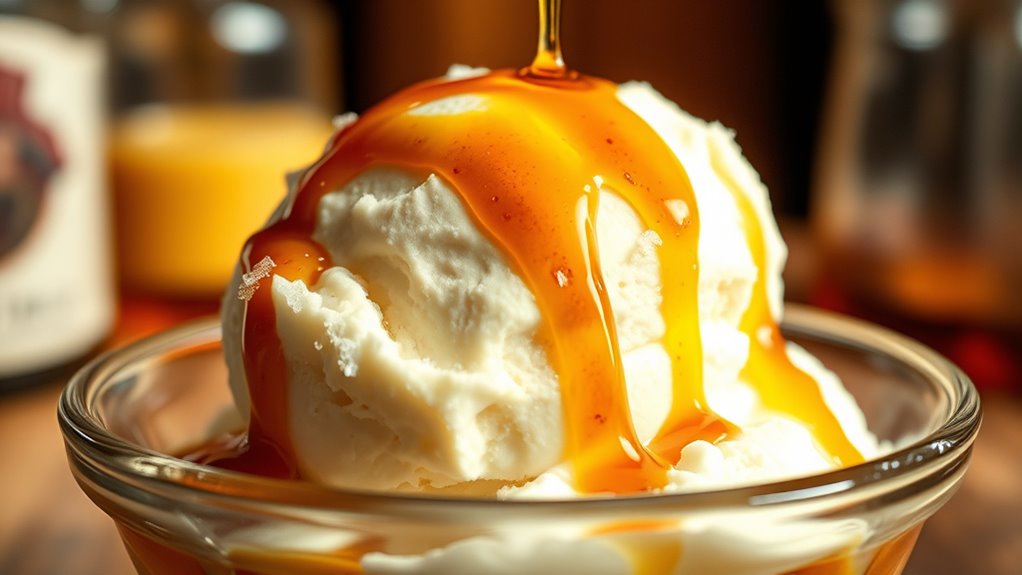
Adding alcohol to ice cream boosts its flavor and creates a more adult, aromatic treat, but it also lowers the freezing point, making your ice cream softer and easier to scoop. Using just a small amount, around 1-2 ounces per quart, helps balance flavor with texture, preventing it from becoming too soft or icy. Different spirits vary in how much they depress freezing, so understanding these effects helps you get the perfect balance—if you keep exploring, you’ll learn how to master this tasty tradeoff.

Get baking supplies delivered free — and shop member deals
- Fast, free delivery on millions of items
- Access to Prime Big Deal Days deals on October 6–7
- Prime Video, Amazon Music and more included
Key Takeaways
- Alcohol enhances flavor and adds aromatic complexity, creating a more adult-oriented ice cream experience.
- It depresses the freezing point, resulting in softer, scoopable texture even at colder temperatures.
- Using 1-2 ounces per quart balances flavor enhancement with maintaining proper freezing and texture.
- Different alcohol types and proof levels influence how much the freezing point is lowered and the final consistency.
- Excessive alcohol can prevent proper freezing, leading to overly soft or semi-liquid ice cream, so moderation is key.

Have you ever wondered why some ice creams contain alcohol? It’s all about enhancing flavor and adding a unique twist to your favorite frozen treat. When you infuse alcohol into ice cream, you’re essentially doing an alcohol infusion, which can intensify flavors and introduce new aromatic layers. However, adding alcohol isn’t as simple as mixing a splash into your base. Alcohol has a significant impact on the freezing point of the mixture. Unlike water, which freezes at 32°F (0°C), alcohol lowers the freezing point of the ice cream, making it softer and creamier even at colder temperatures. This is why alcohol-infused ice creams tend to be less hard and more scoopable straight out of the freezer.
Alcohol lowers the freezing point, making ice cream softer and more scoopable straight from the freezer.
That reduction in the freezing point means you can enjoy a luscious, smooth texture without it turning rock solid. But it also presents a challenge: if you add too much alcohol, the mixture might not freeze properly at all. You risk ending up with a semi-liquid dessert that’s more like a gel or sorbet rather than traditional ice cream. To get the perfect balance, you need to carefully control how much alcohol you incorporate. Usually, a small amount—around 1 to 2 ounces per quart—is enough to impart flavor without compromising the freezing process. By doing this, you retain that ideal scoopability and creamy texture that makes ice cream so appealing.
Another key factor to *ponder* is the type of alcohol you choose. Liquors like rum, whiskey, or liqueurs like Grand Marnier or Baileys can bring complex flavors, but they also contain different levels of alcohol content, which affects how much you can add. The higher the alcohol percentage, the more it will depress the freezing point. So, if you’re aiming for a rich, boozy flavor without sacrificing texture, stick to lower-proof spirits or adjust the amount accordingly. Additionally, understanding the freezing point depression caused by alcohol helps you better predict the outcome of your ice cream.
Ultimately, adding alcohol to ice cream is a balancing act. You want to infuse your dessert with distinctive flavors, but you also need to respect the science behind freezing point depression. Too much alcohol and your ice cream may stay too soft or not freeze properly; too little, and the flavor won’t shine through. When done right, alcohol infusion creates a decadent, adult-only treat that’s perfectly scoopable and packed with flavor. Just remember, moderation is key to achieving that ideal harmony between taste and texture.
alcohol infusion ice cream maker
As an affiliate, we earn on qualifying purchases.
As an affiliate, we earn on qualifying purchases.
Frequently Asked Questions
Can Children Safely Eat Alcohol-Infused Ice Cream?
Children should not eat alcohol-infused ice cream because it poses safety concerns related to children safety and alcohol consumption. Even small amounts of alcohol can affect children differently, and accidental ingestion can lead to health risks. As a parent or caregiver, you need to be cautious and make sure that ice cream or other treats containing alcohol are kept out of reach. Prioritize safe options that avoid any risk of alcohol exposure for children.
How Does Alcohol Affect Ice Cream’s Texture and Consistency?
Sure, adding alcohol to ice cream is like inviting a mischievous guest who loves to shake things up. It lowers alcohol viscosity, making your dessert feel a bit more liquid than usual, and it also interferes with ice crystal formation. As a result, your ice cream might turn out softer, smoother, and less icy, but beware—too much can make it slushier than a beach drink, compromising that perfect scoop.
Are There Legal Restrictions on Selling Alcoholic Ice Cream?
Yes, there are legal restrictions on selling alcoholic ice cream. You need to conform to legal regulations that govern alcohol sales, which often include licensing requirements. You must obtain appropriate permits and licenses from local or state authorities before selling alcoholic ice cream. These regulations ensure you follow proper alcohol handling and sales procedures, so check your local laws to avoid penalties and ensure your product is legally sold.
What Types of Alcohol Are Best for Flavor and Stability?
Imagine your taste buds as travelers on a flavorful journey—choose the right alcohol for a smooth ride. Opt for liqueur pairings like Baileys or Grand Marnier, which offer excellent alcohol stability and rich flavor. These spirits blend well without compromising texture or freezing quality. Their moderate alcohol content guarantees your ice cream stays creamy and delicious, making your dessert both memorable and stable.
How Does Alcohol Content Influence Freezing Point and Storage?
You’ll find that higher alcohol content lowers the alcohol freezing point, making your ice cream less solid and more scoopable. This also affects storage stability because it can prevent complete freezing, risking texture changes over time. When you add alcohol, keep in mind that balancing the alcohol level is key—too much can compromise the ice cream’s firmness and shelf life, so moderate amounts work best for ideal freezing and storage.
Conclusion
Adding alcohol to ice cream gives your dessert a bold, grown-up flavor, turning a simple treat into a sophisticated indulgence. But remember, that same alcohol can cause your ice cream to melt faster, making every scoop a fleeting delight. It’s a tempting tradeoff: richer taste versus a quicker fade. So, enjoy your boozy ice cream responsibly—savor the complexity before it melts away, and embrace the fleeting magic of your flavor-enhanced treat.
Fall Picks
fall essentials
As an affiliate, we earn on qualifying purchases.