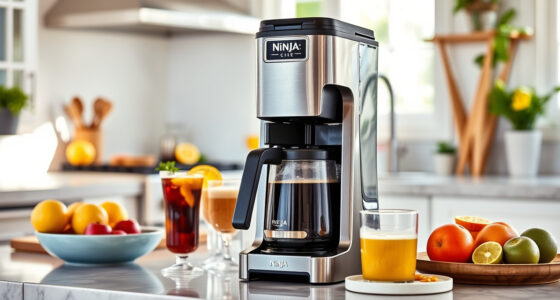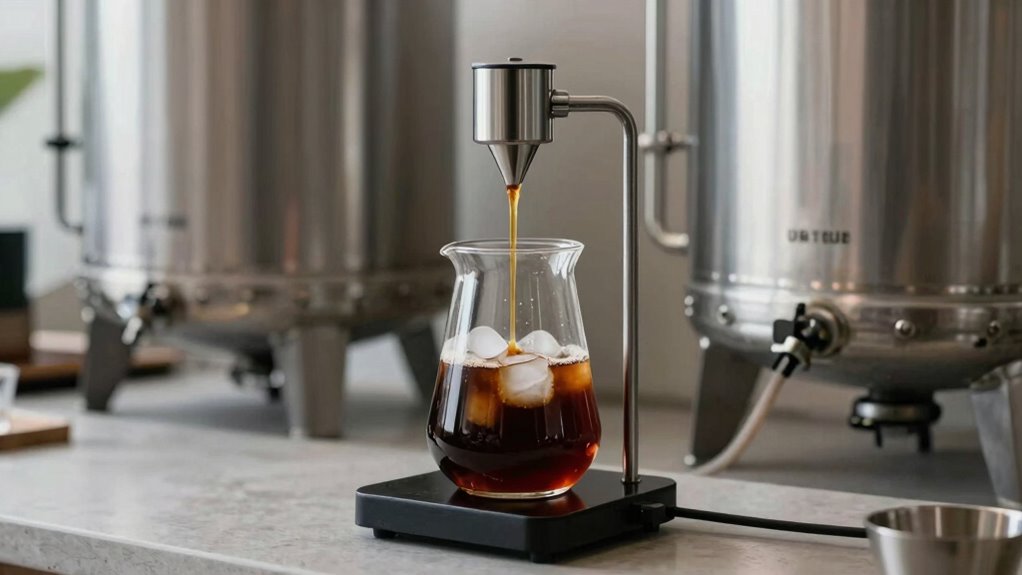

Bigger cold brew systems may seem ideal for high volume, but they often sacrifice flavor consistency and control. Larger setups can lead to uneven extraction, resulting in bitterness or underdeveloped flavors. Smaller systems allow you to more precisely manage brew time and contact, ensuring better quality. Durability and ease of maintenance are also stronger with smaller setups. If you want to learn how to optimize your cold brew process, keep exploring these essential differences.
Key Takeaways
- Larger systems can cause uneven extraction, leading to inconsistent flavor profiles.
- Smaller setups offer better control over brew time, contact, and extraction quality.
- Bigger equipment is more complex, prone to wear, leaks, and higher maintenance costs.
- Smaller, well-designed systems ensure durability, easier cleaning, and consistent results.
- Focusing on quality and control in smaller systems yields better flavor and long-term reliability.
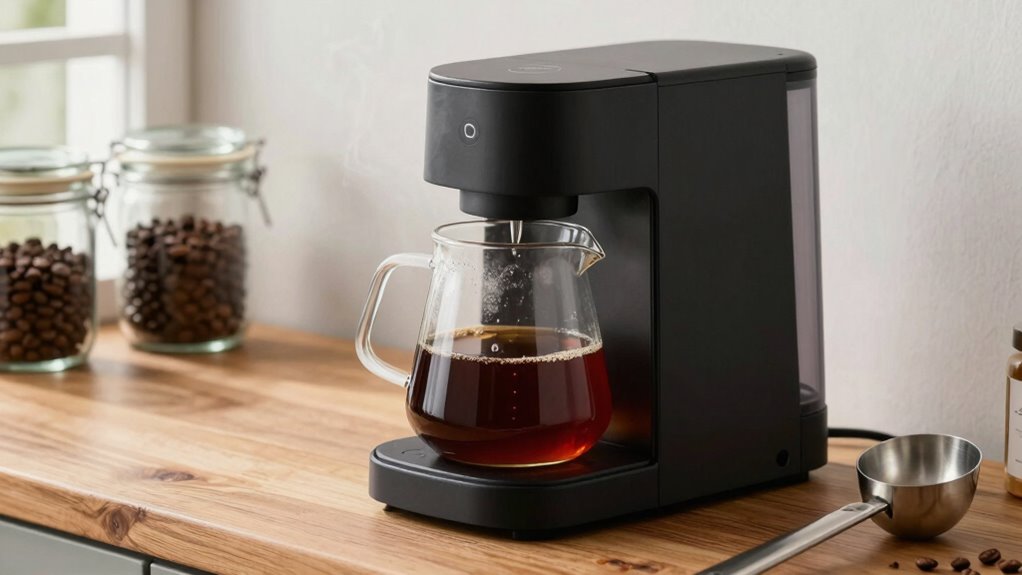
Have you ever wondered how to make smooth, flavorful cold brew coffee at home or in your café? The secret lies in understanding the nuances of coffee extraction and choosing the right equipment. When it comes to cold brew systems, many assume that bigger is better, but that’s a misconception. Larger setups might seem appealing because they promise higher volume and faster production, but they often overlook critical factors like controlled coffee extraction and equipment durability.
Coffee extraction is a delicate process that requires precision. The goal is to extract just enough solubles from the coffee grounds to achieve a rich, balanced flavor. With oversized systems, you may struggle to maintain consistent extraction because the larger volume can lead to uneven contact between water and coffee grounds. This inconsistency might cause over-extraction in some areas, resulting in bitter flavors, or under-extraction elsewhere, which leaves the brew underdeveloped. Smaller, well-designed cold brew systems allow for better control over extraction time and contact, ensuring you get a smooth, flavorful coffee every time. Additionally, proper equipment design can greatly influence the quality and consistency of your cold brew. Proper design also includes considerations like material choice, which impacts durability and ease of cleaning. Moreover, selecting appropriate filtration methods can further improve the clarity and purity of your cold brew. Paying attention to system size and how it relates to your needs is essential for balancing capacity with quality control. Recognizing the importance of temperature stability during brewing can also help prevent flavor inconsistencies and improve overall results.
Smaller cold brew systems offer better control over extraction for consistent, smooth flavor every time.
Equipment durability is another crucial factor often overlooked in bigger systems. Larger setups tend to be bulkier, more complex, and made from materials that may not withstand frequent use or rigorous cleaning. Over time, this can lead to wear and tear, leaks, or even system failure—disrupting your brewing process and increasing maintenance costs. Conversely, smaller, high-quality cold brew systems are typically built with durable materials like stainless steel or BPA-free plastics, designed to withstand daily use. They’re easier to clean and maintain, which helps preserve the integrity of your equipment and guarantees consistent results over time.
Size isn’t the only consideration when selecting a cold brew system. A smaller, more efficient setup often produces a better-quality brew because it allows you to focus on the details—precise coffee grind size, water temperature, and brew time. These factors directly influence coffee extraction, which ultimately determines flavor. Bigger systems might seem like a good investment if you’re looking to scale quickly, but if they compromise extraction quality or require frequent repairs due to poor durability, the long-term costs outweigh the initial benefits.
In the end, the key to great cold brew isn’t just about capacity; it’s about controlling the process and investing in equipment that lasts. Smaller, thoughtfully designed systems give you more control over extraction and are built to endure daily use. Remember, in the world of cold brew, bigger isn’t always better—quality, consistency, and durability matter more for crafting the perfect cup.
As an affiliate, we earn on qualifying purchases.
Frequently Asked Questions
How Long Does Cold Brew Typically Last in Storage?
Cold brew typically lasts about 2 to 3 weeks in the fridge if stored properly. To maximize shelf life, keep it in an airtight container and avoid exposing it to air or light, which can degrade quality. Follow storage tips like maintaining a consistent temperature and always using clean utensils when pouring. This way, you’ll enjoy fresh-tasting cold brew longer, ensuring your beverage stays flavorful and safe to drink during its shelf life.
What Are the Energy Consumption Differences Between Small and Large Systems?
Think of energy consumption differences between small and large systems as a candle versus a floodlight. Smaller systems tend to be more energy-efficient, using less power and consuming less overall. Larger systems often have higher power consumption, but they may not always be proportional to their output. Your choice impacts energy efficiency, with smaller setups offering a smarter, eco-friendly option. Bigger isn’t always better when it comes to energy use.
Can Cold Brew Systems Be Used for Other Beverages?
Yes, cold brew systems can be used for other beverages beyond coffee. You can explore flavor versatility by experimenting with teas, herbal infusions, or even fruit-infused waters. Ingredient customization is key—you can adjust brewing times, ingredients, and flavors to suit your preferences. This flexibility allows you to craft unique, revitalizing drinks, making your cold brew system a versatile tool for creating a variety of delicious beverages.
How Often Should Filters and Components Be Cleaned?
You should clean your cold brew system’s filters and components regularly to guarantee peak taste and hygiene. For filter maintenance, clean them after every use or at least weekly, depending on your volume. Components like the brewing chamber and filters need thorough cleaning to prevent buildup and mold. Follow your manufacturer’s instructions for cleaning frequency, but generally, a deep clean every 1-2 weeks keeps your system functioning smoothly and ensures fresh-tasting cold brew.
Are There Cost Differences Beyond Initial Investment?
Yes, there are cost differences beyond the initial investment. Larger systems often have higher maintenance challenges, which can increase ongoing expenses. While bigger machines might seem cost-efficient due to higher capacity, they can lead to greater energy usage and more frequent repairs. Smaller, more manageable systems may save you money long-term by reducing maintenance challenges and energy costs, making them a smarter choice for cost efficiency.
Conclusion
Remember the story of the tortoise and the hare—sometimes, slow and steady wins the race. Bigger isn’t always better when it comes to cold brew systems; efficiency and quality matter more. Focus on what suits your needs, rather than the size that promises more. By choosing wisely, you’ll craft rich, smooth coffee that rivals the best—proving that in the world of cold brew, less can truly be more.