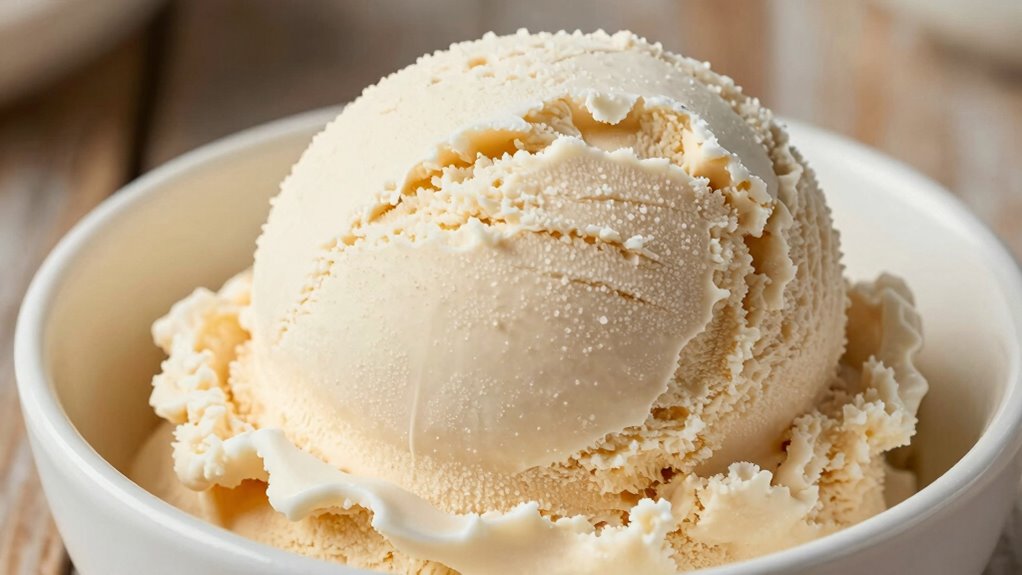

Plant-based ice cream can feel chalky when high-quality ingredients or proper processing aren’t used, leading to coarse particles or large ice crystals. Plant proteins and fillers may not fully dissolve, creating a gritty sensation, especially if freezing methods aren’t optimized. Poor mixing, temperature control, and ingredient balance all contribute to this texture. To understand how to improve or avoid chalkiness, look into the specific causes and solutions that can make your ice cream smoother.
Key Takeaways
- Coarse or improperly processed plant proteins and fillers can create gritty particles, leading to a chalky mouthfeel.
- Inadequate mixing or freezing techniques cause large ice crystals and uneven textures, resulting in chalkiness.
- Ingredient interactions, such as imbalance of fats and stabilizers, influence ice crystal formation and texture.
- Using low-quality or unrefined ingredients can introduce coarse particles that contribute to a chalky sensation.
- Overfreezing or temperature fluctuations during processing promote larger ice crystals, increasing the chalky texture.
plant-based ice cream stabilizers
As an affiliate, we earn on qualifying purchases.
As an affiliate, we earn on qualifying purchases.
What Causes a Chalky Texture in Plant-Based Ice Cream?
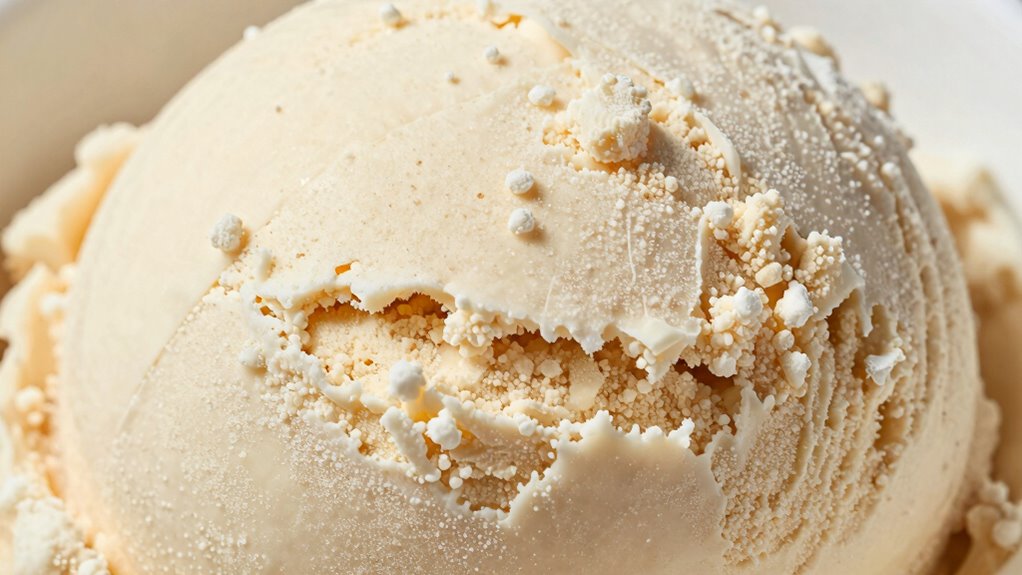
A chalky texture in plant-based ice cream often results from the use of certain ingredients and their interactions during freezing. When ingredient sourcing isn’t carefully managed, some proteins, fibers, or fillers can create a dry, powdery mouthfeel. To combat this, manufacturers often focus on flavor masking, choosing ingredients that help hide gritty or chalky sensations. Poor sourcing can introduce inconsistent textures, especially if plant proteins or fillers aren’t properly processed or purified. Additionally, inadequate balancing of fats and stabilizers can cause ice crystals to form unevenly, intensifying the chalkiness. By selecting high-quality ingredients and using flavor masking techniques, producers can improve the overall smoothness, minimizing that unpleasant chalky feeling and delivering a creamier, more satisfying plant-based ice cream. High-quality ingredient sourcing is crucial for achieving a smooth, creamy texture in the final product. Proper formulation also involves understanding how plant proteins interact during freezing, which can significantly impact texture. For example, understanding protein interactions can help in adjusting stabilizer levels to prevent grit.
Why Do Plant Proteins and Fillers Make Ice Cream Gritty?
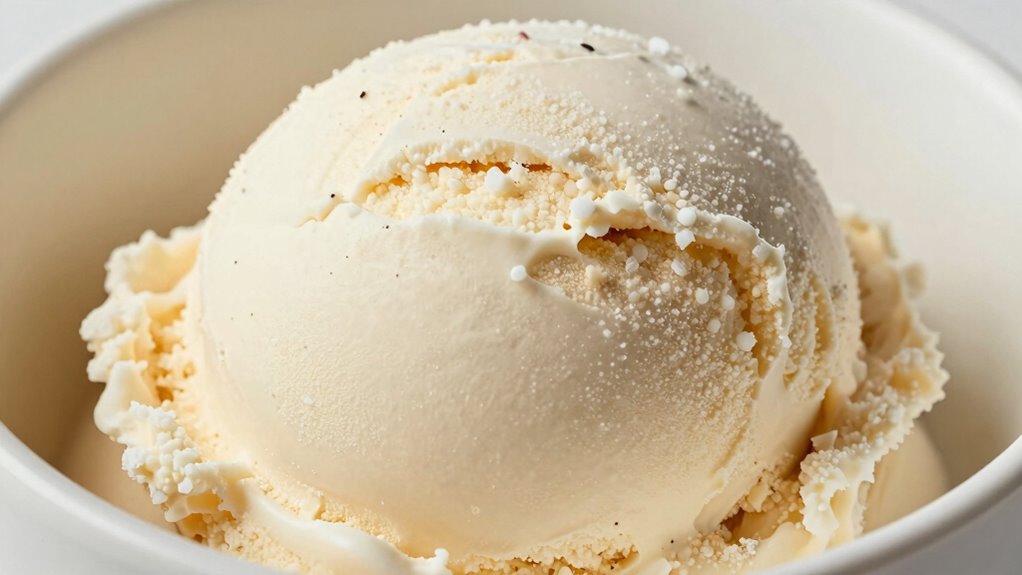
Plant proteins and fillers can make ice cream gritty because their texture depends on protein content and how they’re processed. Fillers and additives can also contribute to a coarse mouthfeel if not combined properly. Understanding the impact of these factors helps explain why some plant-based ice creams feel chalky. Additionally, the processing methods used can significantly influence the final texture, making some products more prone to grittiness. The type of protein sources used can also affect smoothness, as certain plant proteins tend to be more granular if not carefully refined.
Protein Content and Texture
When plant proteins and fillers are added to ice cream, they often create a gritty texture because they don’t dissolve smoothly in the cold mixture. This impacts not only mouthfeel but also the overall nutrient density and flavor profile. Higher protein content can enhance nutritional value but may increase grit if not properly processed. To illustrate, consider the following factors:
| Factor | Effect on Texture | Consideration |
|---|---|---|
| Protein Type | Affects solubility in cold | Some proteins dissolve better than others |
| Particle Size | Larger particles cause grit | Finer particles improve smoothness |
| Processing Method | Influences protein dispersal | Proper emulsification reduces grittiness |
Additionally, understanding the solubility of different proteins can lead to better formulation techniques to minimize grit and improve creaminess. Balancing protein content ensures a nutrient-rich, enjoyable ice cream without sacrificing creaminess or flavor.
Fillers and Additives
Fillers and additives often cause grit in plant-based ice cream because they don’t dissolve fully in cold temperatures, leaving behind coarse particles. These ingredients can interfere with plant protein interactions, disrupting the smooth texture you expect. Additive effects, such as stabilizers or thickeners, may create a gritty mouthfeel if not properly integrated. When additives don’t blend well, they form tiny granules that feel unpleasant under your tongue. This is especially true with certain fillers, like fibers or starches, which can clump or settle unevenly. To improve creaminess, manufacturers need to carefully select and balance fillers and additives, ensuring they work harmoniously with plant proteins. Proper formulation minimizes grit, resulting in a silkier, more enjoyable ice cream experience.
Processing Techniques Impact
Processing techniques play an essential role in whether plant proteins and fillers end up gritty in ice cream. Proper processing influences texture formation by breaking down proteins and stabilizing ingredients, leading to a smoother mouthfeel. Techniques like high-shear mixing, pasteurization, and controlled freezing help improve ingredient stability, reducing the risk of grit or chalkiness. When proteins are inadequately processed, they can form coarse particles that disrupt the creamy texture you desire. Conversely, advanced methods ensure even dispersion, creating a uniform, velvety consistency. Attention to temperature control and mixing speeds during production helps prevent separation and clumping. By optimizing processing techniques, manufacturers can enhance texture formation and ingredient stability, resulting in plant-based ice cream that’s deliciously smooth instead of gritty or chalky.
How Do Processing Methods and Temperature Affect Ice Cream Texture?
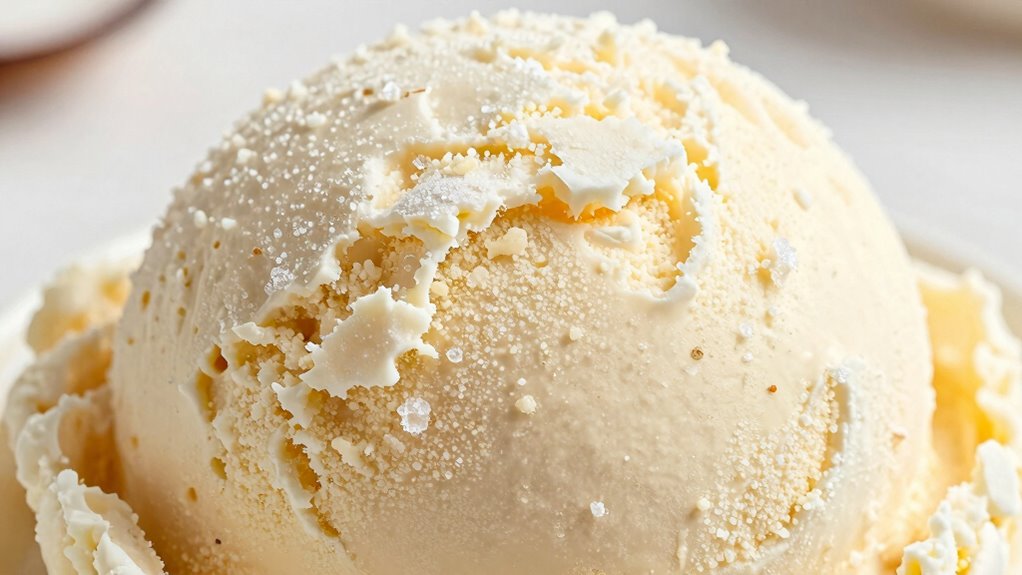
Your ice cream’s texture depends heavily on how you process it and the temperatures you use. Freezing too quickly or too slowly can make it gritty or icy, affecting overall smoothness. Additionally, ingredient interactions during freezing influence whether your final product is creamy or chalky. Incorporating high-quality, luxurious ingredients can also enhance the overall artistry and texture of your ice cream. Properly managing temperature control during production is crucial for achieving a smooth and creamy consistency.
Freezing Temperatures Impact Texture
Freezing temperatures play an essential role in shaping the texture of plant-based ice cream, often determining whether it’s smooth or chalky. When you freeze ice cream at the right temperatures, it allows fats and stabilizers to form smaller, more uniform ice crystals, resulting in a creamier mouthfeel. If temperatures fluctuate or drop too low, larger ice crystals can develop, making the texture gritty or chalky. Proper freezing also enhances flavor, as stable temperatures help preserve delicate tastes. Packaging innovations, like rapid-freeze containers, help maintain consistent temperatures during storage and transportation, preventing texture degradation. Additionally, understanding the heat transfer process during freezing can help optimize equipment settings for better texture. Controlling the freezing rate is crucial because rapid freezing minimizes crystal growth and preserves smoothness. This process also involves the formation of ice crystals, which directly impacts the overall mouthfeel and texture quality. By controlling freezing temperatures, manufacturers can improve overall quality, ensuring your plant-based ice cream remains smooth, enjoyable, and full of flavor from the first scoop to the last. Maintaining consistent temperature control during freezing is crucial for achieving ideal texture and preventing unwanted crystallization. Moreover, advancements in freezing technology contribute significantly to the consistency of the final product.
Processing Speed and Consistency
Since the speed at which ice cream is processed directly influences its texture, adjusting processing methods can lead to noticeable differences in creaminess or chalkiness. Faster processing often results in a finer, smoother texture by creating smaller ice crystals, improving overall texture. Conversely, slower processing can cause larger crystals, leading to a grainy or chalky mouthfeel. Consistency in processing is essential for texture improvement, as uneven speed can introduce variability. Additionally, ingredient selection plays a key role; choosing stabilizers or emulsifiers can help maintain smoothness during processing. Maintaining proper temperature during processing also guarantees uniformity. By fine-tuning processing speed and carefully selecting ingredients, you can achieve a more desirable, creamy texture in plant-based ice creams.
Ingredient Interactions During Freezing
Processing methods and temperature play pivotal roles in how ingredients interact during freezing, directly impacting ice cream texture. When you control freezing speed, you influence ice crystal size, which affects smoothness. Rapid freezing creates smaller crystals, resulting in creamier textures, while slow freezing can lead to a chalky feel. Incorporating thoughtful flavor combinations ensures ingredients blend well and don’t separate during freezing. Packaging innovations also matter: airtight containers prevent moisture loss and ice crystal growth, maintaining ideal texture. Temperature fluctuations during storage can cause ice crystals to grow larger, making the ice cream feel gritty or chalky. By optimizing processing techniques and maintaining consistent freezing temperatures, you ensure the ingredients work harmoniously, delivering a better mouthfeel and preventing undesirable textures in plant-based ice creams. Additionally, understanding ingredient interactions during freezing helps in selecting the right stabilizers and thickeners to promote uniformity and prevent chalkiness. Proper control of freezing rate can significantly improve product quality and consumer satisfaction.
How Can You Find the Creamiest Plant-Based Ice Cream?
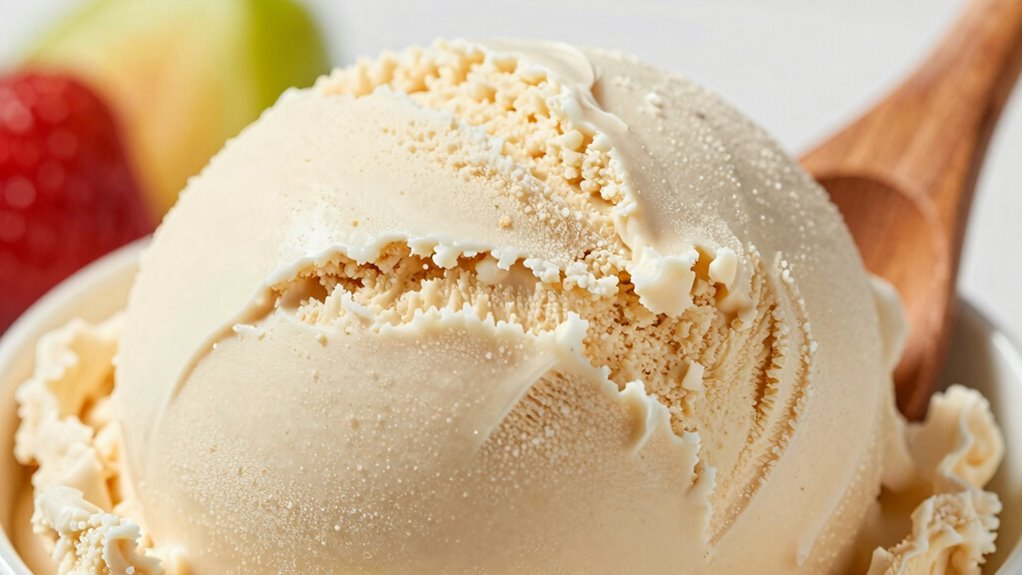
To find the creamiest plant-based ice cream, start by paying attention to the ingredients list. Look for high-quality dairy alternatives like coconut milk, cashew cream, or almond milk, as these often yield a richer texture. Check for added fats, such as coconut oil or cocoa butter, which enhance creaminess naturally. Flavor enhancement ingredients like vanilla extract or natural stabilizers can improve mouthfeel without sacrificing smoothness. Avoid ice creams with excessive thickeners or artificial fillers, as they often lead to a chalky texture. Reading labels helps you choose options that prioritize whole, nutrient-dense ingredients. Incorporating traditional Indonesian decor principles techniques can also help identify the best options. The right combination of dairy alternatives and flavor enhancers makes a noticeable difference in achieving a smooth, indulgent experience.
What Are Manufacturers Doing to Improve Texture?

Manufacturers are actively refining their techniques to improve the texture of plant-based ice cream. They’re investing in plant protein innovations to create smoother, creamier bases that mimic dairy more closely. These innovations often involve optimizing protein sources and processing methods to reduce grittiness and chalkiness. Additionally, companies are employing flavor masking techniques to hide any inherent plant taste or texture issues, making the product more appealing. By blending different plant proteins and using advanced stabilization agents, producers can achieve a more balanced, velvety mouthfeel. These strategies help address common texture challenges, ensuring that plant-based ice creams feel just as indulgent as traditional options. Improved processing techniques are also being adopted to further refine texture and consistency. Techniques like emulsion stabilization help create a more uniform and enjoyable product. Advances in textural enhancement are enabling manufacturers to better mimic the sensory experience of dairy ice cream. As a result, you get a more satisfying experience without sacrificing your plant-based preferences. Empowering New Parents are also noticing the importance of quality and consistency in their choices, whether for nourishing themselves or their families.
How Can You Make Your Plant-Based Ice Cream Less Chalky at Home?
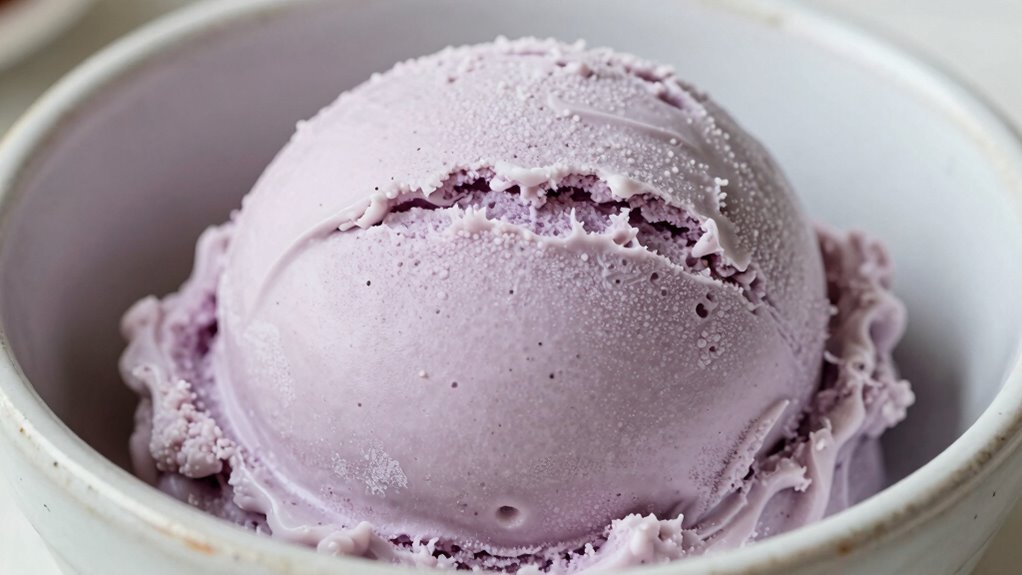
If your homemade plant-based ice cream turns out chalky, there are simple tricks to improve its texture. First, try blending in smooth dairy alternatives like coconut milk or cashew cream, which add creaminess and reduce grittiness. Using a sweetener like maple syrup or agave can also help with flavor enhancement and improve mouthfeel. Incorporate a small amount of arrowroot or cornstarch dissolved in water; these thickeners can create a silkier texture. Avoid overfreezing, as it intensifies chalkiness—softening it slightly during churning or letting it sit at room temperature before serving helps. Additionally, balancing ingredients to include healthy fats boosts creaminess, making your ice cream less chalky and more enjoyable.
Frequently Asked Questions
Can Ingredients Like Coconut Oil Improve Plant-Based Ice Cream Smoothness?
Yes, coconut oil benefits include enhancing the smoothness of plant-based ice cream. It helps create a creamier texture and reduces chalkiness. You can also try ingredient substitutions like using coconut milk or cashew cream for added richness. These options improve mouthfeel and make your ice cream more enjoyable. Incorporating coconut oil or swapping ingredients can make a noticeable difference in achieving that luscious, smooth consistency you crave.
Are There Specific Plant Proteins That Cause Less Chalkiness?
Certain plant proteins, like pea and rice, tend to cause less chalkiness because they have better plant protein interactions that result in smoother textures. They also respond well to texture modifiers, which help improve mouthfeel and reduce grittiness. Choosing proteins with more stable structures and combining them with effective texture modifiers guarantees your plant-based ice cream feels creamier and more enjoyable without chalky residues.
How Does Storage Affect the Texture of Plant-Based Ice Cream?
When you store plant-based ice cream, improper freezing techniques and packaging materials can turn its texture icy or grainy. Freezing slowly causes larger ice crystals to form, making it less smooth, while poor packaging allows moisture or air leaks that affect consistency. To keep it creamy, guarantee quick freezing and use airtight, insulated containers. Proper storage maintains its silky texture and prevents undesirable chalkiness or ice crystal formation.
What Additives Can Help Achieve a Creamier Consistency?
To achieve a creamier consistency, you can add dairy substitutes like coconut milk or cashew cream, which naturally enhance texture. Texture enhancers such as guar gum, xanthan gum, or arrowroot powder also help improve smoothness and prevent chalkiness. These additives work together to create a richer, more traditional ice cream feel, making your plant-based treat more satisfying and indulgent with every scoop.
Are There Regional Differences in Plant-Based Ice Cream Formulations?
You’ll notice regional differences in plant-based ice cream formulations, like how Asian varieties often incorporate coconut milk for a rich texture, reflecting local flavor profiles and cultural ingredient preferences. For example, in Italy, gelato-style plant-based options may emphasize nuts and fruit, while in the US, coconut and pea protein dominate. These regional choices shape textures and flavors, making each market’s products uniquely suited to local tastes.
Conclusion
Now that you know what causes that chalky feel, you can choose or make plant-based ice cream that’s smoother than silk. Remember, with the right ingredients and techniques, you can transform your treat into a decadently creamy masterpiece. Don’t settle for ice cream that feels like chewing on chalk—you’re capable of creating or finding a dessert so luscious, it’ll make your taste buds sing and forget all about those gritty, grainy moments!