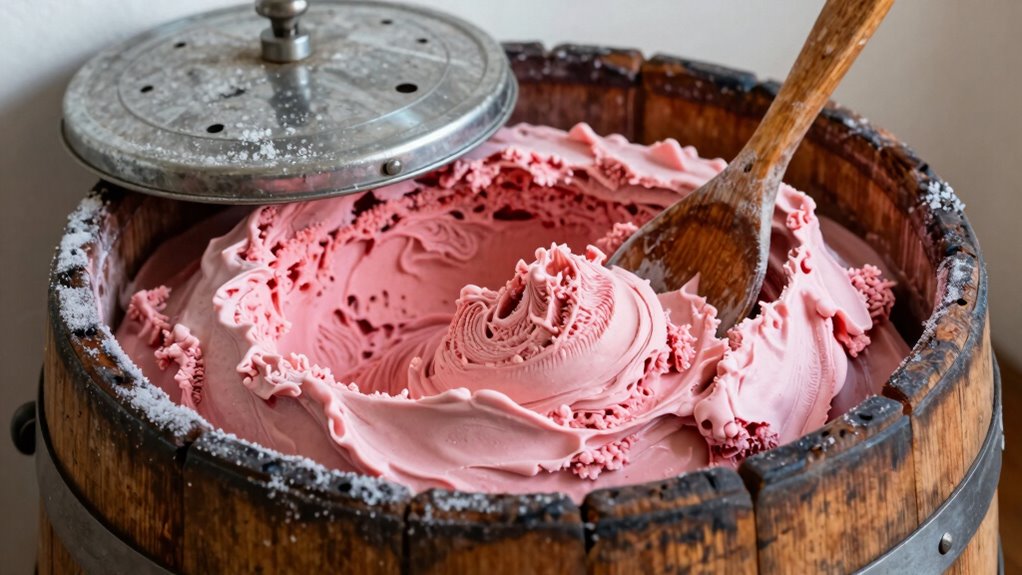
Making strawberry ice cream was once much harder because early methods lacked proper preservation and advanced freezing techniques, leading to inconsistent flavor and texture. Without modern stabilizers or quick-freeze technology, it was tough to prevent ice crystals or spoilage. Strawberries’ perishability meant you needed quick use or special preservation, making it tricky to produce smooth, flavorful batches. If you keep exploring, you’ll discover how innovations eventually made creating perfect strawberry ice cream easier.
Key Takeaways
- Primitive freezing methods often caused icy textures, making it hard to achieve smooth, consistent strawberry ice cream.
- Limited preservation techniques led to spoilage and flavor loss, complicating quality control.
- Natural strawberry variability and perishability made flavor consistency difficult.
- Lack of stabilizers and emulsifiers caused ice crystal formation, affecting texture.
- Technological advances in freezing and preservation improved flavor retention and product quality.
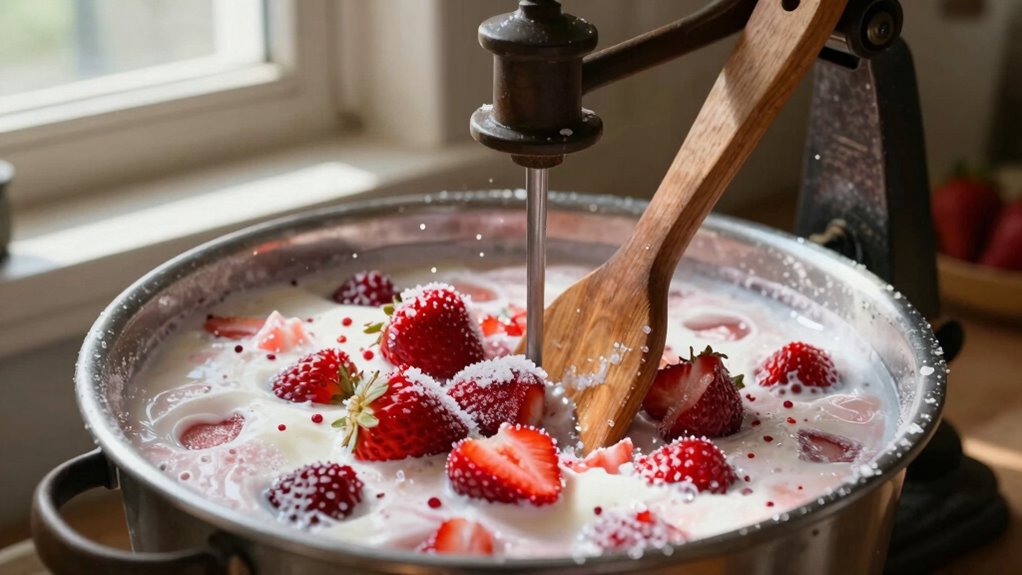
Strawberry ice cream has a rich history that dates back centuries, showcasing both innovation and tradition in frozen dessert making. Back then, creating a smooth, flavorful batch was no simple feat. The process required careful attention to flavor variations and preservation techniques, which made producing consistent quality challenging. Without modern refrigeration or advanced freezing methods, artisans relied on primitive techniques that often resulted in icy or uneven textures. The natural variability of strawberries also played a role—ripeness, seasonality, and freshness impacted flavor, making it harder to produce a reliably delicious product.
In those early days, flavor variations were limited by the ingredients available and the preservation methods at hand. Without the benefit of preservatives or stabilizers, strawberries were highly perishable, forcing makers to use them quickly or risk spoilage. They often relied on techniques like sugaring or alcohol infusion to extend shelf life, but these methods only partly preserved the fruit’s natural flavor and aroma. These preservation challenges meant that achieving a consistently rich, true strawberry taste was difficult. The delicate balance between sweetness, acidity, and fruit flavor demanded skill and experience, which not everyone possessed. When preservation techniques weren’t enough, batches could turn icy or develop unwanted freezer burn, making the final product less enjoyable. Additionally, early artisans had limited access to advanced freezing techniques, which could have improved both texture and flavor retention.
The technological advancements of the 19th and 20th centuries helped solve some of these issues. Improved freezing techniques, like continuous commercial freezers, allowed for quicker cooling and better texture. This innovation enabled ice cream makers to retain more of the strawberries’ natural flavor and achieve smoother consistency. The development of stabilizers and emulsifiers further enhanced preservation, preventing ice crystals from forming and maintaining a uniform texture. These improvements made it possible for even small-scale artisans to produce strawberry ice cream that was both flavorful and stable over time. Additionally, preservation techniques became more sophisticated, allowing for better control over flavor consistency and shelf life.
Despite these advancements, the early makers faced significant challenges in perfecting strawberry ice cream. They had to work with limited preservation techniques, which meant that flavor variations depended heavily on the season and freshness of their ingredients. The struggle to balance flavor, texture, and shelf stability made the craft of making high-quality strawberry ice cream much more difficult than it is today. Today, thanks to modern technology and a deeper understanding of food science, you can enjoy a consistently delightful strawberry ice cream that captures the fruit’s vibrant flavor with ease—something early artisans could only dream of.
strawberry ice cream stabilizers
As an affiliate, we earn on qualifying purchases.
As an affiliate, we earn on qualifying purchases.
Frequently Asked Questions
What Ingredients Were Traditionally Used in Early Strawberry Ice Creams?
In early strawberry ice creams, you mostly find fresh strawberries, sugar, and cream. Sometimes, artificial flavoring was added to enhance the taste because real strawberries’ seasonal availability made consistent flavor difficult. Without modern preservation, ice cream makers relied on fresh fruit during harvest times, which limited production and quality. This made making smooth, flavorful strawberry ice cream a challenge until techniques improved and artificial flavoring could supplement fresh fruit.
How Did Refrigeration Advancements Impact Strawberry Ice Cream Production?
Refrigeration advancements revolutionized strawberry ice cream production, acting like a key unsealing flavor consistency and better storage techniques. With improved cooling technology, you can now enjoy smooth, evenly flavored ice cream that stays fresh longer. These innovations made it easier to preserve the delicate strawberry flavor and maintain quality. As a result, making high-quality strawberry ice cream became more reliable, transforming a once challenging art into a delicious everyday treat.
Were There Regional Differences in Early Strawberry Ice Cream Recipes?
Yes, regional differences existed in early strawberry ice cream recipes, often due to variations in fruit purity and local ingredients. You’d notice that some areas used fresher, local strawberries, giving a brighter flavor, while others relied on preserved or less pure fruit, affecting flavor consistency. These differences influenced recipes, making each region’s ice cream unique—yet challenging to achieve uniform quality without modern refrigeration.
How Did Consumer Preferences Influence the Evolution of Strawberry Ice Cream?
Consumer demand for a consistent, flavorful experience drove the evolution of strawberry ice cream. You notice that today’s ice cream offers flavor consistency, making each scoop reliably delicious. As preferences shifted towards smoother textures and natural fruit flavors, producers improved techniques and ingredients. This focus on meeting consumer expectations pushed innovations, ensuring strawberry ice cream became easier to produce while satisfying your desire for high-quality, consistent flavor with every serving.
What Challenges Did Early Ice Cream Makers Face With Strawberry Flavoring?
Early ice cream makers faced challenges with strawberry flavoring because fresh strawberries’ seasonal availability limited their use, forcing them to rely on artificial flavoring. Achieving a natural, consistent taste was difficult due to the fruit’s perishability and the lack of advanced preservation methods. This made it hard to produce high-quality strawberry ice cream year-round, prompting innovators to develop better artificial flavoring techniques over time.
Conclusion
Back in the day, making perfect strawberry ice cream was like trying to catch lightning in a bottle—difficult and unpredictable. Imagine the early cooks, experimenting with new techniques, much like explorers charting unknown waters. Now, with modern tools and knowledge, we can create that creamy, fruity delight effortlessly. It’s a reminder that progress turns once-tough challenges into everyday successes, transforming the art of ice cream making from a wild adventure into a simple pleasure.