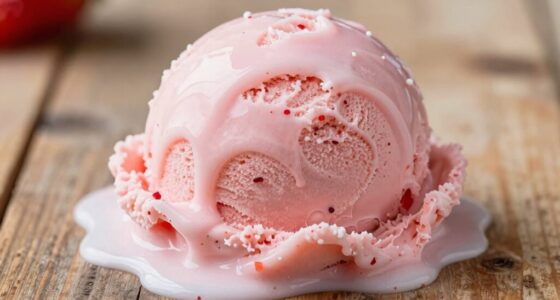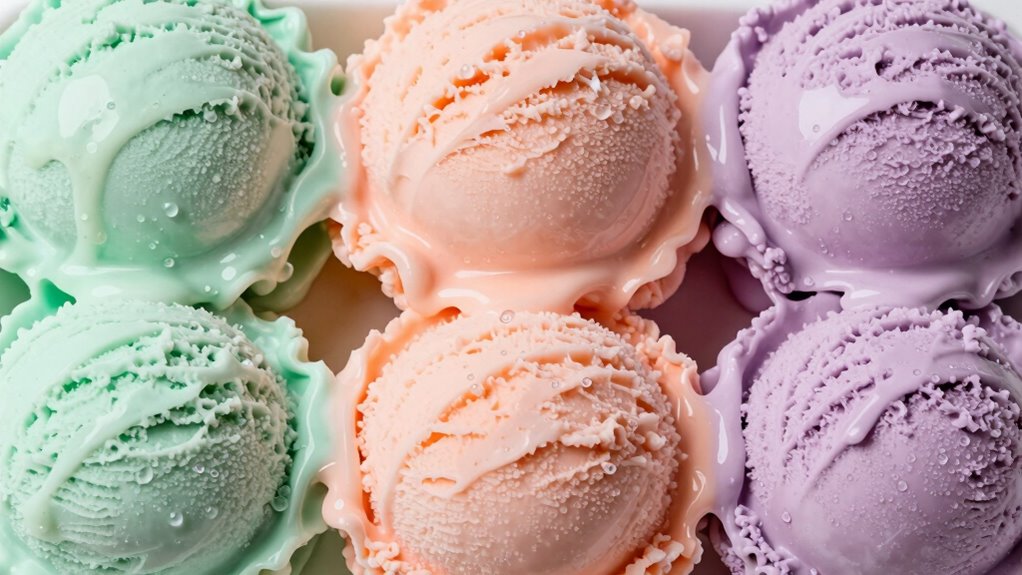

Natural colors in ice cream fade over time because exposure to light, air, and temperature causes the pigments to break down. UV rays and oxygen speed up chemical reactions that dull and discolor these shades, especially during improper storage or repeated melting and freezing. While natural dyes are more sensitive, learning some simple tips on how to store and handle your ice cream can help keep those vibrant hues fresh longer. Keep going to find out more.
Key Takeaways
- Natural pigments degrade faster when exposed to light, air, and high temperatures, causing colors to fade.
- Storage conditions like light exposure and temperature fluctuations accelerate the breakdown of natural dyes.
- Natural colorants are sensitive to environmental factors, making it difficult to maintain vivid, stable shades over time.
- Synthetic dyes offer more durable and consistent colors, while natural dyes are prone to fading.
- Proper storage in airtight, cool, and dark environments helps slow natural color fading and preserves ice cream’s appearance.

LayYun Ice Cream Containers for Homemade (4 Pack – 1 Quart Each), Reusable PP Plastic Ice Cream Storage Containers for Freezer, Leak-Free Ice Cream Containers with Silicone Lids
Stylish Ice Cream Containers Reusable- Each homemade ice cream container holds 1 Liter (1 Quart) and measures 5.3”…
As an affiliate, we earn on qualifying purchases.
As an affiliate, we earn on qualifying purchases.
Why Do Natural Colors in Ice Cream Fade Over Time?
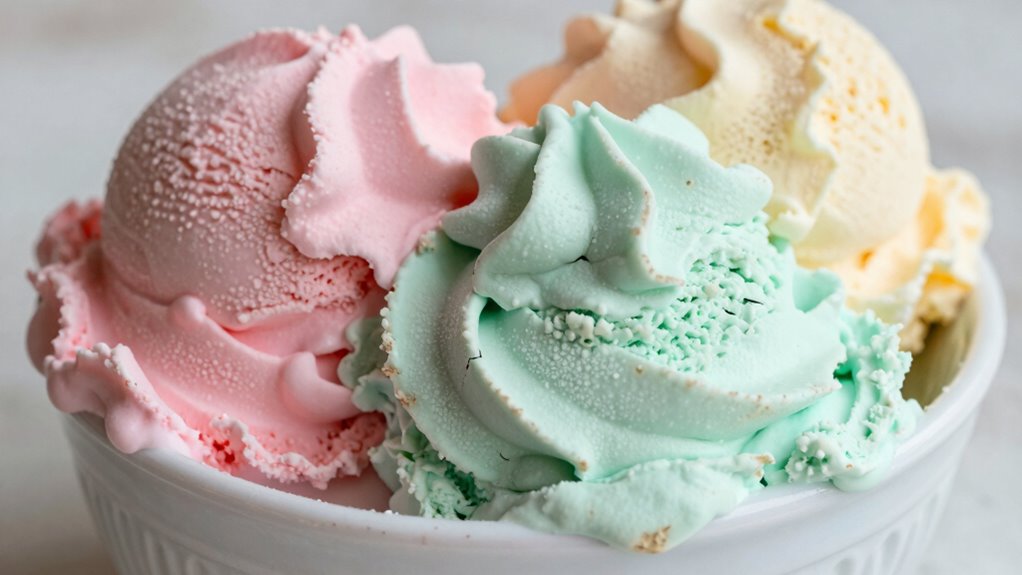
Natural colors in ice cream tend to fade over time because exposure to light, air, and temperature changes causes chemical reactions that break down the pigments. This fading can affect the visual appeal and how you perceive flavor combinations, making the ice cream look less vibrant. While some might worry about losing the bright hues, it’s worth noting that natural colors often retain their nutritional benefits longer than artificial dyes. These colors come from fruit, vegetable, or spice extracts that provide antioxidants and vitamins. As time passes, these nutrients may diminish slightly, but the health benefits remain. Environmental factors such as storage conditions also play a significant role in the rate of fading. To enjoy both the flavor and nutritional advantages, it’s best to consume ice cream within a reasonable timeframe, before fading impacts the visual and nutritional quality. Additionally, preservation methods can help slow down the fading process and extend the appearance and nutritional integrity of natural-colored ice cream. Proper storage in a cool, dark place can further preserve color and nutritional value over time, especially when combined with airtight packaging that limits exposure to air and light. Using proper storage techniques can further enhance the longevity of the natural hues and nutritional content.
JFFTLL Summer Ice Cream Storage Bins with Handles, Ice Cream Lovers Gifts, Colorful Ice-Creams Collapsible Laundry Basket Storage Box for Home Bedroom Bathroom Clothes Toys Books
Unique Designs – Each JFFTLL storage bin is thoughtfully crafted with a one-of-a-kind design that brings warmth, personality,…
As an affiliate, we earn on qualifying purchases.
As an affiliate, we earn on qualifying purchases.
What Causes the Colors to Dull? Light, Air, and Temperature
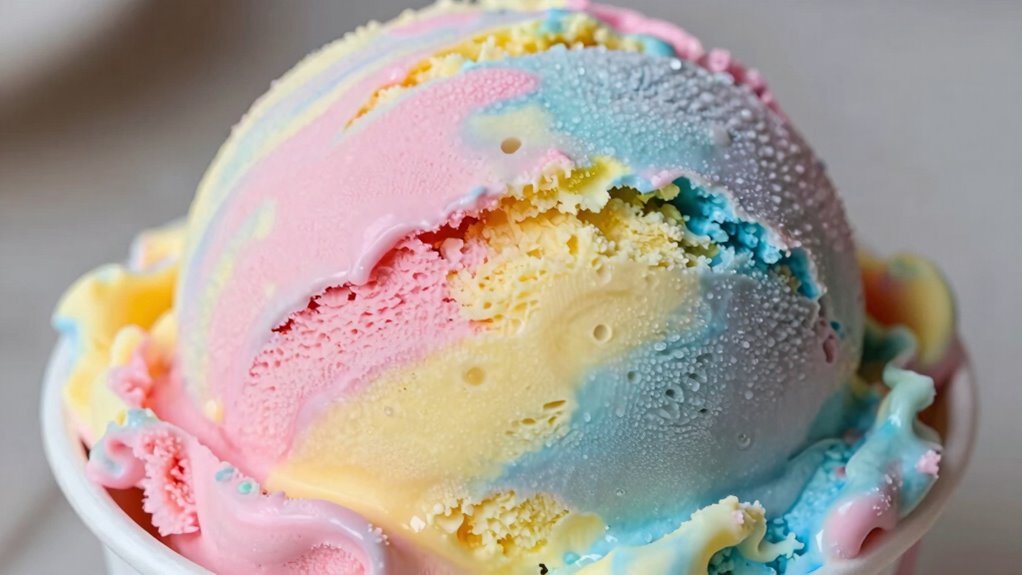
You might notice your ice cream’s colors becoming less vibrant over time, especially when exposed to light. Air and temperature also speed up the fading process, making colors look duller faster. Understanding these factors can help you keep your ice cream looking fresh and appealing longer. Additionally, Free Floating systems can influence how well preservatives protect the color from environmental damage.
Light Exposure Accelerates Fading
Exposure to light can cause ice cream’s vibrant colors to fade quickly, especially when it’s left out in the open. UV exposure plays a significant role in breaking down the pigments responsible for these shades, reducing pigment stability over time. When exposed to sunlight or artificial light, the energy from UV rays damages the molecular structure of natural dyes, causing the colors to dull or shift. This process happens faster if the pigments are less stable or more sensitive to light. To preserve the bright hues, it’s best to store ice cream in opaque containers and keep it away from direct light. Color stability depends heavily on environmental conditions, and minimizing UV exposure helps maintain the original vibrancy and prevent premature fading of your favorite flavors. European cloud innovation also emphasizes the importance of protecting digital assets from environmental factors, underscoring the value of proper storage and preservation techniques. Additionally, understanding the small systems involved in storage can help you make better decisions to extend freshness, especially since climate control plays a crucial role in preserving the quality of perishable items.
Air and Temperature Effects
While light exposure is a major factor in fading, air and temperature also play significant roles in dulling ice cream’s vibrant colors. Elevated temperatures cause pigment degradation, reducing dye stability and leading to dullness. When ice cream warms, the heat accelerates chemical reactions that break down the natural and artificial dyes, causing colors to fade faster. Air exposure introduces oxygen, which can further degrade pigments and promote oxidation, diminishing brightness. Cooler temperatures slow these processes, helping maintain color vibrancy longer. Proper storage in airtight, cool environments minimizes oxygen contact and temperature fluctuations, preserving dye stability. Pigment stability is crucial for maintaining vivid hues over time. Understanding how air and temperature accelerate pigment degradation helps you protect your ice cream’s lively hues, ensuring it stays appealing and colorful for as long as possible. Additionally, indoor air quality can influence temperature consistency and oxidation levels, indirectly affecting color preservation. Maintaining optimal storage conditions, including avoiding temperature fluctuations, is essential for preserving the integrity of the dyes and keeping your ice cream visually appealing. Furthermore, controlling humidity levels can also impact the overall quality and appearance of stored ice cream. A well-regulated environment not only preserves the taste but also supports the colorfastness of ice cream.

WALL QMER 2 Pack Ice Cream Tub Containers (1.6 Quart Each), Reusable Freezer Storage Containers with Lids for Homemade Sorbet, Frozen Yogurt, or Gelato, Orange and Purple
🍨【Easy Scoop & Easy Store Ice Cream Tub Form】The ice cream tubs set of 2 are a great…
As an affiliate, we earn on qualifying purchases.
As an affiliate, we earn on qualifying purchases.
The Limitations of Natural Colorants in Ice Cream

Natural colorants often fall short when it comes to vibrancy and stability in ice cream. Fruit extracts, while appealing for their natural origins, tend to produce muted or inconsistent colors that fade over time. Mineral pigments, such as iron oxides or clays, offer some stability but often lack the brightness needed for eye-catching products. These limitations mean your ice cream may look appealing initially but lose its vivid hue quickly. Natural dyes are also sensitive to light, pH changes, and storage conditions, making it difficult to maintain consistent coloration. Additionally, the challenges in achieving consistent texture and color can impact overall product quality and consumer satisfaction. Since natural colorants are influenced by storage conditions, manufacturers often face unpredictable results, affecting brand reputation. As a result, many manufacturers struggle to achieve the bold, stable shades consumers expect, leading them to supplement or replace natural colorants with synthetic alternatives for better longevity and visual appeal. Moreover, advances in synthetic dye technology have provided more reliable options for manufacturers seeking vibrant and durable hues. Incorporating stability-enhancing additives can also help improve color retention and product consistency, although these may sometimes raise concerns regarding clean label formulations. It is important for producers to understand the limitations of natural colorants and weigh the benefits against potential drawbacks in their product development.
Luxshiny 4pcs Portable Bread Boxes Leak-proof Bakery Storage Containers Natural Color Toast Organizer for Outdoor Activities and Daily Food Preservation
Toast storage organizer:tightly sealed box, sturdy, and drop-proof, it is your perfect kitchen storage container,food container
As an affiliate, we earn on qualifying purchases.
As an affiliate, we earn on qualifying purchases.
How Temperature Changes Speed Up Color Loss
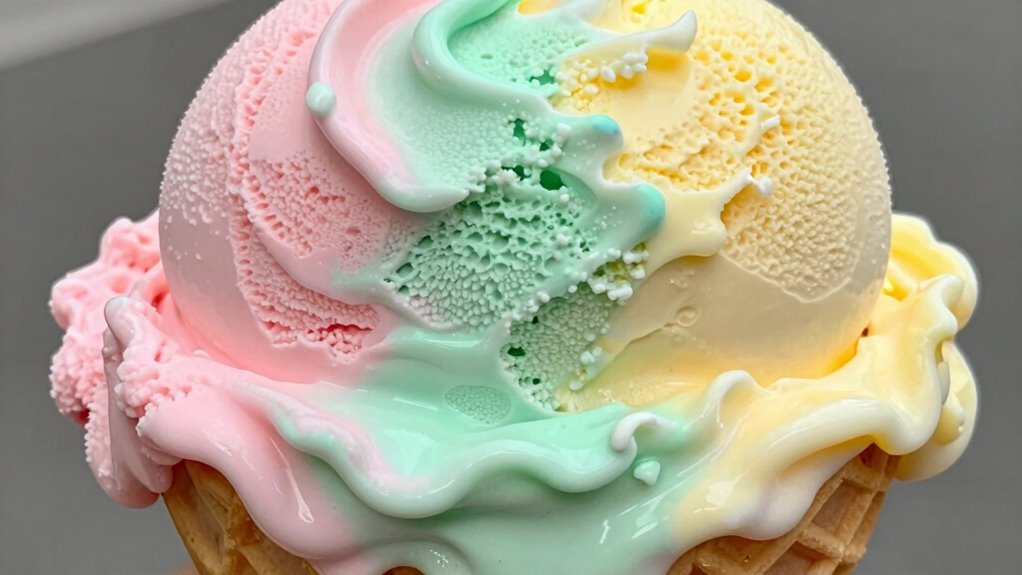
When ice cream melts, its colors fade faster because the heat accelerates pigment breakdown. Higher temperatures damage the natural and artificial dyes, making the colors dull and less vibrant. Repeated freeze-thaw cycles worsen this process, causing even more color loss over time. Additionally, exposure to extreme weather conditions can strain the integrity of the dyes, further hastening color degradation. Proper storage and handling can help preserve the vibrancy of colors, and understanding how temperature impacts dye stability is key to maintaining the ice cream’s visual appeal.
Melting Accelerates Color Fading
As ice cream melts, its vibrant colors fade more quickly, and this process speeds up drastically with rising temperatures. When melting occurs, the heat accelerates pigment degradation and compromises food dye stability. The rapid breakdown of color molecules leads to duller shades and uneven hues. Melting exposes pigments to moisture and oxygen, further hastening color loss. You’ll notice that the longer ice cream stays melted, the less vivid its appearance becomes. This is especially true for natural dyes, which are more sensitive to temperature changes. Understanding how melting affects color helps you appreciate the importance of proper storage. Keeping ice cream cold slows down pigment degradation and preserves its appealing look longer. To enjoy bright colors, minimize melting and serve the ice cream quickly after removal from the freezer.
- Melting speeds up pigment degradation
- Heat reduces food dye stability
- Natural dyes are more sensitive
- Exposure to moisture accelerates color fade
- Quick serving preserves vibrant shades
Higher Temperatures Damage Pigments
Higher temperatures cause pigment molecules in ice cream to break down faster, leading to quicker loss of vibrant color. Elevated heat accelerates chemical reactions, jeopardizing color stability. When pigment molecules break apart, the ice cream’s shades fade, turning dull and washed out. To visualize this process, consider the following:
| Temperature | Effect on Pigments |
|---|---|
| Low | Stable, vibrant colors |
| Moderate | Slight fading, minor breakdown |
| High | Rapid pigment breakdown |
| Very High | Complete color loss |
As the temperature rises, pigment breakdown speeds up, causing colors to dull faster. This process underscores how heat undermines natural shades, making ice cream lose its visual appeal.
Repeated Freeze-Thaw Cycles
Repeated freeze-thaw cycles accelerate color loss in ice cream by repeatedly exposing pigments to shifting temperatures. Each cycle causes the pigments’ molecular structures to break down, reducing their color stability. When your ice cream undergoes multiple freeze-thaw cycles, the repeated melting and refreezing weaken the vibrancy of natural shades. These temperature fluctuations create stress on the pigments, leading to faded or dull colors over time. Understanding this process helps you recognize why some ice creams lose their bright appearance faster than others. To maintain appealing color, it’s best to minimize freeze-thaw cycles during storage and transportation. Keeping ice cream consistently frozen preserves its color stability. Remember, fewer temperature shifts mean your ice cream’s natural hues stay vibrant longer.
- Temperature fluctuations harm pigment integrity
- Freeze-thaw cycles cause molecular damage
- Repeated cycles weaken color stability
- Consistent storage preserves brightness
- Avoiding temperature shifts prolongs freshness
How Packaging and Storage Help Keep Colors Vibrant

Proper packaging and storage are essential for maintaining the vibrant colors of ice cream. Packaging design plays a key role in protecting the ice cream from light, oxygen, and temperature fluctuations that can cause fading. Airtight containers prevent oxidation and limit exposure to external elements, while opaque packaging blocks UV rays that break down color pigments. The storage environment is equally important; keeping ice cream at a consistent, cold temperature minimizes color degradation. Avoiding temperature fluctuations prevents the breakdown of natural and artificial dyes. Proper sealing and ideal storage conditions preserve the visual appeal of your ice cream, ensuring it stays bright and attractive for longer periods. When you pay attention to packaging and storage, you help keep the colors lively and enticing for your customers or yourself.
Can Natural Colors Be Made to Last Longer? Tips and Tricks
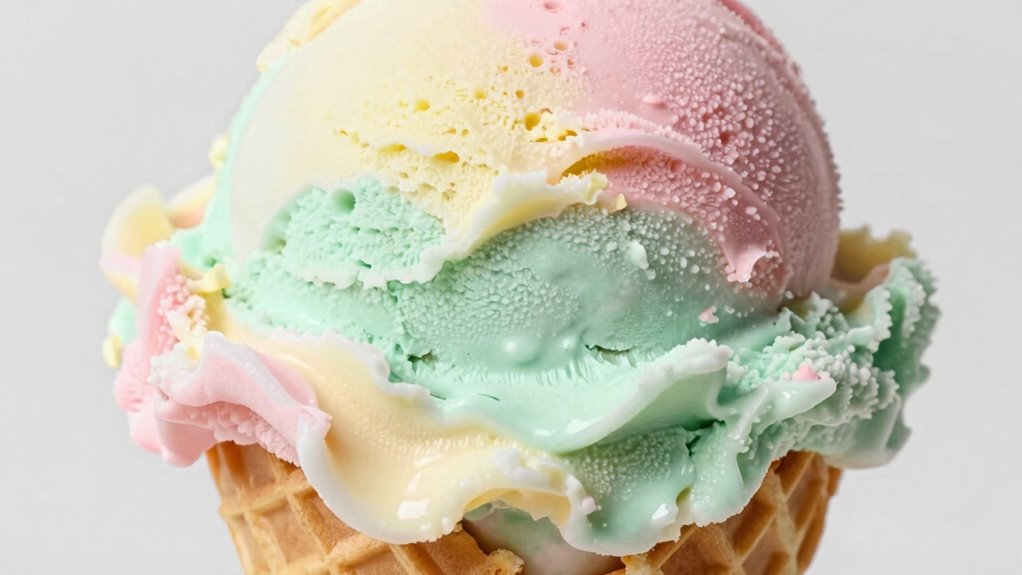
Natural colors in ice cream can fade over time, but with the right techniques, you can make them last longer. To boost color longevity, consider using stable fruit extracts and mineral pigments, which resist fading better than other natural sources. Keep ice cream stored at consistent, cool temperatures to prevent color breakdown. Additionally, adding natural preservatives can slow color degradation. Avoid exposing ice cream to direct sunlight or frequent temperature shifts. Using high-quality, concentrated natural colorings ensures vibrant hues that endure. Finally, gentle mixing during preparation helps evenly distribute color, reducing fading.
- Incorporate stable fruit extracts for vibrant, lasting hues
- Use mineral pigments to enhance color durability
- Maintain consistent, cold storage conditions
- Minimize exposure to light and heat
- Add natural preservatives to extend color life
Natural vs. Artificial Food Coloring: Which Lasts Better?
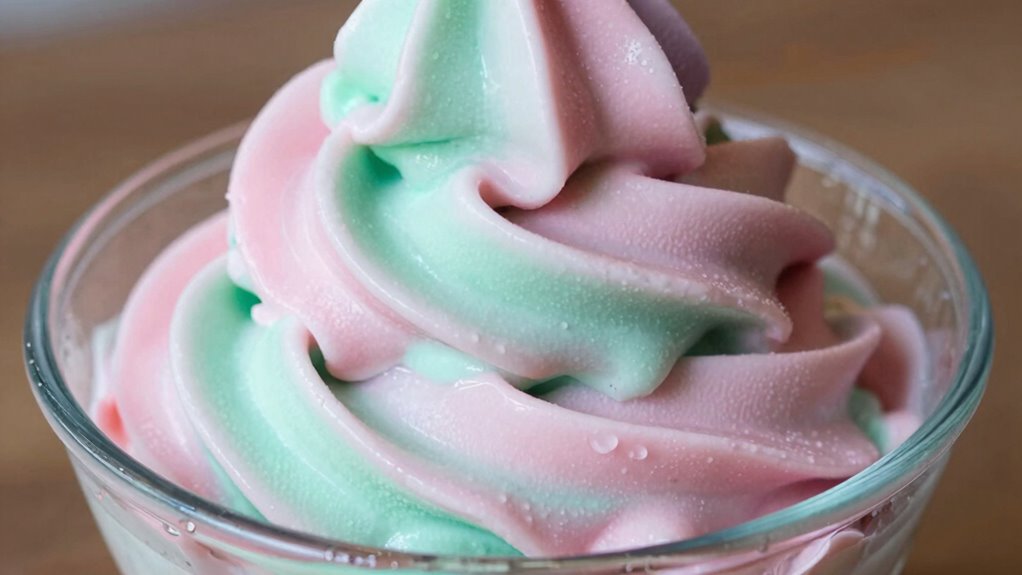
When it comes to the longevity of ice cream colors, the choice between natural and artificial options makes a significant difference. Artificial colorings typically offer better flavor stability and resist pigment degradation longer. Natural dyes, however, tend to fade faster due to their fragile pigments, which are more susceptible to environmental factors.
| Aspect | Artificial Coloring | Natural Coloring |
|---|---|---|
| Flavor stability | Higher | Lower |
| Pigment degradation | Slower | Faster |
| Color retention | Longer-lasting | Fades more quickly |
| Arrangement of shades | Consistent | Variable |
Choosing artificial colors gives you more predictable, vibrant results, while natural options require careful handling to maintain brightness.
Simple Tips to Keep Your Ice Cream Colors Bright at Home and in Shops

Keeping ice cream colors bright at home or in shops can be straightforward if you follow a few simple tips. First, pay attention to ingredient sourcing; fresh, high-quality ingredients help maintain vibrant hues. Consider cultural preferences when choosing natural colorants, as some may fade faster or alter the appearance. To preserve brightness, add colorings after cooking or churning, not during, to minimize color degradation. Store ice cream in airtight containers away from direct sunlight, which can cause fading. Ultimately, avoid overmixing, which can dull colors. By carefully selecting ingredients and handling them properly, you’ll keep your ice cream looking appealing and true to its color, pleasing both your customers and family.
Frequently Asked Questions
Are Some Natural Colorants More Resistant to Fading Than Others?
Some natural colorants are more resistant to fading than others. For instance, beetroot and turmeric tend to hold their vibrancy longer than others like spirulina or spinach. You prefer natural dyes over artificial ones because of consumer preferences for cleaner labels, but note that artificial dyes often resist fading better. Choosing stable natural colorants helps you maintain appealing, authentic shades in ice cream without sacrificing natural ingredients.
How Do Preservatives Affect the Longevity of Natural Ice Cream Colors?
Preservatives can considerably boost the longevity of natural ice cream colors, with studies showing they extend color stability by up to 30%. By slowing down oxidation and microbial growth, preservatives help maintain natural hues longer. Unlike artificial additives, which may artificially enhance appearance, preservatives support flavor stability and color retention naturally. So, if you want your ice cream’s shades to last, preservatives are a smart choice for maintaining vibrant, authentic colors.
Can Adding Certain Ingredients Help Maintain Natural Color Vibrancy?
Adding fruit extracts and antioxidants can help maintain your natural ice cream’s color vibrancy. Fruit extracts contain natural pigments that boost color intensity, while antioxidants prevent pigment breakdown caused by oxidation. By incorporating these ingredients, you actively preserve the vividness of your ice cream’s shades, ensuring they stay appealing longer. This approach not only enhances visual appeal but also supports overall product quality, making your ice cream more attractive to consumers.
What Are the Best Storage Conditions to Preserve Natural Ice Cream Hues?
To preserve natural ice cream hues, you should prioritize proper storage conditions that enhance color stability. Keep your ice cream at a consistent, cold temperature—around -20°C—and avoid frequent temperature changes. Use airtight containers to prevent exposure to light and air, which can cause fading. Proper storage techniques like minimizing air contact and maintaining a steady freeze help retain vibrant shades, ensuring your ice cream stays colorful and appealing longer.
Do Natural Colors Fade Differently in Homemade Versus Commercial Ice Creams?
You’ll notice natural colors fade faster in homemade ice cream because you skip the artificial additives and flavor enhancement that help preserve vibrant hues in commercial varieties. Without those chemical tricks, your ice cream’s shades are more sensitive to light, air, and temperature swings, making the colors fade quicker. So, while your homemade batch may look charmingly rustic, don’t expect it to stay vividly colorful forever—nature’s palette is a little more delicate.
Conclusion
Remember, a picture is worth a thousand words, and vibrant ice cream colors can make or break your experience. While natural shades may fade faster, proper storage and handling can keep them brighter longer. Think of it like an old saying: “A stitch in time saves nine.” So, take care of your ice cream by keeping it cool, covered, and away from light, and you’ll enjoy those beautiful, natural hues just a little longer.