
To prevent freezer burn, you should wrap foods tightly using plastic wrap, aluminum foil, or vacuum-sealed bags, removing as much air as possible. Keep your freezer at 0°F (-18°C) and monitor the temperature regularly to avoid fluctuations. Label items with freeze dates and consume foods within 3 to 6 months for best quality. Proper handling during thawing and refreezing also helps. Continue exploring for more tips to keep your food fresh longer.

Get baking supplies delivered free with Prime
- Fast, free delivery on millions of items
- Prime Video, Amazon Music and more included
- Member-only deals all year
Key Takeaways
- Wrap foods tightly with moisture-proof materials to eliminate air exposure and prevent dehydration.
- Maintain a consistent freezer temperature at 0°F (-18°C) and avoid fluctuations.
- Label foods with freeze dates and consume within 3-6 months for optimal freshness.
- Use small, portioned packages for quick freezing and easier, efficient thawing.
- Minimize freezer door opening and refreezing to reduce temperature fluctuations and moisture loss.
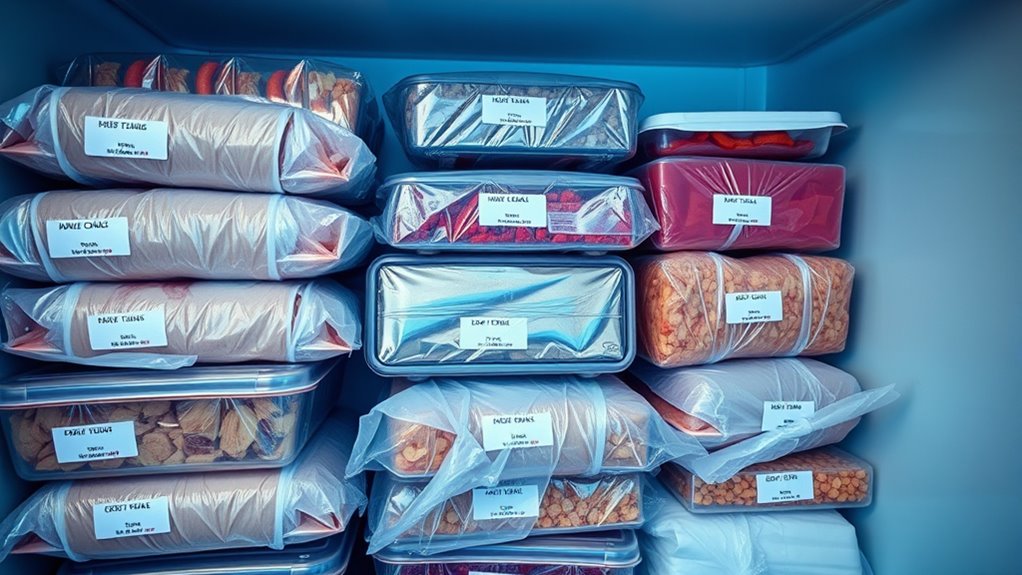
Freezer burn can ruin your food by causing dry, discolored patches and a loss of flavor, but you can prevent it with simple techniques. One of the most effective ways is through proper wrapping. When you store food, make sure to wrap it tightly using materials like plastic wrap, aluminum foil, or vacuum-sealed bags. The goal is to eliminate as much air as possible because air exposure leads to dehydration and freezer burn. For larger items like roasts or whole chickens, double-wrapping can add an extra layer of protection. Wrap delicate items in moisture-proof materials to prevent ice crystals from forming on the surface, which contributes to freezer burn.
Proper wrapping with plastic, foil, or vacuum bags prevents air exposure and freezer burn.
Temperature control is equally important in preventing freezer burn. Keep your freezer at a steady 0°F (-18°C) to slow down the sublimation process, where moisture transitions from ice directly to vapor. Fluctuating temperatures, like frequent opening or power outages, create cycles of slight warming and refreezing that increase the risk of freezer burn. To maintain consistent temperature, avoid overloading your freezer, which can restrict air circulation, and regularly check the temperature with a reliable thermometer. If you notice any temperature spikes or inconsistent readings, take steps to correct them immediately.
Additionally, be mindful of how long you store food. Even with proper wrapping and temperature control, food stored for extended periods is more susceptible to freezer burn. Label your items with the date they were frozen, and try to consume them within recommended time frames—typically 3 to 6 months for most foods. This not only prevents freezer burn but also ensures your food stays fresh and flavorful.
Another useful tip is to avoid partial thawing and refreezing. When you need to take out food, only remove what you plan to use, and reseal the remaining portion tightly before returning it to the freezer. This minimizes exposure to air and prevents moisture loss. Also, try to freeze food in small portions to make defrosting quicker and more efficient, reducing the chances of temperature fluctuations during the process. Maintaining proper food storage techniques can significantly extend the quality and safety of your frozen goods.
As an affiliate, we earn on qualifying purchases.
Frequently Asked Questions
How Does Humidity Affect Freezer Burn?
Higher humidity levels increase the risk of freezer burn because moisture migration occurs more easily, leading to dehydration of your stored food. When humidity is high, moisture from the air can condense on food surfaces, causing ice crystals to form and creating dry spots. To minimize this, keep humidity low inside your freezer by sealing foods tightly and avoiding frequent door openings, which helps maintain ideal storage conditions and prevents freezer burn.
Can Vacuum Sealing Prevent Freezer Burn?
Ever wonder if vacuum sealing can truly prevent freezer burn? Absolutely! By removing air and sealing food in airtight packaging, vacuum sealing minimizes exposure to moisture and oxygen, which are primary causes of freezer burn. This method extends your food’s freshness, prevents dehydration, and keeps flavors intact. So, next time you store leftovers, consider vacuum sealing to maintain quality and avoid the dreaded freezer burn.
Does Opening the Freezer Frequently Cause Freezer Burn?
Yes, opening the freezer frequently can cause freezer burn because it lets warm air inside, which affects the freezer temperature. To minimize this, keep the freezer at the right temperature and use proper storage containers that seal tightly. Each time you open it, the temperature fluctuates slightly, increasing the risk of freezer burn. Limit openings when possible, and guarantee your freezer stays consistently cold for ideal food preservation.
Are Certain Foods More Prone to Freezer Burn?
Certain food types are more prone to freezer burn because of their moisture content and surface characteristics. For example, fruits, vegetables, and meats with higher water content tend to have higher freezer burn susceptibility. You should wrap these foods tightly and remove excess air to reduce exposure. Items like bread or baked goods are less susceptible but still benefit from proper packaging to prevent dehydration and freezer burn over time.
How Long Can I Store Food Before Freezer Burn Occurs?
Freezer burn is a thief that sneaks in over time, so you should use your stored foods before they hit the 3 to 12-month mark, depending on the item. Temperature fluctuations and storage duration are key culprits. To keep your food fresh and prevent freezer burn, maintain a consistent temperature of 0°F and package items tightly. The longer you wait, the higher the chance of it happening—so don’t let time be your enemy.
Conclusion
To prevent pesky freezer burn, practice proper packing and persistent patience. Seal snacks securely, squeeze out excess air, and store items in airtight containers. By being mindful and meticulous, you’ll master the art of maintaining freshness and flavor. Remember, consistent care creates cold storage success. So, stay vigilant, seal tightly, and savor your stored goodies without the sting of freezer burn. Your frozen favorites will thank you for your thoughtful, thorough tactics!
Halloween Picks
halloween
As an affiliate, we earn on qualifying purchases.