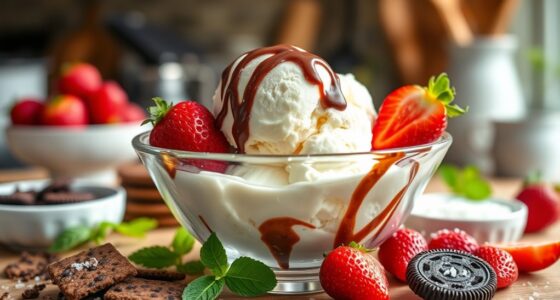
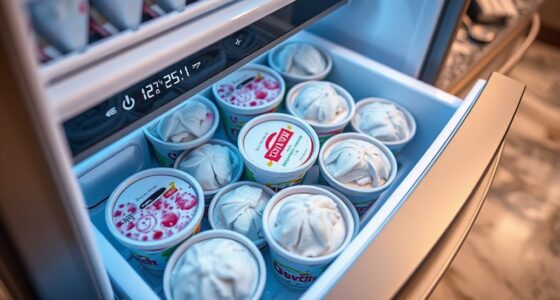
To manage texture over time when freezing and thawing, you should focus on rapid freezing to create smaller ice crystals that preserve cell structure, which helps keep food firm and flavorful. Proper packaging prevents moisture loss and freezer burn, while gradual thawing, preferably in the refrigerator, minimizes moisture and texture damage. Avoid refreezing, as it causes additional cell rupture and quality decline. If you stay mindful of these techniques, you’ll keep your food tasting great and maintain its original texture longer.

Get baking supplies delivered free with Prime
- Fast, free delivery on millions of items
- Prime Video, Amazon Music and more included
- Member-only deals all year
Key Takeaways
- Rapid freezing creates smaller ice crystals, reducing cell damage and preserving food texture over time.
- Gradual thawing in the refrigerator minimizes moisture loss and prevents mushiness.
- Proper packaging with airtight seals prevents freezer burn and moisture loss, maintaining texture quality.
- Avoid refreezing thawed food to prevent additional ice crystal growth and texture degradation.
- Controlling moisture during freezing and thawing helps retain original flavor, texture, and nutritional value.
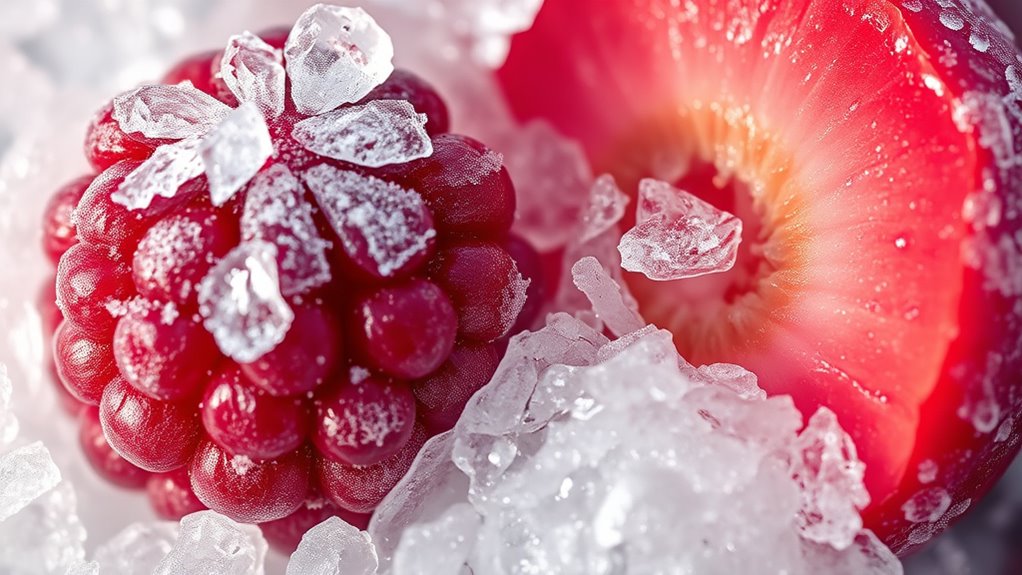
Have you ever wondered how freezing and thawing affect the quality of food and other materials? When you freeze items, the goal is to preserve their freshness and texture for as long as possible. To do this effectively, understanding how these processes impact quality preservation is essential. Proper freezing and thawing techniques help maintain the original flavor, texture, and nutritional value of your food. One key factor in achieving this is moisture control. When moisture escapes or forms ice crystals within the food, it can cause cell walls to rupture, leading to undesirable changes once thawed. By controlling moisture levels during freezing, you prevent excessive ice crystal formation, which can damage the food’s structure and compromise quality.
Controlling moisture during freezing prevents ice crystal damage and preserves food’s quality and texture.
When you freeze food, the formation of ice crystals is inevitable, but the size and distribution of these crystals matter. Smaller, evenly distributed crystals tend to cause less damage, preserving the food’s texture better. That’s why quick freezing methods are often recommended—they promote rapid ice formation, resulting in smaller crystals and better quality preservation. If moisture isn’t properly managed, large ice crystals develop, puncturing cell walls and leading to a mushy or watery consistency after thawing. To optimize moisture control, avoid thawing and refreezing items multiple times, as this cycle exacerbates moisture loss and texture degradation.
Another way to maintain quality during freezing is to package foods airtight and in suitable containers. This prevents freezer burn, which occurs when moisture escapes and creates dry spots that ruin the texture. Proper packaging also minimizes exposure to air and external odors, which can compromise flavor and overall quality. When you thaw frozen items, doing so gradually in the refrigerator helps control moisture loss and keeps the texture intact. Rapid thawing at room temperature or in hot water often causes uneven thawing and moisture loss, resulting in compromised quality. Additionally, understanding the role of freezing rate can help you choose the best method for preserving texture and flavor.
In addition, understanding how different materials react to freezing and thawing can help you better preserve their quality. For example, fruits with high water content are more susceptible to texture changes, so gentle handling and quick freezing are crucial. Conversely, meats with lower moisture levels typically withstand freezing better but still benefit from moisture control techniques. Overall, managing moisture during both freezing and thawing is essential to maintaining the original quality of your food and other materials. When you pay attention to these details, you’ll find that your frozen items retain their texture, flavor, and nutritional value much longer, making your preservation efforts truly effective.
airtight food storage containers
As an affiliate, we earn on qualifying purchases.
As an affiliate, we earn on qualifying purchases.
Frequently Asked Questions
How Does Freezing Affect the Nutritional Value of Foods?
Freezing slightly impacts the nutritional value of foods by slowing nutrient degradation and enzyme activity, helping retain most vitamins and minerals. You’ll find that frozen foods often preserve nutrients better than fresh ones that sit exposed to air and light. However, some water-soluble vitamins, like vitamin C, may still diminish over time. Overall, freezing is a good way to maintain food’s nutritional quality, with minimal nutrient loss if done properly.
What Are the Best Containers for Freezing Different Foods?
Imagine giving your foods a cozy, secure home. For best results, use airtight containers for soups, stews, and leftovers to prevent freezer burn. Flexible freezer bags work well for fruits, vegetables, and smaller portions, saving space and keeping flavors fresh. Choose containers that are durable and leak-proof, ensuring your frozen treasures stay protected. This way, you preserve quality and make thawing a breeze, making your kitchen organized and efficient.
Can Freezing Cause Chemical Changes in Food Textures?
Freezing can cause some chemical changes in food textures, mainly due to alterations in chemical structure and enzyme activity. You might notice that enzymes become less active, which can slow down spoilage, but if freezing isn’t done properly, cell walls can break down, leading to texture changes. While freezing preserves food, it can still impact the chemical structure, so you may see some differences in the texture once thawed.
How Long Can Foods Be Stored in the Freezer Without Quality Loss?
You can store foods in the freezer for several months without significant quality loss, but beware of freezer burn and ice crystal formation that can ruin texture. Typically, meats last 6-12 months, fruits and vegetables 8-12 months, and baked goods around 3-6 months. To preserve quality, use airtight containers and avoid temperature fluctuations. Properly stored, your food stays fresh, flavorful, and safe longer.
Are There Any Foods That Shouldn’T Be Frozen at All?
You should avoid freezing foods like fresh eggs in shells, soft cheeses, and leafy greens because they can become unsafe or develop freezer burn, affecting quality. These foods may change texture or promote bacteria growth, risking food safety. To prevent freezer burn, always package foods properly in airtight containers. If you notice freezer burn, discard the item, as it compromises both safety and flavor, ensuring you enjoy your frozen foods at their best.
Conclusion
By mastering freezing and thawing, you become the conductor of your food’s symphony, ensuring each note—texture and flavor—remains flawless over time. Think of your freezer as a magic box that preserves freshness like a time capsule, while careful thawing gently awakens your ingredients, like a sunrise blooming anew. With this knowledge, you hold the power to transform frozen chaos into culinary harmony, turning everyday ingredients into a masterpiece that delights every time you open your freezer door.
Halloween Picks
halloween
As an affiliate, we earn on qualifying purchases.