
To reduce butter bits in your homemade ice cream, focus on stabilizing the emulsion by using high-quality fats and incorporating stabilizers or emulsifiers. Guarantee you mix ingredients gradually and keep your mixture at consistent cold temperatures to prevent fat separation. Proper tempering, careful churning at steady speeds, and avoiding temperature fluctuations during freezing also help. For more tips on achieving smooth, velvety ice cream, explore further techniques and troubleshooting strategies.

Get baking supplies delivered free with Prime
- Fast, free delivery on millions of items
- Prime Video, Amazon Music and more included
- Member-only deals all year
Key Takeaways
- Ensure thorough and gradual mixing of fats and liquids to promote stable emulsion formation.
- Maintain consistent, cold temperatures during churning and storage to prevent fat separation.
- Incorporate stabilizers or emulsifiers like lecithin or gelatin to enhance emulsion stability.
- Chill the base mixture completely before churning to improve fat dispersion.
- Avoid overmixing during churning, which can cause fat to coalesce into butter bits.
As an affiliate, we earn on qualifying purchases.
Why Butter Bits Form in Homemade Ice Cream
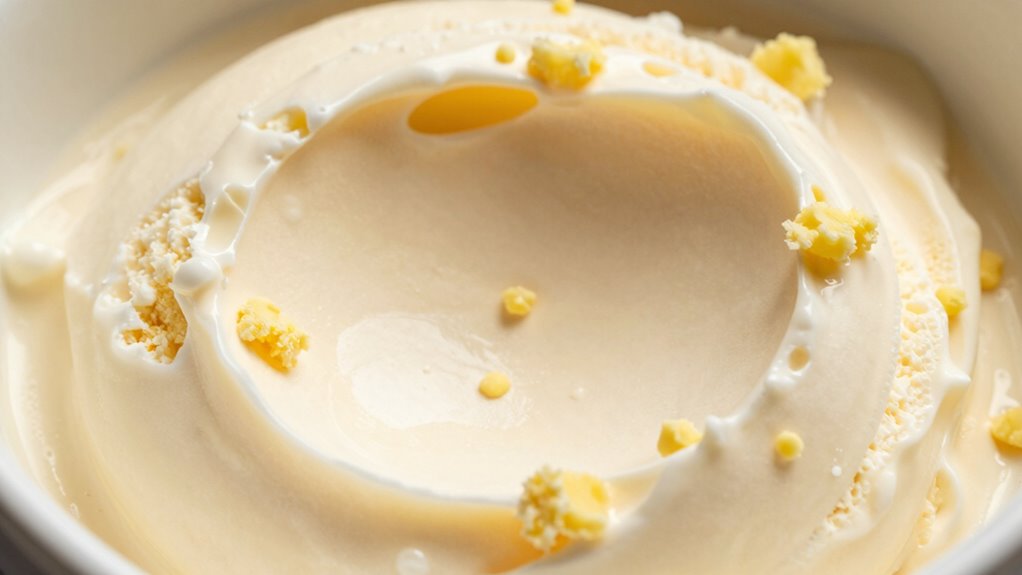
Butter bits form in homemade ice cream when the butterfat separates from the milk solids and clumps together during freezing. This happens because the butter emulsion isn’t stable enough, leading to fat separation. When the ice cream cools, the fat molecules can’t stay evenly distributed, causing the butterfat to coalesce into solid bits. Proper emulsion stabilization is essential to prevent this separation, as it keeps the fat molecules evenly dispersed throughout the mixture. This process is influenced by how you mix and stabilize the ingredients; if the emulsion isn’t properly maintained, fat separation becomes inevitable. Maintaining a consistent temperature during freezing helps preserve the emulsion stability, reducing the likelihood of butter bits forming. Temperature control is crucial because fluctuations during freezing can also weaken the emulsion, encouraging butter bits to form. Additionally, incorporating stabilizers or emulsifiers can further enhance emulsion stability, making it less likely for butter bits to develop. Basically, an unstable butter emulsion allows the fat to migrate and clump, creating those undesirable butter bits. Understanding this helps you identify why your ice cream develops these inconsistencies during the freezing process.
How to Choose Fats and Ingredients for Creamy Ice Cream
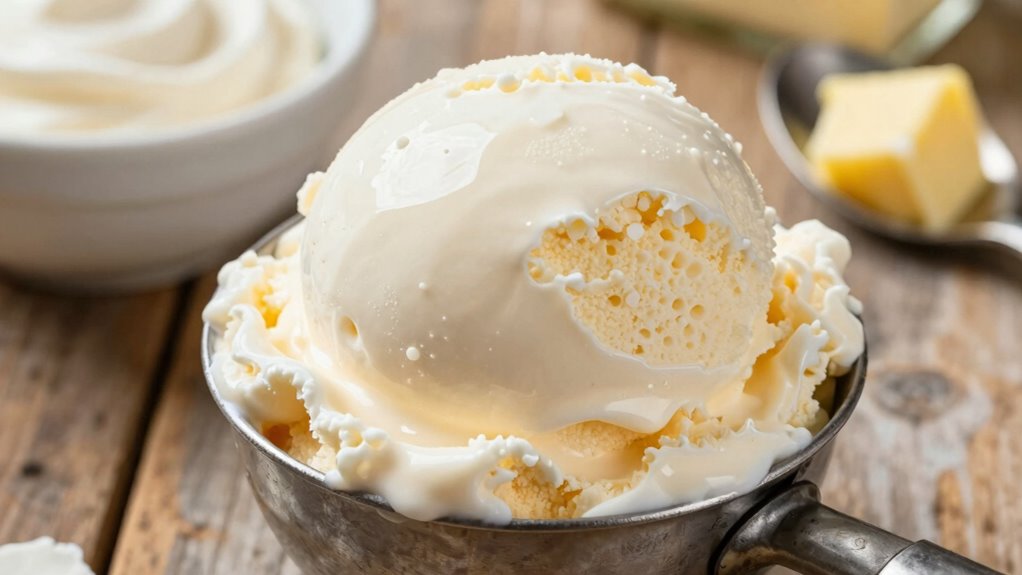
Choosing the right fats and ingredients is key to making your ice cream wonderfully creamy. You should focus on selecting high-quality fats, balancing the right fat ratios, and picking ingredients that add smoothness. These choices directly impact the texture, so pay close attention to each component. Incorporating proper equipment such as ice cream makers can also improve the consistency and prevent unwanted textures like “butter bits.” Properly managing ingredient freshness not only improves flavor but also reduces the chances of energy waste during production. To achieve optimal results, it’s helpful to understand the seasonal checklists for ingredient freshness and storage that can influence texture and flavor. Additionally, understanding cleaning and maintenance of your equipment ensures consistent quality and reduces the risk of contamination or spoilage.
Selecting Quality Fats
The quality of fats you use can make a significant difference in achieving a smooth, creamy texture in your homemade ice cream. Opt for high-quality fats like heavy cream, full-fat coconut milk, or nut butters to enhance richness and mouthfeel. These fats help incorporate fruit flavors seamlessly and support the use of sugar alternatives without sacrificing creaminess. When selecting fats, consider their melting points and flavor profiles, as these influence texture and taste. Use the table below to compare common fats:
| Fat Type | Key Characteristics |
|---|---|
| Heavy Cream | Rich, smooth, high-fat content |
| Coconut Milk (full-fat) | Natural sweetness, tropical flavor |
| Nut Butters | Adds creaminess, nutty depth |
Choosing quality fats ensures your ice cream stays smooth and indulgent. Additionally, selecting the right fats can help prevent the formation of butter bits and maintain a desirable texture. Incorporating halal-certified fats is especially important if you are adhering to halal dietary standards, helping you align your ingredients with your dietary needs. Paying attention to fat quality in your ingredients can also help you control the overall flavor profile of your ice cream. Incorporating proper fat selection is essential for consistent results and achieving a luxurious texture. Being aware of storage conditions for fats can also influence their performance in recipes, ensuring your ice cream remains smooth and free of undesirable texture issues.
Balancing Fat Ratios
Achieving the perfect creamy texture in homemade ice cream depends heavily on balancing fat ratios to suit your recipe. Too much fat can cause butter bits, while too little can make the ice cream icy and grainy. Proper fat ratios ensure smoothness and stability. To maximize emulsification, choose fats that blend easily and maintain consistency, such as cream or milk with balanced fat content. Combining different fats can improve texture and prevent separation. Keep in mind that an ideal ratio supports stable emulsification, resulting in a silky, uniform ice cream. Adjusting fat ratios based on your ingredients helps prevent butter bits and creates a creamy, luxurious finish. Monitoring emulsification techniques during the process can help you refine your technique and achieve the perfect texture every time. Additionally, understanding fat emulsification can guide you in selecting the right fats and methods for optimal results. Remember, precise balancing is key to a smooth, indulgent homemade ice cream, and paying attention to ingredient ratios can make all the difference. Properly managing fat distribution can further enhance the overall consistency and mouthfeel of your ice cream.
Choosing Creamy Ingredients
Selecting the right fats and ingredients directly influences the creaminess of your homemade ice cream. To achieve smooth texture and proper butter consistency, choose ingredients that promote seamless fat integration. High-quality dairy products like heavy cream and whole milk provide a rich base, while butter adds flavor and richness. Consider using emulsifiers such as egg yolks or lecithin to improve fat blending. Opt for fats with a stable consistency to prevent butter bits, especially when using stabilizers that help maintain a uniform mixture. Additionally, adding a small amount of corn syrup or glucose can enhance smoothness and prevent crystallization. Using fat stability techniques can further ensure smooth incorporation and prevent separation. Ensuring the mixture is kept at the right temperature during blending also helps maintain emulsion stability, reducing the likelihood of butter bits forming. Incorporating temperature control methods during preparation can significantly improve the overall texture and consistency of your ice cream. Proper selection and handling of creamy ingredients will help you create a luscious ice cream without unwanted butter bits.
How to Properly Temper and Mix Your Ice Cream Base

To guarantee your ice cream base turns out smooth and creamy, properly temper and mix your ingredients. Start by gradually warming your dairy or egg mixture, stirring constantly, to avoid curdling or uneven texture. When adding ingredients like melted butter or chocolate, consider ingredient substitution options that promote better emulsification, reducing butter bits. Use a whisk or blender to ensure thorough mixing, which helps incorporate air and break up fat clumps. Proper flavor pairing also plays a role; pairing rich ingredients with bright, acidic flavors can help maintain a smooth consistency. Once combined, chill the mixture thoroughly before churning. This careful tempering and mixing process ensures a uniformly smooth base, minimizes butter bits, and results in a creamier, more enjoyable ice cream.
How Stabilizers and Emulsifiers Help Prevent Butter Bits
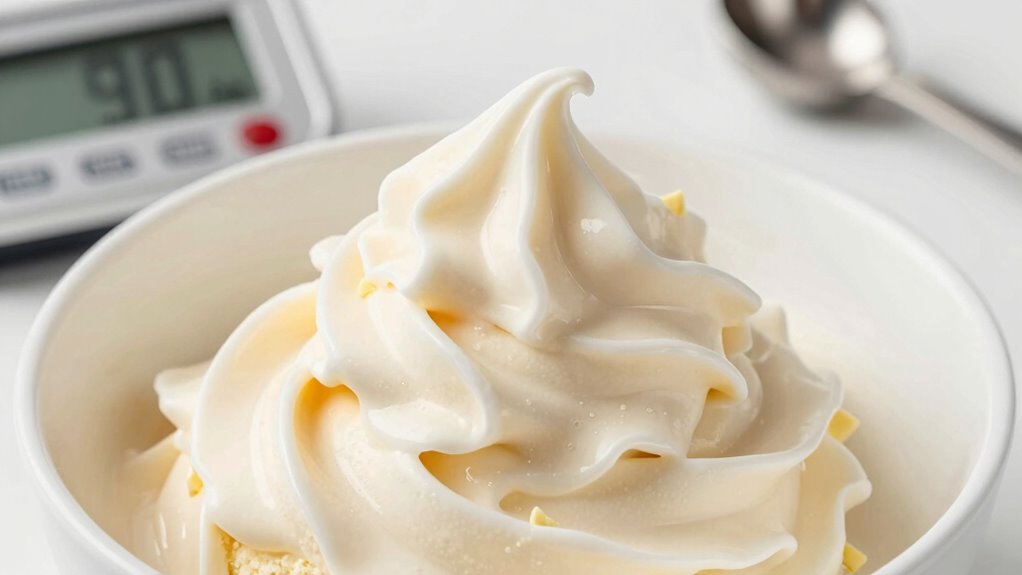
Stabilizers and emulsifiers play a crucial role in preventing butter bits by improving the overall texture and consistency of your ice cream. Stabilizer benefits include reducing ice crystal growth and creating a smoother mouthfeel, which helps prevent fat separation. Emulsifier functions help blend fats and liquids evenly, maintaining a uniform mixture and preventing greasy clumps. By adding these ingredients, you ensure your ice cream stays creamy and well-integrated. Consider using:
- Gelatin or agar-agar for stabilization
- Guar gum or xanthan gum for thickness
- Lecithin as an effective emulsifier
- Cornstarch to improve texture
- Egg yolks for natural stabilizing effects
These tools work together to keep fats evenly dispersed, reducing the risk of butter bits forming during freezing.
How to Incorporate Fats and Dairy to Avoid Greasy Clumps

Incorporating fats and dairy smoothly into your ice cream mixture is key to preventing greasy clumps and ensuring a creamy texture. Focus on fat emulsification by gradually adding fats, like melted butter or cream, while whisking continuously. Selecting the right dairy is essential; opt for high-fat options such as heavy cream or full-fat milk to promote better emulsification and consistency. Proper dairy selection helps avoid separation and greasy patches. To deepen your understanding:
| Dairy Type | Effect on Texture | Best Use Case |
|---|---|---|
| Heavy Cream | Rich, smooth | Base for ice cream |
| Whole Milk | Light, balanced | Flavor and base |
| Half-and-Half | Creamy, moderate fat | Custards and mix-ins |
| Sour Cream | Tangy, smooth | Unique flavor twists |
| Yogurt | Tangy, smooth, thick | Healthier alternative |
Best Churning Techniques to Minimize Butter Bits
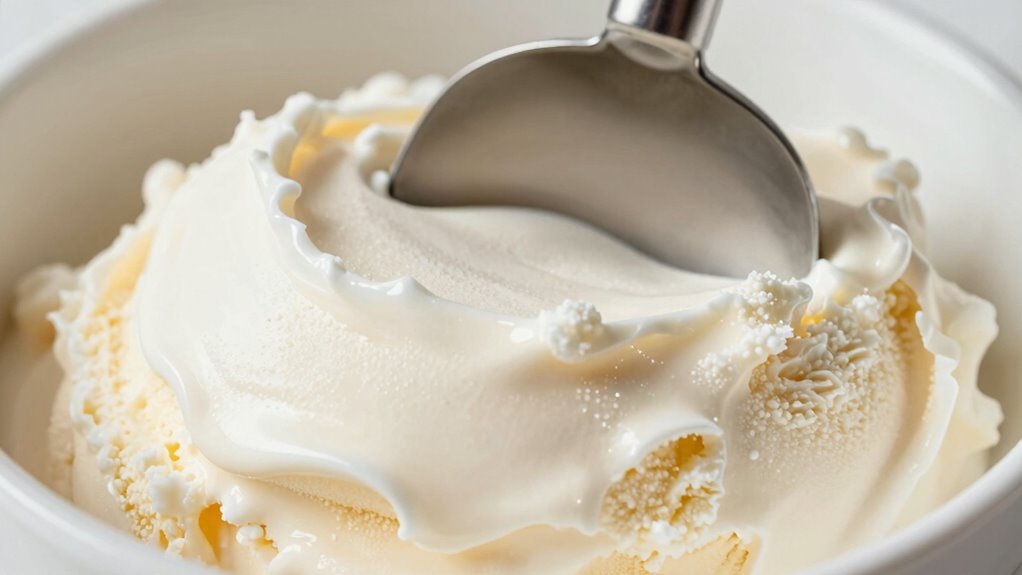
When churning your ice cream, the way you handle the process can make a significant difference in preventing butter bits from forming. Proper churning techniques help maintain a smooth butter texture and avoid cream separation that causes butter bits. To improve results:
Proper churning techniques ensure smooth ice cream and prevent butter bits from forming.
- Churn at a consistent, moderate speed to prevent over-agitation
- Avoid excessive freezing of the mixture before churning
- Use a pre-chilled bowl to keep the mixture cold and slow cream separation
- Stop churning just before the ice cream reaches soft-serve consistency
- Incorporate stabilizers or emulsifiers to promote even fat distribution
These techniques help you achieve a uniform butter texture and minimize butter bits, resulting in creamier, smoother ice cream with less greasy clumps.
Troubleshooting Common Causes of Butter Bits in Ice Cream
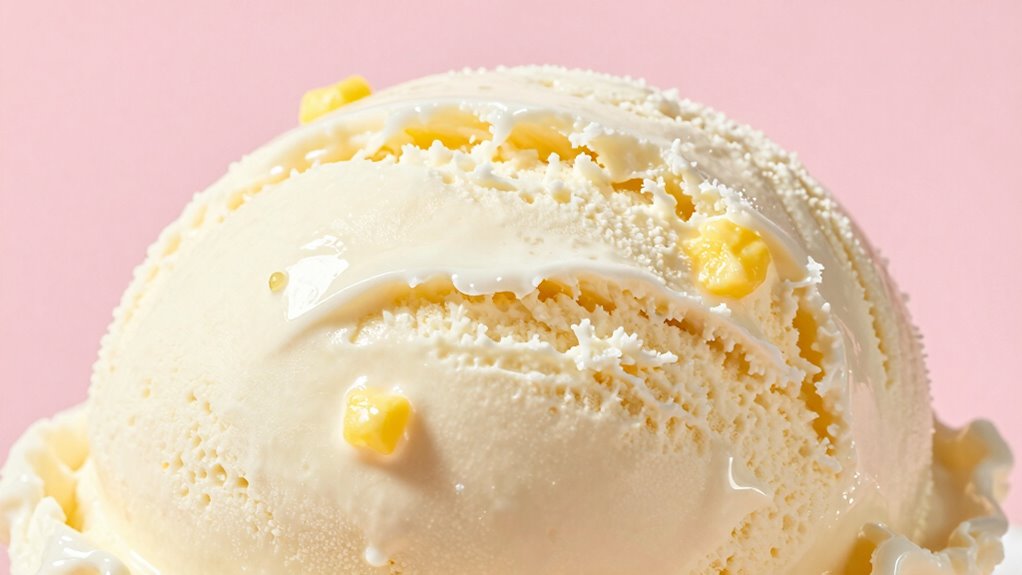
If you’re still encountering butter bits, it’s worth checking your process. Overmixing the cream base, not churning long enough, or temperature issues can all cause the problem. Fixing these factors can help you achieve a smoother, creamier ice cream.
Overmixing Cream Base
Overmixing the cream base can cause the fat to separate and form butter bits in your ice cream. When you overmix, you disrupt the delicate process of fat emulsification, which is essential for maintaining dairy stability. This leads to fat clumping together instead of staying evenly dispersed. To avoid this, follow these tips:
- Mix just until ingredients are combined
- Use low-speed settings on your mixer
- Monitor the mixture closely during blending
- Chill the base before churning
- Avoid prolonged mixing after reaching the desired consistency
Insufficient Churning Time
Insufficient churning time is a common cause of butter bits forming in your ice cream. When you don’t churn long enough, the mixture doesn’t fully incorporate air and evenly distribute fat, leading to uneven butter distribution. This can cause small butter bits to develop as the fat separates during freezing. To improve texture and prevent butter bits, guarantee you churn your ice cream until it reaches a soft-serve consistency. This step helps achieve a smooth, creamy texture and enhances flavor. Additionally, incorporating whipped cream during churning can improve overall flavor enhancements and create a lighter, more uniform mixture. Proper churning time is essential for evenly distributing ingredients and preventing fat separation, which ultimately results in a better, butter-free ice cream.
Temperature Control Issues
Temperature control plays a essential role in preventing butter bits from forming in your ice cream. If temperatures fluctuate during freezing, fat can separate and create unwanted butter bits. To avoid this, guarantee your equipment is properly calibrated for consistent cold temperatures. Always check your freezer’s temperature regularly, aiming for around 0°F (-18°C). Avoid opening the freezer too often, which causes temperature swings that can disrupt fat emulsification. Use a reliable thermometer to monitor conditions closely. Keep your mixture chilled before churning to maintain a steady temperature. Proper equipment calibration is fundamental—you want uniform freezing conditions to prevent fat separation. Be mindful of ambient temperature changes, especially in warmer environments, which can impact your freezer’s performance. Consistent temperature control ensures smooth, creamy ice cream without butter bits.
Tips for Freezing and Storing Ice Cream for Smoothness
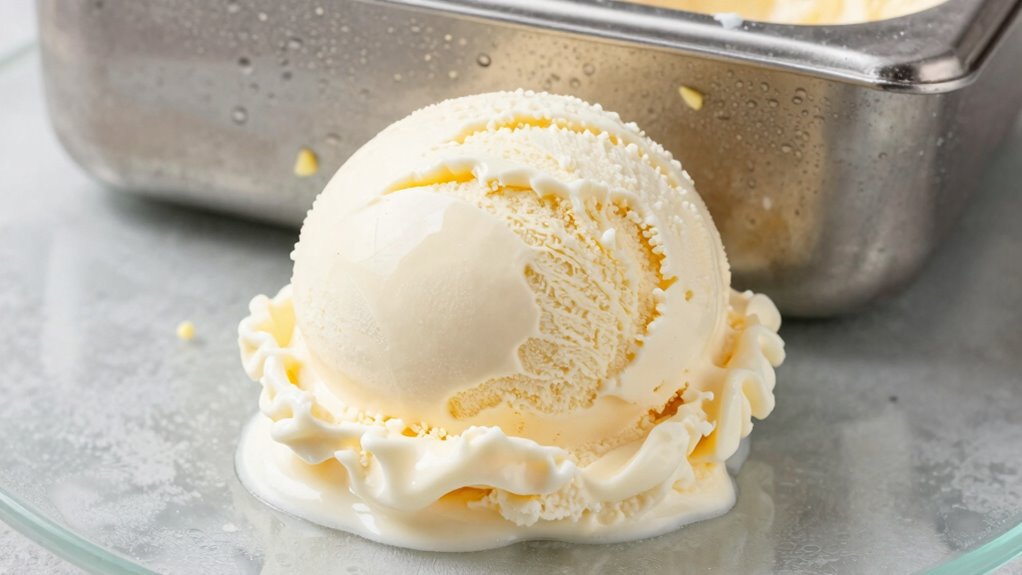
To keep your homemade ice cream smooth and scoopable, proper freezing and storage are essential. Use airtight containers to prevent ice crystal formation, which can create a gritty texture. Before freezing, consider adding sugar alternatives that help maintain a soft consistency without sacrificing sweetness. Incorporate flavor infusions carefully, as they can alter the freezing process; freeze them separately if needed. For best results, press plastic wrap directly onto the surface of the ice cream before sealing to minimize air exposure. Store at a consistent, cold temperature, ideally around 0°F (-18°C). When ready to serve, let the ice cream sit at room temperature for a few minutes to soften slightly. Proper freezing and storage guarantee your ice cream remains smooth and enjoyable.
Pro Tips for Achieving Velvety, Smooth Ice Cream
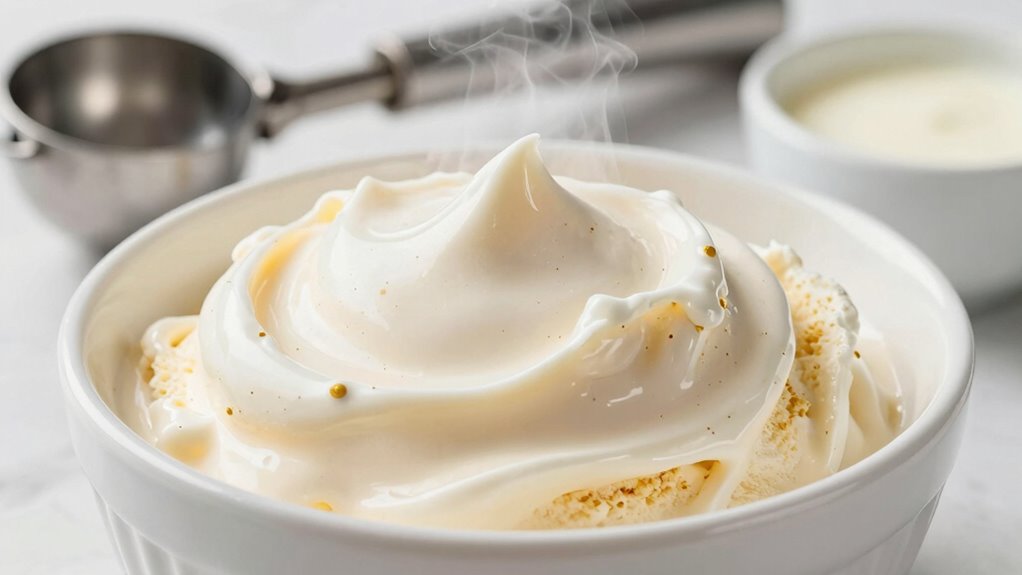
Achieving a velvety, smooth ice cream starts with selecting the right ingredients and techniques. To prevent butter formation and ensure proper fat emulsification, focus on incorporating ingredients like emulsifiers or stabilizers. Use high-quality cream with a balanced fat content to promote even fat distribution. Chilling your base thoroughly before churning helps achieve uniform texture. Additionally, avoid over-agitating the mixture, which can cause fat separation. Consider adding a small amount of alcohol or corn syrup to reduce ice crystal formation and enhance smoothness. Lastly, guarantee your churner is at the ideal temperature for efficient fat emulsification. These pro tips will help you create ice cream with a luscious, velvety consistency free from butter bits.
For silky ice cream, use stabilizers, chill thoroughly, and maintain proper churning temperatures.
- Use emulsifiers or stabilizers to improve fat emulsification
- Chill the mixture thoroughly before churning
- Incorporate alcohol or corn syrup to prevent ice crystals
- Avoid over-agitating during churning
- Maintain the right freezer and churner temperatures
Frequently Asked Questions
Can Temperature Fluctuations During Storage Cause Butter Bits to Form?
Yes, temperature fluctuations during storage can cause butter bits to form in your homemade ice cream. When storage conditions aren’t stable, the fat separates and solidifies unevenly, creating those unwanted bits. To prevent this, maintain consistent temperature stability in your freezer. Keep your ice cream stored at a steady, cold temperature and avoid frequent opening, which helps keep the texture smooth and prevents butter bits from forming.
Does Overmixing or Undermixing Contribute to Butter Bit Formation?
Think of your ice cream as a delicate dance. Overmixing at a high speed can cause the butter to clump like stubborn dancers, while undermixing leaves ingredients out of sync, forming lumps. Striking the right balance with your mixing speed guarantees ingredients blend smoothly. Pay attention to ingredient ratios too; too much fat can make butter bits more likely. You control the rhythm—mix just enough to keep everything in harmony.
Are Certain Dairy Brands More Prone to Creating Butter Bits?
Certain dairy brands are more prone to creating butter bits because of differences in dairy quality and brand consistency. Lower-quality or inconsistent dairy products often contain more fat separation, which leads to butter bits in your ice cream. To prevent this, choose reputable brands known for high-quality, well-processed dairy. Using fresh, high-fat dairy from trusted sources helps ensure a smoother, creamier texture without unwanted butter bits.
How Does Freezer Temperature Impact Butter Bit Development?
You’ll find that freezer temperature substantially impacts butter bit development because colder temps cause smaller ice crystals, reducing butter bits. If your freezer’s humidity is too high, larger ice crystals form, making butter bits more noticeable. Keep your freezer at a steady, ideal temperature—around 0°F—and avoid fluctuations. Properly managing freezer humidity helps control ice crystal size, resulting in creamier ice cream with fewer butter bits.
Can Adding Alcohol or Other Ingredients Reduce Butter Bits?
Adding alcohol or other ingredients can help reduce butter bits in your ice cream. Alcohol addition lowers the freezing point, making the mixture smoother and preventing fat separation. You can also try ingredient substitution, like using lighter fats or emulsifiers, to improve texture. Just keep in mind that too much alcohol might affect the flavor and texture, so add it gradually and taste as you go.
Conclusion
By following these tips, you’ll turn your homemade ice cream into a silky-smooth masterpiece, free of unwanted butter bits. Think of it like fine-tuning an orchestra—you’re harmonizing ingredients and techniques to create a creamy symphony in every scoop. With patience and attention to detail, you’ll master the art of smooth, luscious ice cream that delights every time. Say goodbye to clumps and hello to dessert perfection!
Fall Picks
fall essentials
As an affiliate, we earn on qualifying purchases.