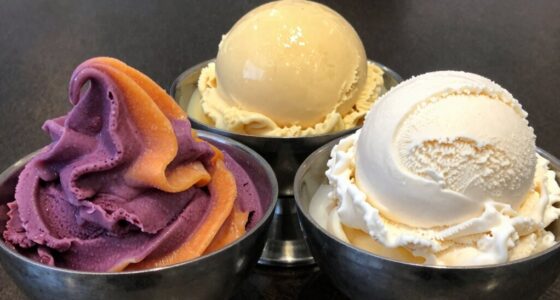

You might get confused between sherbet, sherbert, and sorbet because of their similar names and pronunciation variations. Sherbet has a little dairy, giving it a creamy texture, while sorbet is dairy-free and made from pure fruit. Sherbert is just a common spelling and pronunciation mistake that many use. Knowing these differences helps you choose the right dessert and better understand their history. Keep exploring to uncover more about these cool, tasty treats.

Get baking supplies delivered free with Prime
- Fast, free delivery on millions of items
- Prime Video, Amazon Music and more included
- Member-only deals all year
Key Takeaways
- “Sherbert” is a common pronunciation variation of “sherbet,” but “sherbet” is the correct spelling in most dictionaries.
- Sherbet contains dairy, giving it a creamy texture, while sorbet is dairy-free and made from pure fruit.
- Pronunciations like “sor-bay” for sorbet are influenced by French language origins.
- Regional dialects and speech patterns cause variations in spelling and pronunciation of these desserts.
- Understanding the differences helps clarify confusion and enhances appreciation of these frozen treats.

Have you ever wondered what sets sherbet, sherbert, and sorbet apart? These words often trip people up because of their similar spelling and pronunciation, yet they refer to different frozen treats. To understand the distinctions, it helps to look into their historical origins and pronunciation variations. Sherbet, in particular, has a fascinating history rooted in ancient times, with origins tracing back to the Middle East and Persia, where a fruity, icy beverage called “sharbat” was enjoyed. The word traveled through various cultures and languages, eventually making its way into European languages. Over time, the term evolved to describe a frozen dessert with a creamy texture, often containing dairy or fruit flavors, especially in Western contexts. Meanwhile, “sherbert” is simply a common pronunciation variation of “sherbet,” especially in the United States. Some people say “sherbert” because it rolls off the tongue more easily or sounds more natural to their ears, even though it’s technically a misspelling. Despite this variation, “sherbet” remains the correct spelling in most dictionaries, though “sherbert” is widely understood and used colloquially. Additionally, understanding the linguistic evolution of these words can deepen your appreciation for their usage and pronunciation. This evolution reflects changes in pronunciation and spelling over time, influenced by regional speech patterns and regional dialects. Recognizing these language variations can help you better understand how words adapt across different communities. This variation is a common example of how language adapts and shifts in different communities. In recent years, the popularity of these icy desserts has grown worldwide, leading to more regional adaptations in naming and preparation styles.
On the other hand, sorbet is a different type of frozen dessert altogether. Its origins are traced back to France and Italy, where it was known as “sorbetto” or “sorbet.” Unlike sherbet, sorbet contains no dairy, making it entirely fruit-based and often lighter and more refreshing. Its preparation involves pureed fruit, sugar, and sometimes wine or liqueurs, churned to a smooth, icy consistency. The pronunciation variations for sorbet are less common, but some may say “sor-bay” instead of “sor-bay,” influenced by French pronunciation. The key difference lies in ingredients: sherbet usually contains a small amount of milk or cream, giving it a slightly creamy texture, while sorbet is dairy-free, emphasizing fruit flavors and icy freshness. Recognizing these ingredient differences can help you choose the right dessert for any occasion. These distinctions are especially important for those with dietary restrictions or preferences, ensuring you pick the best treat for your needs.
Understanding these nuances helps you appreciate the subtle distinctions among sherbet, sherbert, and sorbet. The historical origins reveal a fascinating journey through different cultures, and pronunciation variations reflect regional speech patterns and linguistic evolution. When you go to buy or make these frozen treats, knowing their backgrounds adds a layer of appreciation. Even though people often use “sherbert” interchangeably with “sherbet,” recognizing the proper term and its history can make your dessert choices more informed. So, next time you enjoy a scoop of sorbet or sherbet, remember the rich history and linguistic twists behind the words, and you’ll savor each bite with a bit more insight.
ice cream maker for frozen desserts
As an affiliate, we earn on qualifying purchases.
As an affiliate, we earn on qualifying purchases.
Frequently Asked Questions
Are There Any Health Benefits Associated With Sherbet or Sorbet?
Yes, sherbet and sorbet can offer health benefits. Sherbet typically contains dairy, providing calcium and vitamin D, though in smaller amounts, as shown in nutritional comparisons. Sorbet is dairy-free, making it lower in fat and suitable for lactose intolerance. A dairy content analysis reveals both can be invigorating, low-calorie options for hydration and vitamins, especially if you choose versions with natural fruit ingredients. However, watch for added sugars to maximize health benefits.
How Are Sherbet, Sherbert, and Sorbet Traditionally Served?
Imagine you’re at a Mediterranean celebration where sherbet is served in small bowls, reflecting its cultural origins. Typically, sherbet, sherbert, and sorbet are presented chilled, often as a invigorating palate cleanser between courses or dessert. Serving traditions vary, but they generally involve scooping or pouring the frozen fruit or dairy-based treat into cups or bowls. This approach emphasizes their role as cooling, flavorful delights enjoyed in social or cultural settings.
Can Sherbet or Sorbet Be Made at Home Easily?
Yes, you can easily make sherbet and sorbet at home. You’ll enjoy homemade flavor customization by choosing seasonal ingredients like berries or citrus. Simply blend fruit with sugar and a bit of juice or milk, then freeze, stirring occasionally to prevent ice crystals. This process allows you to create invigorating, personalized desserts tailored to your taste and the season, making homemade sherbet or sorbet both fun and flexible.
What Are the Common Flavor Variations of These Frozen Desserts?
You’ll find many flavor variations of these frozen desserts, from classic fruit combinations like lemon and raspberry to exotic blends like mango and passionfruit. You can also experiment with flavor combinations like coconut and pineapple or berry and mint. Texture variations range from smooth and creamy to icy and granular, depending on the ingredients and preparation methods. Feel free to mix and match to discover your favorite flavor and texture combinations!
Do These Desserts Contain Alcohol or Other Unusual Ingredients?
You might find some sherbet or sorbet varieties infused with alcohol, giving them a subtle kick, but most traditional recipes don’t include alcohol or unusual ingredients. Some specialty versions, however, might incorporate alcohol infusion for added flavor, and occasionally, you’ll see unique ingredients like herbs or spices to enhance the taste. Generally, these desserts stick to fruit, dairy, and sugar, making them safe and invigorating treats.
Conclusion
So, next time you’re craving a frozen treat, remember these differences—your taste buds will thank you. Mispronouncing or mixing up sherbet, sherbert, and sorbet might seem minor, but it can turn a simple dessert into a confusing mess. With just one letter, you could be on the verge of culinary catastrophe! Master these names, and you’ll impress everyone at the dessert table—your knowledge will shine brighter than the sun!
Halloween Picks
halloween
As an affiliate, we earn on qualifying purchases.