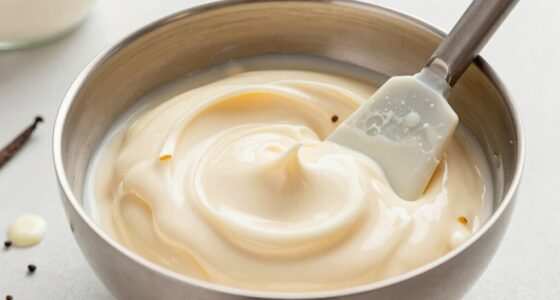
Eggy flavors in ice cream often happen when you overcook or mishandle eggs during custard making, causing sulfur-like off-notes. To prevent this, keep the custard below 185°F, stir constantly, and remove it from heat promptly. Using high-quality, fresh eggs and gentle temperature control helps maintain a clean flavor. Proper tempering and careful mixing are key. Keep exploring for expert tips that’ll help you craft smooth, egg-free ice cream every time.
Key Takeaways
- Overcooking or heating custard above 185°F can cause proteins to tighten and release sulfur compounds, resulting in an eggy taste.
- Using poor-quality or old eggs increases the likelihood of off-flavors in the ice cream base.
- Failing to strain the custard removes cooked egg bits that can contribute to an eggy flavor.
- Rapid or improper mixing can cause curdling or uneven heating, leading to off-flavors from eggs.
- Proper temperature control, gentle cooking, and careful ingredient selection help prevent an eggy taste in ice cream bases.

Digital Candy Thermometer with Pot Clip, 10" Long Stainless Steel Probe, Instant Read Kitchen Thermometer for Cooking, Baking, and Candy Making
- Pot Clip for Safe Handling: Securely attaches to pots for safety
- Clear LCD Temperature Display: Easy-to-read digital screen
- Waterproof and Easy to Clean: IP65 rated, dishwasher safe probe
As an affiliate, we earn on qualifying purchases.
As an affiliate, we earn on qualifying purchases.
What Causes an Eggy Taste in Ice Cream Bases?

An eggy taste in ice cream bases usually occurs when eggs are overcooked or incorporated improperly. If you’re using a custard base, it’s vital to handle the eggs carefully to prevent this. Poor egg quality can also contribute to an off-flavor, so choose fresh, high-quality eggs for better results. Overcooking the custard causes the proteins in the eggs to tighten, releasing sulfur compounds that create that distinct eggy flavor. Even if you’re making a smooth custard, excessive heat or prolonged cooking can trigger this reaction. To avoid it, heat the custard gently and remove it from the stove once the mixture thickens slightly. Properly incorporating the eggs and selecting good-quality ones help guarantee your ice cream base remains flavorful and free from any eggy taste.
How Do Eggs and Egg Yolks Affect Ice Cream Flavor and Texture?
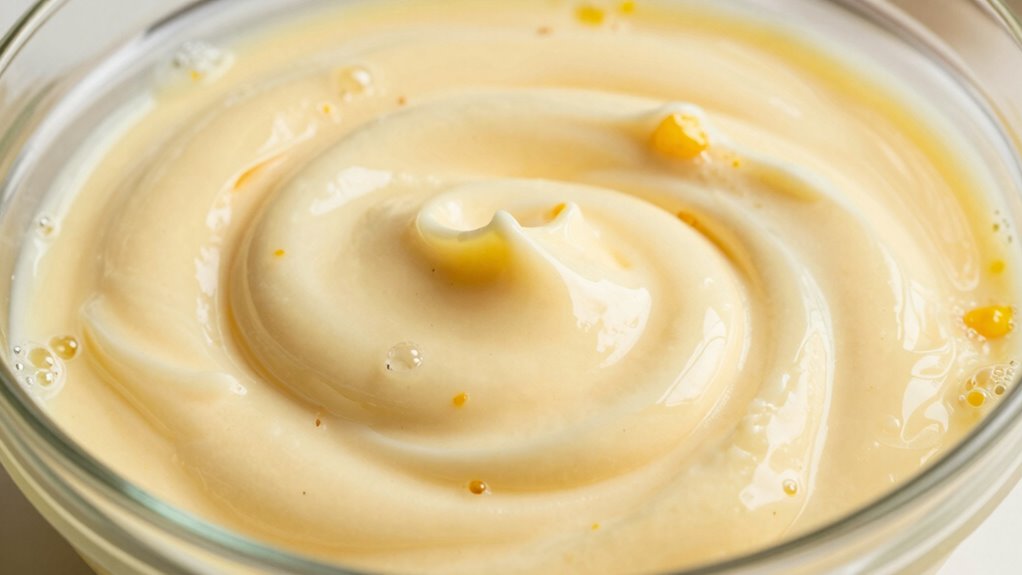
Eggs and egg yolks play a crucial role in shaping both the flavor and texture of ice cream. Their unique properties, especially egg yolk properties, contribute to richness and smoothness. Egg yolks act as natural emulsifiers, creating a creamy mouthfeel and preventing ice crystal formation. They also enhance flavor by adding depth and a subtle richness that elevates your ice cream. To understand their impact, consider these points:
Egg yolks naturally emulsify and enrich ice cream, creating smoothness and depth of flavor.
- Egg yolk properties provide natural emulsification
- Flavor enhancement adds richness and depth
- Fats in yolks improve creaminess
- Proteins contribute to a stable, smooth texture
- Proper heating activates egg yolk properties without causing off-flavors
- Temperature control is essential to prevent curdling and maintain a silky texture.
Using eggs correctly balances flavor and texture, ensuring a delectable ice cream experience.
Common Mistakes That Lead to Eggy Flavors in Homemade Ice Cream

When homemade ice cream develops a strong eggy flavor, it often results from common mistakes during the preparation process. One mistake is using egg substitution without adjusting other ingredients, which can upset flavor balancing. Overcooking or heating the custard too quickly can also cause the eggs to curdle, intensifying the eggy taste. Additionally, not thoroughly mixing the ingredients or failing to strain the custard leaves behind cooked egg bits that affect flavor. Proper temperature control during cooking is essential to prevent eggs from curdling and developing an eggy flavor. To avoid this, carefully control heat and incorporate ingredients gradually. Here’s a quick guide:
| Mistake | Effect | Solution |
|---|---|---|
| Using egg substitution | Alters flavor balance | Adjust other ingredients |
| Overheating custard | Eggy, cooked flavor | Cook slowly, stir constantly |
| Not straining custard | Undesirable textures, flavor | Strain before freezing |
| Inadequate mixing | Uneven flavor distribution | Mix thoroughly |
| Skipping flavor balancing | Overwhelming egg taste | Adjust with vanilla or sugar |
Additionally, paying attention to custard temperature during cooking can prevent eggs from curdling and developing an eggy flavor. Proper heat control is essential for smooth, creamy custard without off-flavors. Implementing proper mixing techniques can also significantly reduce the chances of unwanted flavors.
How to Prevent Eggy Flavors When Making Ice Cream From Scratch

To prevent eggy flavors when making ice cream from scratch, paying close attention to your custard’s temperature and cooking process is essential. Properly temper your eggs, avoid overcooking, and remove the custard promptly once it reaches the right temperature. Focus on flavor balancing by adjusting sugar and dairy to mask any residual egg taste. Use fresh ingredients to minimize off-flavors that can enhance egginess. Additionally, consider these tips:
- Keep custard below 185°F (85°C) during cooking
- Stir constantly to prevent curdling
- Strain custard before chilling
- Use high-quality, fresh eggs
- Incorporate complementary flavors to mask subtle egg notes
- Monitor cooking temperature closely throughout the process to prevent overcooking and preserve the custard’s delicate balance
- Be mindful of ingredient quality, as older eggs or dairy can intensify unwanted flavors
- Maintaining a consistent temperature helps prevent curdling and ensures a smooth, creamy base
- Incorporating proper mixing techniques can also help achieve an even texture and flavor distribution
- Employing temperature control methods, such as using a double boiler or a sous vide setup, can further ensure gentle, even cooking to avoid eggy tastes
Following these steps ensures a smooth, balanced ice cream base without unwanted eggy flavors.
Why Proper Tempering and Mixing Help Keep Your Ice Cream Egg-Free
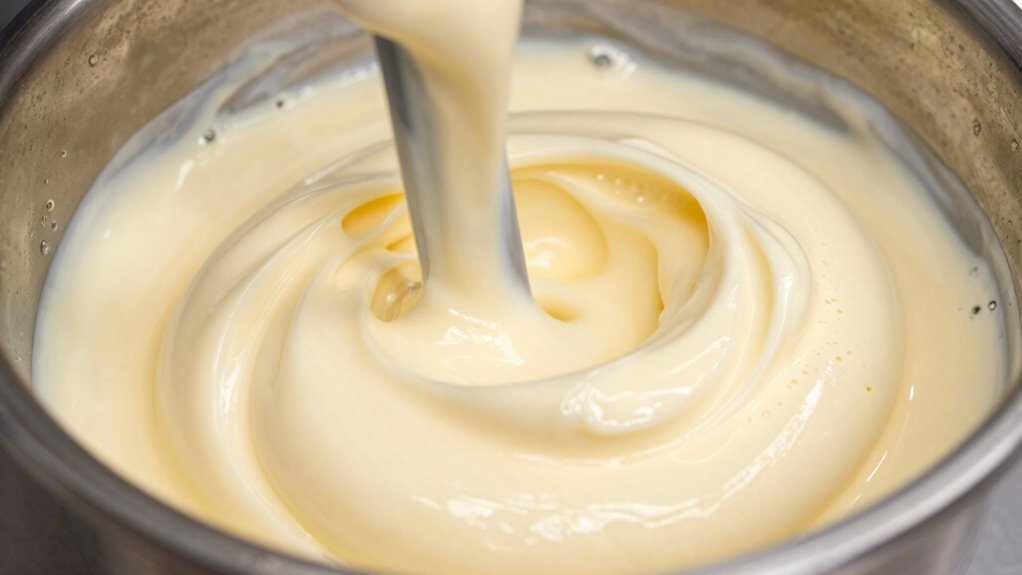
Proper tempering and mixing are essential for preventing eggy flavors in your ice cream because they guarantee a smooth, uniform custard without curdling or overcooking. Cream tempering involves gradually adding hot milk or cream to eggs, preventing sudden temperature shocks that cause curdling. Egg integration is key; slowly incorporating eggs ensures they blend evenly without scrambling. Use a double boiler to maintain steady heat and reduce risks. Here’s a quick comparison:
| Technique | Purpose |
|---|---|
| Cream Tempering | Prevents curdling during egg addition |
| Egg Integration | Ensures smooth, uniform custard |
| Gentle Mixing | Avoids overcooking and egg flavor |
Mastering these steps results in a silky, egg-free ice cream base. Additionally, maintaining proper temperature control during the process is crucial to prevent unintended eggy tastes. Understanding thermal management helps keep your custard at the ideal consistency and flavor. Paying attention to heat regulation is vital for consistent results and avoiding overcooking. Proper technique execution also plays a crucial role in achieving a perfect custard base free of eggy notes. Regularly monitoring the cooking temperature can further help prevent overcooking and preserve the delicate balance of flavors.
Choosing the Right Ingredients for Fresh, Clean Ice Cream

Choosing the right ingredients is essential for creating a fresh, clean-tasting ice cream that highlights natural flavors. Using quality ingredients guarantees your base isn’t overwhelmed by off-flavors or eggy notes. For egg substitutes, consider options like aquafaba or cornstarch to mimic binding without the eggy taste. Dairy alternatives, such as coconut milk, almond milk, or cashew cream, can replace traditional dairy and reduce risk of unwanted flavors. When selecting ingredients, keep these in mind:
Opt for fresh, high-quality ingredients to ensure pure, natural flavors in your ice cream.
- Fresh, high-quality dairy alternatives
- Egg substitutes like aquafaba or starches
- Natural sweeteners over artificial ones
- Minimal additives or stabilizers
- Organic or non-GMO options
Incorporating eco-friendly ingredients can further enhance the sustainability of your ice cream, aligning with a more responsible approach to food production. Additionally, paying attention to ingredient sourcing helps ensure the purity and quality of your final product. Being mindful of clean-label ingredients can also contribute to a fresher, more natural flavor profile in your ice cream.
How Professional Ice Cream Makers Avoid Eggy Tastes
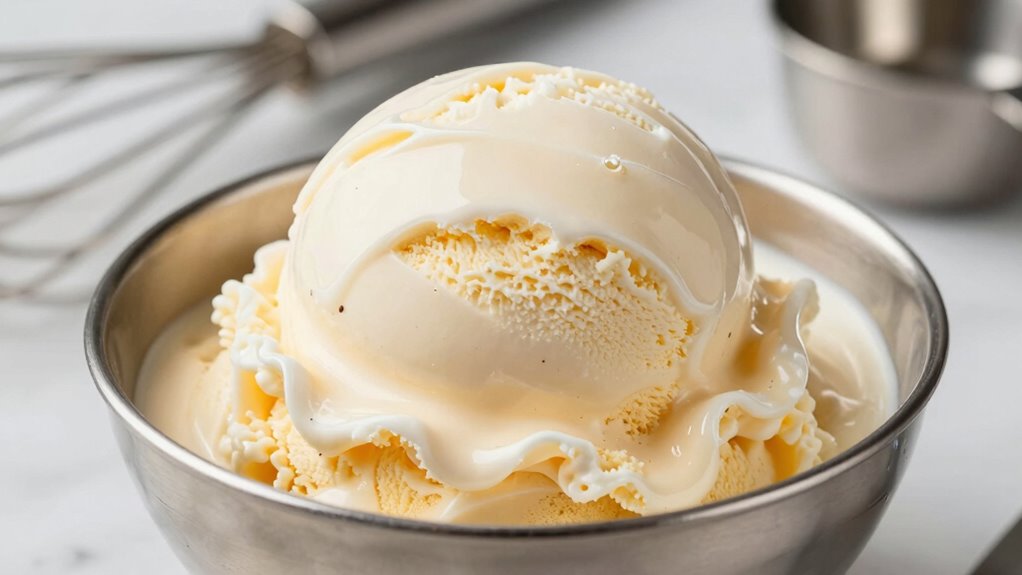
Professional ice cream makers carefully select ingredients and control their process to prevent eggy flavors from developing. They focus on flavor pairing to guarantee ingredients complement each other, reducing the risk of off-notes. For example, choosing dairy that’s fresh and balancing it with natural stabilizers minimizes the chance of an eggy taste. When an ingredient seems prone to egginess, they make strategic ingredient substitutions—using alternatives like different egg types or plant-based options. They also pay close attention to the timing and temperature during cooking, avoiding overcooking eggs, which can intensify eggy flavors. Additionally, monitoring high volatility risks during production helps prevent flavor deviations, ensuring consistency. Proper temperature control during each step further prevents undesirable flavors from developing. Implementing these techniques, including precise cooking methods, helps them craft smooth, flavorful ice cream without the unwanted eggy aftertaste, and staying aware of ingredient interactions can further optimize flavor quality. Being mindful of the chemistry of eggs and how different ingredients react during processing can also significantly impact flavor outcomes. This comprehensive approach ensures a clean, balanced flavor profile in every batch.
Troubleshooting: What to Do When Your Ice Cream Tastes Eggy

If your ice cream tastes eggy despite careful ingredient selection, it’s likely due to overcooked eggs or unintended chemical reactions during processing. To fix this, consider the following:
- Switch to a custard-free base if eggs are problematic
- Use egg replacers like cornstarch, arrowroot, or commercial substitutes
- Ensure eggs are gently heated, avoiding boiling or overcooking
- Chill your mixture properly before churning to prevent overreaction
- Opt for high-quality eggs and fresh ingredients to reduce off-flavors
- Incorporate support networks for new dads to better manage stress and avoid rushing during preparation, which can lead to mistakes.
Expert Tips for Smooth, Egg-Free Ice Cream Every Time

To make smooth, egg-free ice cream, start with fresh, high-quality ingredients to guarantee the best flavor. Properly temper your egg mixture to prevent curdling and achieve a creamy texture. Also, use stabilizers correctly to improve consistency and prevent ice crystals from forming.
Use Fresh, Quality Ingredients
Using fresh, high-quality ingredients is key to achieving smooth, egg-free ice cream with rich flavor. When you start with quality ingredients, you guarantee a better taste and texture, reducing the risk of off-flavors like egginess. Always choose fresh produce, as it offers vibrant flavor and better consistency. Opt for dairy and flavorings that are fresh and free from additives. Avoid low-quality or expired items that can introduce unwanted tastes.
Consider these tips:
- Use fresh, ripe fruits for natural sweetness
- Select high-quality dairy products
- Avoid processed flavorings
- Choose organic or fresh herbs and spices
- Purchase from reputable sources for guaranteed freshness
Properly Temper Egg Mixture
Achieving a silky, egg-free ice cream texture depends on properly tempering your mixture to prevent curdling and guarantee even blending. To do this, slowly add a small portion of the hot base into the beaten eggs, stirring constantly, then gradually combine this mixture back into the pan. This process ensures the eggs warm gradually, reducing the risk of eggs tasting eggy. When considering ingredient substitutions, such as plant-based milks, tempering helps maintain flavor balancing without compromising texture. Use the following tips to master tempering:
| Step | Action | Purpose |
|---|---|---|
| Warm eggs gently | Add small hot liquid gradually | Prevent curdling |
| Constant stirring | Keep mixture smooth | Ensure even heat distribution |
| Gradual mixing | Incorporate into the base slowly | Achieve a uniform texture |
Incorporate Stabilizers Correctly
Incorporating stabilizers properly can make a noticeable difference in the texture and consistency of your egg-free ice cream. Stabilizer functions to prevent ice crystal formation and improve mouthfeel, ensuring smoothness. When added correctly, stabilizers also enhance the emulsifier benefits, helping fats and liquids blend seamlessly. To get it right, consider these tips:
- Dissolve stabilizers in cold liquid before mixing.
- Use the recommended quantity; too little won’t work, too much affects flavor.
- Incorporate stabilizers early in the process for even distribution.
- Use high-quality stabilizers suited for ice cream.
- Combine with emulsifiers to maximize texture benefits.
Proper use of stabilizers not only prevents graininess but also ensures a creamy, professional finish every time.
Frequently Asked Questions
Can Using Pasteurized Eggs Reduce Eggy Flavors in Ice Cream?
Using pasteurized eggs can reduce eggy flavors in your ice cream because they’re often processed to eliminate raw taste and bacteria, making them less likely to impart that eggy taste. However, to further prevent egginess, you should also use flavor masking techniques like adding vanilla or other strong flavors. This combination helps create a smoother, more balanced ice cream base without unwanted eggy notes.
Are There Flavor Pairings That Mask Eggy Tastes Effectively?
Imagine you’re a culinary wizard in the 18th century, seeking flavor masking tricks. To effectively hide eggy tastes, you should try ingredient pairing with bold flavors like chocolate, coffee, or caramel. These strong, rich flavors balance out the egginess and distract your palate. Combining these with good flavor masking techniques guarantees your ice cream tastes divine, not eggy, giving your dessert a refined, professional touch.
How Does Storage Temperature Influence Eggy Flavors in Ice Cream?
Storing ice cream at the right temperature helps prevent eggy flavors from developing. You should keep your ice cream cold, ideally below -20°C, to slow down chemical changes. Proper temperature control during storage and limiting storage duration reduce the chance of eggy tastes becoming noticeable. If you store ice cream too warm or for too long, the eggy notes can intensify, so always monitor your freezer settings for maximum freshness.
Do Different Types of Eggs Impact the Eggy Taste Differently?
Think of eggs as the spice in your ice cream recipe; different types bring unique flavors. High-quality eggs with fresh, bright yolks minimize eggy flavors, while older or lower-quality eggs can turn your base into a flavor storm. Proper egg cooking techniques also matter—overcooking can intensify egginess. So, choosing the right eggs and cooking them carefully helps keep your ice cream smooth and delicious, not eggy.
Is It Possible to Customize Recipes to Eliminate Eggy Flavors Entirely?
Yes, you can customize recipes to eliminate eggy flavors through recipe modifications and ingredient substitutions. Start by reducing or omitting eggs, replacing them with alternatives like cornstarch, gelatin, or commercial egg replacers. Adjust the liquid and thickening agents accordingly to maintain texture. Carefully test your recipe to balance flavor and consistency, ensuring the eggy taste is minimized or gone altogether without sacrificing quality.
Conclusion
Sometimes, the tiniest mistake or ingredient choice can unexpectedly turn your ice cream eggy, almost like a coincidence reminding you how delicate the process is. By understanding the causes and practicing proper techniques, you can consistently achieve smooth, fresh flavors. Remember, even professionals face surprises, but with patience and attention, you’ll find that perfect balance. Ultimately, embracing these small lessons helps you craft ice cream that’s just as delightful as you envisioned, every single time.