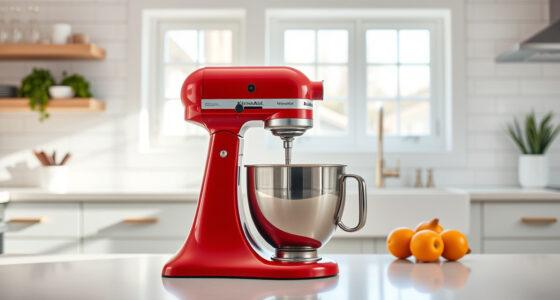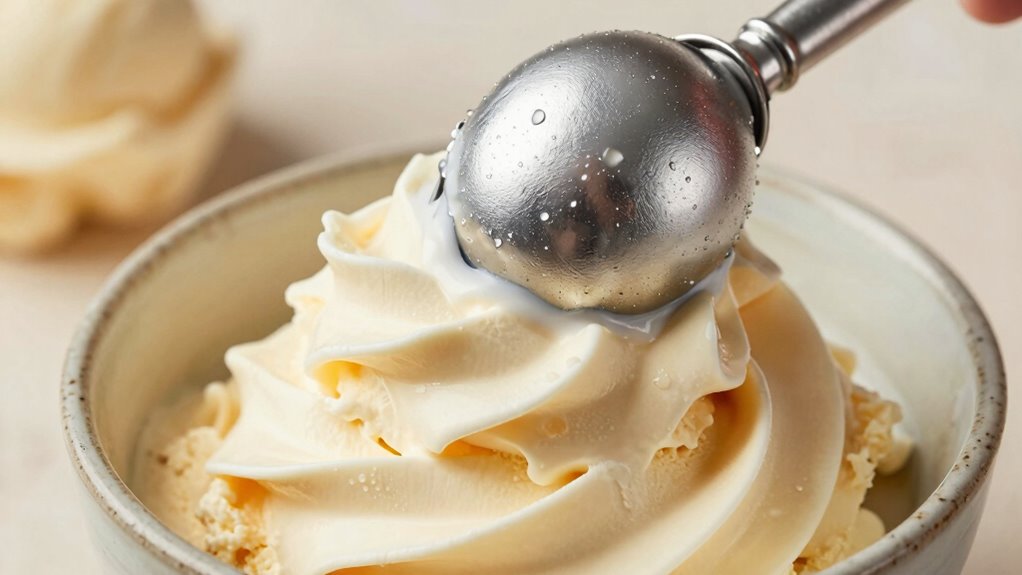

The key step to making homemade ice cream taste more like a shop variety is incorporating stabilizers properly. Stabilizers like gelatin, cornstarch, or guar gum prevent ice crystals and give your ice cream a smooth, velvety texture. Thoroughly dissolving and evenly mixing them guarantees consistent results. If you want your homemade ice cream to match store quality, mastering this step is essential—keep going to discover how to do it perfectly.
Key Takeaways
- Properly churning the ice cream to achieve a smooth, dense, and velvety texture similar to store-bought varieties.
- Using the right stabilizer in correct amounts to prevent ice crystal formation and maintain creaminess.
- Thoroughly dissolving stabilizers before mixing ensures even distribution and consistent texture.
- Chilling the mixture completely before churning enhances smoothness and flavor integration.
- Incorporating stabilizers and maintaining optimal freezing techniques to prevent graininess and improve overall mouthfeel.

Avacream Ice Cream Stabilizer Mix (8 oz)
- Product Type: Ice Cream Stabilizer Mix
- Size: 8 oz
- Ingredients: Hydrocolloids and Emulsifiers
As an affiliate, we earn on qualifying purchases.
As an affiliate, we earn on qualifying purchases.
Why Texture and Flavor Matter in Homemade Ice Cream

Texture and flavor are the main reasons why homemade ice cream can stand out from store-bought varieties. When you make it at home, you have control over the texture comparison, ensuring it’s just the right creaminess or chunkiness you desire. A smooth, velvety texture enhances the overall experience, making each bite more satisfying. Flavor enhancement is equally important; fresh ingredients and tailored flavoring give your ice cream a vibrant, authentic taste that store-bought versions often lack. By focusing on these aspects, you create a dessert that’s not only delicious but also personalized to your preferences. Achieving the perfect balance of texture and flavor elevates homemade ice cream from simple to exceptional, making every scoop a true treat. Additionally, understanding the techniques behind freezing and churning can significantly improve the final texture, ensuring a consistently smooth and creamy result.
What Makes Store-Bought Ice Cream So Smooth and Creamy?
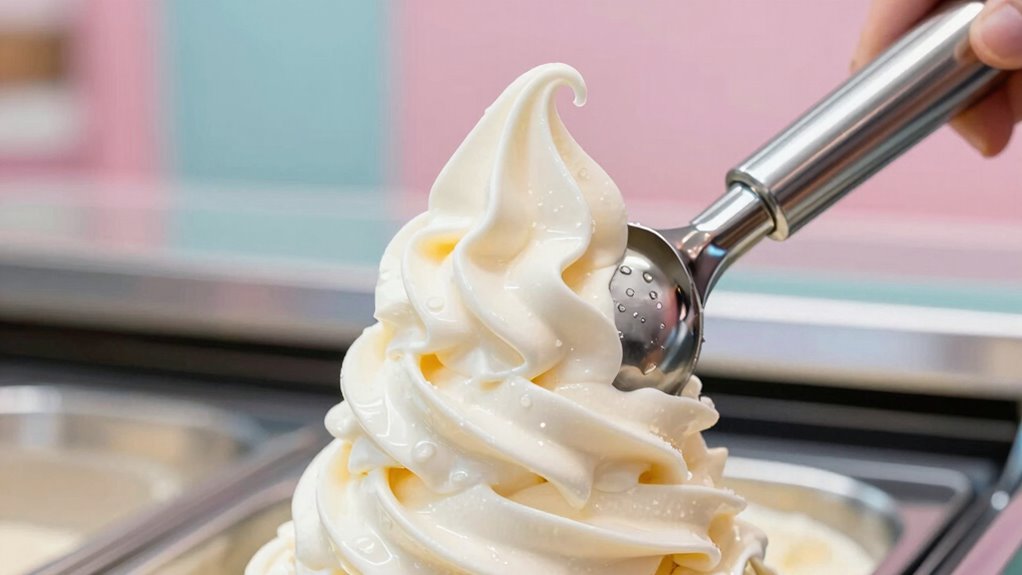
Have you ever wondered how store-bought ice cream manages to stay so consistently smooth and creamy? The secret lies in their use of stabilizers and emulsifiers, which prevent ice crystals from forming and improve creaminess consistency. These additives help maintain a uniform texture, ensuring each scoop is just as smooth as the last. Commercial ice cream makers also control temperature precisely during processing, which reduces ice crystal growth and enhances mouthfeel. Additionally, higher fat content in store-bought options contributes to a richer, creamier texture that feels indulgent. Temperature control during manufacturing is also crucial in achieving that velvety consistency. Proper storage conditions and handling further help preserve this texture over time. All these factors work together to deliver that irresistible, velvety creaminess you expect from store-bought ice cream. Understanding this process helps you appreciate what makes it so consistently delightful.
The Key Step to Achieve Creamier, Tastier Ice Cream
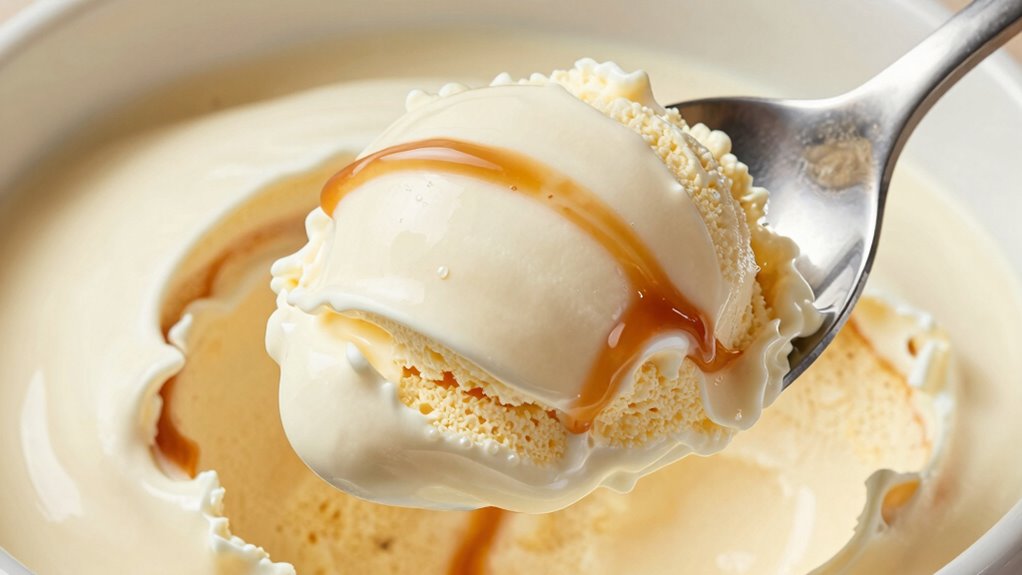
The most important step to making your homemade ice cream creamier and more flavorful is mastering the churning process. Proper churning guarantees a smooth, dense texture similar to store-bought varieties. To enhance flavor, consider adding fruit additions during churning—fresh berries or chopped mangoes create vibrant bursts of taste. Flavor infusions, like vanilla bean or coffee, can be introduced by steeping ingredients beforehand or swirling into the mix during churning. This technique evenly distributes flavors and creates a richer, more complex profile. Be careful not to over-churn, which can make the ice cream too icy. Instead, aim for a soft-serve consistency. With the right churning technique, fruit additions, and flavor infusions, your homemade ice cream will taste more like what you’d find at a shop. Churning technique is essential for achieving the ideal texture, and mastering it can greatly improve your homemade ice cream experience. Incorporating proper freezing methods can also help maintain the desired consistency and prevent ice crystallization.
How to Incorporate Stabilizers for Better Texture at Home
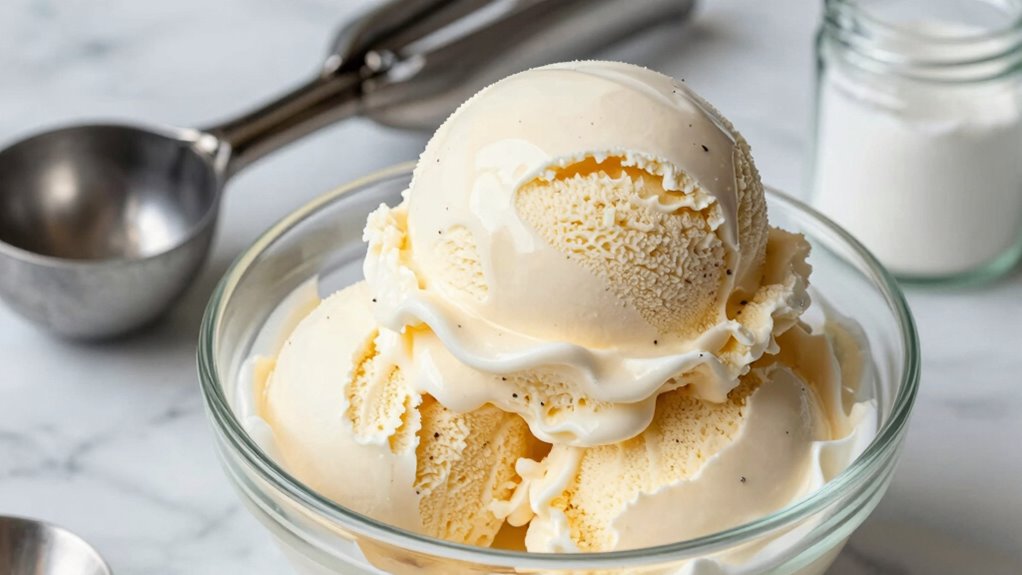
Incorporating stabilizers into your homemade ice cream can substantially improve its structure and prevent ice crystal formation. Stabilizer types, such as gelatin, cornstarch, or guar gum, help create a smoother, creamier texture. To incorporate stabilizers effectively, dissolve them thoroughly in a small amount of warm liquid before adding to your ice cream base. This ensures even distribution and ideal results. Stabilizers also aid in flavor preservation by maintaining the ice cream’s consistency over time, reducing freezer burn and texture breakdown. Be mindful of the quantities used—too much can alter the taste or mouthfeel. With proper incorporation, stabilizers enhance the overall quality of your homemade ice cream, making it closer in texture and flavor to store-bought varieties.
Which Stabilizer Is Best? Gelatin, Cornstarch, or Guar Gum?
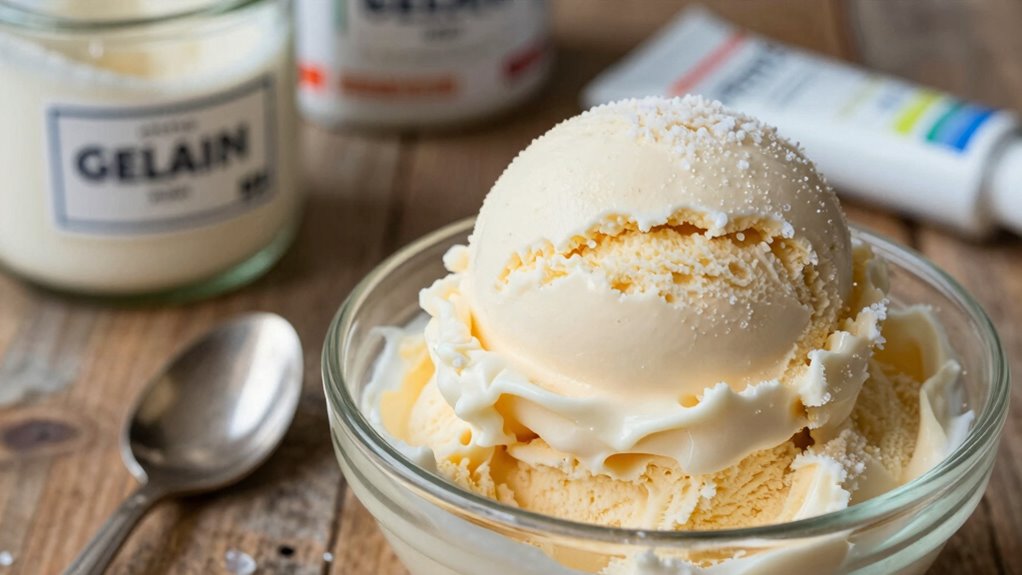
Choosing the right stabilizer can markedly improve your ice cream’s texture, but each option has its strengths. Gelatin, cornstarch, and guar gum differ in how easily they incorporate and how they affect flavor. Let’s compare their ability to enhance texture, ease of use, and taste impact to find the best fit for your recipe. Incorporating natural ingredients can also influence the overall quality of your homemade ice cream. For example, understanding the texture modification properties of each stabilizer helps you select the ideal one for achieving that smooth, creamy consistency similar to store-bought varieties. Additionally, considering piercing care and hygiene can help maintain the integrity of any added ingredients by preventing contamination that could affect texture. Being aware of food safety practices ensures your homemade ice cream remains fresh and safe to enjoy.
Texture Enhancement Capabilities
When it comes to improving the texture of your homemade ice cream, selecting the right stabilizer makes a significant difference. Your choice impacts flavor consistency and texture stability, giving your ice cream that smooth, shop-quality feel. Gelatin provides a creamy texture and excellent stability but can be slightly chewy. Cornstarch offers a thicker, less icy result, enhancing creaminess without overpowering flavors. Guar gum creates a silky texture and prevents ice crystals, ensuring consistent mouthfeel. Here’s a quick comparison:
| Stabilizer | Best For | Texture Impact | Note |
|---|---|---|---|
| Gelatin | Creamy, rich | Smooth, stable | Slightly chewy |
| Cornstarch | Thickening | Creamy, less icy | Neutral flavor |
| Guar Gum | Silky, smooth | Prevents ice crystals | Easy to blend |
Choose based on your desired texture and flavor profile for perfect results.
Ease of Incorporation
Have you wondered which stabilizer is easiest to mix into your homemade ice cream? Gelatin, cornstarch, and guar gum each vary in how smoothly they blend. Gelatin dissolves quickly in warm liquids, making it straightforward to incorporate without clumping. Cornstarch requires careful whisking to prevent lumps but is widely available and affordable. Guar gum, though a bit more concentrated, dissolves easily in cold liquids and blends seamlessly. When considering ingredient sourcing, all three are accessible from most grocery stores or online, but some might prefer natural or vegetarian options. Ease of incorporation ensures you don’t spend extra time fixing clumps or uneven texture, streamlining your process and helping you achieve a consistent, delicious flavor balance every time. Additionally, understanding sound vibrations and their impact on cellular health can inspire natural methods to enhance your culinary creations.
Flavor Impact
Which stabilizer you pick can profoundly influence the flavor of your homemade ice cream. Gelatin, cornstarch, and guar gum each affect flavor layering and fruit infusions differently. Gelatin offers a neutral base, preserving delicate fruit flavors. Cornstarch tends to mute some nuances but provides a smooth texture. Guar gum enhances creaminess without overpowering fruit infusions. To visualize their impact, consider this table:
| Stabilizer | Flavor Clarity | Effect on Fruit Infusions | Best for |
|---|---|---|---|
| Gelatin | High | Preserves subtle flavors | Delicate fruit blends |
| Cornstarch | Moderate | Slightly mutes flavors | Thicker, creamier textures |
| Guar Gum | Neutral | Maintains flavor layering | Complex fruit infusions |
Understanding the stabilizer’s impact on flavor can help you craft ice cream with better flavor impact, closer to shop quality. Additionally, considering the mixing process can further enhance the overall flavor perception. Incorporating the proper preparation techniques can make a noticeable difference in achieving that authentic, store-bought taste.
How to Mix Stabilizers Properly for Smooth Results
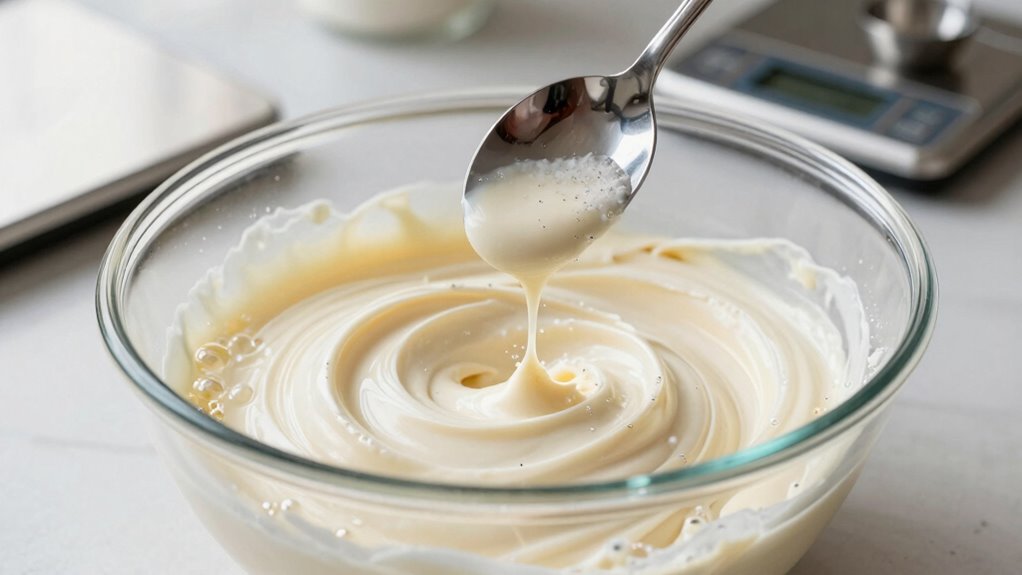
To guarantee your homemade ice cream turns out smooth and creamy, it’s vital to mix stabilizers properly. Start by choosing high-quality stabilizers, which ensures better flavor consistency and easier ingredient sourcing. Dissolve the stabilizer thoroughly in a small amount of cold liquid before adding it to your ice cream base. This prevents clumping and distributes the stabilizer evenly. Use a whisk or blender to ensure complete incorporation, and then chill the mixture before churning. Proper mixing helps achieve a uniform texture, preventing ice crystals and ensuring a silky finish. Remember, the key is to blend the stabilizer well from the start, so it integrates smoothly with your other ingredients for consistently smooth results. Effective stabilization techniques can significantly improve the overall quality of your ice cream, making it more comparable to store-bought varieties.
Troubleshooting Common Stabilizer Problems in Homemade Ice Cream
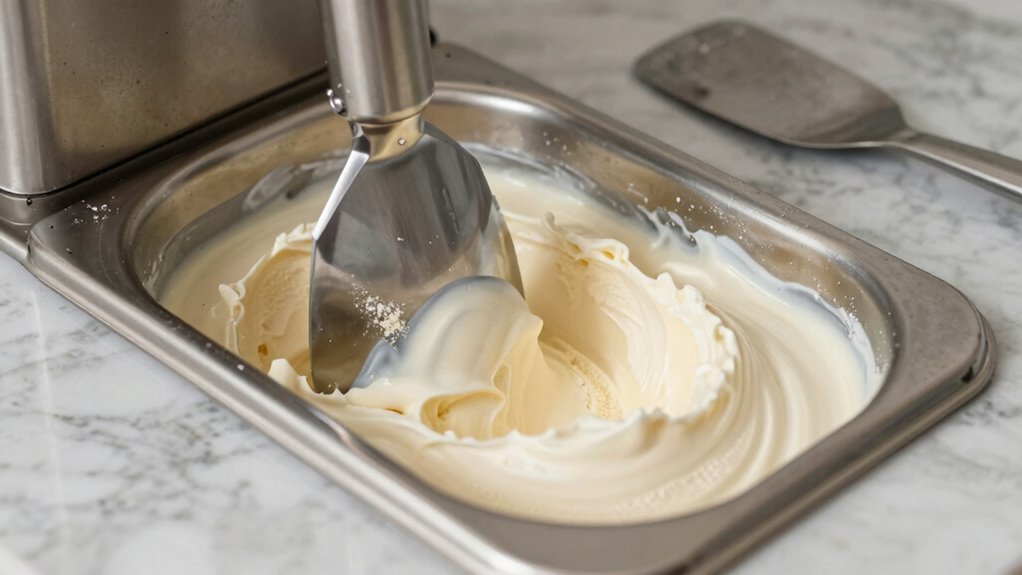
Even when you follow the proper steps, stabilizer problems can still arise, affecting the texture and quality of your homemade ice cream. Too much stabilizer can make your ice cream overly firm or gummy, while too little may cause ice crystals and a gritty texture. To troubleshoot, check your stabilizer selection to ensure it’s appropriate for your recipe. If you’re experiencing flavor imbalance, remember that some stabilizers can subtly alter taste, so choose ones that complement your ingredients. Adjust your stabilizer amount gradually, testing small batches to find the right balance. Proper stabilizer use helps maintain smoothness without compromising flavor. Understanding stabilizer compatibility can help you select the right type for your specific recipe. Being aware of stabilizer interactions with other ingredients can further optimize your ice cream’s texture. By fine-tuning your stabilizer choice and quantity, you’ll prevent common issues and achieve a consistent, shop-quality ice cream every time.
Additional Tips for Making Shop-Quality Ice Cream
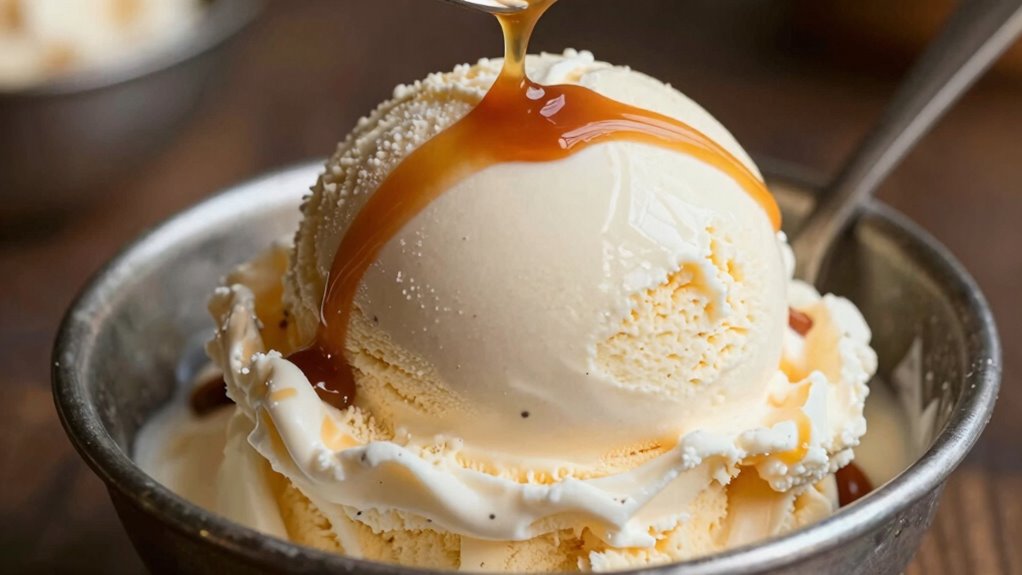
Achieving shop-quality ice cream at home requires attention to detail beyond just following the basic recipe. To enhance flavor, consider adding mix-ins like chocolate chips, fruit purees, or a splash of liqueur for depth. Using high-quality ingredients also makes a noticeable difference. For texture improvements, chill your mixture thoroughly before churning, which results in a creamier consistency. Incorporate a small amount of alcohol, as it lowers the freezing point and prevents ice crystals from forming, boosting smoothness. Properly balancing sweetness and fat content helps mimic store-bought richness. Additionally, avoid over-churning, which can lead to a grainy texture. Understanding ice crystal formation can help you better control the texture of your ice cream. Paying attention to freezing point depression is essential for achieving that ideal creamy texture. Being mindful of initial mixture temperature also plays a role in controlling ice crystal growth and overall quality. To further refine your process, monitor the rate of freezing, which influences the final texture and consistency. These tips collectively elevate your homemade ice cream to match the quality and flavor of shop favorites. Moreover, experimenting with different freezing techniques can help you find the perfect method for your desired texture.
Experimenting Safely With Stabilizers: What You Need to Know
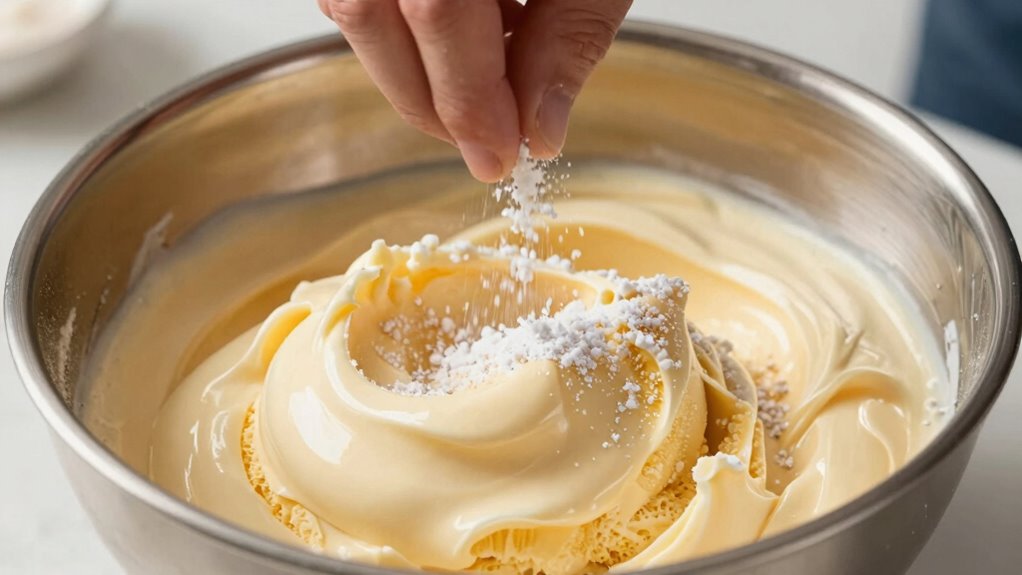
Stabilizers can be a game-changer when making homemade ice cream, but it’s important to use them safely and correctly. Gelatin benefits include improving texture and preventing ice crystal formation, making your ice cream creamier. When experimenting, start with small amounts to avoid altering flavor or consistency. If you’re looking for cornstarch alternatives, options like agar-agar or guar gum work well without compromising safety. Always follow recommended measurements and avoid overusing stabilizers, which can lead to undesirable textures or taste. Remember to dissolve powders thoroughly before mixing to prevent clumping. Proper handling guarantees your ice cream stays smooth and shop-quality. Incorporating innovative tech in fashion such as digital tools can also help you measure and mix stabilizers more precisely. With careful experimentation, you can enhance your recipes while keeping safety a top priority.
Frequently Asked Questions
Can Stabilizers Cause Allergic Reactions in Some Individuals?
Yes, stabilizers can cause allergic reactions in some individuals, especially if you have stabilizer sensitivity. If you notice symptoms like itching, swelling, or difficulty breathing after consuming products with stabilizers, it’s important to consult a healthcare professional. Always check ingredient labels carefully, as stabilizers are common in processed foods and ice cream. Being aware of your allergies helps prevent reactions and keeps you safe.
How Long Should Homemade Ice Cream Be Churned for Optimal Texture?
You should churn your homemade ice cream for about 20 to 30 minutes for the best texture enhancement. This churning duration helps incorporate air, making it creamier and smoother, similar to store-bought ice cream. Keep an eye on the consistency; once it reaches a soft-serve texture, it’s ready. Churning too long can cause it to become icy, so don’t overdo it for ideal texture.
Does Adding Stabilizers Affect the Flavor of the Ice Cream?
Adding stabilizers is like giving your ice cream a gentle shield, helping preserve flavor and improve texture. They don’t substantially alter the taste if used correctly, but overuse might mute some subtle flavors. Stabilizers assist in ingredient modifications, preventing ice crystals and maintaining creaminess. So, yes, they can protect flavor preservation without compromising the deliciousness, making your homemade ice cream taste more like store-bought.
Are There Natural Stabilizer Alternatives Suitable for Homemade Recipes?
Yes, you can use natural stabilizer alternatives like fruit-based stabilizers and herbal thickeners in your homemade ice cream. Fruit purees, such as banana or mango, add natural thickening and flavor, while herbal thickeners like guar gum or xanthan gum derived from plants help prevent ice crystallization. These options keep your ice cream smooth and creamy without artificial additives, giving you delicious, natural results every time.
How Does Storage Temperature Impact the Effectiveness of Stabilizers?
Proper temperature control is vital because storage temperature directly impacts stabilizer efficiency in your homemade ice cream. If you store it too warm, stabilizers may lose their effectiveness, causing ice crystals and a grainy texture. Keep your ice cream consistently cold, ideally around -20°C or 0°F, to maintain stabilizer performance. This guarantees your ice cream stays smooth, creamy, and shop-quality, enhancing flavor and texture with every scoop.
Conclusion
With a simple step, you’ll transform your homemade ice cream into a silky, shop-quality sensation. By blending the best stabilizer with boldness and balance, you’ll boost texture and taste, turning your kitchen into an ice cream haven. Embrace the art of adding, adjusting, and experimenting—making each batch better than the last. So, stir, stabilize, and savor, delighting in dreamy, delicious desserts that taste like they came straight from the scoop shop.