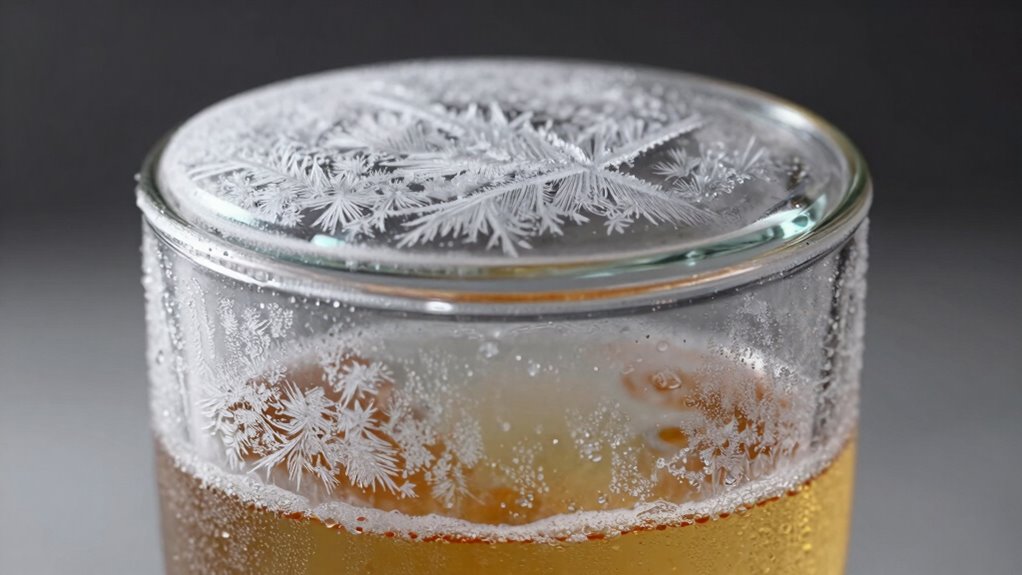

If you leave the lid slightly ajar or fail to seal it tightly after opening your ice cream, moisture can enter and freeze onto the lid, causing frost to form. This often happens when the freezer door is left open longer or isn’t closed properly. Moisture intrusion not only creates frost but can also impact texture and flavor. To prevent this, make sure your lid is completely sealed after each use—there are more tips to avoid this common mistake.
Key Takeaways
- Not sealing the lid tightly allows moisture to enter, causing frost to form on the surface.
- Leaving the lid slightly open or ajar lets humid air in, leading to frost buildup.
- Improper storage near the freezer door exposes ice cream to temperature fluctuations, increasing frost risk.
- Repeatedly opening the pint before fully sealing the lid can introduce moisture.
- Failing to close the lid promptly after serving allows moisture and cold air to interact, causing frost.
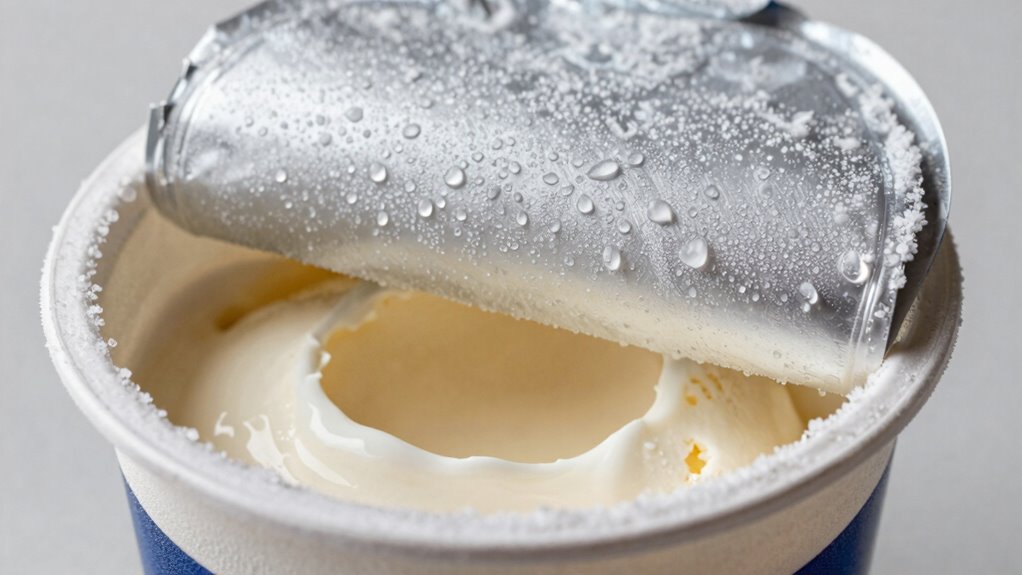
When you open a pint of ice cream and notice a frosty layer on the lid, it’s usually a sign of a common mistake in the storage process. That frost isn’t just a visual annoyance; it indicates issues like ice crystal formation inside the container. Ice crystal formation happens when moisture inside the ice cream repeatedly melts and refreezes, creating larger, gritty crystals that compromise texture and flavor. This process is often linked to how the ice cream is stored, especially if the freezer temperature isn’t properly controlled.
Maintaining the right freezer temperature is crucial. Ideally, your freezer should be set at around 0°F (-18°C). If it’s colder, moisture inside the ice cream can freeze faster than it can stay evenly distributed, leading to more ice crystals. On the other hand, if the freezer isn’t cold enough, the ice cream can partially melt and refreeze, causing the same issue. Proper freezer temperature control ensures the ice cream remains in a semi-solid state, preventing excess ice crystal formation and keeping the texture smooth.
Keep your freezer at 0°F (-18°C) to prevent ice crystal growth and maintain smooth, delicious ice cream.
The mistake many people make is not paying attention to freezer settings or leaving the freezer door open too long, which causes temperature fluctuations. When the temperature rises even slightly, moisture can seep into the ice cream, freeze, and then expand, leading to frost on the lid and ice crystals inside. This frost on the lid isn’t just cosmetic; it’s a sign that moisture has entered the container and that ice crystal formation is likely underway. The more often this happens, the more pronounced the frost becomes, and the less enjoyable your ice cream will be when you finally dig in. Additionally, proper storage techniques can significantly reduce freezer burn and improve overall quality.
To avoid this, always ensure your freezer is set to the proper temperature and keep the lid tightly sealed after each use. Avoid leaving the freezer door open for extended periods, especially during busy grocery trips or when restocking. Also, don’t forget to store ice cream away from the freezer’s door, where temperature fluctuations are more common due to frequent opening. By controlling the freezer temperature and sealing your ice cream properly, you minimize moisture intrusion, reduce ice crystal growth, and keep your ice cream fresh and smooth. The frost on the lid is a clear warning sign—pay attention to it, and you’ll enjoy better texture and flavor with every scoop.
As an affiliate, we earn on qualifying purchases.
Frequently Asked Questions
Can Temperature Fluctuations Affect Frost Formation on Pints?
Yes, temperature fluctuations can cause frost to form on pints. When you don’t control humidity properly and neglect proper freezer positioning, cold air interacts with warmer surfaces, leading to frost buildup. Consistently maintain a stable temperature, keep pints in the right freezer spots, and manage humidity levels. This way, you prevent moisture from condensing and forming frost, keeping your pints fresh and frost-free.
Does the Type of Lid Material Influence Frost Buildup?
Think of lid material as a shield against frost buildup. Metal lids conduct cold, making frost more likely, while plastic lids insulate better, reducing frost. I once saw a bartender switch to plastic lids, and frost disappeared almost instantly. For frost prevention, choosing lids with insulating properties can make a big difference. Your choice of lid material directly impacts how much frost forms on your pints.
How Long Should Pints Be Stored Before Opening?
You should store pints for at least 24 hours before opening to guarantee flavor preservation and maximize shelf life extension. Keeping them upright and at a consistent, cold temperature helps prevent frost buildup and maintains quality. By giving the pints adequate time to settle, you reduce the risk of ice crystals forming, which can compromise taste and texture. Proper storage ensures your product stays fresh and flavorful when you’re ready to enjoy it.
Are There Specific Storage Tips to Prevent Frost?
To prevent frost on your pints, focus on proper packaging design and lid sealing. Make sure the lid is sealed tightly to prevent air and moisture from entering, which can cause frost. Store pints upright in a consistent, cold environment, avoiding temperature fluctuations that lead to condensation. Using packaging with a quality seal and an airtight lid helps keep your product fresh and frost-free, ensuring better quality when you open it.
Is Frost on Pints Harmful or Just Cosmetic?
Frost formation on pints is just cosmetic and isn’t harmful, so no need to worry about beverage preservation. It happens when moisture from the air condenses on the cold surface, creating that icy look. While it doesn’t affect taste or safety, it might indicate temperature fluctuations. To keep your drinks fresh and avoid frost, maintain consistent refrigeration and avoid rapid temperature changes. Frost on your pints won’t harm you, but it’s best to manage it for ideal beverage quality.
Conclusion
So, next time you’re about to open that pint, remember: ignoring the lid mistake could turn your ice cream into a winter wonderland inside your freezer! Don’t let a tiny oversight snowball into a frosty disaster. Fix the lid, seal it tight, and save your sweet treat from turning into an ice sculpture. Avoid the frost apocalypse—because nobody wants to battle a frozen fortress when craving a scoop! Stay vigilant and keep your ice cream perfect.