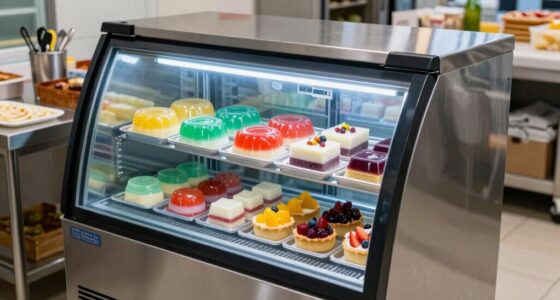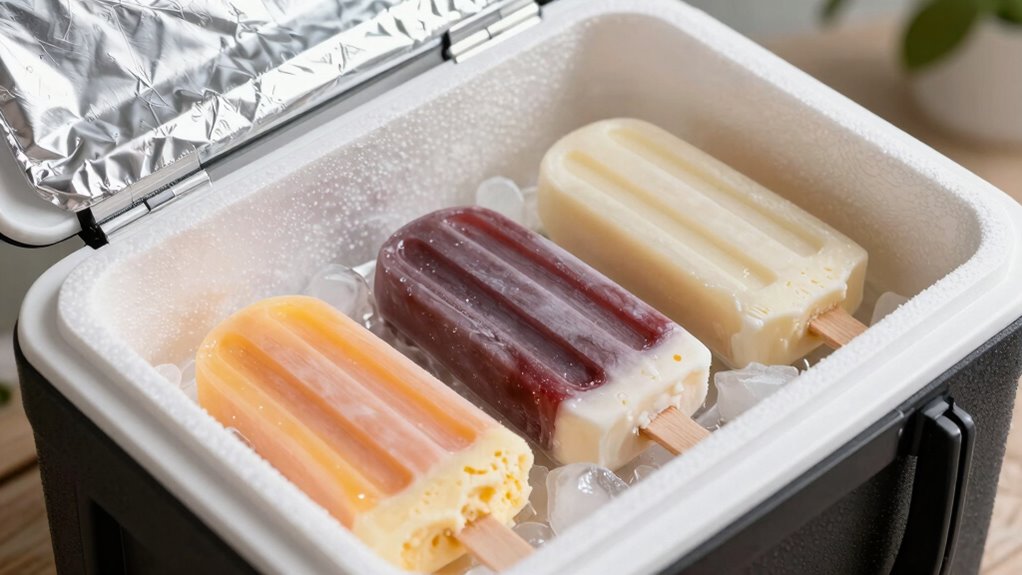

To transport frozen desserts without creating ice crystals, keep everything consistently cold by using insulated packaging and appropriate cooling elements like dry ice or gel packs. Pre-chill containers, seal them tightly, and avoid opening them during transit to prevent temperature fluctuations. Handle dry ice with gloves and monitor temperatures continuously to guarantee they stay steady. Minimizing transit time and maintaining a controlled environment helps preserve the dessert’s quality. For detailed tips, continue exploring how to keep your desserts perfect during delivery.

Get baking supplies delivered free — and shop member deals
- Fast, free delivery on millions of items
- Access to Prime Big Deal Days deals on October 6–7
- Prime Video, Amazon Music and more included
Key Takeaways
- Maintain a consistently cold environment using dry ice or cold packs, avoiding temperature fluctuations during transit.
- Use airtight, pre-chilled containers to prevent moisture ingress and minimize ice crystal formation.
- Monitor temperatures continuously with data loggers to ensure conditions stay below freezing.
- Minimize transit time and avoid opening packaging to prevent exposure to warmer air.
- Store desserts promptly in a freezer after delivery to prevent ice crystal growth.
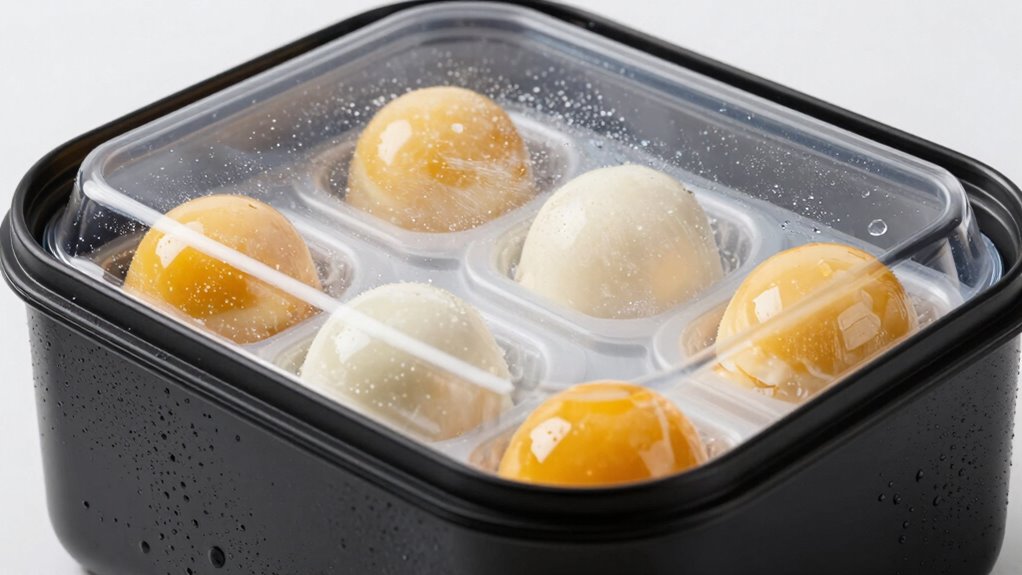
Transporting frozen desserts requires careful planning to guarantee they stay at the right temperature and arrive in perfect condition. One of the biggest challenges you’ll face is preventing ice crystal formation, which can ruin the texture and quality of your treats. Ice crystals develop when frozen desserts are exposed to temperature fluctuations or prolonged unfreezing periods. To avoid this, you need to maintain a consistently cold environment throughout the journey. That’s where insulated packaging comes into play. Using high-quality insulated containers helps keep the temperature steady, reducing the risk of ice crystals forming and preserving the smooth, creamy consistency your customers expect.
Maintaining a steady, cold environment prevents ice crystal formation and preserves dessert quality during transit.
When packing your frozen desserts, start by pre-chilling all packaging materials. Cold packs or dry ice are essential to maintain a low temperature, but you must use them correctly. For instance, dry ice is extremely cold and should be handled with gloves, ensuring it doesn’t come into direct contact with the desserts or packaging. Place the desserts in airtight, moisture-resistant containers before packing them into insulated boxes. This prevents any excess moisture from seeping in, which could promote ice crystal growth. Make sure the containers are sealed tightly to minimize air exchange, as air can carry humidity and contribute to ice crystal formation.
During transit, keep the insulated packaging in a temperature-controlled environment. If you’re using a vehicle, ensure it has a reliable refrigeration unit or use additional cooling elements like gel packs or dry ice to reinforce cold retention. It’s vital to monitor the temperature consistently, either with a thermometer or a data logger, so you can act immediately if temperatures fluctuate outside safe ranges. Maintaining a constant cold environment is crucial to prevent ice crystals from forming. Proper insulation techniques can significantly enhance temperature retention during transit. Avoid opening the packaging during transit unless necessary, as exposure to warmer air can cause condensation and ice crystals to develop once the dessert refreezes. Additionally, ensuring the packaging is well-sealed prevents moisture infiltration, which is key in avoiding ice crystal growth. Regularly checking the condition of your cooling elements can further ensure a stable temperature, preventing any unexpected thawing or refreezing that could lead to ice crystals. Utilizing temperature monitoring devices can further improve your control over the transit conditions, ensuring optimal preservation. Timing also plays a role in preventing ice crystals. Plan your delivery routes to minimize transit time and avoid delays. The longer the desserts are exposed to warmer temperatures, the more likely ice crystals are to form. If you need to store the desserts temporarily before delivery, keep them in a freezer or a specialized cold storage unit until it’s time to ship. Once delivered, prompt refrigeration ensures the desserts retain their quality, preventing any unwanted ice crystal growth.
insulated dessert transport container
As an affiliate, we earn on qualifying purchases.
As an affiliate, we earn on qualifying purchases.
Frequently Asked Questions
How Long Can Frozen Desserts Be Left at Room Temperature?
You shouldn’t leave frozen desserts at room temperature for more than 2 hours. Maintaining temperature stability is essential to prevent thawing, which can compromise texture and safety. Use proper packaging insulation to keep desserts cold during transport. If temperatures rise above 40°F (4°C), bacteria can grow quickly, risking spoilage. Always plan ahead, keep desserts frozen until the last moment, and use insulated containers to guarantee they stay frozen.
What Types of Containers Are Best for Transporting Frozen Desserts?
Back in the day, folks relied on sturdy, insulated containers to keep things cold, and today, that’s still true. You should use insulated containers for transporting frozen desserts, as they prevent heat transfer. Pair them with gel packs, which help maintain a consistent temperature. Make sure the container is airtight and well-sealed so the desserts stay frozen and free from ice crystals during transit.
Can Dry Ice Be Used Safely for Transporting Desserts?
Yes, you can use dry ice safely for transporting desserts, but you must follow dry ice safety guidelines. Wear gloves to prevent frostbite and guarantee proper ventilation to avoid carbon dioxide buildup. Use sturdy, insulated desserts packaging that can handle the cold and moisture from the dry ice. Properly label the packaging, and keep the dry ice away from direct contact with the desserts for maximum preservation.
How Do Ambient Temperatures Affect Frozen Dessert Transport?
Ambient temperatures critically impact your frozen dessert transport. Higher temperatures can cause the desserts to melt or develop ice crystals, so maintaining ambient stability is vital. You should use effective temperature regulation methods, like insulated containers and cold packs, to keep the environment consistently cold. Monitoring ambient conditions during transit guarantees your desserts stay frozen and pristine, preventing quality loss and securing customer satisfaction upon arrival.
What Are Common Mistakes to Avoid During Transport?
You should avoid packaging pitfalls like using improper containers or inadequate insulation, which can lead to temperature fluctuations. Don’t forget to check your insulation regularly during transport, as even small changes in temperature can cause ice crystals or spoilage. Keep the cold chain steady by maintaining consistent temperatures, and steer clear of opening containers unnecessarily. Proper packaging and vigilant temperature control are key to successfully transporting frozen desserts without issues.
Conclusion
Remember, a stitch in time saves nine. To keep your frozen desserts pristine during transport, always pre-chill your containers, use insulated packaging, and minimize door openings. Keep the temperature steady and avoid repeated thawing and freezing. With careful planning and attention, your desserts will arrive just as delicious as when they left. By taking these steps, you’ll guarantee every sweet treat stays perfect—because a little extra effort now means unforgettable enjoyment later.
Halloween Picks
halloween
As an affiliate, we earn on qualifying purchases.