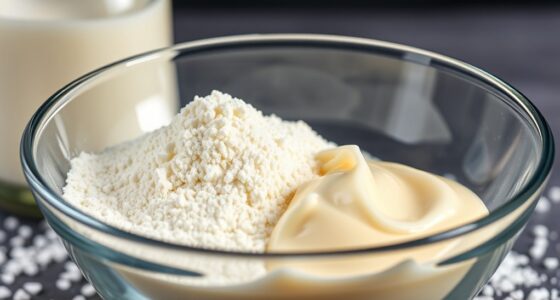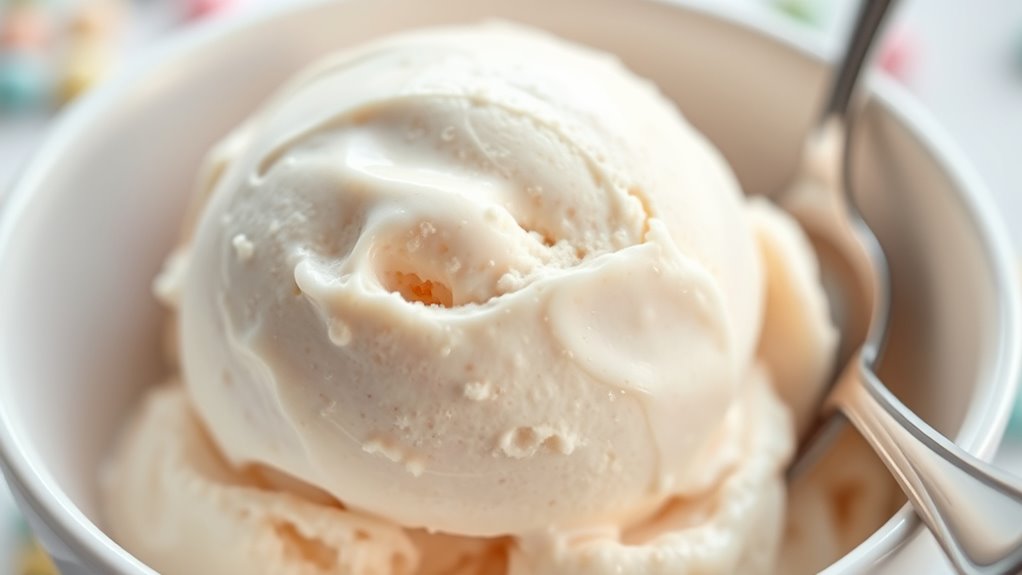

Stabilizers in ice cream are ingredients like guar gum, carrageenan, or locust bean gum that help keep your dessert smooth, scoopable, and free of icy crystals over time. They work by binding water and preventing large ice formation, ensuring a creamy texture. These additives are thoroughly tested and approved as safe to eat when used within recommended limits. If you want to understand how they protect your favorite treat, there’s more to discover.

Get baking supplies delivered free — and shop member deals
- Fast, free delivery on millions of items
- Access to Prime Big Deal Days deals on October 6–7
- Prime Video, Amazon Music and more included
Key Takeaways
- Stabilizers are additives that improve ice cream’s texture, prevent large ice crystal formation, and maintain creaminess over time.
- Common stabilizers include guar gum, carrageenan, and cellulose derivatives, which are approved and considered safe in food.
- They help keep dairy and plant-based ice creams scoopable and prevent them from becoming icy or grainy during storage.
- Stabilizers are used in small, regulated amounts and have undergone extensive safety testing by health authorities.
- When used properly and stored correctly, ice cream with stabilizers is safe to eat and enhances overall product quality.
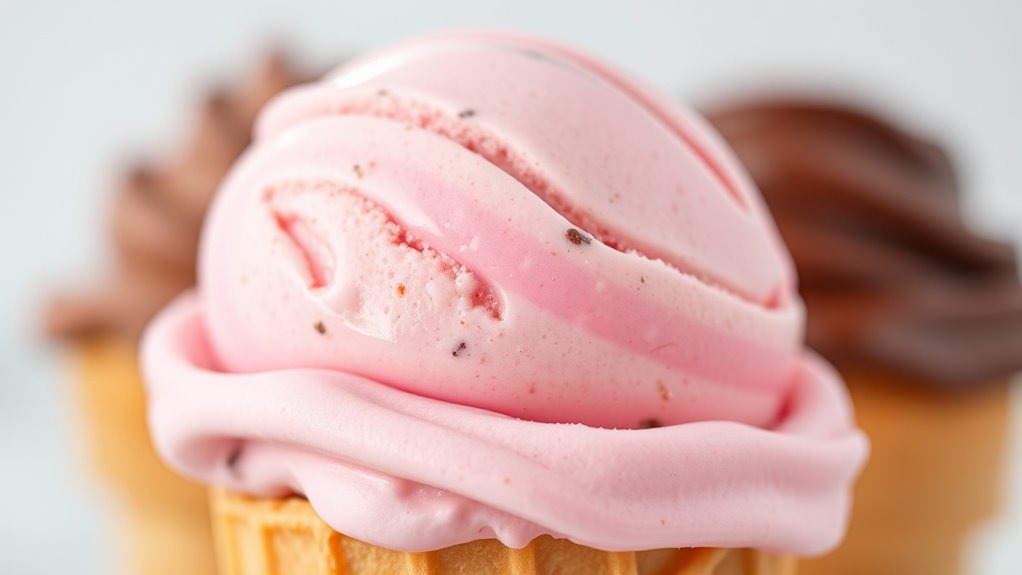
Have you ever wondered what keeps your ice cream smooth and scoopable even after days in the freezer? The secret lies in stabilizers, which are added ingredients that help maintain the ice cream’s creamy texture and prevent the formation of ice crystals. Stabilizers are especially important if you prefer dairy alternatives, like almond, soy, or coconut-based ice creams, because these products often have different compositions that can affect texture. They help ensure that your non-dairy options stay just as delightful and scoopable as traditional ice cream. Without stabilizers, even the best dairy alternatives can become icy or grainy, making them less enjoyable.
Stabilizers work by binding water molecules, slowing down the formation of large ice crystals during freezing and storage. This process preserves the smoothness and prevents ice cream from becoming icy or crumbly over time. If you want your ice cream to stay fresh longer, proper storage techniques are essential in conjunction with stabilizers. Keep your freezer at the right temperature, ideally around -18°C (0°F), to slow down quality loss. Additionally, storing ice cream in an airtight container minimizes exposure to air, which can cause freezer burn and texture changes. Proper storage techniques complement stabilizers, ensuring your ice cream remains delicious and scoopable for longer periods. Using stabilizers effectively also relies on understanding the drainage and water-binding properties of these additives to optimize texture.
Many commercial stabilizers are food-grade additives approved by health authorities. They are generally considered safe when used within recommended limits. Common stabilizers include guar gum, carrageenan, locust bean gum, and cellulose derivatives. These ingredients are used in small quantities and have been extensively tested for safety. If you’re concerned about additives, you can look for products with natural stabilizers or even make your own ice cream at home using simple ingredients and techniques that naturally improve texture, such as churning at the right temperature and storing in proper containers.
As an affiliate, we earn on qualifying purchases.
Frequently Asked Questions
Do Stabilizers Affect the Flavor of Ice Cream?
Stabilizers generally don’t affect the flavor of ice cream directly, but they can influence flavor enhancement by improving texture and consistency. The stabilizer impact is mostly about preventing ice crystals and ensuring smoothness, which allows your taste buds to better enjoy the ice cream’s flavor. So, while stabilizers don’t add flavor themselves, they help maintain the ideal texture that highlights the ice cream’s delicious taste.
Are Stabilizers Used in Homemade Ice Cream Recipes?
You might wonder if stabilizers are used in homemade ice cream recipes. While many traditional recipes rely on natural thickening methods like egg yolks or cream, you can also use ingredient substitutions like cornstarch or gelatin to improve texture. Stabilizers aren’t always necessary, but they can help create a smoother, creamier consistency, especially if you’re experimenting with different ingredients or want to avoid ice crystals.
Can Stabilizers Cause Allergic Reactions?
Imagine biting into creamy ice cream, unaware that stabilizers could trigger reactions. If you have dairy sensitivities or allergies, stabilizers—often derived from milk or soy—might cause allergic reactions. Always check ingredient transparency on labels, especially if you’re prone to allergies. While generally safe for most, it’s wise to stay cautious and consult with your doctor if you suspect sensitivities, ensuring every scoop remains enjoyable and worry-free.
How Do Stabilizers Influence Ice Cream Texture?
You might notice how stabilizer types help improve ice cream’s texture by preventing ice crystal formation and enhancing creaminess. They work actively with ingredients like guar gum, carrageenan, or gelatin to make your ice cream smoother and more consistent. Stabilizers influence texture enhancement profoundly, ensuring each scoop feels rich and velvety. By stabilizing the mixture, they give you that delightful, creamy feel you expect, even when stored in the freezer for a long time.
Are Plant-Based Stabilizers Safer Than Synthetic Ones?
Suppose you’re pondering plant-based stabilizers versus synthetic stabilizers safety. You’ll find plant-based options often boast better biological backing, bringing natural, non-toxic traits to your treat. Synthetic stabilizers, while tested and trusted, sometimes raise concerns about chemical content. You’re safer with plant-based stabilizers, embracing their eco-friendly, edible essence that aligns with your health and environmental values. Ultimately, choosing plant-based stabilizers can provide peace of mind and a purer, preservative-free indulgence.
Conclusion
So, now you know that stabilizers keep your ice cream smooth and delicious, just like a well-placed horseshoe keeps a stable secure. Rest assured, most stabilizers are FDA-approved and safe to eat in moderation. No need to worry about slipping on any metaphorical banana peels—these ingredients are thoroughly tested for safety. So go ahead, enjoy your ice cream, knowing it’s both tasty and safe, even if it’s not from a Victorian-era ice shop!
Fall Picks
fall essentials
As an affiliate, we earn on qualifying purchases.