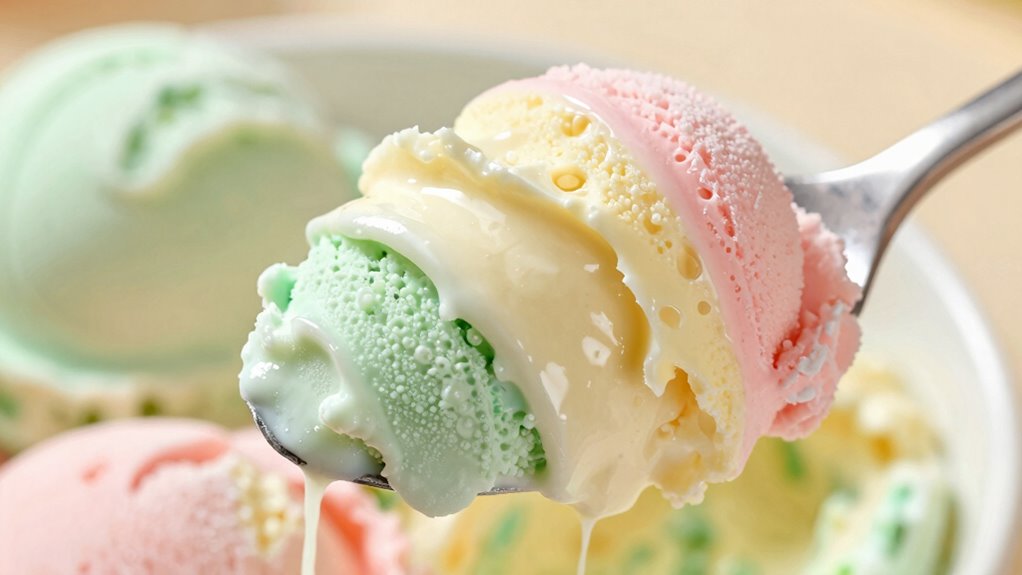

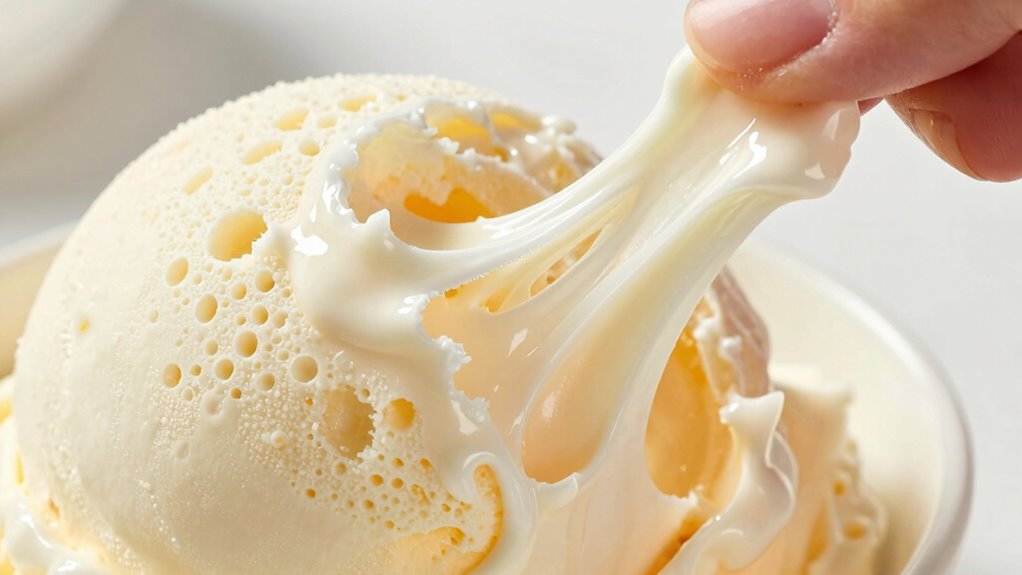
The chewy or stretchy texture in some ice creams comes from ingredients like stabilizers, gums, or gelatin that form a gel-like network, trapping water and air. These ingredients help create elasticity, giving the ice cream a more elastic, chewy feel instead of just smooth. Production techniques, like temperature control and slow churning, also influence this texture. If you want to discover how these components interact for that unique stretchiness, keep exploring more details.

Get baking supplies delivered free with Prime
- Fast, free delivery on millions of items
- Prime Video, Amazon Music and more included
- Member-only deals all year
Key Takeaways
- Hydrocolloids like guar gum and carrageenan form gel-like networks that trap water, creating a stretchy, elastic ice cream texture.
- Stabilizers and proteins interact at the molecular level to develop a flexible matrix that imparts chewiness.
- Manufacturing processes, such as freezing temperature and churning method, influence ice crystal size and elasticity.
- Ingredients like gelatin and pectin enhance elasticity, contributing to a chewy, stretchy mouthfeel.
- Overuse of stabilizers or improper handling can lead to an overly chewy or rubbery ice cream texture.
ice cream stabilizers for chewy texture
As an affiliate, we earn on qualifying purchases.
As an affiliate, we earn on qualifying purchases.
What Causes Ice Cream to Be Chewy or Stretchy?
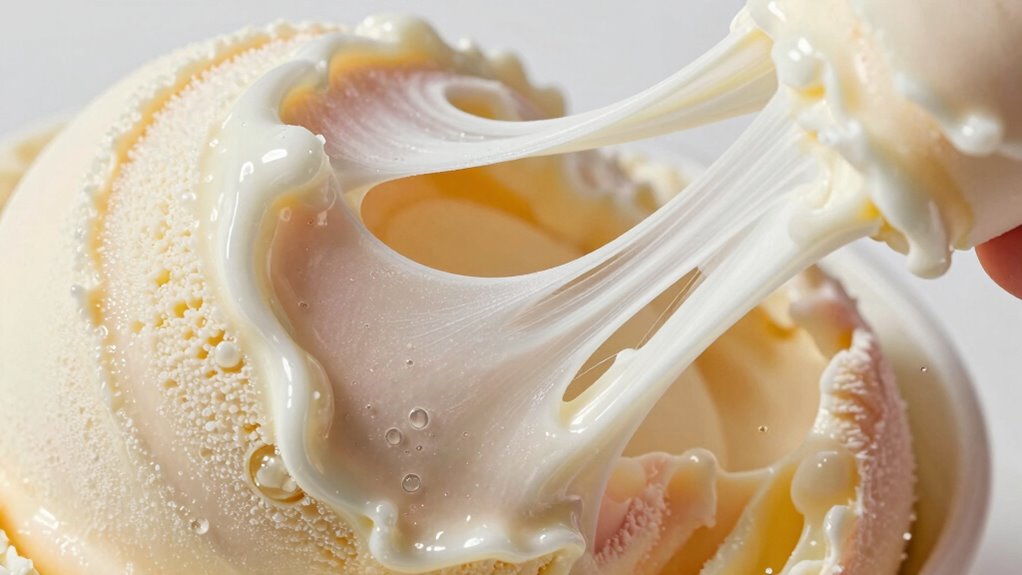
When ice cream turns out chewy or stretchy, it’s usually due to the presence of excessive stabilizers, emulsifiers, or improper freezing techniques. Texture analysis reveals that these additives can alter the ice cream’s structure, making it more elastic than smooth. Overuse of stabilizers and emulsifiers can interfere with the natural creaminess, resulting in a rubbery or chewy mouthfeel. Additionally, poor freezing methods, like inconsistent churning, can cause ice crystals to form unevenly, affecting texture. This change in texture can also diminish flavor enhancement, as the chewy consistency masks subtle tastes. Incorporating advanced monitoring technology in manufacturing environments can help track and optimize freezing parameters for better texture control. Ensuring proper formulation and precise freezing procedures is crucial in avoiding undesirable textures, as these factors directly influence the final product’s mouthfeel and flavor profile. Regular quality control checks can also help identify texture inconsistencies early in production.
Which Ingredients Make Ice Cream Stretchy?

Certain ingredients in ice cream can make it stretchier or more rubbery. These texture modifications are often intentional, aiming for a unique mouthfeel or flavor enhancement. The key ingredients include gelatin, guar gum, and carrageenan, which act as stabilizers and thickeners. They form a network that traps air and liquid, creating that chewy texture. Here’s a quick look:
| Ingredient | Effect on Texture | Additional Role |
|---|---|---|
| Gelatin | Adds elasticity, stretchiness | Enhances flavor stability |
| Guar Gum | Thickens, improves stretchiness | Balances creaminess |
| Carrageenan | Creates rubbery, chewy texture | Extends shelf life |
| Pectin | Modifies texture, adds stretch | Boosts flavor profiles |
Furthermore, understanding the role of stabilizers in ice cream can help in crafting the perfect texture for different preferences.
How Do Production Techniques Influence Ice Cream’s Chewiness?
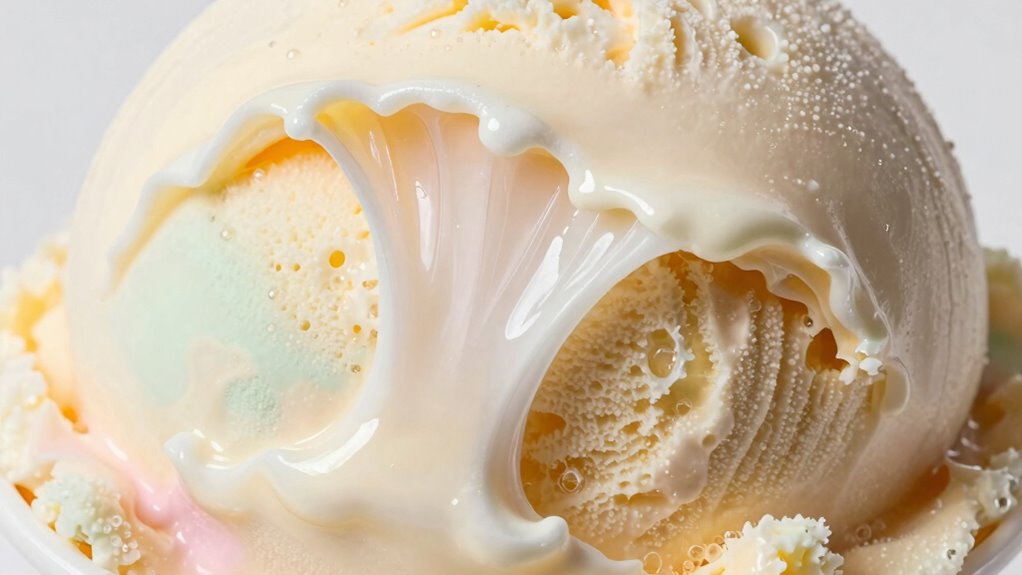
Production techniques play an essential role in determining ice cream’s chewiness by influencing its texture and structure. Using artisanal techniques, such as slow churning and careful ingredient selection, helps create a denser, more elastic product. These methods encourage the development of a stretchy, chewy consistency. Flavor infusion during production can also affect chewiness, as added ingredients like fruit pieces or flavor oils alter the ice cream’s matrix. Additionally, controlling temperature during freezing impacts ice crystal formation, which influences chewiness. Regular use of specific ingredients, such as glycolic acid, in skincare can enhance skin elasticity, which is somewhat analogous to how production methods influence ice cream texture. Gelatin is another ingredient that can be used to increase chewiness and elasticity in various food products. Adjusting freezing methods to optimize elasticity can also involve temperature control and process timing to ensure the desired texture. Furthermore, the choice of ingredient quality can significantly affect the final chewiness and overall mouthfeel of the ice cream. Moreover, understanding microstructure helps in refining production techniques to achieve consistent chewiness and texture.
What Are the Differences Between Regular and Specialty Stretchy Ice Creams?

Regular ice creams typically have a lighter, less elastic texture, resulting from standard churning and freezing processes. In contrast, specialty stretchy ice creams are crafted to create a distinct texture contrast that’s more elastic and chewy. These variations often involve unique ingredients or techniques, such as adding certain stabilizers or polysaccharides, which give the ice cream its signature stretchiness. The flavor profile of specialty versions can also differ, often featuring richer or bolder tastes to complement the chewy texture. While regular ice cream emphasizes creaminess and smoothness, specialty stretchy types focus on a more dynamic mouthfeel. This difference makes them stand out, offering a different sensory experience that’s both fun and satisfying, especially if you enjoy a more playful dessert.
How Can You Make Your Own Stretchy Ice Cream at Home?
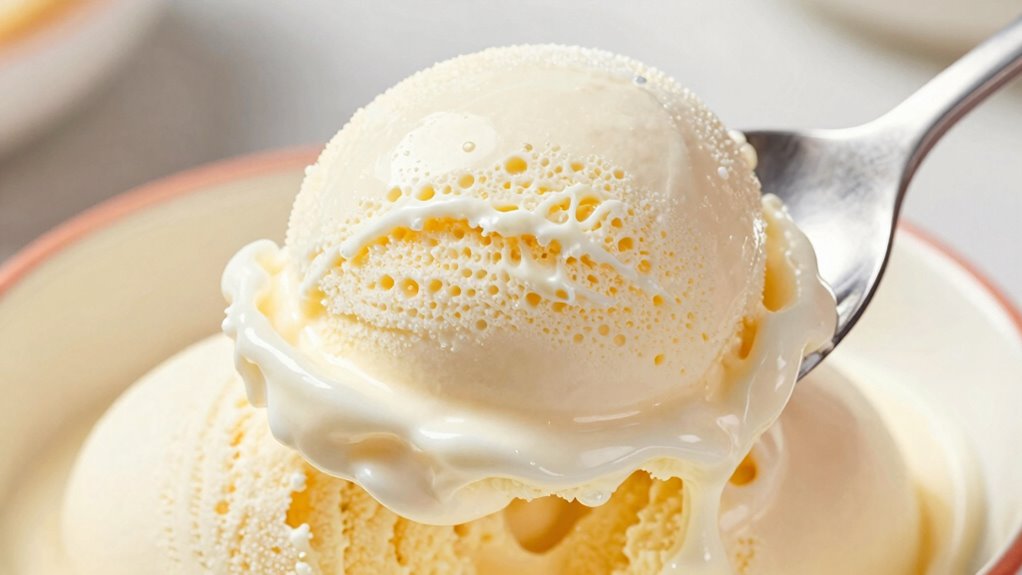
Making your own stretchy ice cream at home is easier than you might think, especially with a few simple ingredients and a bit of experimentation. To achieve that chewy texture, consider adding gelatin, which helps create elasticity and stretchiness. Incorporate egg yolks into your recipe for richness and a smoother consistency, as they also contribute to the stretchy quality. Using natural ingredients like native plants can help enhance the flavor and texture of homemade ice cream. Gelatin’s role in texture can be pivotal in achieving that perfect stretchiness. Incorporating eco-friendly practices, such as sourcing ingredients sustainably, can also elevate your homemade treat and align with sustainable travel principles. Chill your mixture thoroughly before churning to develop the desired chewiness. Embracing creative storytelling in your recipes can also make the process more engaging and memorable. Additionally, understanding ingredient interactions can help you better tailor your recipe for the perfect chewy consistency.
Making stretchy ice cream is simple with gelatin and egg yolks for added chewiness.
With these tips, you can craft homemade stretchy ice cream that’s fun to eat and personalized to your taste.
What Mistakes Should You Avoid When Making Stretchy Ice Cream?
When creating stretchy ice cream, one common mistake is adding too much gelatin, which can make the texture rubbery or overly stiff. Avoid overmixing, as it can break down the delicate structure and result in a less desirable chewiness. Be cautious with ingredient substitutions; using alternatives not suited for stretchiness, like low-quality thickeners, can ruin the texture. Also, don’t skip measuring ingredients accurately—adding too much or too little of certain components impacts elasticity. Rushing the process or skipping steps, such as proper chilling, can prevent achieving the desired stretch, so patience is key. Understanding ingredient interactions can help you better control the texture of your ice cream and avoid common pitfalls. Additionally, being aware of proper mixing techniques ensures the ingredients are blended evenly for optimal results. Incorporating standardized measuring methods can improve consistency in your recipe outcomes. Finally, avoid relying solely on one thickening agent; combining ingredients thoughtfully yields a balanced, chewy consistency. Staying mindful of these mistakes helps ensure your ice cream turns out perfectly stretchy. Furthermore, paying attention to consistent temperature control during preparation can significantly influence the final texture and elasticity, leading to more predictable results. Additionally, understanding how passive voice detection can improve clarity helps make your instructions more precise and engaging.
Frequently Asked Questions
Can Adding Certain Additives Improve Ice Cream’s Stretchiness?
Adding certain additives can improve ice cream’s stretchiness by affecting chewing mechanics and altering texture. Ingredients like gelatin, pectin, or guar gum act as stabilizers and thickeners, giving the ice cream a more elastic, chewy feel. These additives form a network that enhances stretchiness, making bites more satisfying. So, if you want a stretchier ice cream, experimenting with these additives can definitely influence its chewy, enjoyable texture.
Does Temperature Affect the Chewiness of Ice Cream?
Did you know that ice cream’s temperature can change its chewiness by up to 30%? When you lower the temperature during freezing, it can become firmer, reducing stretchiness. Warmer ice cream, just above freezing, often has a softer, more elastic texture. So, temperature directly impacts ice cream’s texture consistency, making it more or less chewy depending on how cold it is. Keep it at the right temperature for your preferred bite!
Are There Regional Variations in Stretchy Ice Cream Recipes?
Yes, regional variations influence stretchy ice cream recipes due to local ingredients and cultural influences. In some areas, you might find unique thickeners or stabilizers like taro or cassava, which add elasticity. Cultural preferences also shape recipes, with certain regions favoring more chewy textures for traditional treats. These regional differences create a diverse array of stretchy ice creams, reflecting local tastes and available ingredients.
How Long Does It Take to Develop a Stretchy Ice Cream Texture?
It takes about 24 to 48 hours for gelatin stabilization and emulsifier effects to fully develop the stretchy texture in ice cream. When you incorporate gelatin, it needs time to set and create that chewy consistency. Emulsifiers work alongside to enhance stretchiness, but their full effects become noticeable after chilling. So, patience is key; give your ice cream at least a day to achieve the desired chewy, stretchy texture.
Is Stretchy Ice Cream Suitable for All Dietary Restrictions?
Stretchy ice cream isn’t ideal for everyone, especially if you have dairy allergies or are sensitive to specific ingredients. You might want to explore dairy alternatives like coconut, almond, or soy-based options that cater to allergy considerations. Always check ingredient labels carefully, and consult with your healthcare provider if you’re uncertain about how certain ingredients could affect your dietary restrictions. That way, you can enjoy a treat without worry.
Conclusion
Now that you know what makes ice cream chewy, you’re armed with the scoop on ingredients and techniques. Think of it as revealing a secret recipe buried deep in a treasure chest. With a little experimentation and care, you can craft your own stretchy, delightful ice cream at home. So, don’t be afraid to play with textures—after all, creating your perfect ice cream is like painting a delicious masterpiece on a blank canvas.
Halloween Picks
halloween
As an affiliate, we earn on qualifying purchases.