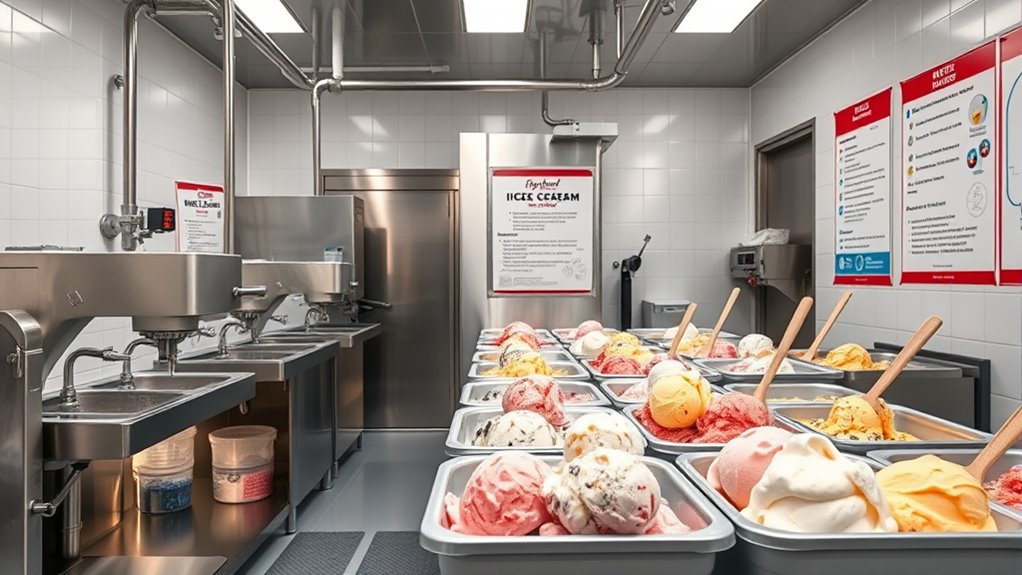

Food safety in ice cream making is all about maintaining strict hygiene and using safe ingredients. Always use pasteurized milk and avoid raw eggs to reduce illness risks. Keep your ice cream stored below -18°C (0°F) to prevent bacterial growth. Also, be aware of cross-contamination and practice good hygiene techniques like handwashing. It’s essential to stay informed on best practices for handling ice cream safely so that you can guarantee quality and compliance. There’s so much more to explore!

Get baking supplies delivered free — and shop member deals
- Fast, free delivery on millions of items
- Access to Prime Big Deal Days deals on October 6–7
- Prime Video, Amazon Music and more included
Key Takeaways
- Ensure all ingredients, especially dairy, are pasteurized to minimize foodborne illness risks.
- Maintain strict hygiene practices, including regular handwashing and sanitized utensils.
- Store ice cream at -18°C (0°F) or lower to prevent bacterial growth.
- Avoid cross-contamination by keeping raw and cooked ingredients separate.
- Regularly train staff on safe handling techniques to comply with food safety standards.
pasteurized milk for ice cream making
As an affiliate, we earn on qualifying purchases.
As an affiliate, we earn on qualifying purchases.
Importance of Hygiene in Ice Cream Production
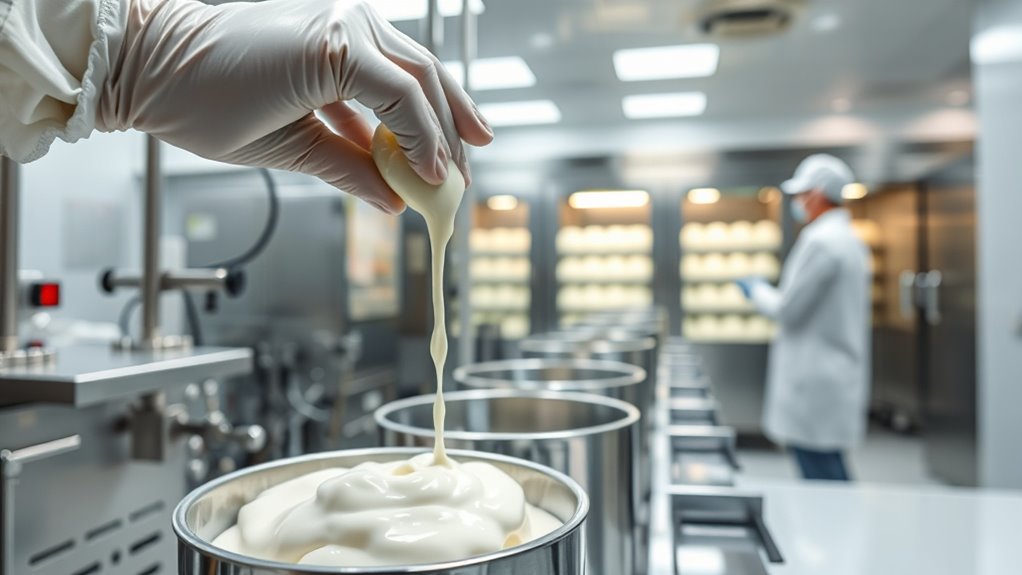
When you think about ice cream production, hygiene is essential to ensuring safety and quality. With consumer concerns about food safety and ice rising considerably, it’s imperative to maintain high standards throughout the manufacturing process.
Compliance with hygiene regulations, like EN 1672-2 and ISO 14159, helps minimize bacterial growth and contamination risks. By effectively cleaning and sanitizing equipment, you safeguard the ice cream’s integrity.
Compliance with hygiene regulations is crucial for minimizing bacterial growth and ensuring the integrity of ice cream products.
Additionally, separating drive and production areas reduces cross-contamination, further enhancing safety and ice cream quality.
Post-Covid-19, the demand for improved food safety measures has surged, with 50% of consumers prioritizing hygiene. As an ice cream producer, adopting thorough hygiene practices isn’t just necessary; it’s an essential part of meeting consumer expectations.
Safe Ingredients for Ice Cream
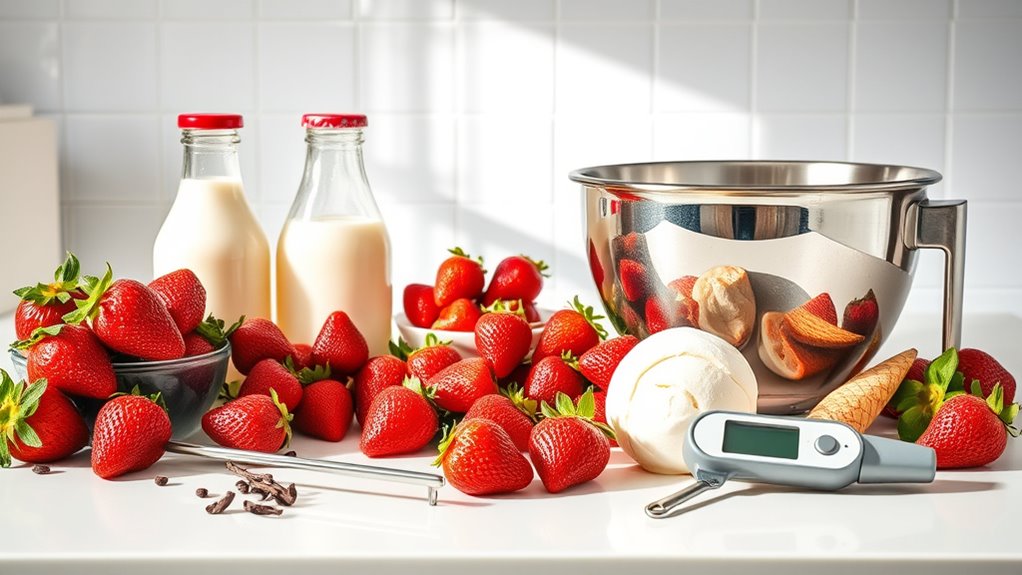
To guarantee the safety of your ice cream, using high-quality ingredients is essential. Here are some key tips to keep in mind:
- Always opt for pasteurized milk and cream to reduce the risk of foodborne illness.
- Avoid using raw eggs since they can harbor Salmonella, posing serious health risks.
- Consider eggless recipes or use pasteurized shell eggs and substitutes for safety without sacrificing flavor.
- Incorporate a cooked custard base; heating the mixture to 160ºF effectively kills harmful bacteria.
Preventing Foodborne Illnesses

Making sure your ice cream remains safe to eat involves vigilance in preventing foodborne illnesses. Proper handling and storage are vital; keep your ice cream at -18°C (0°F) or lower. Be aware of cross-contamination risks, especially with raw meats. Adopt strict hygiene practices like thorough handwashing and using clean utensils. Educate yourself and any food handlers on safe ice cream techniques and check expiration dates regularly to minimize risks.
| Practice | Importance | Tips |
|---|---|---|
| Safe Storage | Prevents bacterial growth | Store below -18°C (0°F) |
| Avoid Cross-Contamination | Reduces contamination risk | Keep raw and cooked foods separate |
| Good Hygiene | Essential for safety | Wash hands frequently |
| Educate Handlers | Increases awareness | Conduct regular training |
| Monitor Expiration Dates | Guarantees quality | Check dates before usage |
The Role of Automation in Food Safety
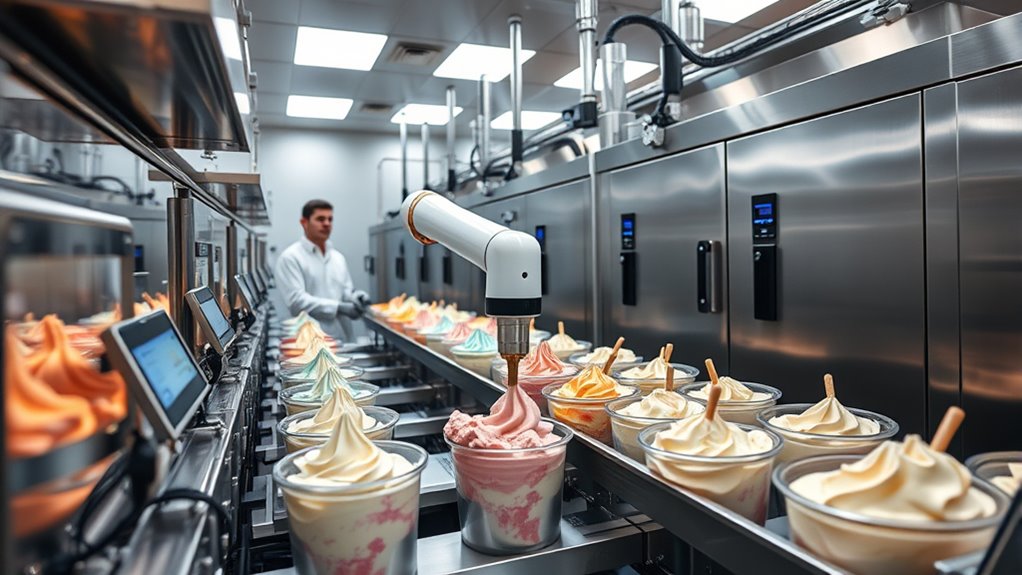
As automation transforms ice cream production, it greatly enhances food safety by minimizing human errors that can introduce contaminants.
With advanced technologies in place, you can expect smoother operations and better compliance with food safety standards.
- Automation improves processes for consistency and quality.
- Real-time data sharing helps maintain ideal hygiene conditions.
- Equipment with safety features reduces the risk of accidents.
- Enhanced traceability guarantees all ingredients meet safety specifications.
- Additionally, understanding ice cream terminology is crucial for ensuring all products comply with safety regulations.
Educating Food Handlers on Best Practices

While ice cream production can be a delightful venture, educating food handlers on best practices is essential for ensuring safety. You must prioritize hygiene by regularly washing your hands and using clean utensils to prevent harmful bacteria from contaminating the ice cream.
Store ice cream at temperatures of -18°C (0°F) or below to inhibit the growth of pathogenic microorganisms. Always avoid cross-contamination by keeping raw ingredients, like eggs or meat, separate from cooked items.
Be aware of the risks associated with using raw eggs, as they can lead to Salmonella outbreaks. Regular training on safe handling techniques and temperature monitoring is vital to maintain compliance with food safety standards and protect consumer health. Incorporating high-quality ingredients can also enhance the safety and flavor of your ice cream.
Frequently Asked Questions
What Is the Most Common Hazard Associated With Ice Cream?
The most common hazard associated with ice cream is the presence of harmful bacteria like Salmonella, especially when you use raw eggs in your recipes.
If you’re making ice cream at home, you should be cautious about the ingredients you choose. Always consider the risks, particularly if you’re serving high-risk individuals.
To keep everyone safe, opt for pasteurized eggs or avoid using eggs altogether, ensuring a safer treat for all.
Is It Safe to Eat Raw Eggs in Homemade Ice Cream?
It’s not safe to eat raw eggs in homemade ice cream. Raw eggs can harbor Salmonella, which puts you at risk of foodborne illness.
Even if you’ve made it before without issues, you can’t assure safety every time. If you want to enjoy homemade ice cream, consider using pasteurized eggs or eggless recipes to eliminate that risk.
Keeping safety in mind guarantees everyone can enjoy your delicious treat without worry!
What Is the FDA Standard for Ice Cream?
When you think about ice cream, it’s fascinating how it’s not just a delicious treat but also a product regulated by the FDA.
The FDA defines ice cream as a blend of cream, milk, sugar, and flavoring, requiring at least 10% milk fat and 20% total solids. It mandates pasteurization at 165º F for 15 seconds, limits overrun to 50%, and recommends storage at -18°C (0°F) or below for safety.
How to Tell if Ice Cream Is Safe to Eat?
To tell if ice cream’s safe to eat, start by checking the expiration date on the container.
Verify it’s been stored at -18°C (0°F) or lower.
Look for signs of freezer burn or off odors, which can indicate spoilage.
If you made it at home, confirm you used pasteurized ingredients and cooked any custard base to 160º F.
Always use clean utensils to serve, preventing cross-contamination with raw foods.
Conclusion
In the world of ice cream making, keeping things clean isn’t just important—it’s absolutely essential for creating the best treats on the planet! By prioritizing hygiene, using safe ingredients, and educating your team, you can prevent foodborne illnesses and guarantee every scoop is a delight. Embracing automation also enhances safety measures. So, let’s make every batch not just delicious, but a shining example of food safety that’ll have customers coming back for more!
Fall Picks
fall essentials
As an affiliate, we earn on qualifying purchases.