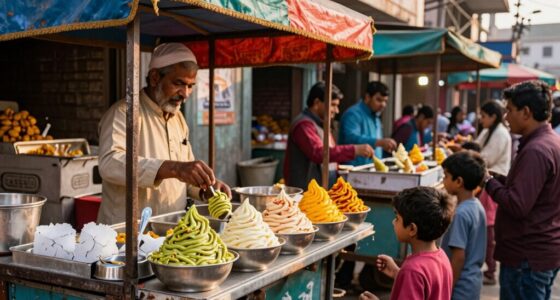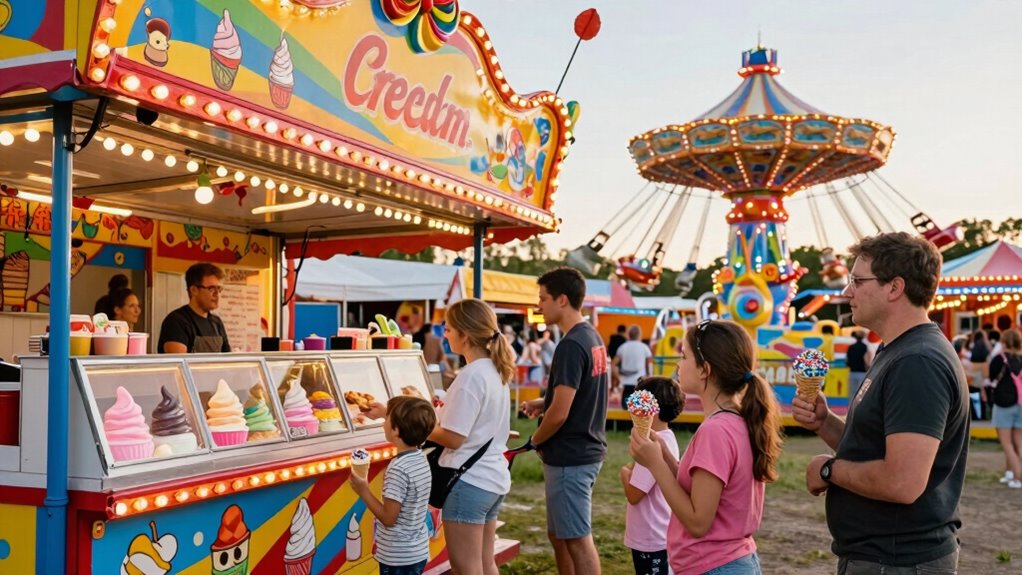

Frozen desserts have become a beloved part of fair experiences, dating back to 19th-century America when ice cream gained popularity thanks to better refrigeration. Different regions add their unique twist, like citrus drinks in the Southwest or custards in the Midwest. Today, artisans create new flavors and dairy-free options, blending tradition with innovation. These treats symbolize culture, pride, and community. If you keep exploring, you’ll discover more about how frozen desserts continue to charm fairgoers everywhere.

Get baking supplies delivered free — and shop member deals
- Fast, free delivery on millions of items
- Access to Prime Big Deal Days deals on October 6–7
- Prime Video, Amazon Music and more included
Key Takeaways
- Frozen desserts became popular at fairs in the 19th century, driven by advancements in refrigeration technology.
- Regional influences shape the variety, from rich ice creams in the South to fruit drinks in the Southwest.
- Modern innovations include artisanal gelatos, dairy-free options, and creative flavor combinations.
- Frozen treats symbolize cultural pride, technological progress, and shared festive experiences at fairs.
- They continue to serve as refreshing, nostalgic, and inclusive symbols of tradition and innovation at carnivals.
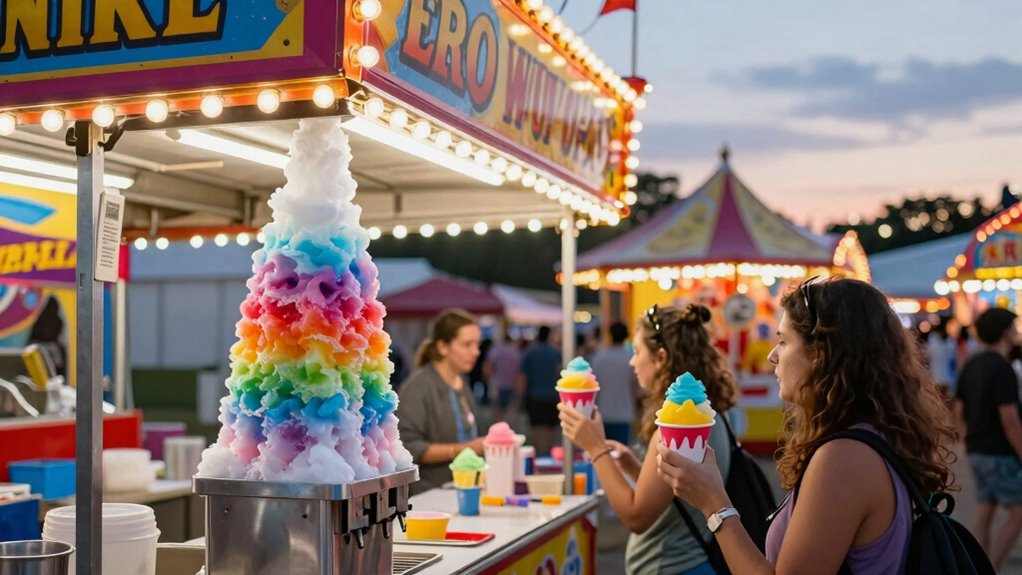
When you visit a fair or carnival, one of the most tempting treats you can indulge in is a frozen dessert. These chilly delights have become an essential part of the fair experience, appealing to visitors of all ages. The story of frozen desserts at these events is rooted in a rich history of evolving tastes and regional influences, making each treat a reflection of local culture and innovation.
Historically, frozen desserts gained popularity in the United States during the 19th century, especially with the rise of ice cream. As refrigeration technology improved, ice cream became more accessible and affordable, quickly becoming a favorite fair food. Its popularity skyrocketed as vendors began offering it in various flavors and styles, turning it into a staple at fairs and carnivals nationwide. Over time, frozen treats like popsicles, frozen yogurt, and slushies entered the scene, each adding new layers of variety and excitement to the fair experience.
Frozen desserts became popular in 19th-century America, with ice cream at fairs fueling regional delight and innovation.
Regional variations add a unique flavor to the history of frozen desserts. In the South, for example, you might find vendors serving up classic ice cream floats and rich, creamy milkshakes, often made with local dairy. Meanwhile, in the Southwest, frozen fruit drinks and icy treats flavored with regional ingredients like citrus or chile peppers are common. In the Midwest, you’ll see a strong tradition of custard-style frozen desserts, which are smoother and richer than typical ice cream. Coastal areas might feature frozen seafood-inspired treats or tropical flavors, showcasing local ingredients and culinary traditions. These regional variations not only highlight local tastes but also influence the types of frozen desserts that become popular at specific fairs. Additionally, regional culinary traditions have played a significant role in shaping the diverse range of frozen treats enjoyed today. The increasing popularity of innovative flavor combinations demonstrates how vendors continue to adapt to modern palates and trends.
As fairs and carnivals continue to evolve, so do their frozen dessert offerings. Today, you might find artisanal gelatos, dairy-free sorbets, or innovative flavor combinations that reflect modern dietary trends. Additionally, advancements in refrigeration technology have allowed vendors to experiment with more complex and diverse frozen treats. A technological evolution has also made it easier for vendors to maintain optimal serving temperatures and presentation, enhancing the overall experience. Despite these changes, the core appeal remains the same: a cold, refreshing escape from the heat and a way to enjoy a sweet treat while wandering through the fairgrounds.
In essence, frozen desserts at fairs and carnivals tell a story of cultural exchange, technological progress, and regional pride. They bring people together in shared delight, offering a taste of local tradition and innovation in every spoonful or bite. Whether you prefer a classic cone or a funky new flavor, these treats continue to be a beloved part of the fair experience, connecting generations through the simple joy of a frozen delight.
As an affiliate, we earn on qualifying purchases.
Frequently Asked Questions
How Do Fair Vendors Ensure the Freshness of Frozen Desserts?
You guarantee the freshness of frozen desserts by properly managing ice cream storage, keeping it at the right temperature to prevent melting and spoilage. Using insulated freezers or display cases helps maintain ideal conditions, which preserves flavor and texture. Regularly checking temperatures and rotating stock guarantees flavor preservation, so your customers get fresh, delicious treats. Proper storage techniques are key to offering high-quality frozen desserts at all times.
What Are the Most Popular Flavors at State Fairs?
Think of popular fair flavors like a vibrant tapestry, woven with cultural influences and novel trends. You’ll find classics like vanilla and chocolate, but also exciting options like cotton candy or caramel apple. These flavors reflect diverse cultural tastes and current trends, making them favorites at fairs. You’re drawn to these familiar yet innovative choices, craving the sweet memories they evoke and the new tastes that keep fair desserts exciting year after year.
How Has Frozen Dessert Technology Evolved Over the Years?
You’ve seen how frozen dessert technology has evolved through innovative freezing methods like blast freezing and liquid nitrogen, which create smoother textures and faster production. Additionally, vendors now prioritize sustainable packaging to reduce waste and environmental impact. These advancements allow you to enjoy fresher, more eco-friendly treats, making your fair experience better while supporting sustainability efforts. The evolution continues, blending innovation with eco-consciousness for a better dessert experience.
Are There Regional Variations in Fair Frozen Desserts?
Yes, you’ll notice regional variations in fair frozen desserts. Regional flavor trends influence the ingredients and flavors used, reflecting local tastes. Cultural dessert influences also shape offerings, with some areas favoring tropical fruits, spicy infusions, or traditional sweets. This variety makes fair desserts exciting, as you get to experience unique local twists on classic frozen treats that showcase the diverse culinary traditions across different regions.
How Do Fairs Handle Allergen Concerns in Frozen Treats?
You’re often welcomed with clear allergen labeling at fairs, helping you make safe choices. Fair vendors take extra steps to prevent cross contamination, like dedicated equipment and diligent cleaning. They understand the importance of your health and peace of mind, providing options that cater to various dietary needs. By prioritizing transparency and safety, fairs create a welcoming environment where everyone can enjoy frozen treats without worry.
Conclusion
As you indulge in frozen treats at fairs and carnivals, remember you’re part of a sweet tradition dating back decades. Did you know that the average fairgoer consumes over 3,000 calories from ice cream and frozen desserts during the event? Next time, savor every spoonful and appreciate how these cool delights have become a beloved highlight of summer festivities, bringing joy and refreshment to millions like you each year.
Fall Picks
fall essentials
As an affiliate, we earn on qualifying purchases.