Kulfiwallahs are the skilled street vendors who’ve turned traditional Indian kulfi into a beloved nationwide treat. With generations of mastery, they use authentic techniques like slow freezing in clay pots and unique flavor blends such as saffron, pistachio, and rose. Their dedication to preserving tradition while adapting to modern tastes has helped kulfi become a street food icon across India. Keep exploring to discover more about these legendary vendors and their vibrant street food culture.
Get ready for Prime Big Deal Days — try Prime free
Exclusive member deals on October 6–7, plus fast free delivery. Cancel anytime.
As an affiliate, we earn on qualifying purchases.
Key Takeaways
- Kulfiwallahs are traditional street vendors who popularized kulfi across India through authentic recipes and innovative flavors.
- They transitioned from village markets to urban streets, making kulfi accessible to diverse communities.
- Use traditional freezing techniques like clay pots and salt-ice mixes to preserve authentic taste and texture.
- Modern marketing and fusion flavors have helped kulfiwallahs attract new generations of customers.
- Collaborations and sustainable sourcing ensure quality, keeping kulfi a beloved and evolving street food icon.
As an affiliate, we earn on qualifying purchases.
Where Kulfiwallahs Come From and Why They Matter
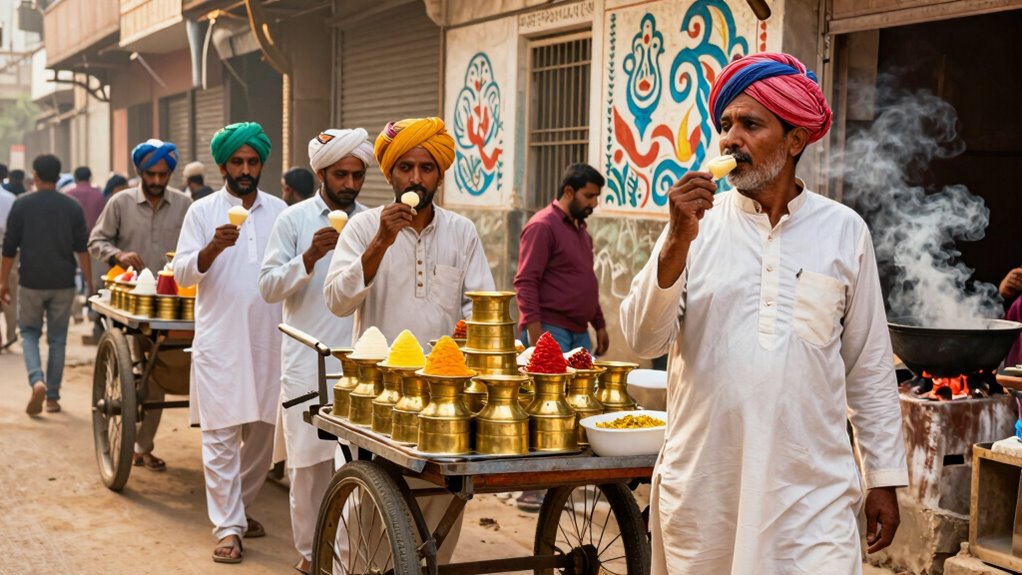
Kulfiwallahs have roots that run deep in Indian street food traditions, with many tracing their origins back generations. Their historical origins lie in ancient India, where kulfi was first enjoyed as a royal delicacy. Over time, regional influences shaped different styles, from the rich, creamy flavors of North India to the fruity and spiced variants in the South. These vendors became essential to local culture, blending traditional recipes with local ingredients. Their presence in bustling markets and street corners reflects a long-standing culinary heritage. By serving authentic kulfi, they preserve regional flavors and connect communities through a shared love for this frozen treat. Their importance goes beyond mere food—they embody a living history of India’s diverse culinary landscape. Recognizing the cultural significance of kulfiwallahs helps appreciate how they contribute to India’s rich gastronomic tapestry and traditional food practices that continue to thrive today. Their role also highlights the importance of street food as an integral part of cultural identity and social life in India.
How Street Vendors Perfected the Art of Making Kulfi

You notice how street vendors have refined traditional freezing techniques to create smooth, dense kulfi. They also experiment with unique flavor combinations that set their kulfi apart from others. These methods and innovations are what truly make their kulfi special. Additionally, their skills are often passed down through generations, preserving cultural heritage while adapting to modern tastes Traditional techniques. Furthermore, some vendors incorporate Piercing-Body inspired tools or methods to ensure consistent quality and hygiene during preparation. Mastery over temperature control plays a vital role in achieving the perfect kulfi texture and taste, which is often aided by specialized equipment like filtering systems to prevent impurities. In addition, understanding quality assessment helps vendors select the best ingredients to enhance flavor and texture.
Traditional Freezing Techniques
Street vendors have mastered traditional freezing techniques that transform simple ingredients into rich, creamy kulfi. They use frozen techniques that slowly chill the mixture, allowing flavors to infuse deeply. This careful process ensures a dense, smooth texture without artificial preservatives. The vendors often rely on traditional methods like slow freezing in clay pots or using salt and ice to control the temperature. These techniques help preserve the authenticity of flavor infusion, resulting in a kulfi packed with natural richness. The table below shows how different freezing methods impact texture and flavor retention:
| Method | Temperature Control | Flavor Infusion Effect |
|---|---|---|
| Clay Pot Freezing | Slow, steady | Deep, natural infusion |
| Salt & Ice Mix | Rapid, adjustable | Preserves intense flavors |
| Traditional Freezing | Consistent, gentle | Maintains smoothness |
Additionally, understanding these freezing techniques highlights the importance of traditional methods in maintaining the authentic taste and texture of kulfi. Recognizing how temperature control influences flavor and consistency underscores the skill involved in these age-old practices. Moreover, these techniques demonstrate the ingenuity of street vendors in optimizing flavor retention and texture. Furthermore, these methods can contribute to biodiversity conservation by utilizing locally available natural materials, reducing reliance on artificial additives, and promoting sustainable practices.
Unique Flavor Combinations
By experimenting with different ingredients and flavor pairings, vendors have transformed kulfi into a canvas for unique taste experiences. They introduce innovative flavorings like saffron, pistachio, rose, and even exotic fruits, creating exciting combinations that appeal to diverse palates. These creative blends not only set vendors apart but also strengthen their branding, making their kulfi memorable. Some vendors even craft signature flavors that become their hallmark, turning each kulfi into a branding opportunity. The art of mixing traditional ingredients with modern twists allows vendors to stand out in crowded markets. This mastery of artful flavor combinations elevates kulfi from a simple dessert to a gourmet experience, showcasing how street vendors continuously push culinary boundaries while building a loyal customer base. Additionally, their focus on innovative flavor pairings helps in creating a distinctive identity that attracts repeat customers and garners word-of-mouth praise. Many vendors also pay close attention to customer preferences, tailoring their flavor profiles to local tastes and seasonal ingredients to stay relevant and appealing. They often incorporate traditional ingredients, which adds authenticity and depth to their creations. By experimenting with modern culinary techniques, they further enhance the complexity and appeal of their kulfi offerings.
Traditional Flavors and Techniques of Kulfi
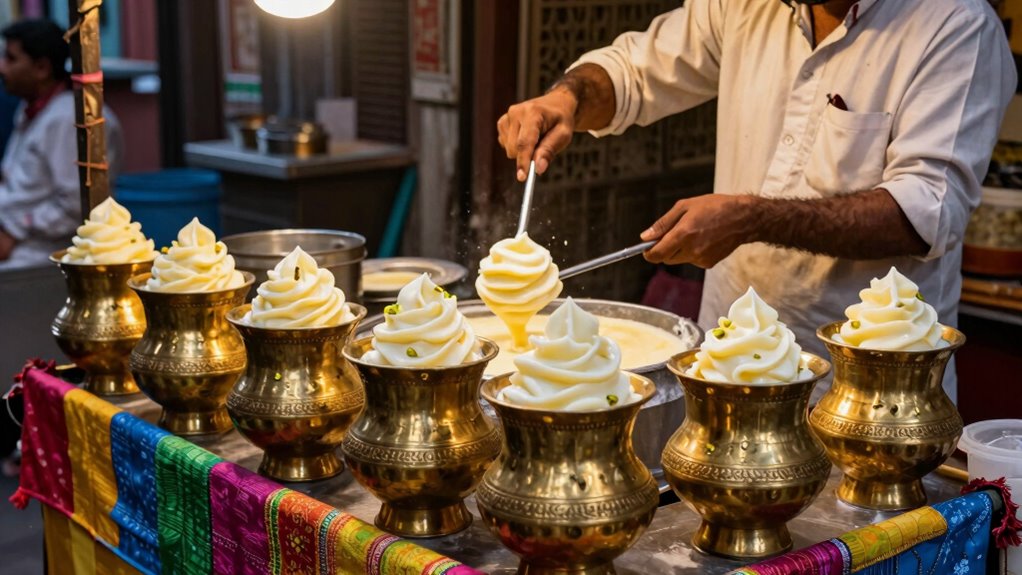
Traditional kulfi is renowned for its rich, intense flavors and time-honored techniques that have been passed down through generations. You’ll notice how these methods emphasize slow simmering, which thickens the milk and develops deep, caramelized notes. Fresh ingredients like saffron, pistachios, and cardamom are used to enhance the authentic taste. Unlike modern ice cream innovations, kulfi relies on natural ingredients and traditional churning methods, often using clay molds called matkas. Flavor experimentation remains rooted in tradition, with vendors blending unique spice combinations or adding fruit infusions while maintaining the core process. This dedication to authenticity creates the distinct, robust profile of kulfi that’s stood the test of time, making it a beloved treat across generations. Authentic preparation techniques ensure the preservation of its cultural heritage and unique flavor profile. Additionally, traditional techniques such as slow simmering and clay mold freezing help maintain the rich texture and flavor that define kulfi. The use of slow simmering also allows for the gradual development of complex, layered flavors that are characteristic of authentic kulfi. Moreover, employing vintage methods like hand-churning with traditional tools further enhances its artisanal quality. Incorporating proper storage practices is also vital to preserving kulfi’s freshness and preventing flavor degradation over time.
How Kulfiwallahs Spread Its Popularity Across India

You see how kulfi started in villages and quickly moved into urban areas, reaching more people along the way. As kulfiwallahs expanded, they blended local flavors and traditions, making kulfi a part of diverse cultures. This fusion helped kulfi gain popularity across India, becoming a beloved treat nationwide. Moreover, visual and auditory cues played a role in enhancing the appeal and recognition of kulfi, similar to techniques used in speech therapy to improve clarity and engagement. Additionally, the strategic use of cookie management and online marketing techniques by vendors contributed to the widespread popularity of kulfi in the digital age.
Village to Urban Expansion
As villages began to grow and urban areas expanded, kulfiwallahs found new opportunities to reach a wider audience. They adapted from traditional village settings to bustling urban markets, bringing village traditions into city streets. This shift allowed them to serve diverse crowds and expand their influence across India. You can picture them:
- Setting up carts in crowded city squares, blending village charm with city hustle
- Using familiar flavors rooted in village traditions to attract urban customers
- Moving into busy markets, making kulfi accessible to everyone, from children to elders
This expansion helped kulfiwallahs spread their popularity beyond rural roots, turning kulfi into a beloved treat across urban India. Their ability to evolve with changing environments kept village flavors alive in city streets.
Cultural Fusion and Popularity
The movement of kulfiwallahs from villages into city streets sparked a vibrant fusion of cultural influences, fueling the widespread popularity of kulfi across India. As they set up shop in urban markets, they introduced fusion cuisine elements, blending traditional flavors with new ingredients. This flavor innovation made kulfi more appealing to diverse tastes, helping it transcend regional boundaries. You’ll notice how kulfi evolved from a simple dessert into an iconic treat, thanks to these creative adaptations. The fusion of local spices, modern techniques, and classic recipes kept kulfi fresh and exciting. This cultural blending resonated with a broader audience, transforming kulfi into a symbol of India’s rich culinary diversity. Ultimately, it’s this fusion and flavor innovation that helped kulfi secure its place across the country.
Challenges Kulfi Vendors Face Today and How They’re Overcoming Them

Despite their popularity, kulfi vendors face numerous challenges today, from rising costs and stiff competition to changing consumer preferences. To survive, they’re adopting strategies like sustainable sourcing, ensuring ingredients are both high-quality and eco-friendly. Vendor collaborations have become essential, allowing vendors to share resources, reduce costs, and innovate together. You might see vendors working with local dairy farms to secure fresh milk or partnering with other street vendors to attract more customers. These efforts help maintain tradition while adapting to modern demands.
Kulfi vendors adapt by sustainable sourcing and collaborations to meet modern challenges.
- Securing affordable, high-quality ingredients through sustainable sourcing
- Forming alliances with local vendors for mutual support
- Innovating flavors and presentation to attract new customers
Adapting to Changing Tastes: Modern Trends in Kulfi Street Food

Modern kulfi vendors are embracing new trends to appeal to evolving tastes and attract a broader customer base. You’ll notice fusion flavors like saffron-mango, cardamom-chocolate, and pistachio-rose, which excite adventurous palates. Additionally, health trends influence offerings with sugar-free, low-fat, and dairy-free options, catering to health-conscious buyers. To help you understand these trends better, here’s a quick look:
| Trend | Description |
|---|---|
| Fusion flavors | Combining traditional ingredients with global influences |
| Health-conscious options | Low-sugar, vegan, or dairy-free kulfis |
| Innovative toppings | Nuts, fruits, and edible flowers for visual appeal |
| Packaging & presentation | Eco-friendly containers and modern displays |
Honoring the Legacy of Kulfi Vendors in Indian Street Food
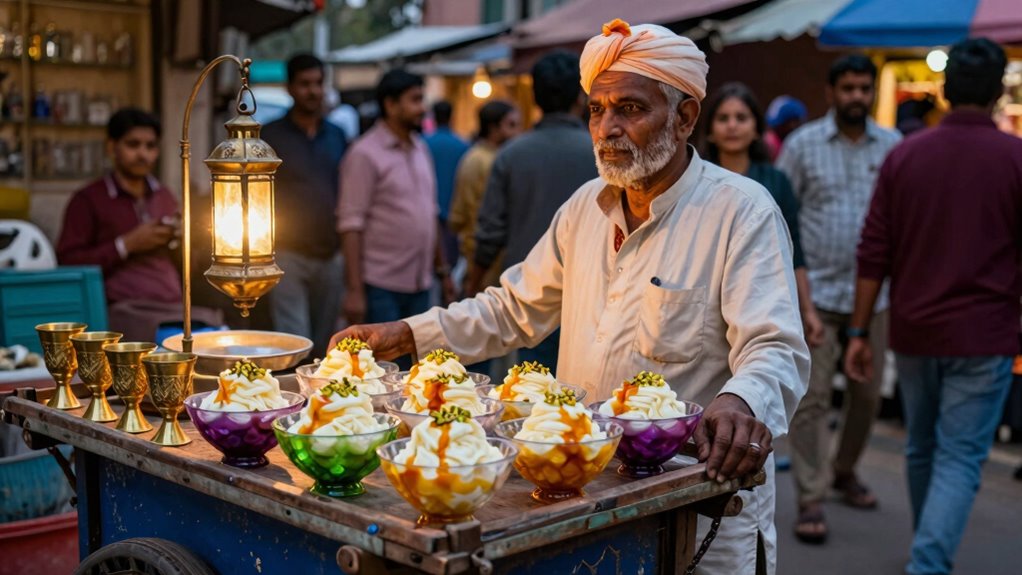
Honoring the legacy of kulfi vendors means recognizing their essential role in shaping India’s vibrant street food culture. These vendors have preserved and evolved vendor community traditions while introducing kulfi flavor innovation that delights generations. You can see this in bustling markets where vendors serve classic saffron, pistachio, and rose flavors alongside inventive options like mango, basil, or saffron-infused varieties. Their dedication sustains a rich heritage, connecting communities through shared tastes and stories. Appreciating their work means valuing the skills passed down through generations, keeping traditions alive amid modern changes. Their dedication ensures that authentic kulfi remains a symbol of India’s diverse and colorful street food scene, celebrating both history and creativity in every scoop.
What’s Next for Kulfiwallahs and India’s Street Food Culture

As India’s street food scene evolves, kulfiwallahs are finding new ways to adapt and thrive amidst changing tastes and urban landscapes. They’re embracing innovative packaging to keep kulfi fresh and portable, making it easier for customers to enjoy on the go. Social media marketing plays a vital role, helping vendors reach wider audiences and showcase their unique flavors. You might see colorful images of kulfi cones and cups flooding Instagram feeds, enticing more people to try these treats. To visualize this shift:
| Traditional Kulfi | Modern Packaging | Social Media Buzz |
|---|---|---|
| Handcrafted in molds | Eco-friendly containers | Viral videos & reviews |
| Served on street stalls | Compact, portable boxes | Influencer collaborations |
| Classic flavors | Innovative flavors & toppings | Hashtag campaigns |
| Local vendors | Digital presence | Customer engagement |
This blend of tradition and technology signals a vibrant future for kulfiwallahs and India’s street food culture.
Frequently Asked Questions
What Are the Common Ingredients Used in Traditional Kulfi Recipes?
You typically use milk and condensed milk as the base for traditional kulfi. Saffron adds a rich flavor and vibrant color, while pistachios provide a nice crunch and nutty taste. Sometimes, you can also add cardamom for extra aroma. The mixture is simmered until thickened, then poured into molds, frozen, and enjoyed. These ingredients create that authentic, creamy kulfi flavor you love.
How Do Kulfiwallahs Maintain Hygiene Standards Amid Street Vending?
You can trust kulfiwallahs to maintain hygiene standards through strict practices and certifications. They regularly clean their equipment, use fresh ingredients, and handle the kulfi with sanitized tools. Many vendors are certified by health authorities, ensuring adherence to hygiene practices. They also store ingredients properly and avoid cross-contamination, which keeps the kulfi safe and delicious for everyone. Your focus on hygiene helps keep street food enjoyable and safe.
Are There Regional Variations in Kulfi Flavors Across India?
Yes, you’ll find regional variations in kulfi flavors across India. Regional influences shape flavor diversity, with North Indian kulfis often featuring saffron and pistachio, while South Indian versions might include coconut or mango. You can taste these differences in street stalls and local markets, where kulfi vendors adapt recipes to local tastes. This diversity makes kulfi a vibrant, flavorful treat that reflects India’s rich culinary landscape.
How Do Kulfiwallahs Compete With Modern Ice Cream Brands?
You can beat modern ice cream brands by turning your kulfi into an unforgettable experience. Use branding strategies that highlight tradition and authenticity, making your stall a nostalgic escape. Focus on building customer loyalty through personalized service and unique flavors that ice cream brands can’t replicate. Like a maestro with a timeless tune, you keep your customers coming back, craving that rich, creamy kulfi’s magic—a taste no machine can match.
What Are the Most Popular Times of Day for Kulfi Sales?
You’ll find kulfi sales peak during the evening snacking hours, especially after sunset when people seek cool treats. The bustling streets and park areas see the most activity, making peak hours the prime time for vendors. During these times, you can expect a surge in customers craving traditional, revitalizing kulfi. Evening is the best window to enjoy and sell kulfi, as it aligns perfectly with the popular after-dinner or sunset cravings.
Conclusion
Imagine walking through a bustling street, the aroma of freshly made kulfi guiding you like a beacon. Just like a seasoned kulfiwallah perfects each scoop, you can appreciate how these vendors have preserved a beloved tradition amid change. Their resilience is a proof to India’s vibrant street food culture—ever-evolving, yet rooted in history. As they adapt and innovate, they keep the sweet legacy alive, inviting everyone to savor a taste of tradition with every bite.
Evergreen bestsellers Picks
bestsellers
As an affiliate, we earn on qualifying purchases.