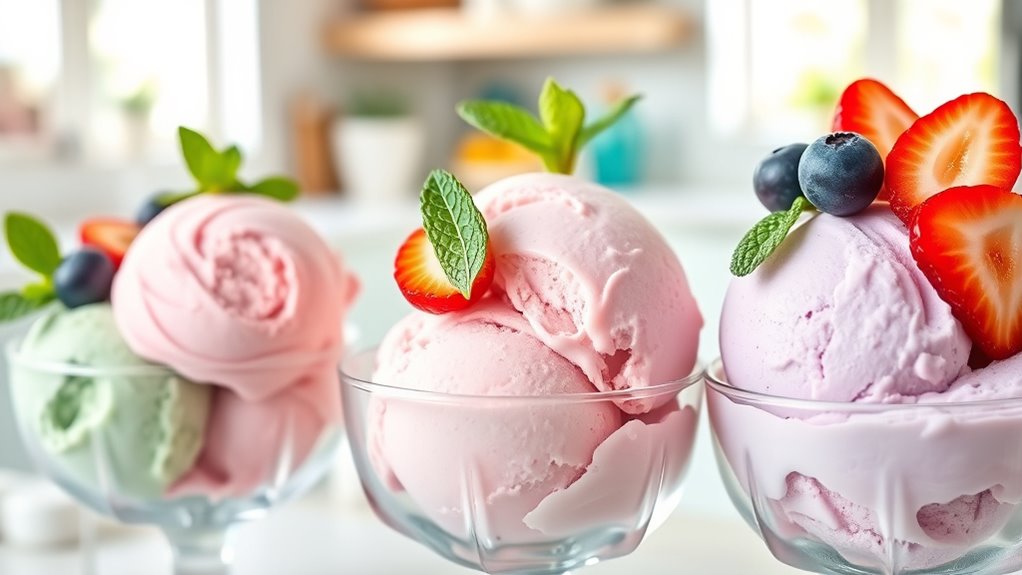

Vegan ice cream uses plant-based ingredients, which can be a healthier choice if you’re lactose intolerant or want to reduce animal products, but it often contains comparable or even higher sugar levels than dairy options. While options with added nutrients and lower sugar exist, they might sacrifice some flavor or creaminess. Carefully checking labels helps you make smarter choices. If you’re curious about more benefits and drawbacks, you’ll find plenty of helpful details ahead.

Get baking supplies delivered free — and shop member deals
- Fast, free delivery on millions of items
- Access to Prime Big Deal Days deals on October 6–7
- Prime Video, Amazon Music and more included
Key Takeaways
- Vegan ice creams use plant-based ingredients, offering dairy-free options suitable for vegans and lactose intolerance.
- They often contain similar or higher sugar levels than traditional ice cream, impacting health considerations.
- Nutritional benefits depend on ingredients and fortification, providing healthy fats and added vitamins or minerals.
- Low-sugar and unsweetened versions are available, but may compromise flavor and creaminess.
- Reading labels is essential to evaluate sugar content, nutritional value, and make healthier choices.

Have you ever wondered how vegan ice cream stacks up nutritionally compared to traditional varieties? If you’re exploring dairy alternatives, you’ll find that vegan ice cream often uses plant-based ingredients like coconut, almond, soy, or cashew milk instead of dairy. These options make it suitable for those who are lactose intolerant, vegan, or simply looking to reduce their intake of animal products. But how do these dairy alternatives affect the nutritional profile, especially when it comes to sugar content? It’s a key factor to think about because many vegan ice creams tend to have higher sugar levels compared to traditional ice cream. Manufacturers often add sugars to mask the sometimes subtle flavor differences of plant-based ingredients, making vegan options sweeter and more appealing to a broader audience.
When comparing sugar content, it’s important to note that some vegan ice creams can pack just as much, if not more, sugar than dairy-based ones. This can be surprising because you might assume that a plant-based product is inherently healthier. Yet, many brands add extra sugars or syrups to enhance flavor and texture. If you’re mindful of sugar intake, always check the nutrition labels. Some vegan ice creams are now offering lower-sugar or unsweetened varieties, which are better choices if you’re trying to cut back. However, be aware that reduced sugar options sometimes sacrifice creaminess or flavor, requiring you to find a balance that suits your taste and health goals.
On the positive side, dairy alternatives used in vegan ice cream can sometimes contribute to other nutritional benefits. For example, almond and cashew-based varieties often contain healthy fats, vitamins, and minerals, making them a good source of nutrients. Coconut-based options might offer medium-chain triglycerides, which some believe support energy metabolism. Additionally, nutrient fortification in some vegan ice creams helps to mimic the nutritional profile of dairy, providing essential nutrients like calcium and vitamin D. It’s also worth noting that some vegan ice creams are fortified with nutrients like calcium and vitamin D to mimic the nutritional profile of dairy ice cream, helping you maintain nutrient intake while avoiding animal products.
As an affiliate, we earn on qualifying purchases.
Frequently Asked Questions
Is Vegan Ice Cream Suitable for People With Nut Allergies?
If you have nut allergy concerns, vegan ice cream may not be suitable since many brands use nuts or nut-based ingredients. Always check ingredient transparency to avoid hidden nuts or cross-contamination. Some options are nut-free, but you must carefully read labels and contact manufacturers if needed. It’s safest to choose products explicitly labeled nut-free and allergen-friendly to prevent allergic reactions.
How Does Vegan Ice Cream Compare to Dairy in Calcium Content?
Think of vegan ice cream as a treasure chest filled with plant-based sources of calcium. It often contains comparable calcium levels to dairy, but your body’s calcium absorption can vary depending on the source. While dairy naturally provides calcium, vegan options rely on fortified plant milks and leafy greens. To maximize calcium intake, incorporate a variety of these plant-based sources into your diet, ensuring strong bones and teeth.
Can Vegan Ice Cream Help With Weight Loss?
Yes, vegan ice cream can help with weight loss if you pay attention to calorie content and practice portion control. Since many vegan options are lower in saturated fats and calories compared to traditional ice cream, you can enjoy a sweet treat without overindulging. Just be mindful of serving sizes, and combine it with a balanced diet and regular exercise for better results.
Are Artificial Sweeteners Used in Vegan Ice Cream Safe?
Artificial sweeteners used in vegan ice cream are generally considered safe by regulatory agencies like the FDA, but individual reactions vary. You might want to check the specific ingredients for artificial sweetener safety and consider how it affects your health. These sweeteners can also influence vegan ice cream flavor, sometimes making it taste less natural. It’s best to enjoy these treats in moderation and stay informed about any personal sensitivities.
What Are the Environmental Impacts of Producing Vegan Ice Cream?
Producing vegan ice cream is like planting a seed for a greener future. It generally has a lower carbon footprint compared to dairy, especially when sourced sustainably. By choosing ingredients from sustainable sources, you help reduce environmental harm, conserving water and reducing greenhouse gases. This shift supports more eco-friendly farming practices, making your sweet indulgence a small but meaningful step toward a more sustainable world.
Conclusion
In the end, choosing vegan ice cream is like stepping into a flavorful wonderland that can boost your health or challenge your choices. While it offers many benefits, like fewer saturated fats, it’s not a magic bullet. You’ll want to enjoy it mindfully, just like savoring a rare jewel. Remember, every scoop counts—so make your decision wisely and treat yourself to the delicious, plant-based delight that best fits your lifestyle.
Fall Picks
fall essentials
As an affiliate, we earn on qualifying purchases.