
To make homemade ice cream safely, focus on handling ingredients properly, keeping everything clean, and maintaining correct temperatures. Use pasteurized dairy and cook mixtures to the right temperature to kill bacteria. Store ingredients and ice cream in airtight containers in the fridge or freezer, and avoid cross-contamination by cleaning tools between uses. Pay attention to proper cooling and freezing temperatures to prevent spoilage. Keep safety tips in mind, and you’ll master delicious, worry-free ice cream crafting.

Get baking supplies delivered free — and shop member deals
- Fast, free delivery on millions of items
- Access to Prime Big Deal Days deals on October 6–7
- Prime Video, Amazon Music and more included
Key Takeaways
- Use pasteurized ingredients and wash hands thoroughly to prevent harmful bacteria in homemade ice cream.
- Maintain proper temperatures: heat mixture to safe levels and keep storage below 40°F (4°C).
- Sanitize all equipment and surfaces before and after use to avoid cross-contamination.
- Store ingredients and finished ice cream in airtight containers, and discard any spoiled or expired items.
- Practice proper handling of raw dairy and eggs, and avoid cross-contact to ensure safety and quality.
pasteurized dairy milk for ice cream
As an affiliate, we earn on qualifying purchases.
As an affiliate, we earn on qualifying purchases.
Why Food Safety Is Crucial When Making Homemade Ice Cream
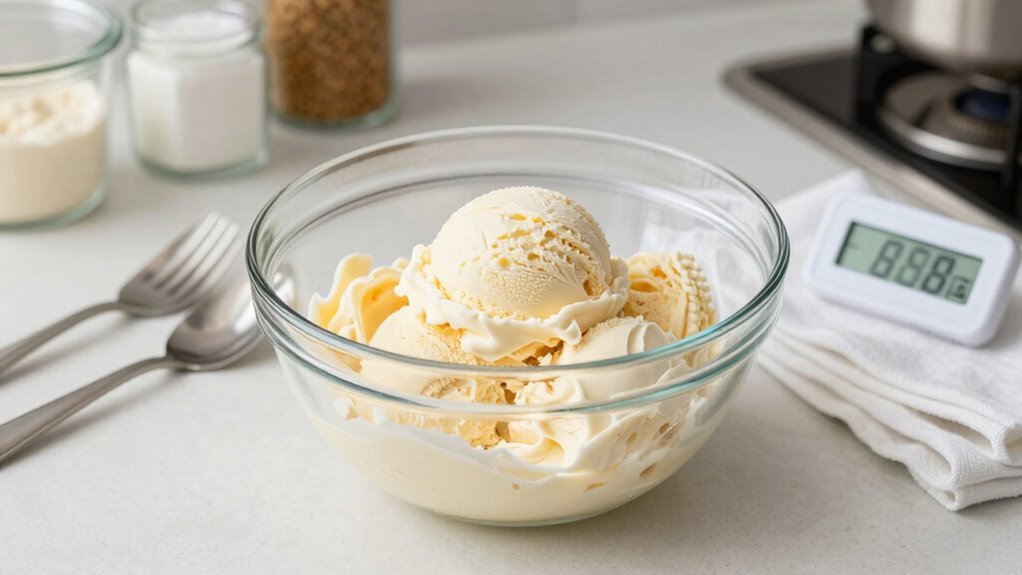
When making homemade ice cream, food safety is essential because it helps prevent illness caused by harmful bacteria. Raw dairy, like milk or cream, can carry pathogens if not handled properly, so using pasteurized ingredients is safest. When preparing homemade mixtures, it’s important to wash your hands and all utensils thoroughly to avoid cross-contamination. If your recipe includes raw eggs or unpasteurized dairy, be aware of the risks and consider alternatives or proper cooking steps. Keeping ingredients at the right temperature minimizes bacterial growth. Additionally, maintaining proper food safety practices throughout the process ensures the safety of your homemade treat. Proper temperature control during storage and freezing is crucial to inhibit bacterial development and ensure freshness. For added protection, consider proper storage techniques to keep your ice cream safe during freezing and serving. Remember, even small lapses in handling raw dairy or mixing ingredients can lead to unsafe ice cream. Prioritizing food safety guarantees you enjoy your homemade treat without worry about foodborne illnesses.
How to Handle and Store Ingredients Safely
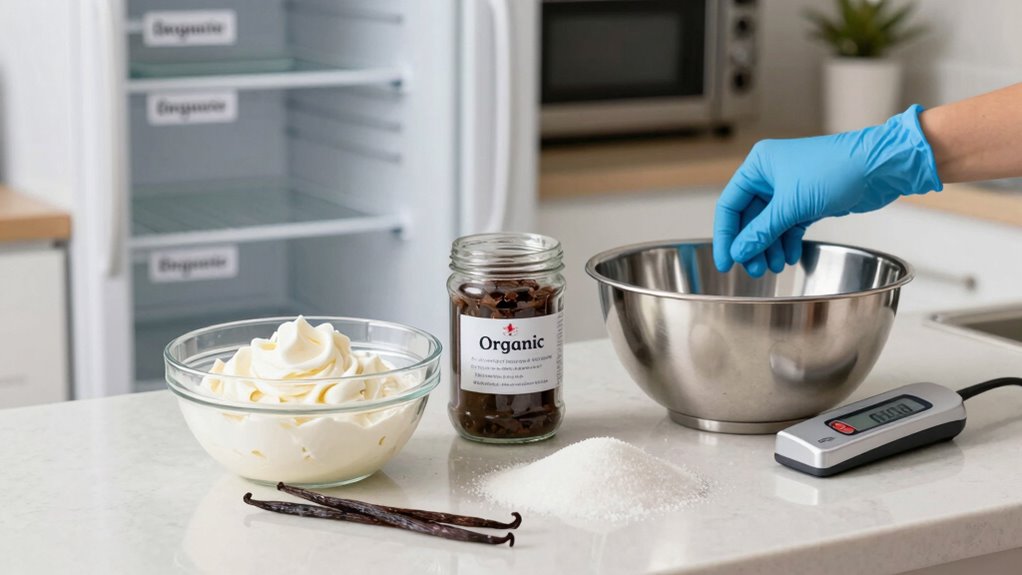
To keep your ingredients safe, start by storing them properly in the refrigerator or freezer to prevent spoilage. Always sanitize your utensils and surfaces before handling ingredients to avoid cross-contamination. Keep a close eye on ingredient freshness, discarding anything that shows signs of spoilage or has passed its expiration date. Additionally, maintaining proper appliance maintenance ensures your refrigeration units function efficiently and keeps your food safe. Regularly checking and cleaning thermal behavior components of your appliances can help prevent temperature fluctuations that might compromise food safety. Incorporating water safety practices in your routine can also help prevent contamination and ensure your ingredients remain in optimal condition. Being aware of Deaf Vibes techniques can help you better understand auditory cues related to food safety alerts and improve your overall kitchen safety practices. Staying informed about food safety guidelines from reputable sources can further enhance your food handling practices.
Proper Ingredient Storage
Proper ingredient storage is essential to keep your homemade ice cream safe and delicious. Always check ingredient labeling to ensure freshness and safety. Use appropriate storage containers that seal tightly to prevent contamination and spoilage. Keep perishable ingredients refrigerated at or below 40°F (4°C) and store dry ingredients in a cool, dark place. Label each container clearly with content and date to track freshness. Proper storage minimizes bacteria growth and maintains ingredient quality. Maintaining optimal storage conditions helps ensure that ingredients retain their nutritional value and are safe for consumption. Following food safety guidelines can further reduce the risk of contamination and spoilage. For example, storing certain ingredients in electric coolers or freezers can help preserve quality for longer periods. Regularly monitoring storage temperatures is crucial to prevent temperature abuse that could compromise ingredient safety. Here’s a quick guide:
| Ingredient Type | Storage Tips |
|---|---|
| Dairy & Eggs | Refrigerate promptly, use within safe dates |
| Fruits & Nuts | Store in airtight containers in fridge or pantry |
| Dry Ingredients | Keep in sealed containers away from light |
Sanitize Utensils and Surfaces
Ensuring your utensils and surfaces are thoroughly sanitized is essential for preventing cross-contamination and keeping your ingredients safe. Start by cleaning all equipment with hot, soapy water, then use a sanitizing solution to eliminate bacteria. Proper surface sterilization involves wiping down countertops, cutting boards, and mixing bowls with a food-safe disinfectant or a diluted bleach solution. Always rinse equipment and surfaces with water after sanitizing to remove any residue. Remember to air-dry or dry with a clean towel to prevent recontamination. Using sanitized utensils and sterilized surfaces reduces the risk of harmful bacteria spoiling your ice cream and ensures a safe, enjoyable treat. Regularly maintain your sanitizing equipment to keep your kitchen hygienic and your ingredients protected. Additionally, choosing reliable sanitizing tools and solutions is crucial for effective kitchen hygiene and food safety.
Monitor Ingredient Freshness
Monitoring ingredient freshness is essential for making safe and high-quality ice cream. Regular ingredient inspection helps you catch spoilage early, preventing contaminated batches. Check dairy products, fruits, and other perishables for signs of mold, sour smell, or discoloration. For freshness monitoring, keep track of expiration dates and storage times. Store ingredients in airtight containers at proper temperatures—refrigerate dairy and fresh produce promptly. Label containers with purchase or opening dates to ensure you use ingredients within their safe window. When in doubt, discard any ingredient that looks or smells off. Proper handling and attentive freshness monitoring are key to maintaining food safety standards. Additionally, understanding food safety regulations can guide you in adhering to best practices for ingredient storage and handling, reducing risks associated with homemade ice cream. Paying attention to proper storage practices also helps maintain ingredient quality and prevent spoilage, especially regarding the air quality considerations of storage areas. Incorporating good hygiene practices during handling further minimizes contamination risks.
What Temperatures Are Needed for Safe Pasteurizing and Freezing
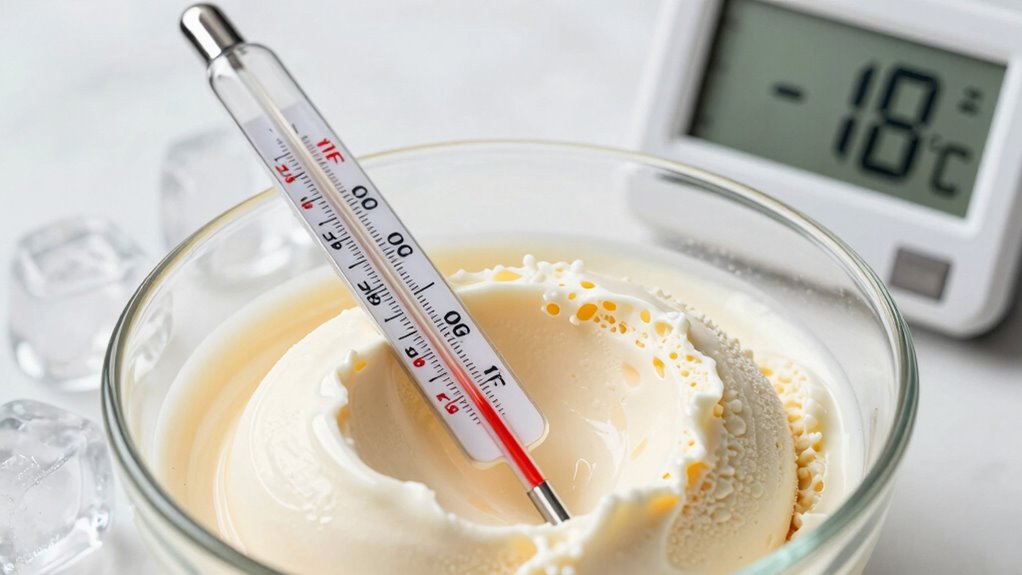
To make homemade ice cream safely, you need to heat your mixture to specific temperatures that effectively eliminate harmful bacteria. The key is reaching the right pasteurization temperatures, which generally involve heating your mix to 160°F (71°C) for 15 seconds or 145°F (63°C) for 30 minutes. After pasteurization, follow freezing guidelines to ensure safety and quality. Proper freezing prevents bacteria growth and preserves flavor. Keep these tips in mind:
- Heat to at least 160°F (71°C) for quick pasteurization
- Maintain 145°F (63°C) for 30 minutes if using slow pasteurization
- Chill mixture rapidly after pasteurizing
- Freeze at 0°F (-18°C) or lower
- Use a thermometer to monitor temperatures accurately
- Temperature control is essential for both safety and quality when making homemade ice cream. Proper temperature management can prevent contamination and spoilage, ensuring your ice cream remains safe to eat. Additionally, understanding food safety standards helps you make informed decisions during the process. Incorporating proper cooling techniques can further improve the safety and texture of your finished product. Being aware of bacterial growth patterns at different temperatures can help optimize your process and ensure the best results.
Following these temperature guidelines ensures your homemade ice cream is safe and delicious.
How to Prevent Cross-Contamination During Preparation
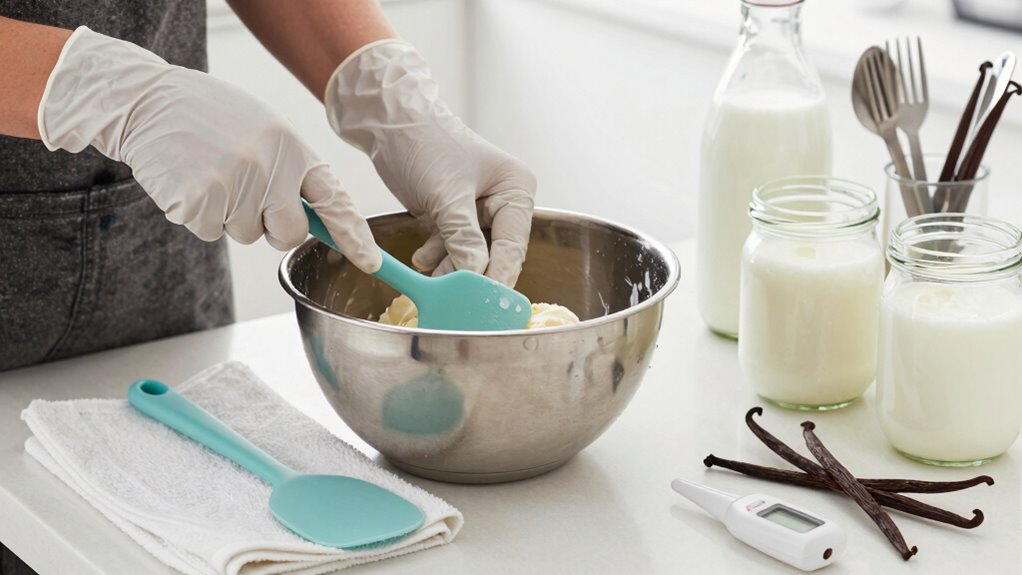
Cross-contamination can easily occur during homemade ice cream preparation if you’re not careful. To prevent this, follow strict handwashing protocols before handling ingredients and equipment. Use separate cutting boards and utensils for different ingredients, especially if allergens are involved. Keeping allergens isolated minimizes risk. Be mindful of cross-contact by cleaning surfaces thoroughly between tasks. Here’s a quick guide:
| Step | Action | Focus Area |
|---|---|---|
| Hand hygiene | Wash hands thoroughly with soap and water | Personal safety |
| Ingredient separation | Use dedicated tools for allergens and non-allergens | Allergen awareness |
| Surface sanitization | Clean all surfaces before and after use | Cross-contact prevention |
| Equipment handling | Store raw ingredients separately | Prevent contamination |
| Monitoring | Stay alert to cross-contact risks | Vigilance |
Common Food Safety Mistakes to Avoid When Making Ice Cream
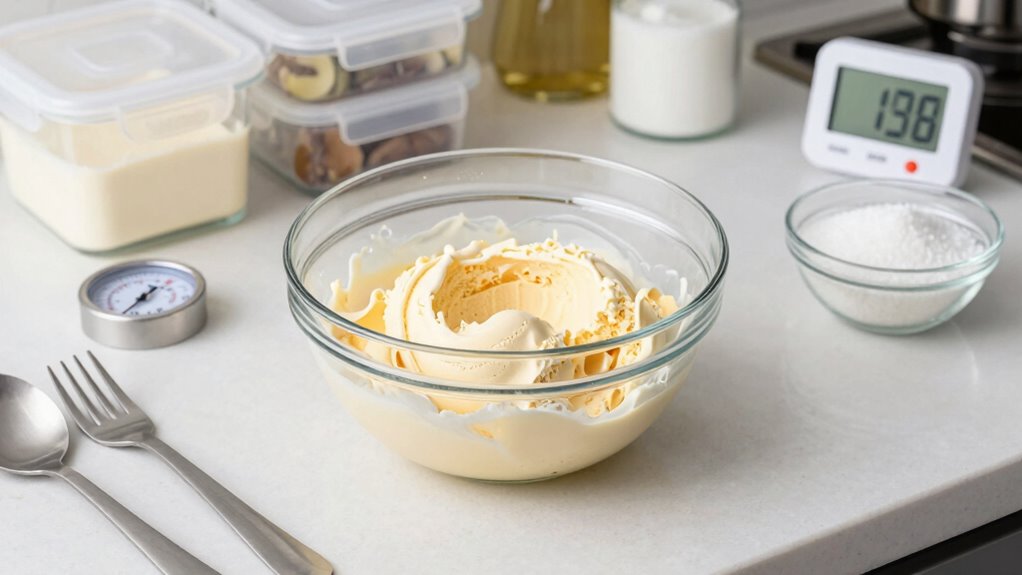
One common mistake is neglecting cross-contamination risks, which can introduce harmful bacteria into your ice cream. Properly handling ingredients, especially raw dairy and eggs, is essential to keep everything safe. By paying attention to these points, you can avoid food safety issues and enjoy your homemade treat with peace of mind.
Cross-Contamination Risks
Are you aware of how easily bacteria can spread during ice cream making if proper hygiene isn’t maintained? Cross-contamination risks are real and can compromise safety. To prevent this, focus on maintaining kitchen hygiene and allergen avoidance. Here are common mistakes to avoid:
- Using the same utensils for raw ingredients and finished products
- Not cleaning surfaces thoroughly between tasks
- Failing to wash hands properly before handling ingredients
- Storing allergens next to other ingredients
- Ignoring how cross-contact can occur through shared equipment
Proper Ingredient Handling
Proper ingredient handling is essential to guarantee your homemade ice cream is safe to eat. Start with reliable ingredient sourcing to ensure freshness and to reduce contamination risks. Always check expiration dates and purchase from reputable suppliers. When handling ingredients, wash your hands thoroughly and clean all utensils and surfaces to prevent cross-contamination. Be aware of allergen information and avoid using ingredients that could trigger allergies in yourself or others. Label ingredients clearly, especially if you’re preparing for guests with allergies. Store perishable ingredients at the correct temperatures and use them promptly. Avoid reusing leftover ingredients without proper cleaning, as this can introduce bacteria. By paying attention to sourcing and allergen awareness, you protect yourself and your loved ones from foodborne illnesses.
Final Tips for Ensuring Your Homemade Ice Cream Is Safe and Delicious
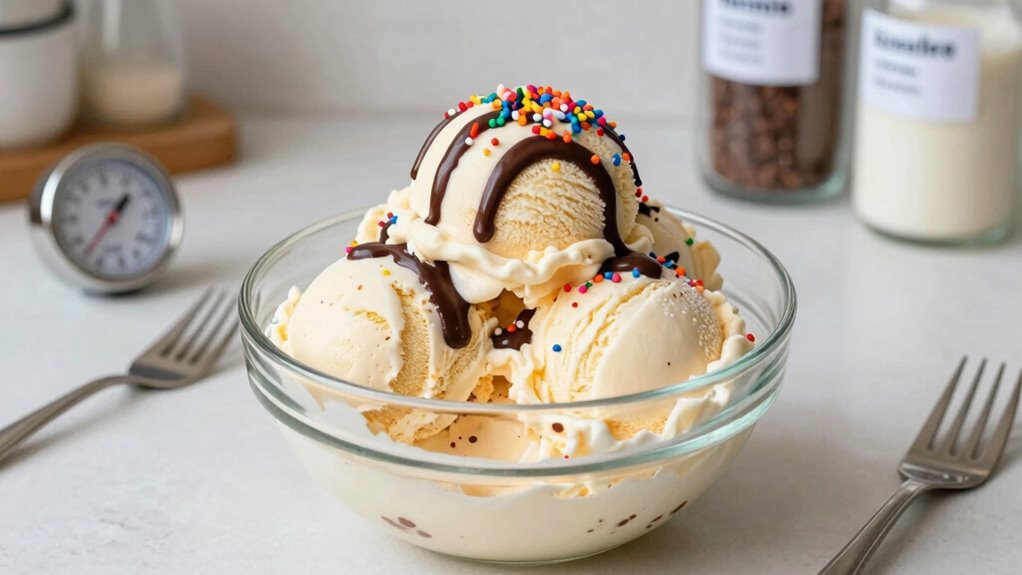
To guarantee your homemade ice cream turns out both safe and delicious, paying attention to a few final tips can make all the difference. First, experiment with flavor combinations that balance sweetness and richness, ensuring a pleasing taste. Next, serve your ice cream with an appealing presentation—use garnishes or colorful toppings to enhance visual appeal. Always store leftovers properly in airtight containers and freeze promptly to prevent bacteria growth. When preparing for serving, let the ice cream soften slightly for easier scooping. Lastly, taste-test in small portions to check flavor and texture, adjusting if needed. By focusing on these key points, you’ll create a safe, flavorful treat that looks as good as it tastes. Your effort will shine through in every delicious scoop.
Frequently Asked Questions
Can I Use Raw Eggs in Homemade Ice Cream Safely?
You can use raw eggs in homemade ice cream safely if you employ proper pasteurization methods. To guarantee raw eggs safety, you can gently heat the mixture to 160°F (71°C) and hold it there for a few minutes, which pasteurizes the eggs without cooking them. Alternatively, use pre-pasteurized eggs, which are a safe option that eliminates the risk of Salmonella. Always handle eggs with clean utensils and wash hands thoroughly.
How Long Can Homemade Ice Cream Be Stored Safely?
You can store homemade ice cream safely for about 1 to 2 months in your freezer. To guarantee freezer safety, keep it tightly sealed in an airtight container to prevent freezer burn and absorption of other odors. Label it with the date so you can track storage duration. After two months, the quality may decline, and consuming it could pose a safety risk. Always check for off smells or ice crystals before serving.
Is It Safe to Taste-Test Ice Cream During Preparation?
Yes, it’s safe to taste-test ice cream during preparation, but you should do so carefully. Use a clean spoon each time to minimize contamination risk, and avoid double-dipping. Keep in mind that frequent tasting can introduce germs, so limit how often you sample. Always wash your hands thoroughly before handling the ice cream and utensils, ensuring taste testing safety while enjoying your homemade treat.
What Are Signs of Spoiled Ingredients in Ice Cream Making?
You should watch for ingredients spoilage in your ice cream. If you notice a sour or off smell, discoloration, or mold growth, discard those ingredients immediately. Mold growth is a clear sign of spoilage and can make you sick. Fresh ingredients should smell and look normal. Always rely on your senses—if something seems off, it’s safest to replace those ingredients before making your ice cream.
Do Different Ice Cream Recipes Require Specific Safety Precautions?
Think of each recipe variation as a different dance requiring its own safety steps. You should tailor precautions for specific ingredients and substitutions, like ensuring eggs are cooked thoroughly or dairy is fresh. Some recipes, especially those with raw ingredients, need extra care to prevent bacteria. Always follow proper handling, storage, and sanitation practices, and adjust safety measures based on ingredient substitutions to keep your homemade ice cream both delicious and safe.
Conclusion
By following these simple food safety tips, you can enjoy homemade ice cream that’s as safe as it is delicious. Think of it like baking a perfect cake—you want every step to be just right to avoid any mishaps. With careful handling and proper temperatures, you’ll create a treat that’s not only tasty but also safe for everyone to enjoy. So, scoop confidently and savor every delightful, worry-free bite!
Fall Picks
fall essentials
As an affiliate, we earn on qualifying purchases.