

Designing a 500-gram trial helps you test your product in a manageable amount, allowing you to evaluate ingredients, texture, and flavor without large-scale risk. Focus on matching your final recipe and process to see how they perform on this small scale. Use this opportunity to adjust variables like mixing or heating, ensuring quality and consistency. If you want proven tips on making your trial effective, explore further for more insights.
Key Takeaways
- Select accurate ingredients and process parameters to replicate the final product in the 500-gram batch.
- Document precise measurements, mixing times, and temperatures for consistency and repeatability.
- Conduct sensory evaluations, pH testing, and visual inspections to assess quality and texture.
- Adjust variables based on trial outcomes to optimize flavor, texture, and process efficiency.
- Record all results and insights to refine formulations and prepare for scaled-up production.
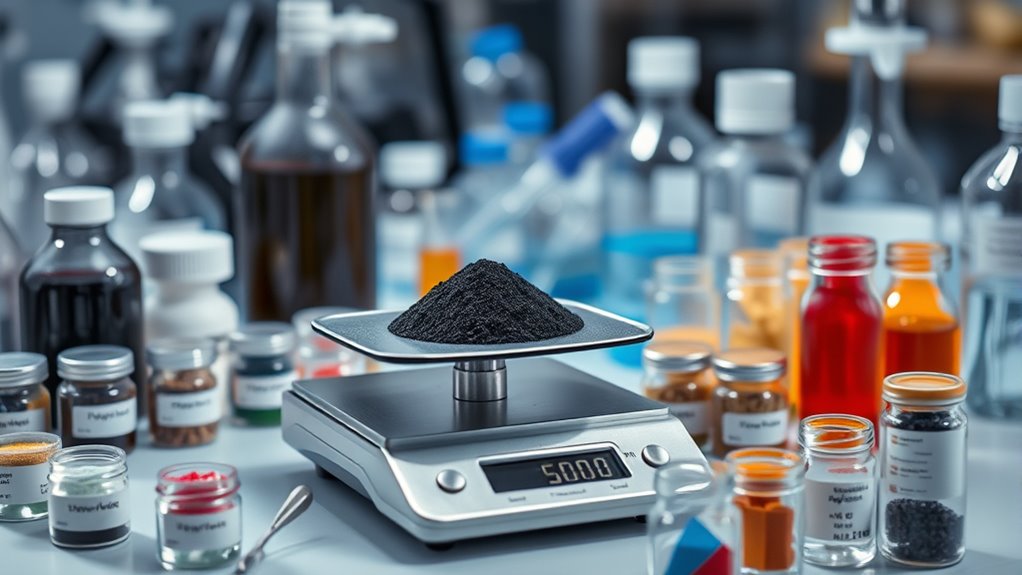
Small-batch testing is a crucial strategy for quickly identifying product issues before scaling up production. When you focus on small batches, you can conduct targeted evaluations that highlight potential flaws early on, saving time and resources down the line. This approach enhances your quality assurance processes, ensuring that each product version meets your standards before committing to larger runs. By testing a manageable quantity—say, a 500-gram trial—you gain valuable insights into how your product performs, feels, and tastes, all without the risk of significant waste or expense.
Small-batch testing helps identify issues early, saving resources and ensuring quality before large-scale production.
When designing a 500-gram trial, you want to be deliberate about your process. Start by preparing a batch that accurately reflects your intended final product, considering ingredients, mixing techniques, and equipment. This small quantity allows you to observe how the ingredients interact, whether the texture is consistent, and if the flavor profile aligns with your expectations. As you assess these factors, you’re actively engaged in process optimization, tweaking variables like heating times, blending methods, or ingredient ratios. This iterative process helps streamline your production, making it more efficient and reliable before moving to larger quantities.
Quality assurance is at the core of small-batch testing. It’s your opportunity to verify that each aspect of your product meets predefined standards. You can conduct sensory evaluations, measure pH levels, or check for consistency in appearance and texture—all within a manageable scope. If issues arise, you can quickly identify the root cause and adjust your process without wasting extensive resources. This proactive approach minimizes the risk of product recalls or customer dissatisfaction down the line, ensuring that your final product is consistently high quality.
Moreover, testing in small batches provides a controlled environment where you can experiment with different formulations or processing techniques. For example, if you’re developing a new recipe, a 500-gram trial allows you to test variations without significant investment. You can gather feedback from taste testers, analyze the results, and refine your process accordingly. This cycle of testing and adjustment promotes continuous process optimization, helping you develop a more refined product with each iteration.
In essence, small-batch testing isn’t just about quality assurance; it’s a strategic step toward building a robust, scalable production process. By focusing on a manageable quantity like 500 grams, you gain the agility to identify issues, make improvements, and ensure that your product consistently meets your standards before committing to large-scale manufacturing. Incorporating mindfulness practices during testing can also help you stay attentive to subtle product nuances, leading to better outcomes. This method saves money, enhances quality, and accelerates your path to market readiness.
Frequently Asked Questions
What Equipment Is Needed for Small-Batch Testing?
You need essential equipment like a precise digital scale to measure 500 grams accurately, mixing tools such as spatulas and bowls, and containers for sample storage. A controlled environment, like a clean workspace, helps follow testing protocols effectively. Additionally, temperature and humidity monitors guarantee conditions stay consistent. These essentials help you ensure reliable results, maintain quality, and adhere to testing protocols during small-batch testing.
How Do I Scale up From a 500-Gram Trial?
Oh, so you think scaling up from a 500-gram trial is as easy as pressing a button? Well, buckle up! You’ll need effective scaling strategies like maintaining ingredient ratios, adjusting equipment size, and controlling process parameters. Moving to large-scale production isn’t magic; it’s meticulous planning and testing. Use pilot batches, monitor quality, and tweak your process. That’s how you turn small success into big results!
What Are Common Mistakes in Small-Batch Testing?
You often mistake batch size for testing accuracy, which can lead to errors. Keep in mind that small batches might not reflect real-world performance, so relying solely on batch size can be misleading. Avoid rushing the testing process, and don’t ignore variability within your samples. Instead, verify your testing methods are consistent and representative to improve accuracy and reliability in your small-batch trials.
How Long Should a Small-Batch Test Run?
You should run a small-batch test for about 1 to 2 weeks, depending on your product and goals. This test duration allows you to gather enough data to identify trends and potential issues. Conduct trial frequency daily or every few days to monitor consistency and performance. Adjust the testing period if needed, ensuring you collect sufficient insights without prolonging the process unnecessarily.
How Do I Ensure Consistency in Small-Batch Results?
To guarantee consistency in small-batch results, focus on batch uniformity by using precise measurement tools and maintaining controlled conditions. Keep your ingredients or materials consistent in quality and quantity, and follow the same process each time. Regularly calibrate equipment to enhance testing precision, and document every step. This approach minimizes variability, helping you achieve reliable, repeatable results in your 500-gram trial.
Conclusion
By embracing small-batch testing, you turn the formidable ocean of production into a manageable pond, allowing you to refine your process with precision. This approach helps you catch issues early and optimize your design before diving into larger commitments. Think of it as planting seeds carefully to guarantee a fruitful harvest later. With each 500-gram trial, you’re building a sturdy bridge toward success, one small step at a time.