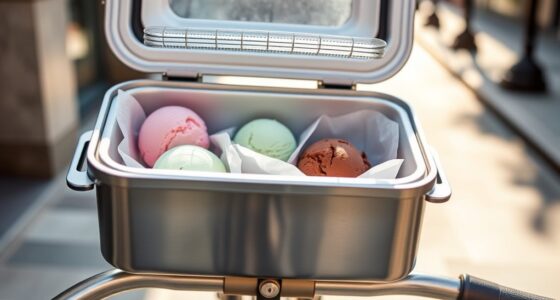
The one thing you should always do before scooping ice cream is to dip your scoop in hot water for a few seconds. Warming the scoop makes it easier to lift firm ice cream smoothly without crumbling or sticking. This quick step helps you serve clean, well-shaped scoops with less effort, ensuring a neat presentation. If you want foolproof tips for perfect scoops every time, keep going to discover more simple tricks.
Key Takeaways
- Dip your ice cream scoop in warm water for a few seconds.
- Ensure the freezer is set between -10°F and 0°F for optimal firmness.
- Wipe the scoop dry before scooping to prevent melting and sticking.
- Confirm the ice cream is sufficiently firm but not hard for smooth scooping.
- Use firm, confident pressure with the scoop for clean, round servings.

Ever wonder what the most important step is before you scoop that perfect bowl of ice cream? It’s surprisingly simple but often overlooked: checking the freezer temperature. Before grabbing your scoop, you need to guarantee your freezer is set to the right temperature—ideally between -10°F and 0°F (-23°C to -18°C). If it’s too warm, your ice cream will be soft and difficult to handle, leading to melted messes and inconsistent servings. If it’s too cold, it might be hard to scoop smoothly, putting unnecessary strain on your wrist and risking broken scoops. Keeping your freezer at this ideal temperature guarantees the ice cream stays firm enough for easy scooping while remaining soft enough to serve neatly.
Once you confirm the temperature, the next vital step is mastering your scoop technique. A good scoop is more than just diving in; it’s about applying the right pressure and motion. Start by letting the scoop sit in your warm water for a few seconds before each use. The heat from the water slightly melts the ice cream’s surface, making it easier to lift a rounded, clean scoop. When you’re ready, hold the scoop firmly and use a quick, confident motion to glide through the ice cream, rather than pressing down slowly or hesitating. A smooth, swift motion minimizes crumbling and ensures a neater, more uniform serving. If the ice cream is particularly hard, warming the scoop in hot water helps reduce resistance and prevents frustration.
Another tip is to keep the scoop close to the ice cream’s surface, allowing gravity to help with the lift. Don’t dig aggressively—let the scoop do the work. Once you’ve got a good ball, gently scrape it off the scoop onto your bowl or cone. If your ice cream is too soft due to a warm freezer or improper handling, it can stick to the scoop or melt quickly, ruining the presentation. That’s why maintaining the right freezer temperature and using a proper scoop technique go hand in hand—they’re the foundation of a perfect scoop every time.
Frequently Asked Questions
Should I Warm the Ice Cream Scoop Before Use?
You might wonder if warming the scoop before use is necessary. Warming the scoop can help with scoop temperature, making it easier to serve hard ice cream smoothly. It also aids in scoop maintenance, preventing the scoop from sticking to the ice cream. Just a quick warm-up with warm water can make scooping more efficient and enjoyable, ensuring your ice cream looks perfect and is easy to serve.
How Do I Prevent Ice Cream From Sticking?
Imagine your ice cream is a smooth dance partner, and you’re trying to keep them from sticking to the floor. To prevent ice cream from sticking, use a warm scoop, ideally metal, which glides easily through the consistent texture of your ice cream. Keep your scoop cold between servings to prevent melting, and guarantee your ice cream has the right consistency. This combo makes scooping effortless and keeps your dessert looking perfect.
Is It Better to Thaw or Freeze Ice Cream Before Scooping?
For easier scooping, it’s better to slightly thaw your ice cream before serving. This improves consistency and makes the process smoother. Cold ice cream is harder to scoop, so allowing it to sit at room temperature for a few minutes helps with temperature control. Just don’t leave it out too long, or it’ll melt and become messy. Properly thawed ice cream offers a better texture and easier scooping experience.
What’s the Best Type of Scoop for Hard Ice Cream?
Choosing the best scoop for hard ice cream means balancing strength and comfort. Opt for a scoop with a sturdy material like stainless steel, which withstands cold and resists bending. An ergonomic design ensures you don’t strain your hand, making scooping easier. While a plastic scoop may seem lighter, it often lacks durability. So, prioritize a durable scoop material paired with an ergonomic handle for effortless, smooth servings every time.
How Can I Keep My Ice Cream Cold Longer?
To keep your ice cream cold longer, focus on proper ice cream storage and maintaining an ideal freezer temperature. Store your ice cream in an airtight container to prevent ice crystal formation and keep it fresher. Also, set your freezer to around -18°C (0°F); this helps preserve texture and prevents melting. Regularly check the temperature and avoid leaving the ice cream out at room temperature to maintain its chill.
Conclusion
So, next time you’re about to scoop that perfect serving, remember to give the container a gentle tap or a quick warm-up under warm water. It might seem small, but it makes a big difference in getting a smooth, easy scoop. After all, isn’t it worth taking that extra second to enjoy your ice cream without frustration? Don’t skip this step—your taste buds will thank you for it.