Storing ice cream on the door shelf is a disaster because it’s the warmest and most exposed part of your freezer. Every time you open and close the door, warm air enters, causing temperature fluctuations that melt and refreeze your ice cream. This results in softening, ice crystals, and uneven texture. To keep your ice cream frozen and perfect, you’ll want to learn the best spots and tips for storage that actually work.

Get baking supplies delivered free with Prime
- Fast, free delivery on millions of items
- Prime Video, Amazon Music and more included
- Member-only deals all year
Key Takeaways
- The door shelf is the warmest part of the freezer, causing ice cream to soften and melt faster.
- Frequent opening and closing of the door introduce warm air, leading to temperature fluctuations.
- Lack of proper insulation on the door shelf allows heat transfer, accelerating ice cream spoilage.
- Storing ice cream on the door shelf exposes it to inconsistent temperatures and uneven freezing.
- Organizing ice cream in the coldest, most stable areas of the freezer helps prevent melting and maintains quality.
freezer ice cream storage container
As an affiliate, we earn on qualifying purchases.
As an affiliate, we earn on qualifying purchases.
Why Storing Ice Cream on the Door Shelf Causes Melting
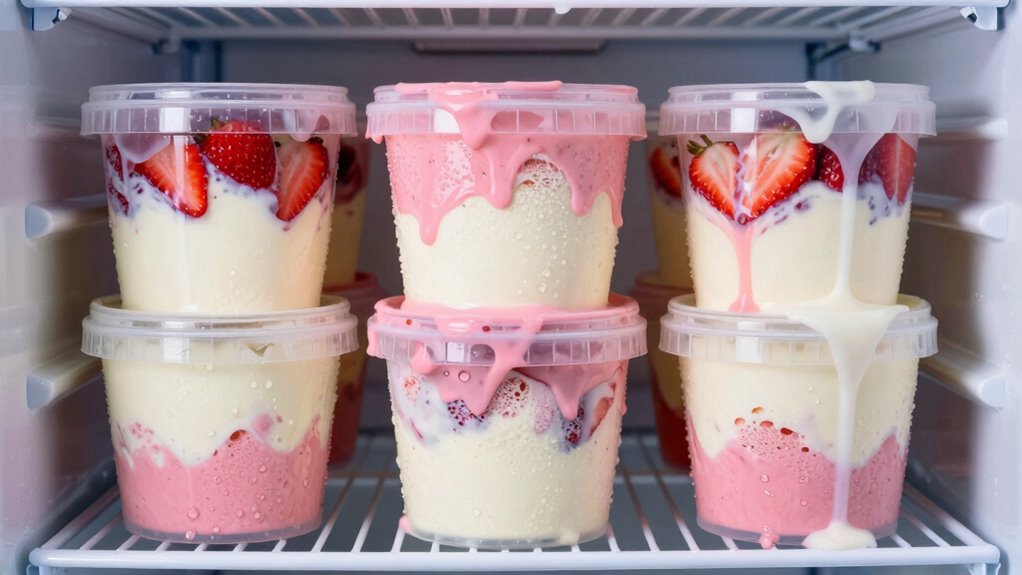
Since the door shelf is usually the warmest part of the freezer, storing ice cream there can cause it to melt more quickly. Ice cream containers sit directly on the shelf, which often lacks proper insulation. Without adequate shelf insulation, heat from outside the freezer seeps in more easily, raising the temperature around your ice cream. This makes the door shelf an unsuitable spot for keeping your frozen treats, especially if you want them to stay firm. The constant opening and closing of the door expose containers to temperature fluctuations, further increasing melt risk. For better preservation, place ice cream deeper inside the freezer where shelf insulation helps maintain a consistent, colder temperature, preventing premature melting and ensuring your ice cream stays scoopable. Additionally, proper storage techniques can help extend the freshness of your frozen goodies, including temperature stability, provided by optimal placement and insulation.
How Temperature Fluctuations on the Door Shelf Lead to Melts
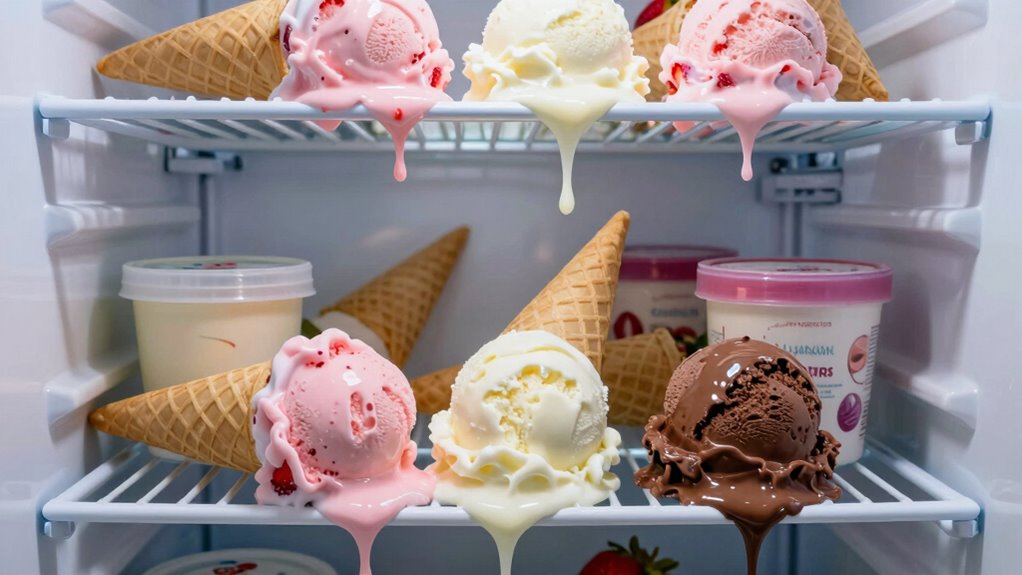
Temperature fluctuations on the door shelf happen every time you open and close the freezer, causing the temperature to rise temporarily. These temperature swings disrupt the stable environment needed for ice cream, making it vulnerable to melting. When the door opens, warm air enters and hits the outer freezer zones, which are usually less cold than the core. This uneven heat exposure accelerates melting, especially for items stored near the door. Each fluctuation prevents the ice cream from staying at a consistent, low temperature. Over time, repeated temperature swings weaken the cold barrier, leading to softening and melting. Recognizing how temperature zones within the freezer react to door openings helps explain why ice cream stored here melts faster, emphasizing the importance of proper storage to keep it solid. Additionally, humidity control within the freezer can influence how quickly ice cream melts by affecting frost buildup and temperature stability. Proper freezer organization can help minimize the impact of door openings on temperature stability, preserving your ice cream’s texture. Understanding the role of thermal stability is key to maintaining the ideal environment for frozen treats.
How Frequent Opening and Closing Worsens Ice Cream Melting

Every time you open and close the freezer door, the temperature inside fluctuates. These changes speed up the melting process, causing your ice cream to soften more quickly. As a result, you end up wasting more ice cream than you intended. Implementing smart‑home integrations can help monitor and maintain consistent freezer temperatures, reducing unnecessary melting. Additionally, proper freezer organization can minimize door openings and temperature fluctuations, helping to preserve your ice cream longer. Understanding temperature stability is essential for keeping your ice cream at an optimal consistency and preventing waste, especially when combined with adaptive temperature control systems that respond to usage patterns. Maintaining thermal insulation in your freezer can further stabilize internal temperatures and improve overall efficiency.
Increased Temperature Fluctuations
Frequent opening and closing of the fridge door causes temperature swings that accelerate ice cream melting. These fluctuations disrupt the temperature stability within your freezer zones, making it harder to maintain consistent cold. When the door is opened, warm air enters, causing localized temperature rises that affect the entire freezer. Over time, this uneven temperature distribution weakens the ice cream’s structure, leading to faster melting. To illustrate, consider this table:
| Effect of Door Opening | Impact on Ice Cream |
|---|---|
| Disrupts temperature stability | Causes uneven melting |
| Introduces warm air | Speeds up melting process |
| Alters freezer zones | Reduces overall efficiency |
| Increases temperature fluctuations | Weakens ice cream’s texture |
| Lowers freezer performance | Contributes to ice cream disaster |
Maintaining consistent temperature is key to keeping your ice cream intact, as fluctuations can also impact freezer efficiency. Additionally, temperature fluctuations can cause the formation of ice crystals, which negatively affect the texture of your ice cream.
Faster Melting Rates
When you open and close your fridge door repeatedly, warm air rushes in each time, causing your ice cream to melt faster. This frequent temperature change disrupts the ice cream’s consistency, making it softer and less appealing. The shelf impact accelerates melting because the cold environment becomes inconsistent with each opening. Additionally, temperature fluctuations can lead to ice crystal formation, which negatively affects texture and flavor. These fluctuations can also interfere with the stability of the insulation, further hastening melting. Moreover, improper storage techniques can exacerbate the melting process by exposing ice cream to temperature variations outside of optimal conditions. Being aware of proper storage practices helps maintain the ideal temperature and prevents unnecessary melting. Understanding how fridge organization impacts temperature stability can also help in preserving your ice cream longer.
Wasted Ice Cream
Repeatedly opening and closing your fridge door not only speeds up melting but also wastes valuable ice cream. Every time you do this, warm air enters, causing temperature fluctuations that compromise ice cream storage. These fluctuations make your ice cream melt faster and refreeze unevenly, leading to ice crystals and texture loss. Maintaining a consistent freezer temperature—ideally around 0°F (-18°C)—is vital for preserving quality. When you keep the door open too often, you force the freezer to work harder to maintain this temperature, risking freezer burn and spoilage. Over time, this cycle results in wasted ice cream that’s become too soft or develops icy chunks. To avoid wasting your favorite treat, open the freezer only when necessary and keep it at a steady temperature. Proper storage practices help ensure your ice cream stays fresh and enjoyable longer.
What’s the Best Place in Your Freezer to Store Ice Cream?
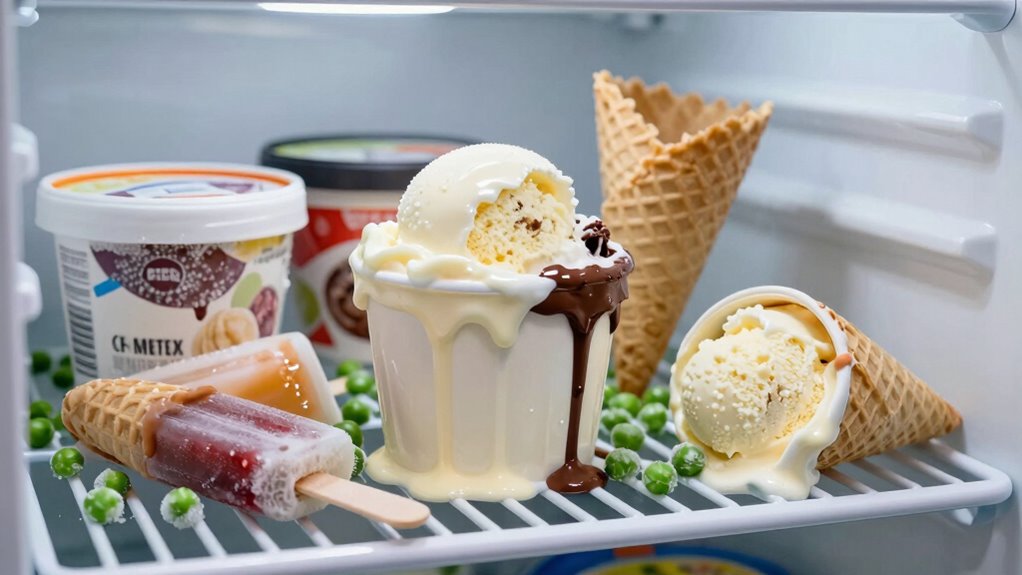
To keep your ice cream in top shape, store it in the coldest part of your freezer. Avoid placing it on the door shelf, where temperature fluctuations happen every time you open and close. Picking the right spot helps prevent melting and keeps your ice cream scoop-ready. Using a consistent temperature environment in your freezer can further help maintain its ideal texture. Additionally, choosing a dedicated storage container can help protect your ice cream from freezer burn and odors. For optimal preservation, ensure your freezer is set to a freezing temperature that maintains a stable environment and prevents ice crystal formation.
Coldest Freezer Spot
Have you ever wondered where the best spot in your freezer is for storing ice cream? The coldest freezer spot offers the most temperature stability, keeping your ice cream from melting or developing ice crystals. Typically, this area is away from door openings and fluctuating freezer zones. Look for:
- The back corner of the bottom shelf
- The center of the freezer, away from vents
- Shelves near the rear wall
- Areas least affected by opening and closing
These spots maintain a consistent cold temperature, preventing ice cream from experiencing temperature fluctuations. By placing your ice cream in the coldest zone, you’re ensuring it stays firm and delicious longer. Avoid the door shelf, where temperature swings are common, and focus on the most stable, chill zone for ideal storage.
Avoid Door Temperature Fluctuations
While the back corner of the freezer often provides the most stable temperature, storing ice cream on the door shelf exposes it to frequent temperature swings. The door’s insulation isn’t as effective here, making it vulnerable to ambient temperature changes whenever you open or close the door. These fluctuations cause ice crystals to form and melt repeatedly, ruining texture and flavor. To avoid this, keep your ice cream away from the door and instead store it in the colder, more stable areas of your freezer. By doing so, you’ll maintain consistent freezing temperatures, preventing ice crystals and preserving quality. Recognizing that the door is the least stable spot helps you make smarter storage choices and keeps your ice cream at its best.
Tips for Properly Storing Ice Cream to Keep It Frozen
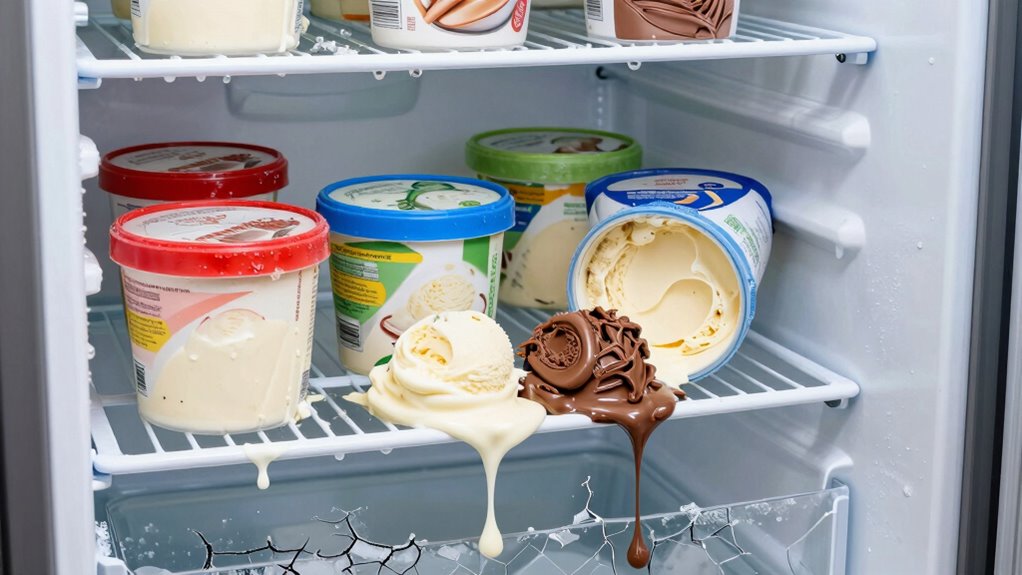
Properly storing ice cream is essential to keep it frozen and maintain its texture. To do this, focus on freezer organization and use proper ice cream containers. First, always keep ice cream in airtight, sturdy containers to prevent freezer burn and odor absorption. Second, store ice cream towards the back of the freezer, where temperatures stay more consistent. Third, minimize opening the freezer door to keep cold air inside. Fourth, consider using a dedicated section for ice cream to avoid temperature fluctuations caused by other frozen items. Keeping your freezer organized ensures ice cream remains properly frozen and ready to enjoy. Remember, a well-structured freezer helps preserve quality and prevents mishaps like melting or freezer burn.
How to Maintain a Consistent Freezer Temperature
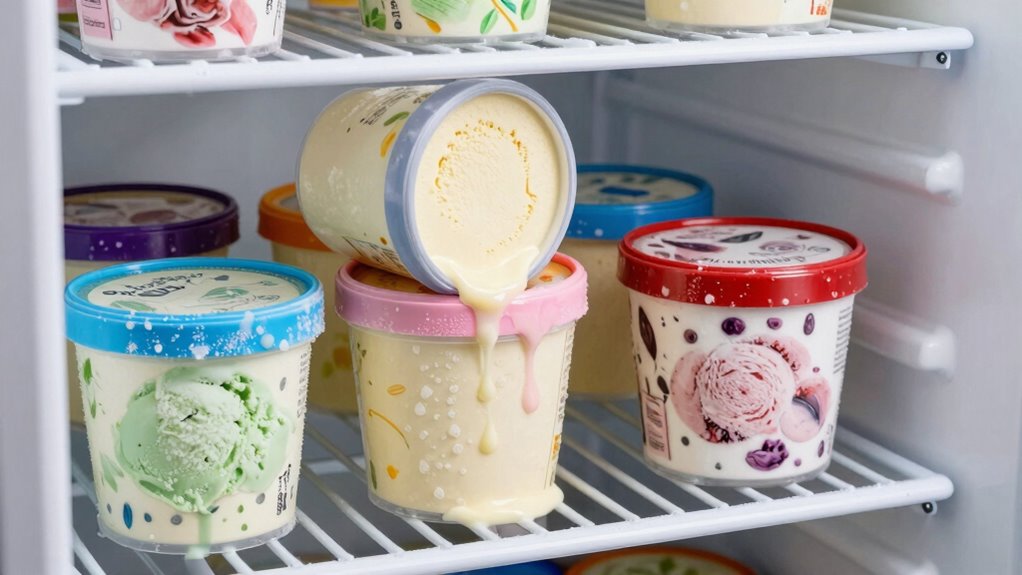
Maintaining a consistent freezer temperature is essential to keep your ice cream perfectly frozen and prevent spoilage. Proper freezer organization helps regulate temperature by reducing clutter and ensuring good airflow. Keep your ice cream away from the door, where temperature fluctuations are common due to frequent opening and closing. Use a thermometer to monitor the freezer’s temperature regularly; aim for around 0°F (-18°C). Avoid overpacking the freezer, which can obstruct cold air circulation and cause uneven cooling. Consistent ice cream maintenance involves adjusting the thermostat if needed and ensuring the door seals tightly. By keeping your freezer organized and stable, you prevent temperature swings that can lead to ice crystal formation and spoilage, preserving your ice cream’s quality and texture.
Signs Your Freezer Is Too Warm or Unstable for Ice Cream
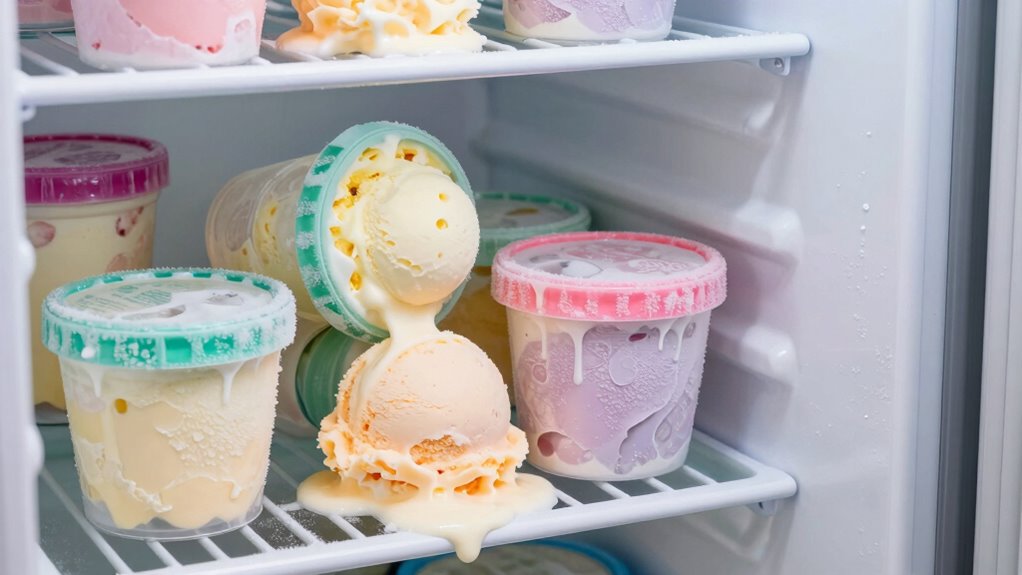
If your ice cream keeps melting or developing ice crystals, your freezer might be too warm or unstable. Temperature fluctuations and uneven cooling can cause these issues, making it hard to keep your treats perfect. Check your freezer’s placement and storage habits to guarantee consistent, reliable cold temperatures.
Temperature Fluctuations Matter
When your freezer’s temperature fluctuates, it can spell trouble for your ice cream. Instability can cause ice crystals to form, making your ice cream icy and grainy. To spot issues, pay attention to signs like:
- Frequent temperature swings on the display
- Ice buildup around the freezer
- Uneven freezing of stored items
- Difficulty maintaining consistent cold
Maintaining proper temperature stability is key. Poor freezer organization can hinder airflow and cause temperature fluctuations. Keep your freezer well-organized, avoid overstuffing, and ensure vents aren’t blocked. Regularly check the temperature and adjust settings if needed. Small fluctuations might seem harmless, but over time, they can lead to a disastrous ice cream texture. By monitoring and managing temperature fluctuations, you’ll keep your ice cream creamy and delicious.
Uneven Freezer Cooling
Uneven cooling in your freezer can be a clear sign that it’s too warm or unstable for storing ice cream properly. If some areas are colder while others are warmer, it suggests issues with freezer insulation or door gasket integrity. Poor insulation allows temperature fluctuations, making it hard to maintain a consistent cold environment. Damaged or worn door gaskets let warm air seep in, causing uneven cooling. When cooling is inconsistent, ice cream can partially melt and refreeze, leading to texture problems and ice crystals. Regularly check your freezer’s insulation layers and ensure the door gasket seals tightly. Addressing these issues helps maintain a stable temperature, preventing uneven cooling and protecting your ice cream from becoming a disaster on the door shelf.
Storage and Placement Tips
Proper storage and placement of your ice cream are essential to prevent spoilage and texture issues. If your freezer experiences frequent temperature fluctuations, it can cause ice crystals to form or lead to softer, melted ice cream. To monitor this, watch for signs your freezer is too warm or unstable.
- Check the door shelf for warmer spots or uneven cooling
- Use a thermometer to detect temperature fluctuations above 0°F (-18°C)
- Avoid placing ice cream near the freezer door, where temperature changes are common
- Ensure the freezer is consistently cold and not frequently opening or closing
Maintaining a steady, cold environment helps preserve the texture and flavor of your ice cream, preventing that disastrous door shelf melt or ice crystal formation.
Common Mistakes That Cause Ice Cream Meltdowns and How to Avoid Them
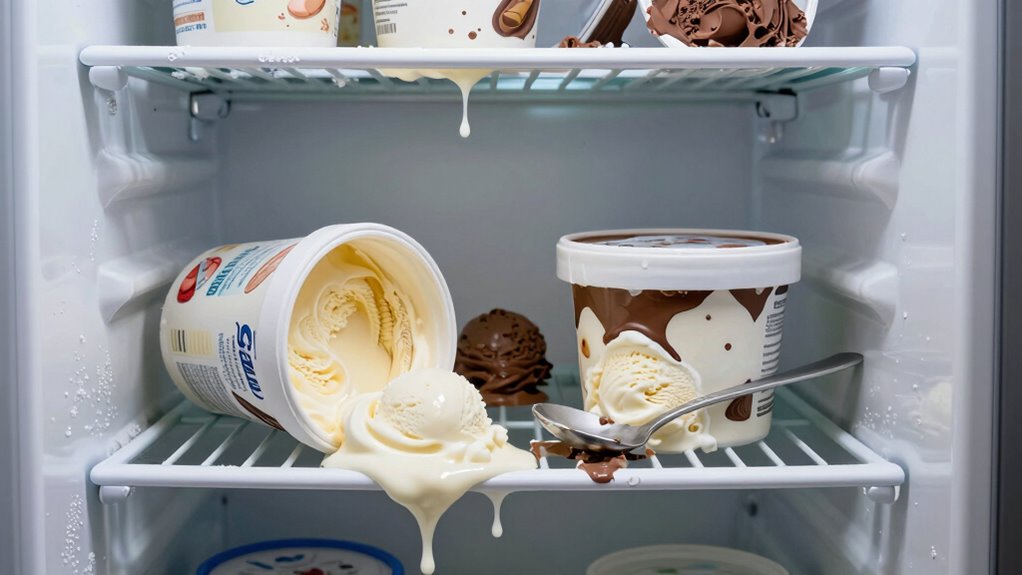
One common mistake that leads to ice cream meltdowns is not storing it at the right temperature. When ice cream isn’t cold enough, it melts quickly, ruining its texture and making it impossible to scoop. Proper freezer organization helps maintain consistent temperatures and avoid temperature fluctuations. Avoid overcrowding your freezer, which can block cold air flow. Keep ice cream away from the door, where temperature fluctuates most. Use the table below for quick tips:
| Mistake | Effect | Solution |
|---|---|---|
| Ignoring freezer temperature | Melts ice cream, ruins texture | Use a thermometer, keep at 0°F |
| Poor freezer organization | Uneven freezing | Arrange items for airflow |
| Storing near door | Temperature swings | Place ice cream deep inside |
| Overloading freezer | Temperature fluctuations | Leave space for air circulation |
| Not sealing properly | Moisture and ice buildup | Ensure lid is airtight |
Alternative Storage Ideas for Your Frozen Treats

While maintaining the right freezer temperature is essential for keeping your ice cream in top condition, exploring alternative storage options can further protect your treats from melting and freezer burn. Using alternative containers designed for freezer storage can help preserve freshness and prevent spills. Consider investing in stackable, airtight containers that maximize freezer organization and prevent exposure to air. Vacuum-sealed bags are also excellent for compact storage and reducing ice crystal formation. Additionally, insulated storage boxes can keep ice cream colder for longer periods during short-term use. For superior freezer organization, label your containers clearly, so you know what’s inside without rummaging. These alternative storage ideas ensure your ice cream stays delicious, prevents messes, and makes your freezer more efficient.
Quick Fixes for Melting or Spilled Ice Cream

When ice cream starts melting or spills occur, quick action can save your dessert and minimize mess. Immediately grab paper towels or a clean cloth to blot up ice cream spills before they spread. If melting issues cause the ice cream to become too soft, transfer it quickly to a colder part of the freezer or a chilled bowl. Using a spatula, gently smooth out melting ice cream to prevent pooling and sticky messes. For drips on shelves, wipe them up promptly to avoid sticky buildup. If the spill is large, place a tray or shallow container underneath to catch drips and prevent further mess. Acting fast reduces cleanup time and keeps your freezer and surroundings tidy, ensuring your treat stays enjoyable.
Frequently Asked Questions
Can Storing Ice Cream on the Door Shelf Affect Its Flavor?
Storing ice cream on the door shelf can definitely affect its flavor. The door shelf experiences frequent temperature fluctuations when you open and close the fridge, causing the ice cream to develop freezer burn or ice crystals. This change dulls its creamy texture and alters the flavor, making it less enjoyable. To keep your ice cream tasting fresh, store it in the main freezer compartment where temperature stays more consistent.
Does the Type of Ice Cream Impact How It Melts on the Door Shelf?
When it comes to how ice cream melts on the door shelf, the type definitely matters—think of it as a race between ice cream consistency and freezer door design. Denser, creamier varieties tend to melt slower, while lighter, airy textures melt faster. Your freezer door design also plays a role, as warmer spots near the front make all types of ice cream more prone to quick melting, regardless of flavor.
How Often Should I Check My Freezer’s Temperature for Optimal Ice Cream Storage?
You should check your freezer’s temperature at least once a month to ensure ideal ice cream storage. Use a reliable thermometer and make sure it’s properly calibrated for accurate readings. Also, inspect your freezer door seals regularly to prevent cold air from escaping, which can affect temperature consistency. Maintaining a stable temperature of around 0°F (-18°C) keeps your ice cream from melting or freezer burn.
Are There Specific Door Shelf Materials That Prevent Ice Cream Melting?
You should look for door shelves made from insulated, durable materials like high-quality plastic or reinforced glass, which help prevent ice cream from melting quickly. These shelves with good insulation maintain a stable temperature, protecting your frozen treats. Avoid thin or brittle materials, as they can crack or transfer heat easily. Investing in sturdy, well-insulated door shelves guarantees your ice cream stays cold longer and reduces the risk of melting.
What Are Some Signs That My Freezer Needs Maintenance to Keep Ice Cream Frozen?
Did you know that 60% of freezer issues stem from door seal problems? If your freezer makes unusual noises or struggles to keep ice cream solid, it’s time for maintenance. Check for frequent freezer noise and inspect the door seal for gaps or cracks. These signs indicate your freezer isn’t sealing properly, causing temperature fluctuations that affect ice cream’s firmness. Addressing these issues guarantees your frozen treats stay perfectly cold.
Conclusion
Remember, your freezer is like a fortress guarding your frozen treasures. By avoiding the door shelf, you’re protecting your ice cream from the chaos of temperature swings and careless opening. Keep it safe in the back, where it can stay perfectly frozen—just as a treasure deserves. Treat your treats with the care they deserve, and they’ll reward you with every creamy, cold bite—turning your freezer into a sanctuary, not a battlefield.
Halloween Picks
halloween
As an affiliate, we earn on qualifying purchases.