
Temperature abuse for ice cream happens when it’s not stored at the proper cold temperature, usually around 0°F (-18°C). This causes ice crystals to grow larger, making the ice cream grainy and icy. Fluctuations or warming can also melt and refreeze it, damaging flavor and texture. If you want to keep your ice cream tasting fresh and smooth, understanding how temperature affects it is key—there’s more to uncover that can help you preserve quality.
Key Takeaways
- Temperature abuse occurs when ice cream is stored outside optimal cold conditions, leading to quality deterioration.
- It causes ice crystals to grow larger, resulting in a grainy or icy texture.
- Fluctuating temperatures can weaken flavor and cause off-notes or spoilage.
- Improper storage practices, like frequent door openings or incorrect freezer settings, contribute to temperature abuse.
- Detecting texture changes and sensory signs helps identify when ice cream has been subjected to temperature abuse.

2 Pack Refrigerator Thermometer, 30-30°C/20-80°F, Classic Fridge Thermometer Large Dial with Red Indicator Thermometer for Freezer Refrigerator Cooler
- Versatile Use: Suitable for refrigerators, freezers, and insulated boxes
- Easy to Read: Large dial with clear color indicators
- Wide Temperature Range: -20°F to 80°F / -30°C to 30°C
As an affiliate, we earn on qualifying purchases.
As an affiliate, we earn on qualifying purchases.
What Is Temperature Abuse and How Does It Affect Ice Cream?
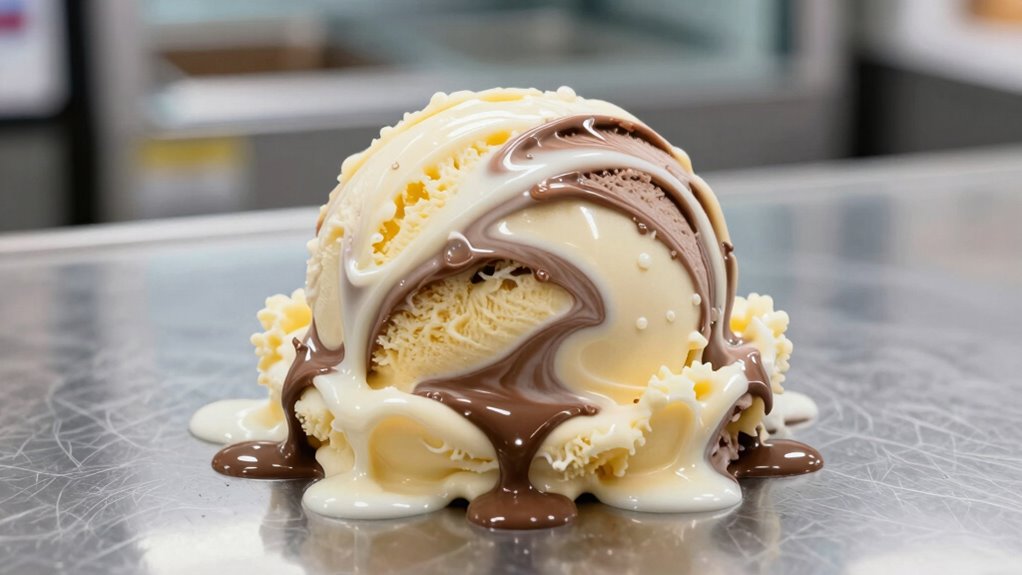
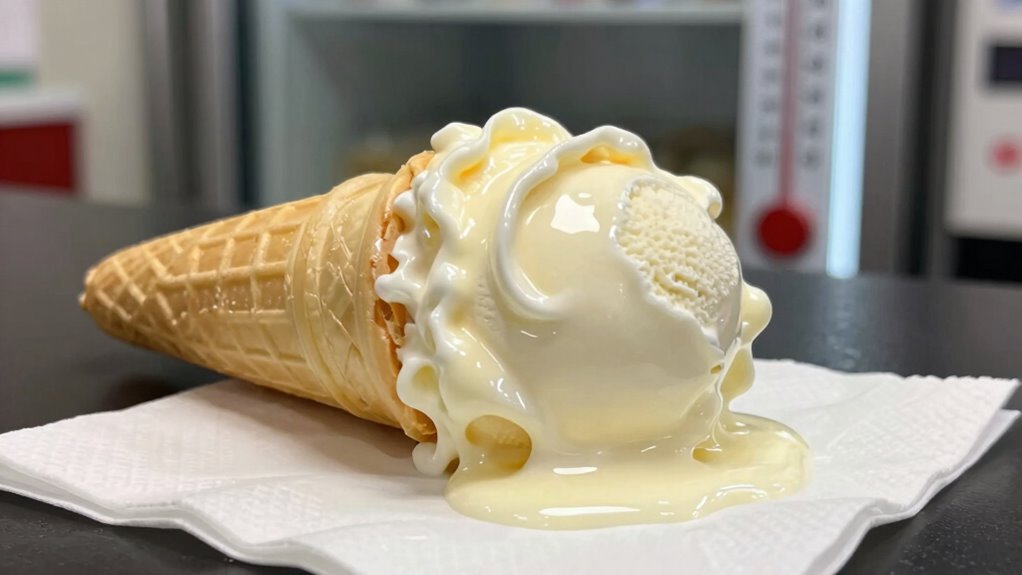
Have you ever wondered what happens to ice cream when it’s stored at the wrong temperature? When temperature abuse occurs, the cold environment isn’t maintained properly, leading to significant issues. The ice cream can experience flavor degradation, causing it to taste dull or develop off-flavors. At the same time, texture alteration happens as ice crystals grow larger, making the ice cream gritty or icy instead of smooth and creamy. This change results from temperature fluctuations that melt the ice cream slightly and refreeze it repeatedly. As a consequence, the quality diminishes, and your favorite treat no longer offers the same enjoyable experience. Understanding this helps you realize why consistent, proper storage is essential for preserving the flavor and texture of ice cream. Additionally, using proper storage techniques can help prevent temperature abuse and maintain optimal quality. Proper storage practices include maintaining the ideal temperature range and ensuring good airflow around the container to avoid temperature fluctuations. Recognizing signs of temperature abuse can help you take steps to protect your ice cream. Being aware of temperature stability can help you better safeguard your frozen treats from quality loss. For example, proper storage methods help sustain the ice cream’s integrity and prevent unwanted texture or flavor changes.
How Fluctuating Temperatures Damage Ice Cream’s Texture and Flavor
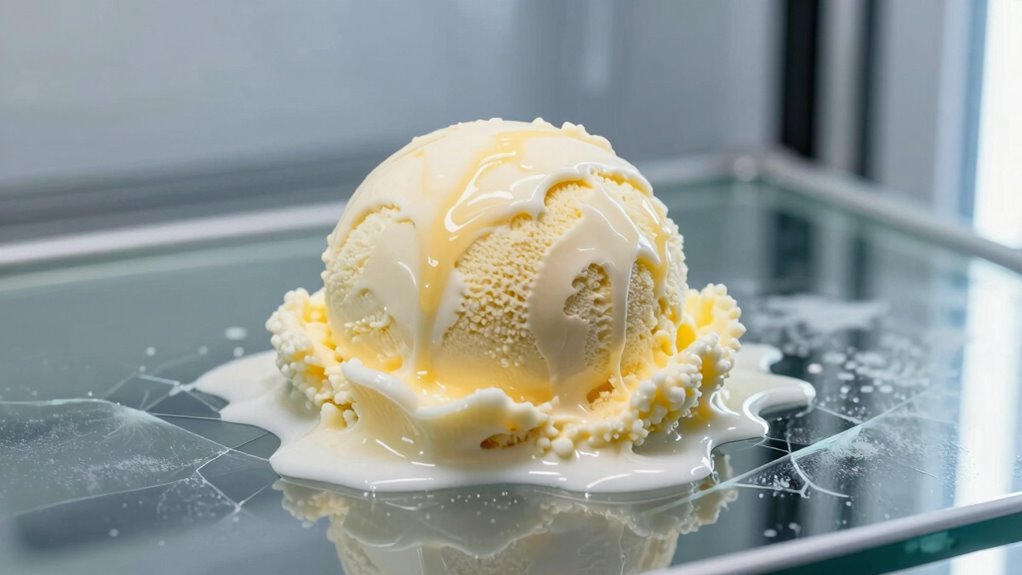
When ice cream is subjected to fluctuating temperatures, its texture and flavor suffer noticeably. Temperature swings cause ice crystals to grow larger, disrupting the smooth ice cream consistency you expect. This growth results in a grainy, icy mouthfeel that diminishes enjoyment. Additionally, inconsistent temperatures compromise flavor preservation, as exposed surfaces undergo melting and refreezing cycles that weaken taste stability. These cycles also lead to ice crystal growth, which further impacts texture and flavor. Over time, the flavor becomes muted or develops off-notes, making your favorite treat less appealing. These fluctuations also cause fat separation and ice crystal growth, further altering texture and making ice cream less creamy. To maintain peak quality, it’s essential to keep ice cream consistently frozen, preventing temperature swings that damage its smoothness, richness, and overall flavor integrity. Proper storage conditions help preserve the contrast ratio of the ice cream, ensuring it remains as intended in texture and flavor. Maintaining a stable temperature environment minimizes quality degradation, keeping your ice cream fresh and enjoyable longer. A controlled environment reduces the risk of freezer burn and other spoilage effects that can compromise quality.
Spotting Signs of Temperature Abuse in Your Frozen Treats

You can often spot temperature abuse by feeling your ice cream’s texture—if it’s icy or grainy, something’s wrong. Unusual odors or color changes are also signs that the product may have been compromised. Keep an eye out for these clues to make sure your treats stay fresh and safe to enjoy. Additionally, inconsistent temperatures can impact the quality of your ice cream, similar to how temperature control requires careful oversight to maintain their value. Proper storage conditions, such as maintaining consistent freezer temperatures, are essential for preserving the best frozen treat quality. Regularly monitoring your freezer’s temperature with a reliable thermometer helps prevent temperature fluctuations that can lead to texture and flavor degradation. Maintaining optimal cold chain integrity minimizes the risk of spoilage and ensures your ice cream remains at peak quality.
Changes in Texture
Changes in texture are often the first noticeable signs that ice cream has been subjected to temperature abuse. You may observe a grainy or icy consistency, indicating cream crystallization has occurred. This happens when fluctuating temperatures cause ice crystals to grow larger, resulting in a gritty mouthfeel. Texture deterioration can also lead to a loss of creaminess and smoothness, making the ice cream feel dry or flaky. If you notice these changes, it’s a clear sign that the product has experienced improper storage conditions. Recognizing these signs early can help you avoid consuming ice cream that’s lost its intended texture and freshness due to temperature abuse. Additionally, understanding the importance of proper storage conditions can help maintain the product’s quality and safety. Proper temperature control is essential to prevent ice crystal growth, which significantly impacts texture and overall quality. Maintaining optimal storage conditions also supports the product’s shelf life and preserves its sensory attributes. A lack of consistent temperature control may lead to texture degradation, reducing the enjoyment and safety of the frozen treat.
Unusual Odors or Colors
Unusual odors or colors are clear indicators that ice cream has been subjected to temperature abuse. If your ice cream develops strange colors, like grayish or dull hues, it signals that the product may have been stored improperly. Similarly, unusual odors—such as sour, rancid, or chemical smells—are red flags that bacteria or spoilage have occurred due to temperature fluctuations. These sensory changes suggest that the cold chain was broken, allowing quality and safety to decline. Properly maintaining the storage conditions is crucial because improper handling can accelerate spoilage and increase health risks. Ensuring consistent temperature control helps prevent foodborne illnesses and preserves the product’s freshness. Consuming ice cream with strange colors or odors can lead to digestive issues or foodborne illnesses. Always trust your senses; if your frozen treat smells off or looks odd, it’s safest to discard it. Proper storage and handling are key to preserving your ice cream’s quality and safety. Maintaining the integrity of the cold chain is essential to prevent temperature abuse and ensure your treats remain safe to enjoy.
How Temperature Abuse Impacts Ice Cream Safety and Quality
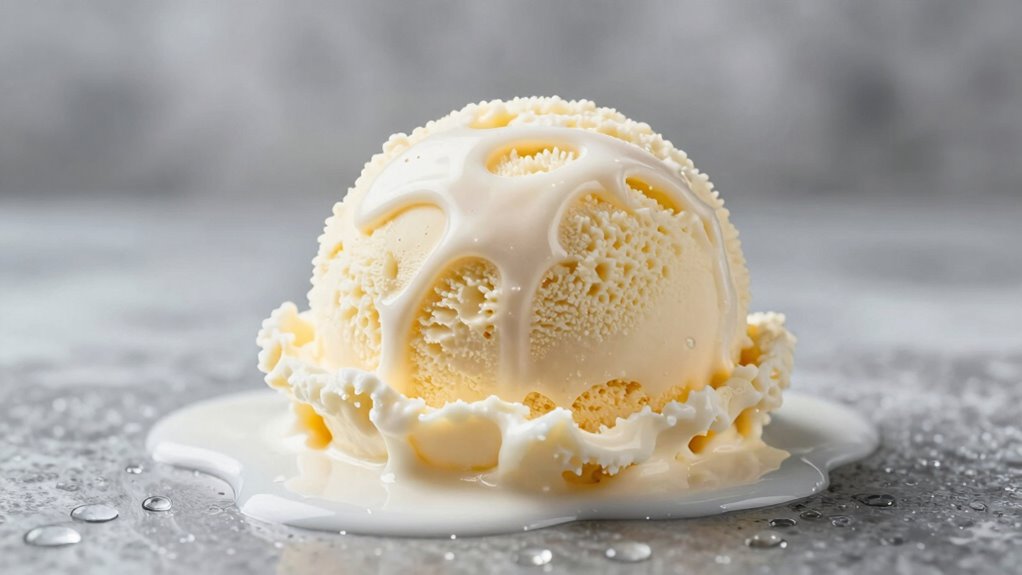
When ice cream is exposed to temperatures above its recommended storage range, its safety and quality can quickly deteriorate. Elevated temperatures weaken the effectiveness of ice cream preservatives, increasing the risk of microbial growth and spoilage. This temperature abuse can cause ice crystals to grow, leading to undesirable texture changes and compromising flavor stability. As a result, the ice cream may develop off-flavors or become gritty, making it less enjoyable or even unsafe to consume. Additionally, repeated temperature fluctuations can accelerate spoilage and reduce shelf life. Maintaining proper storage temperatures helps preserve the integrity of ice cream’s ingredients, ensuring it remains safe, tasty, and smooth. Proper temperature control also impacts the filtration process, which is essential for maintaining the quality of frozen desserts. Ignoring these temperature guidelines can notably impact both product quality and consumer safety.
Easy Tips for Storing Ice Cream to Prevent Temperature Problems
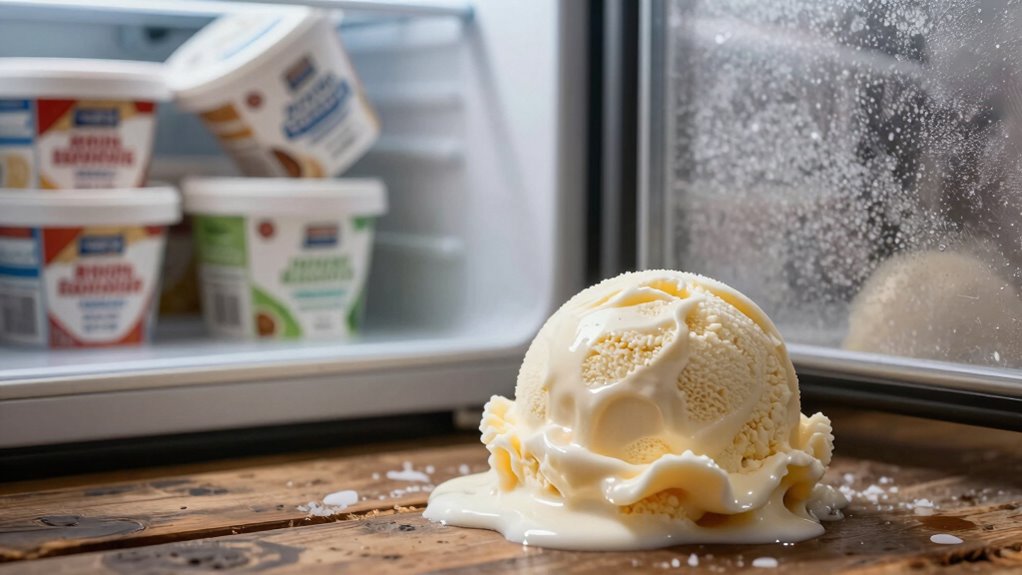
Proper storage is key to maintaining ice cream’s safety and quality after it’s purchased. To prevent temperature problems that cause flavor degradation and texture changes, keep your ice cream consistently cold. Store it in the coldest part of your freezer, away from door openings, which expose it to temperature fluctuations. Guarantee the container is airtight to avoid freezer burn and odors. Use a sturdy, sealed container instead of the original carton to prevent air exposure.
| Tip | Why it matters |
|---|---|
| Keep at constant temperature | Prevents flavor loss and ice crystal formation |
| Store away from door | Avoids temperature swings |
| Use airtight containers | Maintains texture and flavor integrity |
Proper Ways to Handle and Transport Ice Cream for Maximum Freshness
To keep your ice cream at its freshest during handling and transportation, you need to maintain its cold temperature at all times. When ice cream warms even slightly, flavor degradation occurs, dulling its rich taste. Additionally, improper handling can cause textural changes, making it icy or grainy instead of smooth. Always use insulated containers or coolers with ice packs to prevent temperature fluctuations. Avoid open-air exposure and limit handling time to reduce the risk of melting or temperature abuse. If you need to move ice cream over long distances, plan for quick transport and keep it frozen until delivery. Proper handling preserves the original texture and flavor, ensuring your ice cream remains creamy and delicious from start to finish.
Common Storage Mistakes That Lead to Freezer Burn and Melting

If your freezer isn’t set to the right temperature, your ice cream can quickly develop freezer burn or start melting. Opening the door frequently causes temperature fluctuations that compromise its quality. Using inadequate packaging also exposes your ice cream to air and moisture, making it easier to spoil.
Improper Freezer Temperature Settings
When freezer temperatures are set too high, ice cream becomes vulnerable to freezer burn and melting. This improper freezer temperature setting can cause ice crystals to form unevenly, affecting the ice cream flavor and texture. If your freezer isn’t calibrated correctly, it may not maintain a consistent temperature, leading to spoilage. Always keep your freezer at around 0°F (-18°C) to preserve quality. Failing to do so allows warmer air to cause partial melting and refreezing, which damages the ice cream’s smoothness. Regularly check and calibrate your freezer to ensure it stays at the right temperature. Proper calibration prevents temperature fluctuations that can compromise your ice cream’s flavor and texture, keeping it fresh and enjoyable for longer.
Frequent Opening Causes Melting
Frequent opening of the freezer introduces warm air, which can cause your ice cream to melt and refreeze repeatedly. This cycle disrupts the ice cream’s consistency, making it icy or grainy instead of smooth. Each time the freezer door opens, it raises the internal temperature and forces the ice crystals to melt. When the freezer cools down again, the melted ice cream refreezes, creating a rough texture. To prevent this, practice good freezer maintenance by limiting how often you open the door and keeping it closed as much as possible. Proper storage habits help maintain a stable temperature, preserving the ice cream’s quality and preventing unwanted melting. Remember, consistency in your freezer’s environment is key to enjoying smooth, creamy ice cream every time.
Inadequate Packaging for Storage
Inadequate packaging is a common mistake that can lead to freezer burn and melting of your ice cream. When packaging isn’t secure, it compromises packaging integrity, allowing air and moisture to reach the ice cream. Seal failure is a major culprit, often caused by damaged or poorly sealed containers. If the seal isn’t airtight, ice crystals form, resulting in freezer burn and a loss of texture and flavor. Always check that your containers are properly sealed before storing your ice cream. Using airtight, sturdy packaging helps maintain the correct temperature and prevents exposure to external air. Proper packaging not only preserves quality but also extends the shelf life of your ice cream, keeping it fresh and delicious longer.
Fixing Ice Cream That’s Been Temperature Abused and Extending Shelf Life

Even if your ice cream has been temperature abused, there are ways to restore its quality and extend its shelf life. First, assess the extent of flavor degradation and texture alterations. If the ice cream has just slightly softened, you can refreeze it quickly; however, be aware that flavor and texture may still be affected. To improve texture, consider churning it again to incorporate air and restore creaminess. For flavor issues, mixing in fresh ingredients or flavor extracts can help mask any off-tastes. Proper storage is vital—keep the ice cream at a consistent, cold temperature to prevent further damage. By taking these steps, you can salvage your ice cream and prolong its usability, even after some temperature abuse.
Frequently Asked Questions
Can Temperature Abuse Cause Health Risks Besides Texture Changes?
Yes, temperature abuse can pose health risks beyond texture issues. When ice cream experiences improper temperatures, bacterial growth can accelerate, increasing the risk of foodborne illnesses. Mold development is also possible if the ice cream is stored for extended periods at wrong temperatures. These health hazards underscore the importance of maintaining proper storage conditions to ensure safety and prevent contamination.
How Long Does Ice Cream Need to Be Exposed to High Temperatures to Spoil?
If ice cream is exposed to high temperatures beyond the recommended storage guidelines, spoilage can occur within just a few hours, typically 2-4 hours depending on the environment. To prevent spoilage, you should keep ice cream consistently frozen and avoid leaving it out at room temperature for extended periods. Once it surpasses the spoilage timeline, it may develop off-flavors, texture changes, and potential health risks.
Are Certain Ice Cream Flavors More Sensitive to Temperature Abuse?
Some ice cream flavors are more sensitive to temperature abuse than others, and you’d swear they have a sixth sense for danger. Flavors with delicate ingredients like fruit swirls or high butterfat content tend to show greater flavor sensitivity and texture variations when exposed to heat. These changes can make your favorite treat lose its original charm, turning creamy perfection into a soggy, flavorless mess in a heartbeat.
What Equipment Best Prevents Temperature Fluctuations During Storage?
You should use equipment with advanced insulation technology to prevent temperature fluctuations during storage. Insulated display cases or walk-in freezers help maintain consistent temperatures, reducing the risk of temperature abuse. Additionally, integrating real-time temperature monitoring guarantees you stay aware of any deviations immediately, allowing prompt adjustments. This combination keeps your ice cream at the ideal temperature, preserving quality and preventing spoilage caused by temperature fluctuations.
Can You Recover Ice Cream That Has Undergone Temperature Abuse?
A stitch in time saves nine, so if your ice cream experiences temperature abuse, it’s unlikely you can fully recover it. Once it surpasses the freezing point, microbial growth accelerates, risking safety and quality. Freezing may slow bacteria, but it won’t eliminate them. If the ice cream has thawed considerably, it’s best to discard it to avoid health risks, as recovery isn’t reliable once the integrity of the product is compromised.
Conclusion
Understanding temperature abuse is key to enjoying your ice cream at its best. Did you know that even a brief fluctuation can cause ice crystals to form, ruining texture and flavor? By following proper storage and handling tips, you can prevent freezer burn and guarantee every scoop is perfect. Keep your treats at consistent temperatures, and you’ll maximize freshness and safety—making every indulgent bite as satisfying as the first.