
If your ice cream is icy, the problem might not be your machine but how you prepare and store your ice cream. Uneven mixing, incorrect ingredient ratios, or not softening it properly can lead to ice crystals. Proper storage and consistent freezer temperatures are also key. Ensuring your ingredients are balanced and your storage techniques are right can improve texture. Keep going to discover more tips to get that smooth, creamy result you want.

Get baking supplies delivered free — and shop member deals
- Fast, free delivery on millions of items
- Access to Prime Big Deal Days deals on October 6–7
- Prime Video, Amazon Music and more included
Key Takeaways
- Incomplete ingredient blending can cause uneven freezing, leading to icy textures regardless of machine quality.
- Incorrect ingredient proportions, especially low fat or sugar, promote larger ice crystals and a icy consistency.
- Improper storage, like temperature fluctuations or air exposure, contributes to ice crystal formation after freezing.
- Frequent freezer openings or unstable freezer temperatures can cause ice crystals to grow, affecting texture.
- Allowing ice cream to soften slightly before serving improves creaminess, even if the machine was functioning properly.

Ever wonder if your ice cream machine is truly to blame when your frozen treats turn out icy instead of creamy? It’s a common frustration, but often, the problem isn’t with the machine itself. Instead, factors like flavor consistency and storage techniques play a vital role in achieving that smooth, scoopable texture you crave. Understanding these elements can help you troubleshoot and improve your homemade ice cream without rushing to replace or repair your equipment.
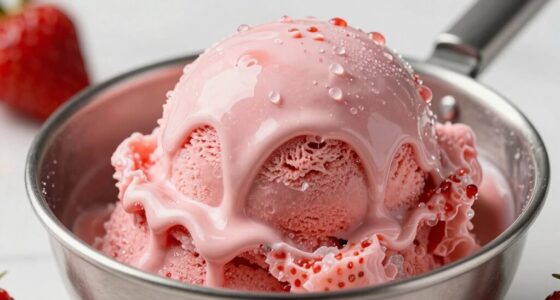
First, let’s talk about flavor consistency. When your ice cream isn’t as creamy as you’d like, it might be due to uneven mixing or ingredient proportions. If the mixture isn’t thoroughly blended, certain elements—like fat, sugar, or stabilizers—won’t distribute evenly, leading to an icy texture. Make sure you’re following the recipe precisely and blending the ingredients well before churning. Also, pay attention to the balance of ingredients, especially fat and sugar. Both play essential roles in lowering the freezing point and preventing ice crystals from forming. If your recipe lacks enough fat or sugar, the resulting ice cream can turn icy, regardless of how well your machine operates. Additionally, proper ingredient proportions are crucial for the ideal texture. Incorporating proper mixing techniques can further ensure a homogeneous blend, helping prevent crystallization. Proper flavor consistency is also key to achieving the desired creamy texture. Using the right ingredients in the correct amounts can drastically improve the final outcome.
Proper blending and ingredient balance ensure creamy, smooth ice cream—avoid uneven mixing and low fat or sugar.
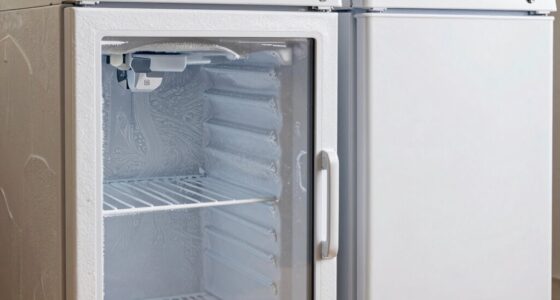
Storage techniques are equally vital. Once you’ve made your ice cream, how you store it can greatly impact its texture. If you put the freshly churned ice cream directly into the freezer without proper preparation, it might develop ice crystals. Use an airtight container and press a piece of plastic wrap directly onto the surface of the ice cream before sealing. This minimizes air exposure, which can cause ice formation and compromise flavor consistency. Additionally, store your ice cream at a consistent, cold temperature—around -20°C or 0°F. Fluctuations in temperature cause ice crystals to grow larger, resulting in that icy texture you’re trying to avoid. If your freezer isn’t cold enough or if you frequently open it, your ice cream is more prone to developing ice crystals, no matter how good your machine is. Ensuring your freezer maintains a steady temperature is a simple but often overlooked step in preserving texture. Also, verifying that your freezer’s temperature settings are correctly calibrated can help prevent unexpected ice crystal formation. Regularly checking your freezer’s temperature settings can help maintain optimal conditions.
Lastly, patience matters. When you’re ready to serve, let the ice cream sit at room temperature for a few minutes to soften slightly. This allows the texture to become creamier and more scoopable. Remember, the machine is just part of the process; the ingredients and storage methods greatly influence the final product. So, next time your ice cream turns out icy, consider these factors before assuming your machine is at fault. With proper attention to flavor consistency and storage techniques, you’ll enjoy smooth, luscious homemade ice cream every time.
ice cream storage containers with airtight lid
As an affiliate, we earn on qualifying purchases.
As an affiliate, we earn on qualifying purchases.
Frequently Asked Questions
Can Storage Temperature Affect Ice Cream’s Texture?
Yes, storage temperature affects your ice cream’s texture. When stored too cold or too warm, it impacts the flavor profile and serving temperature, making the ice cream icy or soupy. Proper storage keeps the texture smooth and creamy, preserving flavors. If your ice cream isn’t at the right temperature when served, it can feel icy or grainy, so maintaining ideal storage conditions guarantees a better tasting, more enjoyable treat.
Does Overfreezing Impact Ice Cream’s Consistency?
Overfreezing can make your ice cream too hard, affecting its flavor consistency and ingredient ratios. Imagine trying to enjoy a frozen block instead of a creamy treat—your spoon struggles, and the texture feels off. Overfreezing causes ice crystals to grow, disrupting smoothness and balance. To avoid this, monitor your freezer temperature and serve at the right chill, ensuring every scoop delivers perfect flavor and consistency.
How Does Ingredient Quality Influence Ice Cream Iciness?
Ingredient quality directly impacts ice cream’s iciness; higher ingredient purity leads to smoother texture and fewer ice crystals. When you use fresh, high-quality ingredients, the flavor stays stable and blends well, preventing uneven freezing. Poor-quality ingredients can introduce excess water or impurities, causing ice crystals to form and making your ice cream icy. So, investing in good ingredients helps you achieve a creamy, stable, and enjoyable dessert every time.
What Role Does Air Incorporation Play in Ice Cream Texture?
Air incorporation plays a vital role in enhancing your ice cream’s texture. When you churn the mixture, air gets trapped, creating a light, creamy consistency. This process, known as texture enhancement, prevents your ice cream from becoming overly dense or icy. Proper air incorporation guarantees a smooth, fluffy mouthfeel, making your treat more enjoyable. So, controlling how much air you mix in directly impacts the overall texture and quality of your ice cream.
Are There Specific Cleaning Tips to Prevent Ice Formation?
To prevent ice formation, regularly clean your machine thoroughly, paying attention to the container material, which affects how easily ice forms. Use warm water and food-safe cleaning solutions to remove residue that can trigger ice buildup. Ensuring proper flavor balance also helps, as overly sweet or watery mixtures can freeze unevenly. Proper cleaning and choosing the right container material keep your machine running smoothly, reducing ice formation and maintaining ideal ice cream texture.
Conclusion
So, next time your ice cream turns icy, don’t immediately blame your machine. Instead, check your ingredients and process—sometimes, the issue is as simple as using the wrong type of milk or not chilling your mixture enough. Think of it like baking: even the best oven won’t turn out perfect if your ingredients or timing are off. By understanding this, you can enjoy smooth, creamy ice cream every time, without unnecessary repairs or frustration.
Fall Picks
fall essentials
As an affiliate, we earn on qualifying purchases.