TL;DR

Get baking supplies delivered free with Prime
- Fast, free delivery on millions of items
- Prime Video, Amazon Music and more included
- Member-only deals all year
Good Housekeeping has published 11 suggestions for making use of the often-awkward area above kitchen cabinets. The ideas range from storing infrequently used pantry goods and appliances in baskets to displaying art, plants and decorative objects; the report does not compare costs or test the approaches.
Good Housekeeping has published 11 ideas for using the space above kitchen cabinets, suggesting homeowners treat it as either occasional storage or a place to display decor. The list includes baskets for infrequently used items, pantry backups, artwork, cookbooks, plants and other objects, offering options for an area that can otherwise sit empty.
Several suggestions focus on storage that does not need to be reached every day. The report recommends using wicker baskets for backup pantry goods, small appliances or seasonal dish towels. It also suggests putting flour, sugar and grains in attractive storage containers, and using built-in dividers to create cubbies for baskets holding items such as unopened spices or pasta boxes.
Other ideas treat the cabinet tops as display space. Good Housekeeping suggests leaning artwork against the wall, arranging vases or sculptures, and displaying cookbooks. The report cautions that cookbooks placed high above cabinets are better suited to display than regular use, because taking them down may be difficult.
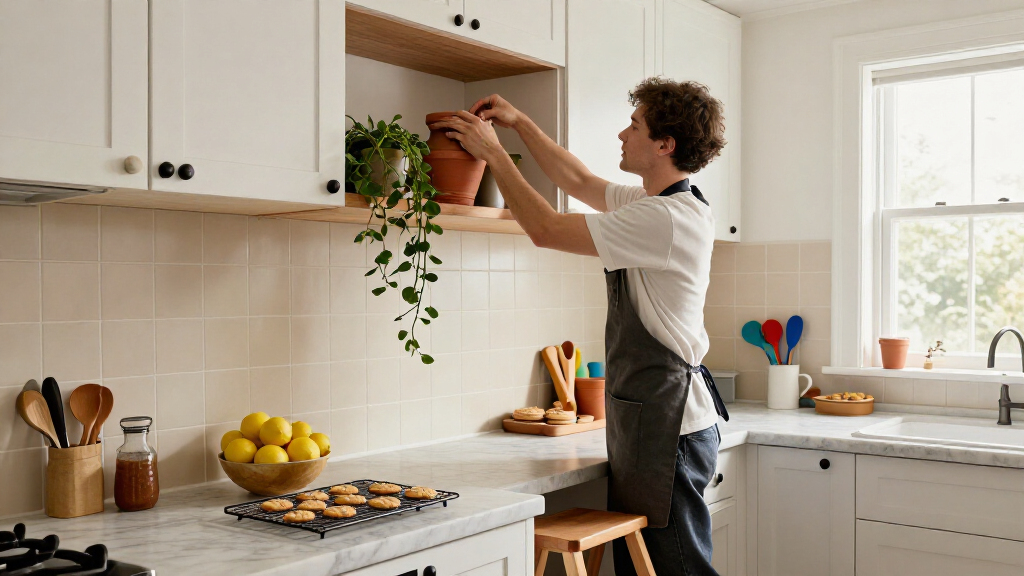
The remaining suggestions include letting houseplants grow in a sunny spot, layering small decorative pieces such as vintage books and faux plants, and using natural textures including wicker, rattan or pampas grass. The report also points to statement lighting as a way to draw attention upward. These are presented as design ideas, not as results from product testing or a comparison of renovation options.
Storage Versus Everyday Access
The ideas give readers a way to make use of overhead space without adding more objects to countertops, which the report notes are useful to keep clear for cooking. The distinction between display and storage matters: items placed high up may be less convenient to retrieve, so the area is better suited to backup supplies and occasional-use goods than everyday essentials.
The suggestions also offer different levels of effort. Baskets and containers can be added without construction, while built-in cubbies involve changing the storage setup. For readers deciding what to place there, the list presents practical and decorative uses side by side, but does not establish which approach works best for any particular kitchen.
As an affiliate, we earn on qualifying purchases.
Eleven Uses for Cabinet Tops
The Good Housekeeping report groups the space above cabinets into a mix of concealed storage and visible styling. Its storage examples include pantry backups, food containers, baskets and cubbies; its display examples include books, artwork, plants, vases and sculptures.
Some recommendations depend on the room. The plant suggestion specifically describes a sunny kitchen, while the artwork and natural-material ideas focus on adding visual interest. The report credits designers, bloggers and photographers alongside several examples, including a kitchen designed by Proem Studio, but does not provide a single plan intended for every cabinet height or layout.
““It’s more about decor, it will be too difficult to pull them down on a regular basis.””
— Good Housekeeping report
Practical Limits Depend on the Kitchen
The report does not give measurements, installation instructions or cost estimates, and it does not assess how much weight cabinet tops or added shelving can hold. It also does not compare how easily different storage options can be cleaned or reached. Readers will need to judge whether their own space, lighting and cabinet arrangement suit a particular idea.
Food storage is described in broad terms, with examples such as flour, sugar, grains and pantry backups. The report does not specify containers, temperature conditions or other storage guidance for individual foods. It also does not address access or stability considerations for items placed overhead.
Choose a Use That Fits
The article presents ideas rather than announcing a product, renovation project or follow-up test. Readers can begin by sorting the space into items to store and objects to display, then reserve high shelves for things they do not need often. Baskets, jars or decorative pieces are lower-commitment options than building dividers or cubbies.
Any next step depends on the kitchen itself: available clearance, sunlight for plants and whether objects can be reached safely. Good Housekeeping’s report does not identify a preferred design or say that another update is planned.
Key Questions
What are the main uses Good Housekeeping suggests?
The list covers backup pantry storage, baskets, food containers, cubbies, artwork, cookbooks, plants, vases, sculptures and small decorative objects.
Are cookbooks above cabinets practical to use?
The report says they are best treated as decor, since reaching them regularly may be difficult.
What items does the report suggest storing in baskets?
Examples include small appliances, seasonal dish towels and backup ingredients that are not needed until current supplies run out.
Does the report give installation or food-storage instructions?
No. It offers design ideas but does not provide construction guidance, storage temperatures or detailed food-safety advice.
Source: rss
Columbus Day / Indigenous Peoples' Day Picks
long weekend sales
As an affiliate, we earn on qualifying purchases.