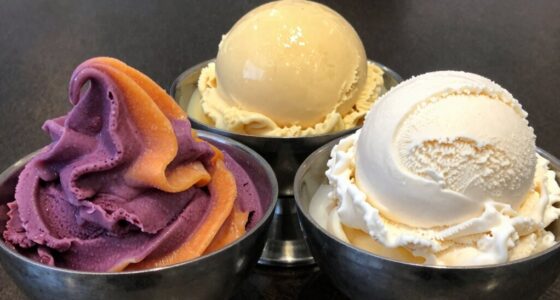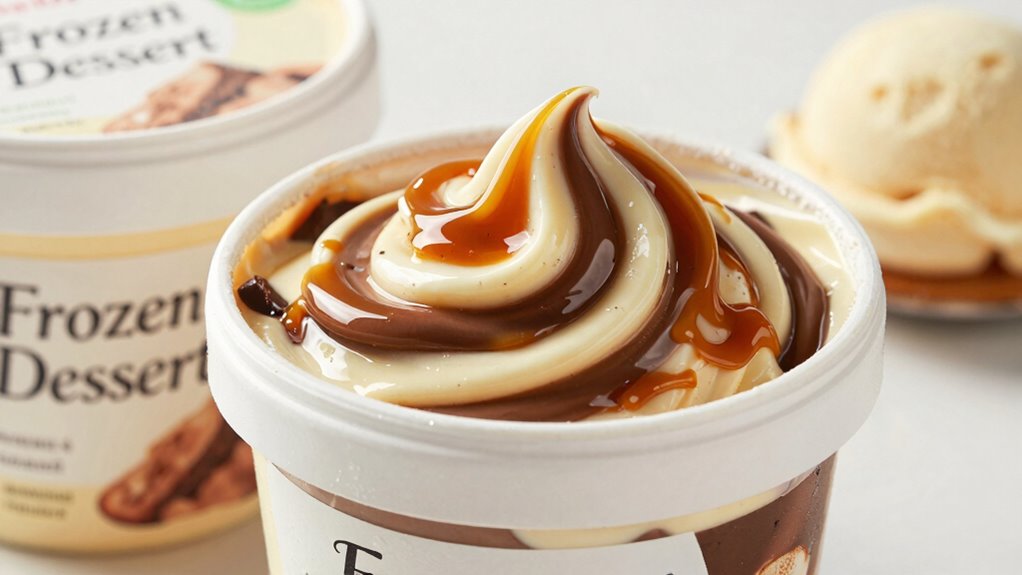

You’ll notice some pints labeled as “frozen dessert” instead of “ice cream” because they don’t meet strict legal standards for ingredients like milk fat and solids. Regulations require specific content levels for “ice cream,” so products that fall short must be labeled differently to avoid misleading you. This helps guarantee honest marketing and transparency about what’s inside. If you want to understand more about these labeling rules, there’s more to discover ahead.
Key Takeaways
- Products that don’t meet legal standards for milk fat or solids must be labeled as “frozen dessert.”
- “Frozen dessert” is a broader term encompassing non-dairy or plant-based alternatives.
- Regulations prevent using “ice cream” unless specific ingredient criteria are met.
- Labels ensure transparency and help consumers identify dairy versus non-dairy options.
- Using “frozen dessert” avoids misleading consumers about product ingredients and quality.
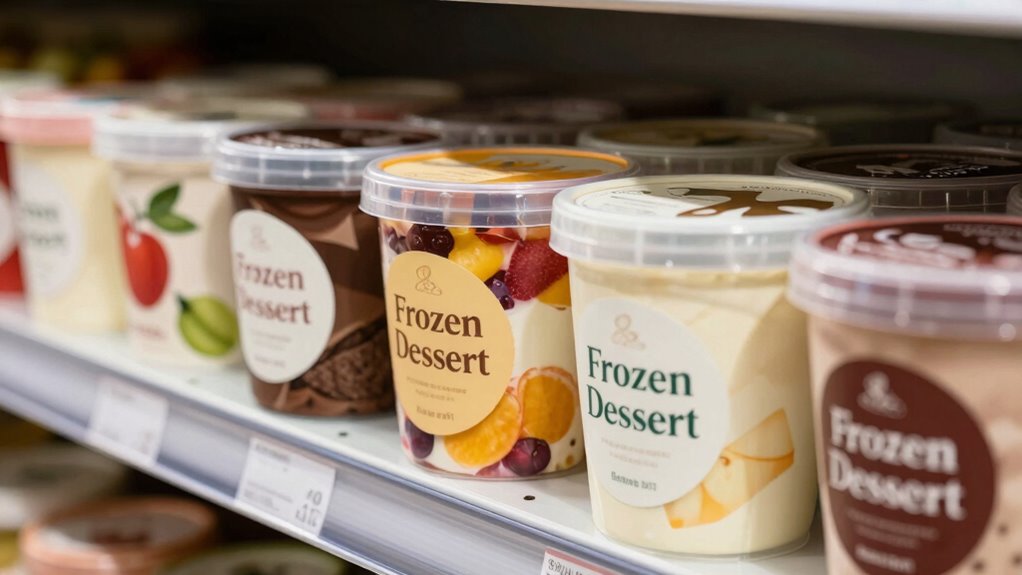
Have you ever noticed that some pint containers are labeled “frozen dessert” instead of “ice cream”? If so, you might wonder why these products aren’t simply called ice cream, especially since they often look and taste similar. The reason behind this labeling choice comes down to regulations and ingredients. The term “frozen dessert” is used to comply with specific labeling regulations that restrict the use of “ice cream” unless certain standards are met. These standards are set by food regulatory agencies and specify the minimum amount of milk fat and milk solids an ice cream must contain. When a product falls short of these requirements, manufacturers have to call it something else, like “frozen dessert,” regardless of its quality or flavor.
One key factor influencing these labels is the use of dairy alternatives. Many brands now produce frozen treats that don’t contain traditional dairy ingredients. Instead, they use plant-based milks and fats, such as almond milk, coconut milk, or soy. Since these dairy alternatives don’t meet the legal definition of dairy-based ice cream, manufacturers can’t label them as “ice cream” without risking regulatory action. Instead, they opt for “frozen dessert,” which is a broader, more inclusive term that covers products made with non-dairy ingredients. This way, they can market their products to a wider audience, including those who follow vegan or dairy-free diets, without running afoul of labeling regulations. Additionally, labeling regulations are designed to protect consumers from misleading claims and ensure honesty in product marketing. Understanding food labeling standards helps consumers make choices aligned with their dietary needs and preferences.
The labeling regulations aim to ensure transparency and protect consumers from misleading claims. They prevent companies from labeling a product as “ice cream” if it doesn’t meet specific ingredient and quality standards. This means that even if a dairy-free frozen treat tastes just as good as traditional ice cream, it still needs to be called “frozen dessert” unless it contains enough dairy content. These rules help consumers quickly identify what they’re buying and make informed choices based on their dietary preferences or restrictions. Moreover, regulatory compliance ensures that consumers are not misled by marketing claims that could imply a product has qualities it does not actually possess.
As an affiliate, we earn on qualifying purchases.
Frequently Asked Questions
What Legal Definitions Differentiate Frozen Dessert From Ice Cream?
Legal standards define ice cream as having at least 10% milkfat, while frozen desserts can have lower fat content. This distinction affects regulatory compliance, as manufacturers must label products correctly to meet federal guidelines. When a product doesn’t meet the strict criteria for ice cream, it’s legally considered a frozen dessert. Recognizing these differences guarantees transparency and helps consumers make informed choices based on the product’s ingredients and standards.
Are There Taste Differences Between Frozen Dessert and Traditional Ice Cream?
Imagine you’re savoring a scoop of frozen dessert in a neon-lit 1950s diner—that’s quite different from traditional ice cream. You’ll notice flavor nuances are often milder, and texture distinctions can make frozen desserts feel lighter or less creamy. While both are delicious, frozen desserts typically have a different mouthfeel, and their taste may lack the richness of classic ice cream, making each dessert unique in its own way.
How Do Ingredient Regulations Vary for Frozen Desserts?
Ingredient regulations for frozen desserts vary, often limiting certain ingredients found in traditional ice cream. You’ll find flavor variations are more diverse since frozen desserts can include added stabilizers or alternative sweeteners. These ingredient restrictions mean some frozen desserts might use different emulsifiers or thickeners, impacting taste and texture. As a result, the labeling as “frozen dessert” helps companies comply with regulations while offering unique flavor options.
Can Frozen Desserts Contain Dairy or Are They Dairy-Free?
Think of frozen desserts like a versatile artist’s palette—some contain dairy, while others are entirely dairy-free. Many frozen desserts do include dairy content, making them traditional ice creams. However, vegan options substitute dairy with plant-based ingredients, catering to dietary needs. So, whether you prefer creamy or dairy-free, there’s a frozen treat for everyone. Always check labels to confirm if your favorite frozen dessert contains dairy or is suitable for vegans.
Why Do Some Brands Choose Labeling Differences for Marketing?
Some brands choose labeling differences like “frozen dessert” over “ice cream” to align with their brand branding and marketing strategies. They might aim to appeal to health-conscious consumers, avoid dairy regulations, or emphasize unique ingredients. By doing so, they differentiate their products, control perceptions, and target specific markets. This strategic choice helps them stand out on shelves and communicate their product’s unique qualities more effectively to consumers.
Conclusion
So, next time you see “frozen dessert” instead of ice cream, remember it’s often about legal definitions and ingredient rules, not taste. Some brands prefer this label to avoid strict regulations or to highlight different ingredients. While it might seem like a small detail, it shows how marketing and laws shape what we buy. Don’t let the label fool you — many “frozen desserts” taste just as delicious as traditional ice cream!