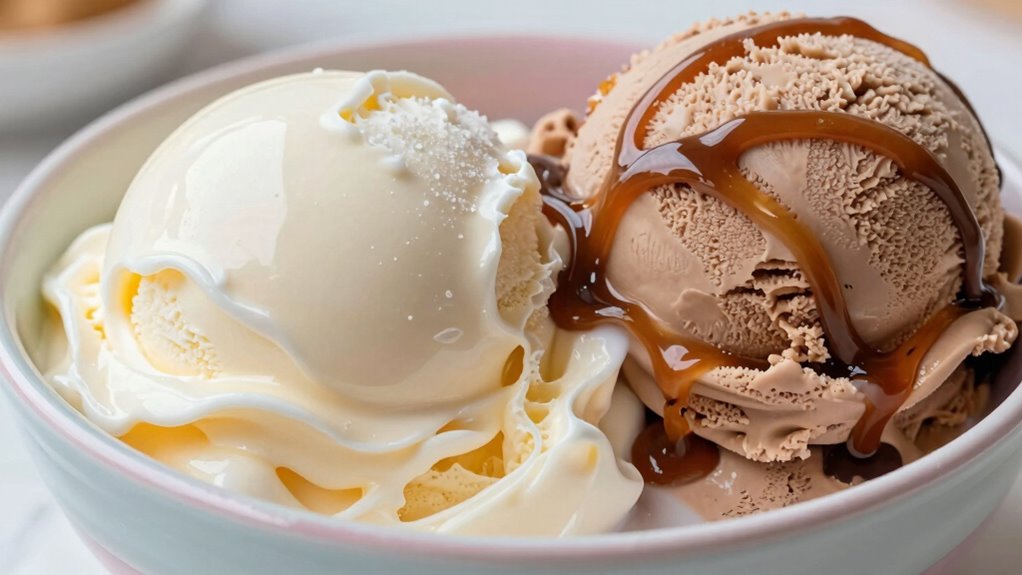

Understanding the label terms helps you choose wisely in the dairy aisle. Ice cream has a higher butterfat content, usually over 10%, making it rich and creamy. Ice milk contains about 3% butterfat, so it’s lighter. Frozen dairy desserts have flexible ingredients and often include stabilizers and additives. Labels reflect legal standards and marketing tactics, so knowing what these terms truly mean helps you pick products that match your taste, diet, or value preferences. Keep going to learn more.

Get baking supplies delivered free with Prime
- Fast, free delivery on millions of items
- Prime Video, Amazon Music and more included
- Member-only deals all year
Key Takeaways
- “Ice cream” must meet minimum butterfat and milk solids standards; “ice milk” contains about 3% butterfat, making it lighter.
- “Frozen dairy dessert” has flexible ingredients, including stabilizers and additives, with less strict standards.
- Labels emphasize adjectives like “rich” or “light” to influence perception, regardless of actual product composition.
- Ingredient lists and nutritional info are essential for understanding product quality and differentiating options.
- Understanding regulatory standards and marketing language helps consumers make informed, preference-aligned choices.
When you’re shopping for products, the labels can often seem like a confusing jumble of terms and claims. This is especially true when it comes to frozen dairy treats like ice milk, frozen dairy dessert, and ice cream. Understanding the differences begins with dairy product regulation, which sets the legal standards for what each product can contain and how it must be labeled. For instance, ice cream must meet specific criteria—like a minimum butterfat content—while ice milk and frozen dairy desserts have different standards, often resulting in variations in creaminess and richness. Recognizing these regulatory distinctions helps you decode what’s on the label and make choices aligned with your preferences. Knowing the dairy product regulation can also help you identify when labels may be emphasizing certain terms for marketing purposes. Consumer perception trends also influence how these products are marketed and labeled. Many consumers associate ice cream with indulgence and premium quality, prompting manufacturers to highlight certain terms to appeal to those perceptions. For example, labels might emphasize “rich,” “creamy,” or “premium” to attract shoppers seeking a decadent experience. Conversely, products labeled as “frozen dairy dessert” might be positioned as lighter or more affordable options, even if they contain less fat or dairy content. These marketing strategies leverage consumer perceptions, which are shaped by trends toward health consciousness and transparency. Today’s shoppers are more attentive to ingredient lists and are increasingly scrutinizing labels for added sugars, artificial flavors, or preservatives. Clearer labeling can help consumers better understand what they’re purchasing beyond marketing claims. Additionally, understanding the regulatory standards can guide you in interpreting ingredient lists and nutritional information more critically. This knowledge demystifies the label terminology used in marketing, making it easier to distinguish between genuine quality and clever branding. Understanding the nuances of these terms can guide you toward better choices. Ice milk, for instance, typically contains less butterfat than ice cream—usually around 3%—and might be seen as a lighter alternative. Frozen dairy desserts, on the other hand, often have a more flexible ingredient list, sometimes including stabilizers or other additives, which can impact taste and texture. Labels might not always clearly differentiate these products, so knowing the regulatory background helps you interpret the information critically. You can look beyond the front label to check the ingredient list and nutritional facts, helping you determine whether what’s being marketed as “premium” truly meets your standards or if it’s simply a clever branding tactic.
Understanding dairy regulations helps you decode labels and choose frozen treats that match your preferences.
In the end, your understanding of dairy product regulation and consumer perception trends empowers you to navigate the frozen dairy aisle more confidently. Recognizing that labels are crafted not only based on standards but also influenced by what consumers want to see allows you to make smarter, more informed decisions. Whether you prefer the richness of traditional ice cream or opt for a lighter frozen dairy dessert, knowing what each term legally and marketing-wise signifies ensures you’re choosing products that match your taste, dietary needs, and values.
premium ice cream with high butterfat content
As an affiliate, we earn on qualifying purchases.
As an affiliate, we earn on qualifying purchases.
Frequently Asked Questions
Are Ice Milk, Frozen Dairy Dessert, and Ice Cream Legally Different Products?
Yes, ice milk, frozen dairy dessert, and ice cream are legally different products. You’ll notice flavor variations and packaging differences that reflect their distinct standards. Ice cream must contain at least 10% milk fat, while ice milk has less. Frozen dairy desserts often have added stabilizers or thickeners, making them different from traditional ice cream. These legal distinctions guarantee you get the product’s specific texture and flavor profile.
Can “Frozen Dairy Dessert” Contain Artificial Flavors?
They say, “Don’t judge a book by its cover,” and that’s true for frozen treats too. Yes, frozen dairy desserts can contain artificial flavorings, even if they’re made from natural ingredient sources. Manufacturers often add artificial flavorings to enhance taste or mimic natural flavors, so always check the ingredient list if you’re wary of artificial additives. Knowing what’s inside helps you make the best choice for your preferences.
How Do Serving Sizes Affect Nutritional Labeling Accuracy?
Serving sizes considerably impact nutritional labeling accuracy because they influence how nutrient content is presented. When you practice portion control, you get a clearer picture of the nutrients you’re consuming, ensuring nutrient accuracy. Larger or smaller servings can skew perception, making it seem like a food is healthier or less healthy than it truly is. Always check the serving size to accurately interpret nutrition facts and make informed dietary choices.
Are There Health Benefits to Choosing One Over the Others?
Choosing between these frozen treats offers subtle health advantages. Nutritional comparisons show ice milk generally contains less fat and calories, making it a gentler choice for your diet. A health impact analysis suggests that opting for lower-fat options can support heart health and weight management. So, if you’re seeking a lighter indulgence, selecting ice milk might bring you closer to your wellness goals, without sacrificing the joy of a cold, creamy treat.
Do All Brands Adhere to the Same Labeling Standards Internationally?
Not all brands follow the same labeling standards internationally. You’ll find that international regulations differ, affecting how products are labeled and marketed globally. Companies often adapt their packaging to align with local rules as part of their global branding strategies. This means some brands might emphasize certain ingredients or health claims in one country but not in another, so you should always check labels carefully regardless of the brand or location.
Conclusion
Now that you know the differences between ice milk, frozen dairy dessert, and ice cream, you can make smarter choices at the store. Remember, “The proof of the pudding is in the eating,” so don’t just rely on labels — taste and texture matter too. By understanding these terms, you’re better equipped to pick the treat that truly satisfies your cravings. After all, knowledge is the key to enjoying your favorite frozen treat to the fullest.
Halloween Picks
halloween
As an affiliate, we earn on qualifying purchases.