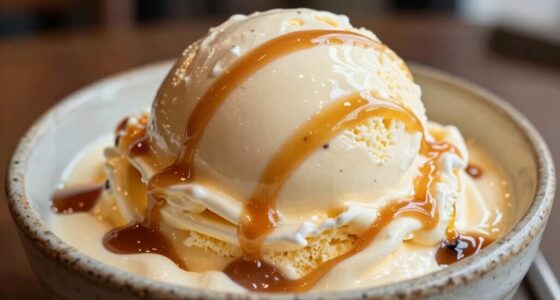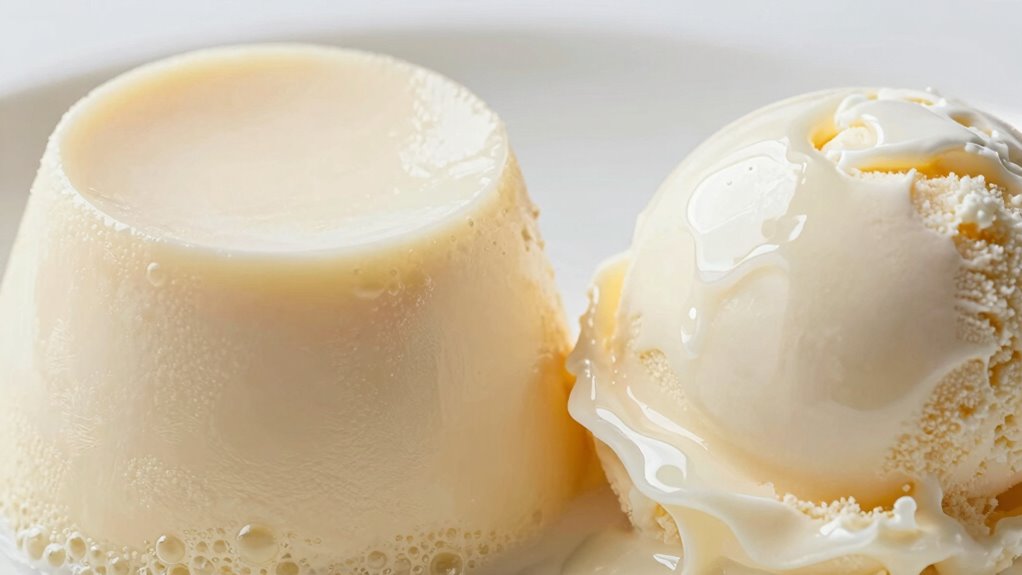

You’ll notice that frozen mousse melts like foam because its airy, whipped structure is designed to dissolve quickly, creating that light, cloud-like feel. In contrast, ice cream is denser and creamier, so it melts more slowly and retains richness longer. The delicate aeration of mousse makes it more fleeting and refined, while ice cream offers a more substantial and indulgent experience. If you want to understand these differences even better, there’s more to discover below.

Get baking supplies delivered free with Prime
- Fast, free delivery on millions of items
- Prime Video, Amazon Music and more included
- Member-only deals all year
Key Takeaways
- Frozen mousse has an airy, whipped structure that melts quickly, resembling foam, unlike the denser, creamier texture of ice cream.
- The aeration process in mousse creates a delicate, foam-like texture that dissolves rapidly on the palate.
- Ice cream’s higher fat content and denser structure slow its melting, providing a richer, longer-lasting experience.
- Mousse emphasizes subtle flavors through its light, ephemeral texture, while ice cream develops deeper flavors as it melts.
- The quick melting of mousse makes it more fleeting and refined, whereas ice cream offers a more substantial, indulgent sensation.
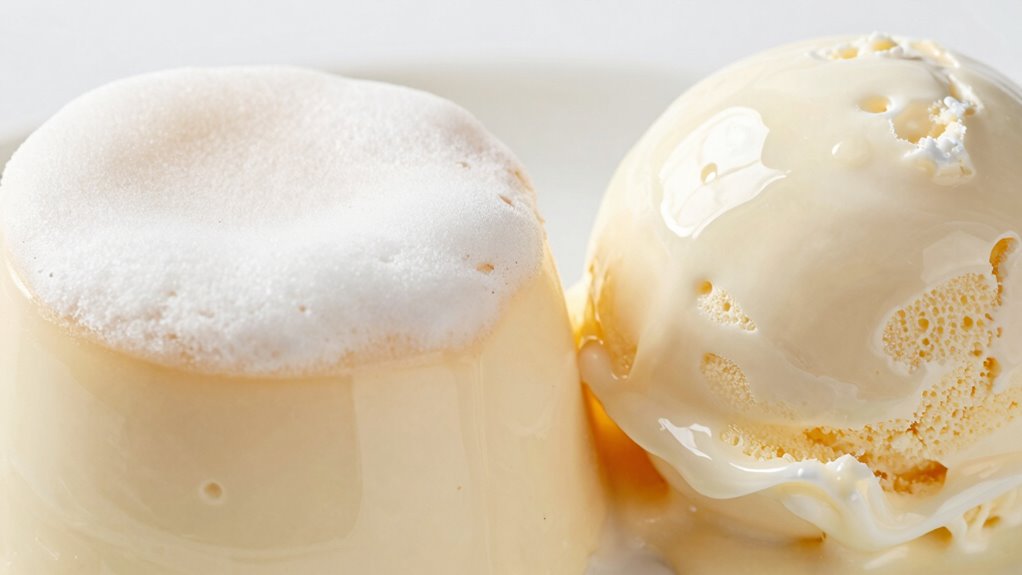
When choosing between frozen mousse and ice cream, you might wonder how they differ in texture, flavor, and overall experience. These desserts may seem similar at first glance, but their differences become clear once you explore their unique characteristics. One of the most noticeable distinctions is the texture contrast. Frozen mousse has a light, airy feel due to its whipped, aerated structure. It melts quickly in your mouth, almost like foam, leaving behind a silky, smooth sensation. Ice cream, on the other hand, provides a denser, creamier texture. Its richness comes from higher fat content and less air incorporation, which creates a more substantial mouthfeel. This difference influences how each dessert feels on your palate and how satisfying it seems with each spoonful. Additionally, the aerated structure of mousse means it’s more delicate and prone to melting faster than ice cream. Flavor profiles also set frozen mousse and ice cream apart. Mousse tends to highlight the flavors more delicately because of its airy nature. The subtlety allows fruity, chocolate, or vanilla notes to shine through without being masked by heaviness. The lighter texture often complements brighter, more vibrant flavors, making each bite feel more refined and nuanced. Moreover, the air incorporation process during mousse preparation is what gives it that characteristic lightness and contributes to its quick melting rate. This process also enhances the delicate texture, making mousse especially appealing for elegant desserts. The texture contrast of these desserts also influences how they are best enjoyed—mousse is often served in smaller portions to emphasize its fleeting, cloud-like feel. Flavor profiles also set frozen mousse and ice cream apart. Mousse tends to highlight the flavors more delicately because of its airy nature. The subtlety allows fruity, chocolate, or vanilla notes to shine through without being masked by heaviness. The lighter texture often complements brighter, more vibrant flavors, making each bite feel more refined and nuanced. The richer, denser structure of ice cream allows its flavors to develop more fully as it melts slowly in your mouth. Because ice cream melts more slowly, you have more time to savor its complex flavor layers, whereas mousse’s quick melt emphasizes its lightness and freshness. The overall experience with each dessert also varies. Frozen mousse provides a fleeting, delicate sensation, almost like tasting clouds or whipped air. Its foam-like quality makes it feel more ethereal, encouraging you to savor each spoon before it dissolves. Additionally, mousse often feels more refined and elegant, suitable for sophisticated presentations, while ice cream is versatile, comforting, and universally loved. Understanding the differences in texture and flavor helps you appreciate each dessert’s unique appeal and choose accordingly. While both desserts are frozen treats, their differences in texture contrast and flavor profiles define their unique identities. Whether you prefer the light, airy melt of mousse or the creamy, satisfying richness of ice cream, understanding these distinctions helps you choose the perfect dessert for any occasion. Each offers a different sensory journey—one fleeting and delicate, the other indulgent and hearty—making your decision all about the experience you’re craving.
As an affiliate, we earn on qualifying purchases.
Frequently Asked Questions
How Does Fat Content Affect Melting Behavior in Frozen Desserts?
Your frozen dessert’s fat composition directly influences its melting behavior by raising the melting point. Higher fat content creates a richer, creamier texture that melts more slowly, preventing rapid foam-like melting. Conversely, desserts with less fat have a lower melting point, causing them to melt quickly and resemble foam. So, fat content helps determine how long your treat stays solid and how smoothly it shifts to liquid.
Can Freezing Method Alter the Melting Properties of Mousse and Ice Cream?
Freezing methods can substantially alter the melting properties of mousse and ice cream, much like how different techniques shape clay. Rapid freezing creates smaller ice crystals, resulting in a smoother texture and slower melt rate, enhancing flavor infusion and texture. Conversely, slow freezing can cause larger crystals, making desserts melt faster and affecting their overall quality. So, your freezing approach directly influences how long your dessert holds its shape and flavor.
What Role Do Stabilizers Play in Melting Rates of Frozen Treats?
Stabilizers help control the melting rates of frozen treats by maintaining flavor consistency and texture stability. When added, they slow down melting, giving your dessert a more uniform texture and preventing it from turning into a puddle quickly. Stabilizers create a barrier that retains moisture and slows ice crystal formation, so your treat stays creamy longer. This makes your frozen dessert more enjoyable and visually appealing over time.
Are There Health Benefits Associated With Frozen Mousse Versus Ice Cream?
You might find frozen mousse offers some health benefits over ice cream, like lower fat content and fewer calories, which can make it a better choice if you’re watching your diet. Plus, its lighter texture allows for creative flavor combinations and exciting serving suggestions. Enjoying frozen mousse can be a delicious way to indulge without feeling guilty, especially when you customize it with fresh fruit or nuts for added nutrients.
How Do Storage Temperatures Influence the Texture and Melting of These Desserts?
You should store frozen desserts at around -20°C to maintain flavor retention and texture stability. Temperatures slightly above this cause ice cream to melt faster, turning it into a liquid, while mousse may lose its airy feel. Notably, even a 1-2°C increase can considerably impact how quickly each melts, affecting both texture and flavor. Proper storage ensures your treat stays delicious and maintains its ideal consistency.
Conclusion
So, next time you’re faced with a frozen dilemma, remember—mousse and ice cream are like night and day, each with its own story to tell. While ice cream melts away like a fleeting dream, mousse stands firm, a proof to its airy elegance. Think of it as the tortoise in our sweet race, slow but steady, inviting you to savor every spoonful. Choose wisely, and let your taste buds dance in delight—frozen wonders await!
Halloween Picks
halloween
As an affiliate, we earn on qualifying purchases.