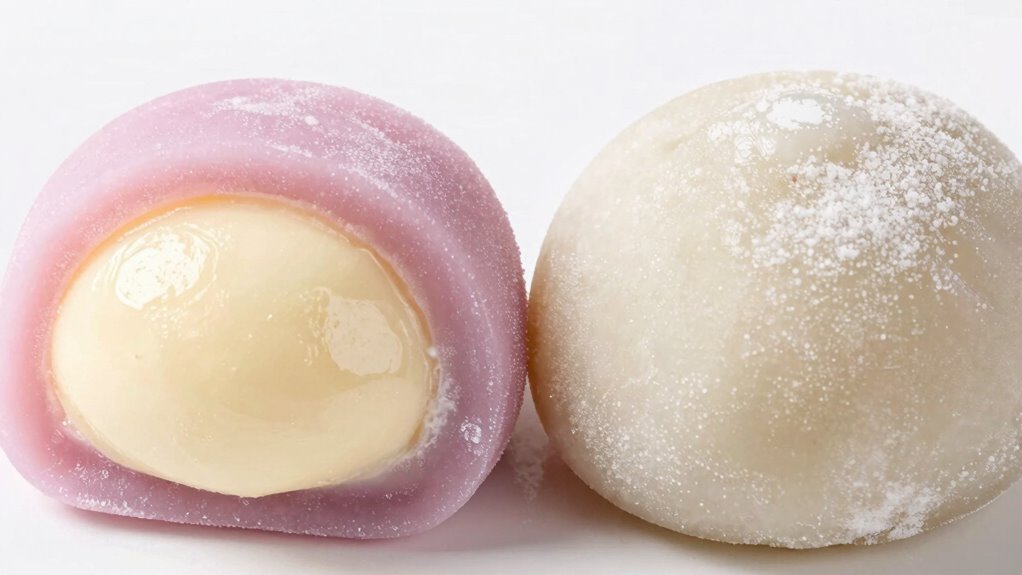

Mochi ice cream and daifuku are both Japanese treats made with mochi, but they’re not the same. Daifuku features a chewy mochi exterior wrapped around sweet fillings like red bean paste or fruit, often enjoyed during celebrations. Mochi ice cream, on the other hand, encases a scoop of ice cream in a thin mochi layer, offering a cool, creamy experience. Curious about how these similarities and differences shape their flavors and traditions? Keep exploring to learn more.

Get baking supplies delivered free with Prime
- Fast, free delivery on millions of items
- Prime Video, Amazon Music and more included
- Member-only deals all year
Key Takeaways
- Both are Japanese treats made from mochi, but daifuku has a sweet filling inside, while mochi ice cream encloses ice cream.
- Daifuku is traditionally handcrafted, emphasizing cultural symbolism, whereas mochi ice cream is often mass-produced for modern consumers.
- The texture of daifuku is soft and chewy, with a sticky mochi exterior, while mochi ice cream combines chewy mochi with cold, creamy ice cream.
- Daifuku is linked to festivals and celebrations, representing good luck, unlike mochi ice cream, which is associated with summer and innovation.
- They differ in flavor profiles: daifuku is generally sweet with fillings like red bean, while mochi ice cream offers a variety of modern flavors.

When it comes to traditional Japanese sweets, mochi ice cream and daifuku often come up as popular favorites, but they’re quite different in both taste and texture. Both treats revolve around mochi, the soft, chewy rice cake made from glutinous rice, but they serve different culinary and cultural purposes. Understanding their traditional preparation and cultural significance helps you appreciate what makes each unique.
Mochi ice cream and daifuku are beloved Japanese treats, each with unique flavors, textures, and cultural meanings.
In traditional preparation, daifuku is a simple yet delicate confection. The process starts with soaking and steaming glutinous rice, then pounding it into a sticky dough known as mochigome. Once cooled, this dough is flattened and wrapped around a sweet filling, most commonly red bean paste, though other fillings like fresh strawberries or chestnuts are also used. The focus on traditional techniques highlights the importance of patience and craftsmanship, as making daifuku by hand is a skillful art passed down through generations. Its cultural significance is rooted in celebrations and festivals, where daifuku is often enjoyed as a symbol of good luck and prosperity. It’s considered a traditional treat that connects you to Japan’s culinary history, often served during New Year’s celebrations and special occasions.
Mochi ice cream, on the other hand, is a modern adaptation that combines traditional mochi with contemporary flavors. Its preparation involves wrapping a small scoop of ice cream inside a thin layer of mochi, often chilled to maintain the ice cream’s texture. Commercial production has made mochi ice cream widely accessible, but it still relies on traditional techniques for the outer layer. The cultural significance of mochi ice cream is more about innovation and globalization, bringing a traditional ingredient into the sphere of modern desserts. It’s popular during festivals and as a snack, especially during the summer, when its cool, invigorating nature provides a delightful contrast to the chewy exterior.
While daifuku maintains a sense of tradition and cultural symbolism, mochi ice cream embodies Japan’s adaptability and openness to new flavors. Both use mochi as a base, but their differences highlight how traditional preparation methods preserve cultural roots, while modern variations showcase evolving tastes. You get to enjoy a taste of history with daifuku’s rich, bean-filled sweetness, and the playful, diverse flavors of mochi ice cream reflect Japan’s innovative spirit. Neither is better—they simply offer different experiences rooted in Japan’s rich culinary culture.
As an affiliate, we earn on qualifying purchases.
Frequently Asked Questions
What Are the Historical Origins of Mochi Ice Cream and Daifuku?
You might find that mochi ice cream originated in Japan, blending traditional mochi with Western ice cream, reflecting modern adaptations. Daifuku, with its roots in ancient Japan, carries cultural symbolism as a symbol of good fortune. Both treats evolved over centuries, with mochi ice cream emerging in the late 20th century, showcasing how traditional Japanese confections adapt to contemporary tastes while maintaining their cultural significance.
Are There Regional Variations of Mochi Ice Cream and Daifuku in Japan?
You’ll find regional flavor variations and modern fusion recipes of mochi ice cream and daifuku across Japan. In colder northern areas, they often feature ingredients like chestnut or sweet potato, while southern regions highlight tropical fruits such as mango and pineapple. Modern chefs experiment with unique fillings, blending traditional flavors with international twists. These regional and innovative variations make each experience of mochi ice cream and daifuku uniquely delightful throughout Japan.
How Are Mochi Ice Cream and Daifuku Traditionally Prepared at Home?
Imagine you’re making daifuku at home, filling sweet rice flour dough with red bean paste, then carefully shaping it. To create fusion recipes or modern adaptations, you might experiment with flavors like matcha or fruit fillings. For mochi ice cream, you freeze small scoops of ice cream wrapped in mochi dough. Both require patience, steaming or pounding glutinous rice, and a delicate touch to perfect traditional textures.
What Are Common Flavor Combinations for Each Treat?
For mochi ice cream, you often enjoy flavor pairings like chocolate, vanilla, matcha, and strawberry, with filling varieties that include fruit, caramel, or even purple yam. Daifuku commonly features fillings like red bean paste, strawberry, or custard, paired with subtle flavors like green tea or sesame. Both treats let you explore diverse flavor combinations, making each bite exciting and customizable based on your preferred filling and pairing choices.
Are There Health Benefits or Nutritional Differences Between Them?
You’ll find that mochi ice cream tends to have more calories and sugar due to its creamy filling, while daifuku offers fewer calories and more fiber, thanks to the red bean paste. The nutritional content differs, meaning potential health benefits vary. If you’re looking for a lower-calorie, fiber-rich option, daifuku might be better. However, moderation is key, and both treats can be enjoyed as part of a balanced diet.
Conclusion
Now that you know the difference, you can confidently choose between mochi ice cream and daifuku whenever you crave a sweet treat. Remember, while they’re related, they’re like siblings with their own unique personalities — one’s a frozen delight, the other a chewy classic. Immerse yourself in these sweets and savor each bite; they’re truly a culinary adventure that’s almost too delicious to believe! Get ready to indulge in a world of delightful textures and flavors.
Halloween Picks
halloween
As an affiliate, we earn on qualifying purchases.