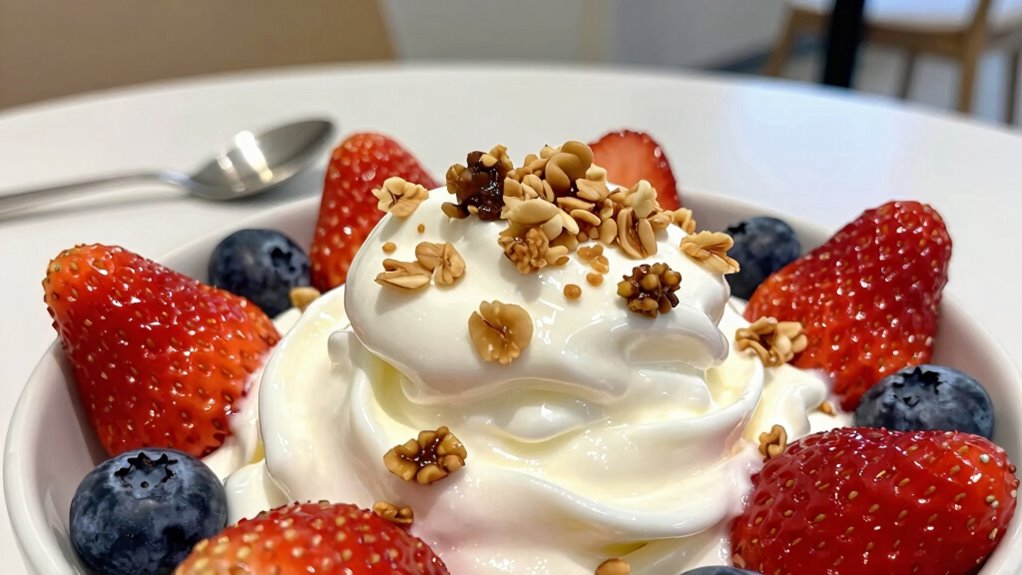

Frozen yogurt isn’t automatically probiotic because many products are pasteurized after fermentation, killing off beneficial bacteria. Also, labels often don’t specify actual probiotic strains or their viability, making it hard to know if you’re getting gut-friendly benefits. To find truly probiotic frozen yogurt, you need to check for clear labels with specific strains and live cultures. Keep exploring to understand how to choose the best options for your health.

Get baking supplies delivered free with Prime
- Fast, free delivery on millions of items
- Prime Video, Amazon Music and more included
- Member-only deals all year
Key Takeaways
- Not all frozen yogurt contains live probiotics; processing and pasteurization often destroy beneficial bacteria.
- Labels must specify “live and active cultures” with strains and CFU counts to confirm probiotic content.
- Pasteurization after fermentation kills many probiotic strains, reducing potential health benefits.
- Freezing can decrease probiotic viability over time, depending on strains and storage conditions.
- To ensure probiotics, choose unpasteurized or explicitly labeled products with verified strains and proper storage.
probiotic frozen yogurt with live cultures
As an affiliate, we earn on qualifying purchases.
As an affiliate, we earn on qualifying purchases.
Why Do Probiotics Matter in Frozen Yogurt?

Probiotics matter in frozen yogurt because they provide health benefits when consumed regularly. They help improve your digestion, support your immune system, and maintain a healthy gut. Sound vibrations are believed to enhance cellular regeneration and overall health, making probiotic-rich frozen yogurt a beneficial addition to your diet. Additionally, the presence of live cultures in these products ensures that you receive the maximum probiotic benefits with each serving. Incorporating bacterial strains into frozen yogurt can optimize its health impact, as different strains offer various benefits. Understanding the science behind probiotics can help consumers make more informed choices about their dietary options. Whether you prefer traditional dairy-based options or dairy alternatives like coconut, almond, or soy, probiotics can be added to these products to boost their health value. Frozen yogurt with probiotics isn’t just about health; it also offers flavor variations to suit your taste. You can enjoy tangy, sweet, or fruity options, all while gaining the benefits of live cultures. Including probiotics in your frozen treat makes it a smarter choice for your well-being, combining deliciousness with functional health advantages. It’s a tasty way to support your overall health goals. Free Floating elements can also influence the natural appeal of your backyard space, making it more inviting for outdoor enjoyment.
What Is Frozen Yogurt, and How Is It Made?
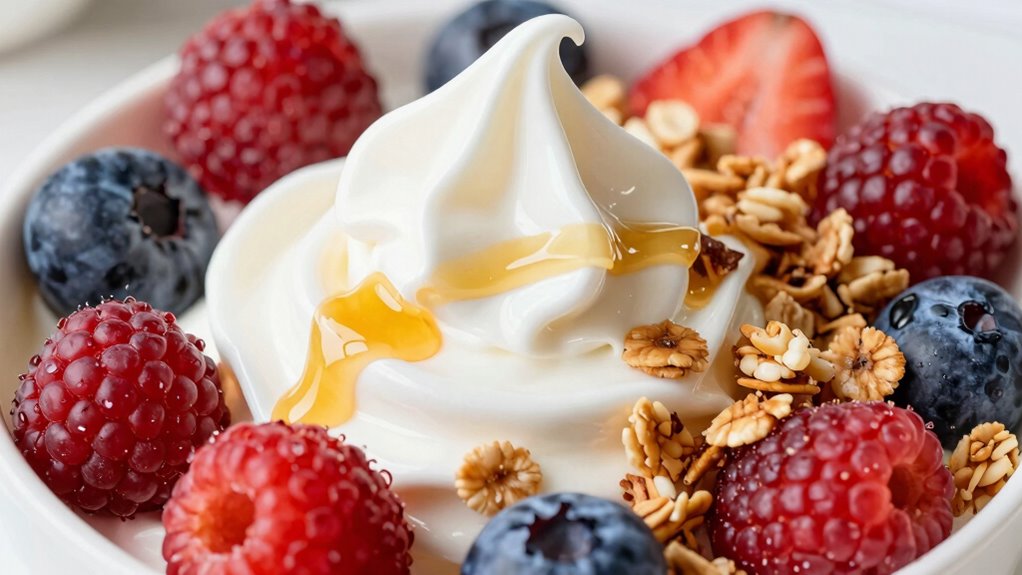
Frozen yogurt is made by combining ingredients like milk, yogurt cultures, and sweeteners, which undergo fermentation to develop flavor and probiotics. After fermentation, the mixture is cooled and churned, creating a smooth, creamy texture as it’s frozen. This process guarantees the final product is both delicious and rich in beneficial bacteria. The fermentation process is essential to develop the characteristic tanginess and probiotic content of true frozen yogurt. Additionally, the temperature control during fermentation influences the growth of beneficial bacteria and the final flavor profile. Maintaining optimal fermentation temperature is crucial to ensure the probiotics thrive and the yogurt achieves its distinctive taste. Proper hygiene practices during production are also vital to prevent contamination and ensure product safety.
Ingredients and Fermentation Process
To make frozen yogurt, the process starts with combining milk, yogurt, and other ingredients like sweeteners and stabilizers. This mixture determines the flavor variations and texture you enjoy. During fermentation, beneficial bacteria ferment the yogurt, producing lactic acid that thickens the product and enhances flavor. Keep in mind:
- The fermentation process influences probiotic content but isn’t guaranteed in all products.
- Ingredients like stabilizers help achieve the desired creamy texture and can impact flavor.
- Producers are increasingly focusing on packaging sustainability, reducing environmental impact without compromising quality.
- The net worth of individuals involved in the industry can reflect their influence and success in product development and marketing.
Additionally, the piercing care and hygiene practices of manufacturers can affect the safety and probiotic quality of frozen yogurt. Proper hygiene standards are essential to prevent contamination and ensure the probiotics remain viable. Maintaining strict hygiene practices can also influence the efficiency of fermentation, as contamination prevention is crucial for preserving probiotic levels throughout production. Understanding these ingredients and processes helps you choose frozen yogurt that aligns with your health goals and values, whether that’s enjoying diverse flavors or supporting eco-friendly packaging practices.
Freezing and Texture Formation
After the fermentation process, the mixture is rapidly cooled and churned to create the smooth, creamy texture characteristic of frozen yogurt. This step is vital for texture formation, as churning introduces air and prevents ice crystal growth, resulting in a soft, uniform consistency. The freezing impact plays a key role here; slow freezing can lead to large ice crystals that make the yogurt icy and gritty. Properly controlled freezing ensures small ice crystals, maintaining a pleasant mouthfeel. The agitation during churning also helps distribute fat and stabilizers evenly, enhancing creaminess. Additionally, freezing techniques are essential to preserve the quality and texture of the final product. Effective temperature control during freezing is crucial to prevent ice crystal growth and ensure optimal texture. Ultimately, this process transforms the liquid mixture into a frozen dessert with a desirable texture, making frozen yogurt enjoyable and satisfying to eat.
Do All Yogurt Products Contain Live Probiotics?
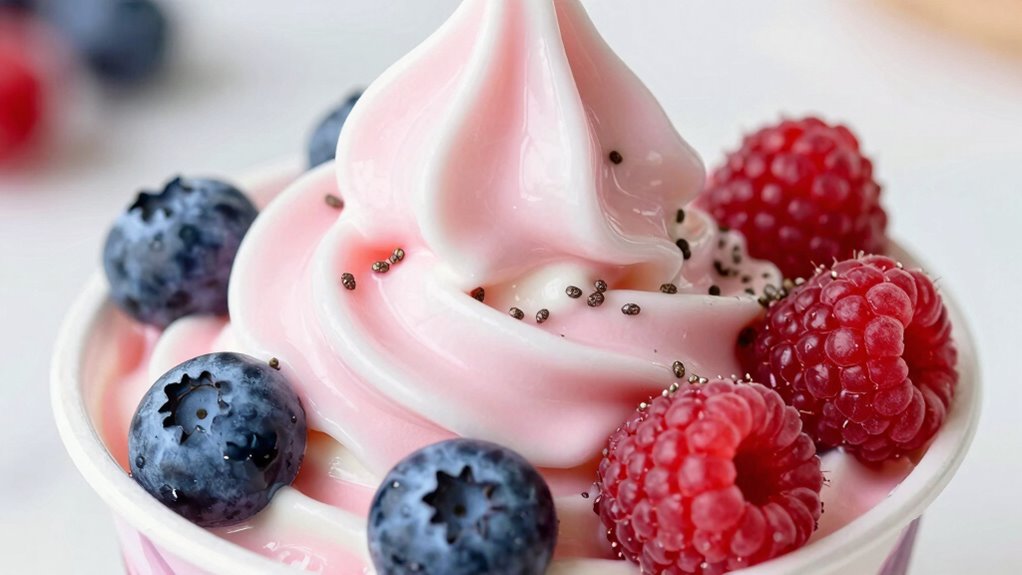
Not all yogurt products contain live probiotics, even if they’re labeled as yogurt. Many store-bought options focus on taste or texture rather than probiotic content. To guarantee you’re getting benefits, look for labels that specify “live and active cultures.” Here are three key points to reflect on:
- Some yogurts are made from cultured dairy but lose probiotics during processing or pasteurization.
- Not all yogurt brands include sufficient probiotic strains to impact your gut health.
- If probiotic benefits are your goal, consider probiotic supplements or products explicitly containing live cultures.
How Does Pasteurization Impact Probiotic Content?

Pasteurization heats yogurt to kill harmful bacteria, but it also destroys beneficial live cultures. This means some products lose their probiotic benefits during processing. Luckily, there are alternatives like adding probiotics after pasteurization or choosing products labeled as live and active cultures. To maximize probiotic intake, look for yogurt that is produced without pasteurization or that includes added probiotics after the process. Understanding fermentation can help consumers select yogurt varieties that naturally retain their probiotic properties.
Pasteurization Kills Bacteria
While pasteurization effectively kills harmful bacteria in yogurt, it also destroys many beneficial probiotic strains. This process impacts the probiotic content, meaning your yogurt might lack the live cultures you seek. To maximize benefits, consider these points:
- Flavor Variations: Pasteurization limits natural fermentation, reducing unique flavors produced by probiotics.
- Serving Suggestions: Opt for live-culture yogurts or supplement with probiotic-rich toppings to boost health benefits.
- Probiotic Preservation: Look for labels indicating “live and active cultures” to ensure your yogurt retains some beneficial bacteria despite pasteurization. Additionally, understanding food safety practices can help you choose products that balance safety with probiotic benefits. Incorporating European cloud servers into food safety data management can enhance traceability and quality assurance, ensuring consumers receive healthier options. Recognizing fermentation processes can also help you identify products with authentic probiotic content. Being aware of regulatory standards can further assist in selecting trustworthy probiotic foods. Furthermore, proper storage methods are essential to maintaining the viability of any remaining probiotics in processed yogurt.
Impact on Live Cultures
Pasteurization markedly reduces the number of live probiotic cultures in yogurt by destroying many of these beneficial bacteria during the heating process. This means that even if your yogurt contains live cultures initially, pasteurization can substantially diminish their presence, impacting potential health benefits. When buying dairy alternatives or flavored yogurts with added flavor additives, check labels carefully. Some products undergo pasteurization after fermentation, reducing probiotic content, while others skip it altogether. Here’s a quick comparison:
| Product Type | Pasteurization Effect | Probiotic Presence |
|---|---|---|
| Traditional yogurt | Usually after fermentation | Reduced or none |
| Dairy alternatives | Often pasteurized | Often minimal |
| Flavored yogurts | May be pasteurized | Varies |
| Unpasteurized options | No effect | Retain live cultures |
| Yogurt with flavor additives | Possible pasteurization | Reduced cultures |
Always read labels to find the most probiotic-rich options. Probiotic content can vary significantly depending on processing methods and product choices.
Alternatives for Probiotics
Because pasteurization can substantially reduce or eliminate live probiotic cultures in many dairy products, it’s important to explore alternative sources that still provide these beneficial bacteria. To maintain probiotic diversity, consider options beyond frozen yogurt, such as:
- Fermented foods like sauerkraut, kimchi, and kefir, which naturally harbor live cultures.
- Dietary supplements containing probiotic capsules or powders, ensuring specific strains and counts.
- Unpasteurized dairy products (where legal and safe), which retain live cultures but require careful sourcing. These alternatives help preserve probiotic diversity and support gut health, especially when traditional dairy products undergo pasteurization. Incorporating these options into your diet can ensure you still benefit from probiotics, even when dairy processing impacts live cultures.
What Are Live Cultures in Yogurt, and Why Are They Important?
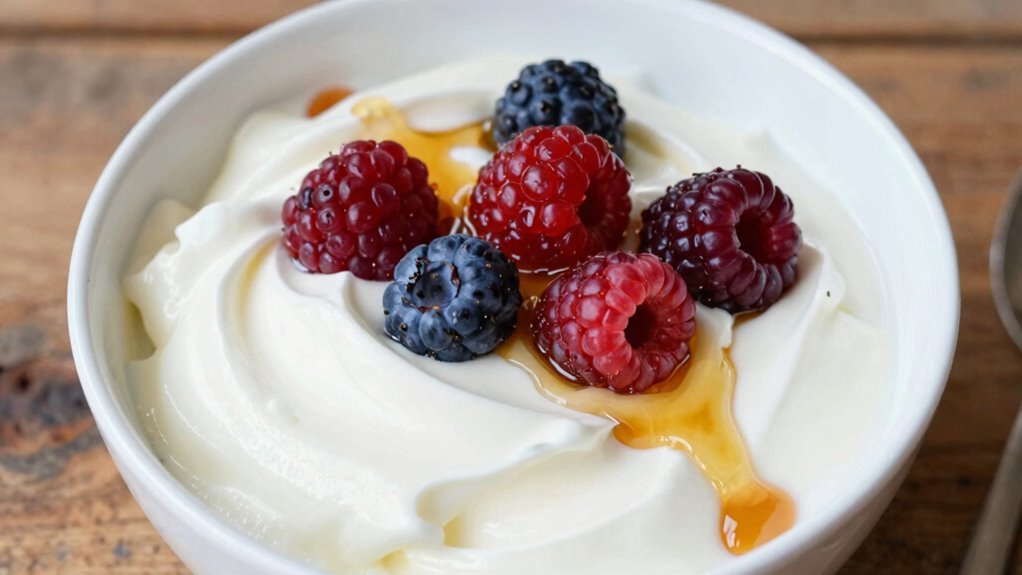
Have you ever wondered what makes certain yogurts beneficial for your gut? The key is the presence of live cultures in yogurt, which are active probiotic strains. These cultured dairy products contain beneficial bacteria that can support your digestive health. When you see labels like “live and active cultures,” it means the yogurt has preserved these probiotic strains during processing. These bacteria help balance your gut microbiome, improve digestion, and boost immunity. Not all yogurts have the same strains, so it is crucial to choose those with specific probiotic cultures known for health benefits. By consuming yogurt with live cultures, you’re giving your gut the beneficial bacteria it needs to thrive and function properly.
How Can You Tell If Frozen Yogurt Has Probiotics?
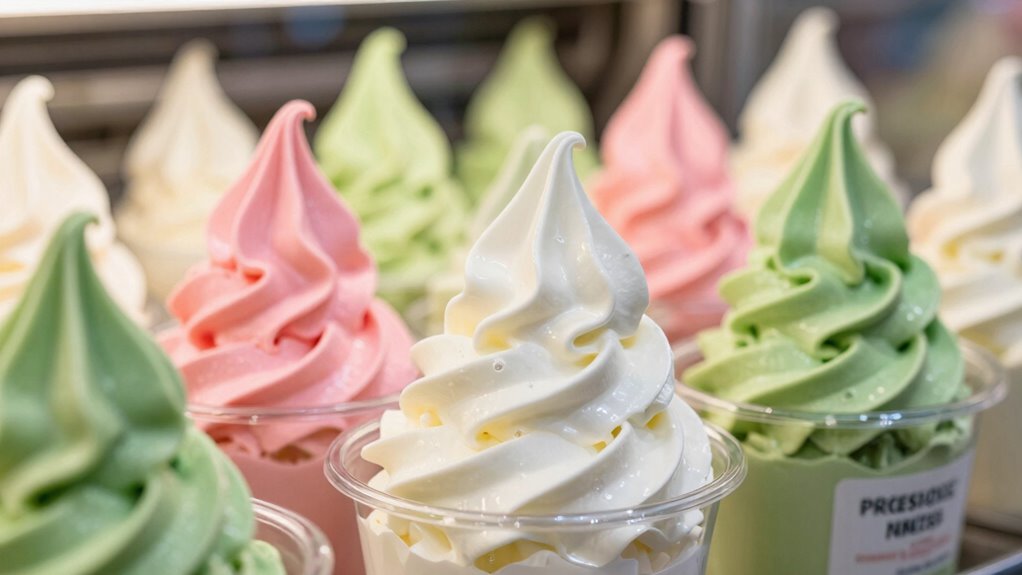
Wondering if your frozen yogurt contains probiotics? Don’t rely solely on labels or marketing claims, as fermentation myths can mislead you. To identify probiotic-rich frozen yogurt, consider these tips:
- Check the label for “live and active cultures”—look for strains like Lactobacillus or Bifidobacterium.
- Ensure the product was refrigerated and has a recent expiration date—probiotics need proper storage to stay effective.
- Research the brand’s fermentation process—probiotic benefits depend on minimal heat during production, which preserves the live cultures.
Are Store-Bought Frozen Yogurt Brands Probiotic-Rich?
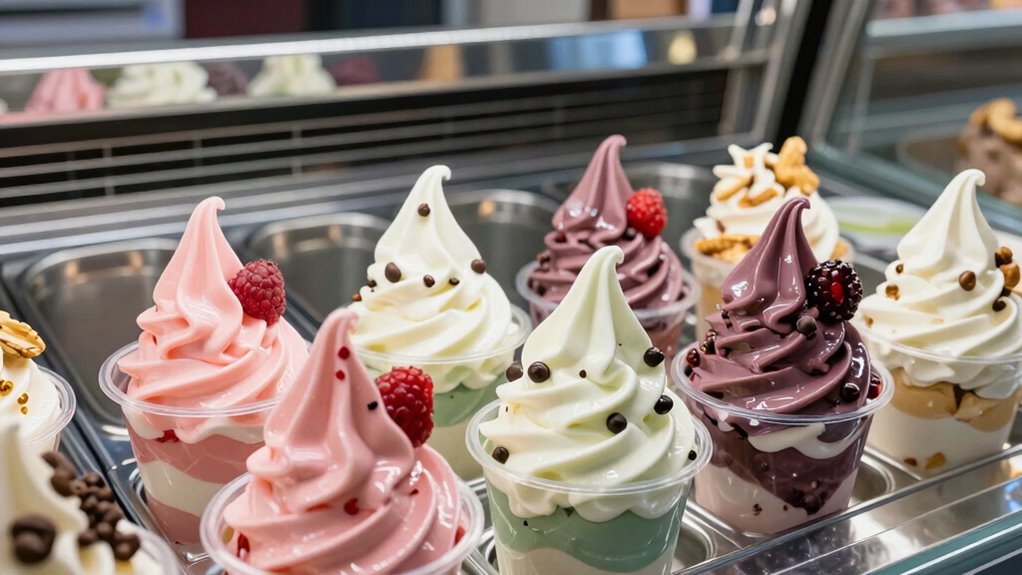
Many store-bought frozen yogurt brands claim to be probiotic-rich, but their actual probiotic content varies widely. These products often include dairy ingredients that may or may not contain live cultures, depending on processing methods. Additionally, flavor additives like sweeteners, fruit purees, and artificial ingredients can obscure the probiotic quality. Some brands add probiotics after pasteurization, but freezing and storage conditions can kill these beneficial bacteria. Others may label their product as containing live cultures without verifying how many survive through manufacturing and freezing. To determine if your frozen yogurt is truly probiotic, check the label for specific strains and CFU counts. Relying solely on marketing claims can be misleading, so scrutinize ingredient lists and probiotic disclosures carefully.
Does Freezing Kill or Preserve Probiotics in Yogurt?

Freezing can substantially impact the viability of probiotics in yogurt, but it doesn’t necessarily kill all beneficial bacteria. The freezing effects on probiotic survival vary depending on factors like temperature and duration. Generally, some probiotics remain alive after freezing, while others may lose their activity. To understand this better:
Freezing affects probiotic viability differently; some survive, others may lose activity but aren’t necessarily killed.
- Certain strains are more resilient to freezing effects, ensuring better probiotic survival.
- Prolonged storage at freezing temperatures can gradually reduce probiotic counts.
- Proper packaging and rapid freezing help preserve probiotic viability by limiting ice crystal formation.
While freezing can weaken some probiotics, it often doesn’t eliminate them entirely. Your frozen yogurt’s probiotic potential depends on the specific strains and how it’s stored.
How to Read Labels and Certifications for Probiotics

To make certain you’re getting the probiotic benefits advertised, it’s vital to know how to read labels and recognize credible certifications. Look for terms like “live and active cultures,” which indicate the yogurt underwent proper fermentation to produce probiotic strains. Check the label for specific probiotic strains such as Lactobacillus acidophilus or Bifidobacterium bifidum, as different strains offer various health benefits. Certifications from reputable organizations, like NSF or the Non-GMO Project, add credibility. Be wary of vague claims like “made with probiotics” without listing strains or CFU counts. Understanding yogurt fermentation processes and the presence of specific probiotic strains helps guarantee you’re choosing a product that genuinely supports your gut health.
Tips for Choosing Truly Probiotic Frozen Yogurt

When selecting probiotic frozen yogurt, make sure the label clearly states the specific strains and CFU counts. You should also check for ingredient transparency to avoid products with unnecessary additives or fillers. Clear labeling helps guarantee you’re choosing a genuinely probiotic option that delivers the health benefits you want.
Probiotic Label Clarity
Choosing truly probiotic frozen yogurt can be confusing if you don’t know what to look for on the label. To guarantee label accuracy and confirm probiotic claims, pay attention to these key points:
- Check for specific strain names and their CFU counts—vague terms like “live cultures” aren’t enough.
- Look for a clear expiration date—probiotic potency declines over time.
- Confirm that the label mentions “probiotic” or “beneficial bacteria” explicitly, not just “contains yogurt.”
These details help verify that the product genuinely offers probiotic benefits. Be cautious of labels that make broad or vague claims, as they may lack the necessary probiotic strains or dosage. Accurate labeling is your best guide to choosing a truly probiotic frozen yogurt.
Ingredient Transparency
Clear ingredient transparency helps you verify that a frozen yogurt truly contains beneficial probiotics and not just empty claims. When checking ingredient labeling, look for specific probiotic strains listed, such as Lactobacillus acidophilus or Bifidobacterium bifidum. Vague probiotic claims like “live cultures” or “contains probiotics” aren’t enough—accurate ingredient labeling should identify the exact strains and their quantities. Avoid products that use generic or ambiguous language, as this can hide a lack of meaningful probiotic content. Transparency guarantees you know what’s inside and whether the yogurt offers real probiotic benefits. By scrutinizing ingredient labels critically, you can confidently choose frozen yogurt that genuinely supports your gut health instead of falling for deceptive marketing.
Frequently Asked Questions
Can Probiotic Levels Vary Between Different Frozen Yogurt Brands?
Yes, probiotic levels can vary between different frozen yogurt brands. You might notice differences in brand consistency and probiotic stability, which impact the actual probiotic content. Some brands prioritize adding live cultures, while others may not maintain the same quality control. Always check labels and choose brands known for their probiotic stability, so you’re sure to get the benefits you’re seeking from your frozen yogurt.
How Long Do Probiotics Survive in Frozen Yogurt?
Probiotic viability in frozen yogurt depends heavily on storage conditions and time. If kept consistently frozen, probiotics can survive for months, but they start to diminish once thawed or if stored improperly. To maximize probiotic benefits, you should consume frozen yogurt soon after purchase and store it at the right temperature. Proper storage helps guarantee you get the probiotic benefits you’re seeking, but over time, viability decreases even under ideal conditions.
Are There Specific Strains of Probiotics Beneficial in Frozen Yogurt?
Yes, certain strains of probiotics are beneficial in frozen yogurt, but strain specificity matters. Look for products that contain specific probiotic strains like Lactobacillus acidophilus or Bifidobacterium bifidum, as these are well-studied for health benefits. You also want probiotic diversity, meaning multiple strains are present to support your gut health. Always check the label to verify the probiotics are viable and that the product guarantees their survival through the frozen process.
Does Adding Fruit or Toppings Affect Probiotic Content?
Adding fruit or toppings can impact probiotic content in frozen yogurt. Fruit interaction may introduce natural sugars that feed bacteria but can also dilute probiotic concentrations if added after fermentation. Topping influence varies; some toppings may contain preservatives or additives that harm probiotics, while others like fresh fruit boost nutrition without harming bacteria. To maximize probiotics, add toppings just before eating and choose fresh, natural options over processed ones.
Can I Make Probiotic-Rich Frozen Yogurt at Home?
Yes, you can make probiotic-rich frozen yogurt at home by making yogurt with live probiotic strains. Start by heating milk, adding a probiotic starter culture, and fermenting it at the right temperature. Once it’s thickened, sweeten and churn it in your freezer. Keep in mind, the freezing process can reduce probiotic levels, so consume it promptly to enjoy the health benefits of the probiotic strains.
Conclusion
Remember, not all frozen yogurt is a probiotic powerhouse—look beyond the label. Imagine opening your freezer and choosing a creamy treat that’s bursting with lively cultures, supporting your gut health with every spoonful. By reading labels carefully and knowing what to seek, you can enjoy a delicious, probiotic-rich dessert that feels as good as it tastes. So next time, pick the one that truly nurtures your body and satisfies your sweet tooth.
Halloween Picks
halloween
As an affiliate, we earn on qualifying purchases.