When you pour soda over ice cream, the foam forms because of the soda’s carbonation, ingredients, and pouring method. High carbonation introduces more bubbles that create a frothy layer, especially if the soda is acidic or contains certain stabilizers. Pouring quickly or using warm soda makes the foam worse, while cold, less carbonated drinks produce less mess. Curious about how to control the foam and make the perfect float? Keep exploring for more tips!

Get baking supplies delivered free — and shop member deals
- Fast, free delivery on millions of items
- Access to Prime Big Deal Days deals on October 6–7
- Prime Video, Amazon Music and more included
Key Takeaways
- Higher carbonation levels increase bubble formation, leading to more foam and frothiness in soda floats.
- Acidity and ingredients like proteins and surfactants influence foam stability and how long bubbles last.
- Pouring soda quickly or at warm temperatures causes rapid CO₂ release, resulting in excessive foam and spillover.
- The type and temperature of ice cream affect foam production; softer or warmer ice cream produces more froth.
- Managing soda’s carbonation, temperature, and pouring technique helps balance fizz and foam for a cleaner float.
As an affiliate, we earn on qualifying purchases.
What Causes Sodas to Froth When Poured Over Ice Cream?

When you pour soda over ice cream, the drink quickly froths up due to a reaction between the carbonation and the cold temperature. The key ingredients in soda, mainly carbon dioxide gas dissolved in sweetened water, create bubbles that form when released. Cold temperatures increase foam stability, making the bubbles last longer and produce a thick, frothy head. The soda ingredients, including sweeteners and acids, also influence how well the foam holds together. As you pour, the carbon dioxide escapes rapidly, creating a cascade of bubbles that cling to the ice cream’s surface. This reaction explains why some sodas foam more vigorously than others. The foam formation process is also affected by the surface tension of the liquid, which is influenced by the soda’s ingredients. Additionally, the temperature of the soda plays a critical role in how lively and persistent the foam becomes when poured over ice cream. The presence of carbonation levels in different sodas can significantly alter the amount of foam produced, with highly carbonated drinks tending to foam more. Ultimately, the combination of soda ingredients and foam stability determines how lively and persistent the foam becomes when poured over ice cream.
How Does Carbonation Level Affect Foam in Ice Cream Floats?
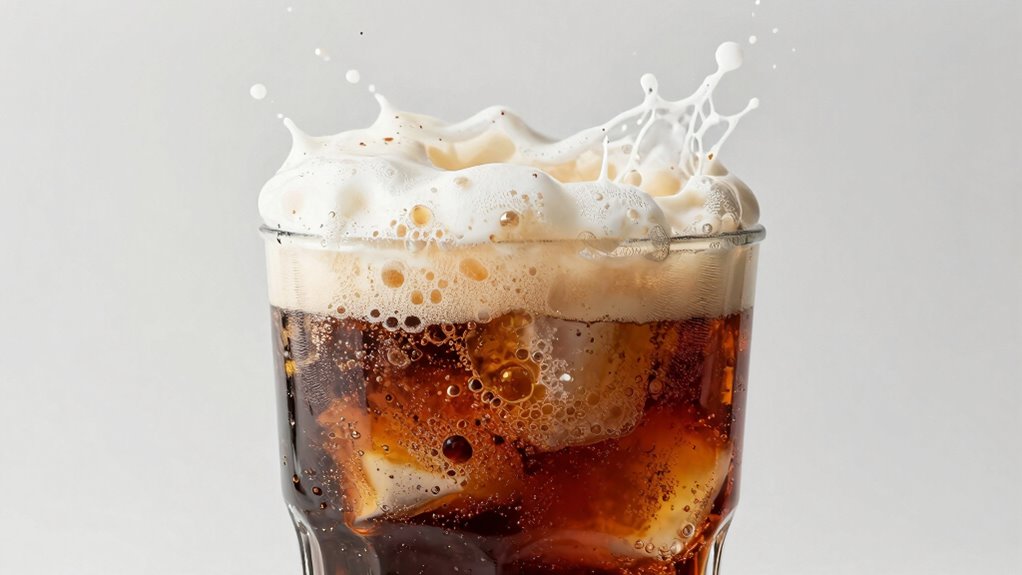
When you pour soda over ice cream, the carbonation level influences how much foam you get. Higher carbonation creates more bubbles and a frothier float, while lower carbonation results in less foam. Finding the right balance guarantees your float has just the right amount of fizz and foam for a perfect treat. Additionally, the carbonation level of the soda can affect how long the foam persists before settling.
Higher Carbonation Means More Foam
Higher carbonation levels in soda introduce more carbon dioxide into the liquid, which directly impacts the amount of foam produced in an ice cream float. When carbonation strength is high, it increases the pressure of dissolved CO₂, leading to more vigorous bubbling when poured over ice cream. This results in a foam that’s thicker and more persistent. The higher the carbonation, the greater the amount of gas released upon contact, creating a frothy, lively foam. Additionally, increased carbonation enhances foam consistency, making the bubbles larger and more stable. You’ll notice that sodas with higher carbonation levels tend to produce a more dramatic, frothy float, emphasizing that carbonation strength plays a vital role in determining how much and what kind of foam forms.
Low Carbonation Produces Less Bubbles
Lower carbonation levels in soda lead to fewer bubbles and less foam in your ice cream float. When the carbonation levels are low, the amount of dissolved carbon dioxide decreases, resulting in less foam formation. This means your float will be less frothy and visually less impressive. To understand this better, consider how different sodas vary in their carbonation:
| Soda Type | Carbonation Level | Foam Formation |
|---|---|---|
| Sparkling Water | Low | Minimal |
| Classic Cola | High | Abundant |
| Diet Sodas | Moderate | Moderate |
As you can see, lower carbonation levels directly reduce foam production, leading to a calmer, less bubbly ice cream float experience. Soil Conditions also influence the overall texture and stability of the foam in your float. Additionally, carbonation level plays a crucial role in determining the foam’s longevity and appearance during consumption. The temperature of the soda and ice cream can also impact foam formation, making temperature control an important factor to consider. For a better understanding of how these factors interact, exploring foam stability can provide further insights into achieving the perfect float. Moreover, understanding the soda’s ingredients can help explain variations in foam and bubble behavior during preparation.
Balancing Fizz and Foam
Balancing fizz and foam in your ice cream float involves understanding how carbonation impacts the overall experience. Soda temperature plays a key role; colder sodas tend to have higher carbonation levels, which can create more foam. However, excessive foam can overpower the drink and diminish enjoyment. Foam stability is also important—if the carbonation is too high, the foam may collapse quickly, leaving a messy float. To achieve the right balance, choose sodas at the proper temperature and consider lower carbonation options if you want less foam. By regulating these factors, you’ll ensure your float has just the right amount of fizz and a stable, appealing foam that enhances the creamy ice cream. Additionally, understanding sound design can help you visualize and manage the effervescence and foam behavior for a more controlled and enjoyable float experience. Proper carbonation level management can prevent unwanted overflow and keep your float looking as good as it tastes.
How Do Ingredients and Additives Influence Foam Formation?

Ingredients and additives play a crucial role in how foam forms and stabilizes in ice cream floats. The ingredient impact is significant because proteins and surfactants in the soda can influence bubble creation and retention. For example, certain acids or stabilizers may weaken foam by breaking bubbles apart, reducing frothiness. Additive effects also matter; emulsifiers and foaming agents can enhance the stability of bubbles, making foam last longer. Sugar content affects viscosity, which impacts how easily bubbles form and persist. Additionally, preservatives and stabilizers in sodas can either promote or hinder foam stability. Understanding these ingredient interactions helps explain why some sodas produce more vigorous, long-lasting foam, while others result in minimal froth. The Chemical interactions between ingredients directly influence the foam’s behavior in your float, highlighting the importance of chemical composition in beverage science. Moreover, the presence of certain stabilizers can either strengthen or weaken foam, depending on their molecular structure and interaction with other ingredients. Recognizing how these components work together can help you choose sodas that produce the perfect float foam, especially when considering foam stability factors.
Which Sodas Make the Frothiest Ice Cream Floats?
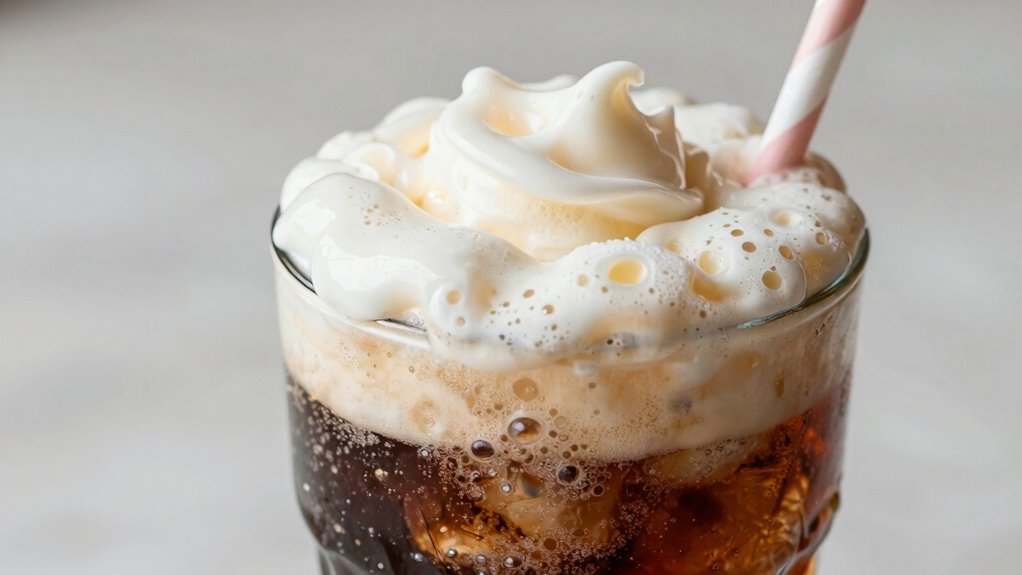
Certain sodas are known for producing more vigorous and longer-lasting foam in ice cream floats. Sodas with high carbonation and specific soda chemistry promote better foam stability, leading to frothier floats. Colas and root beers often create more vigorous foam due to their acidity and carbonation levels. The table below compares popular sodas based on foam stability and carbonation:
| Soda Type | Foam Stability | Carbonation Level |
|---|---|---|
| Classic Cola | High | Very Carbonated |
| Root Beer | Very High | Highly Carbonated |
| Lemon-Lime | Moderate | Moderately Carbonated |
| Ginger Ale | High | Carbonated |
| Diet Sodas | Lower | Varies |
Additionally, carbonation levels play a crucial role in determining the amount of foam produced during the float-making process. The soda chemistry also influences how well the foam adheres to the ice cream, affecting the overall frothiness and longevity of the float. The acidic nature of certain sodas enhances foam formation and stability, making some options preferable for a frothier float. Understanding how carbonation and acidity interact can help you choose the best soda for your ideal float experience. Moreover, selecting sodas with the right combination of these factors can significantly improve the float quality and enjoyment.
Why Do Some Sodas Bubble Over More Than Others?
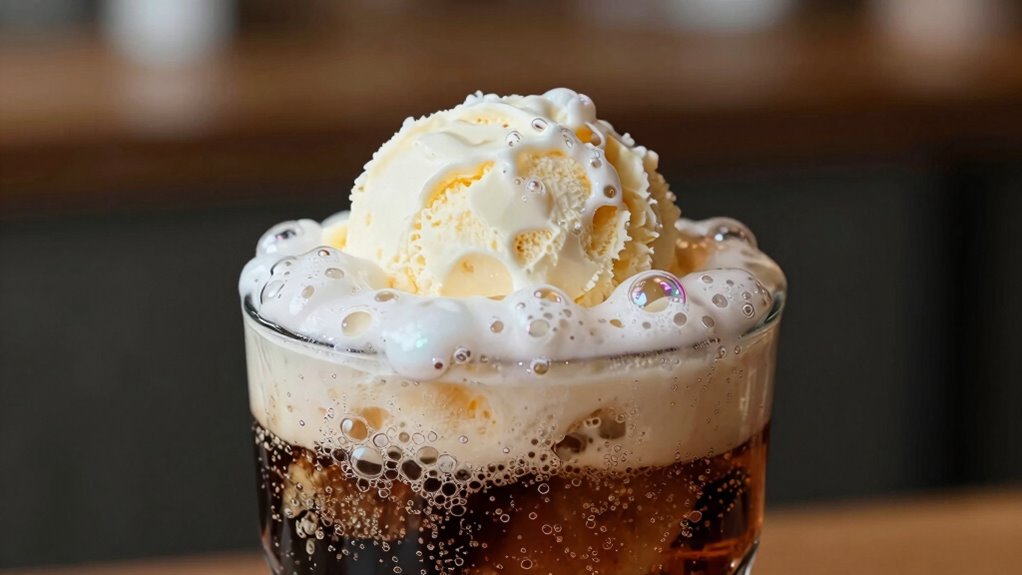
Have you ever wondered why some sodas spill over their containers more quickly than others? It all comes down to sugar content and flavor combinations. Sodas with higher sugar levels tend to produce more foam because sugar affects how gas bubbles form and stabilize. Additionally, certain flavor combinations, like citrus or cola, create more vigorous bubbling due to their chemical makeup. These ingredients influence carbonation and how easily the bubbles escape. When poured, sodas with more sugar and lively flavors release carbon dioxide more rapidly, leading to a frothier overflow. Understanding carbonation and the factors that influence it can help you predict how much a soda might foam up when poured. The presence of specific flavor compounds can also alter bubble stability, impacting how much foam is produced. For example, the chemical composition of a soda can determine how quickly bubbles form and burst, affecting the foaming behavior. So, if you’re trying to minimize spillovers, choosing sodas with lower sugar content or milder flavors can help keep your float from bubbling over too much.
How Temperature and Pouring Technique Change the Foam and Spillover?
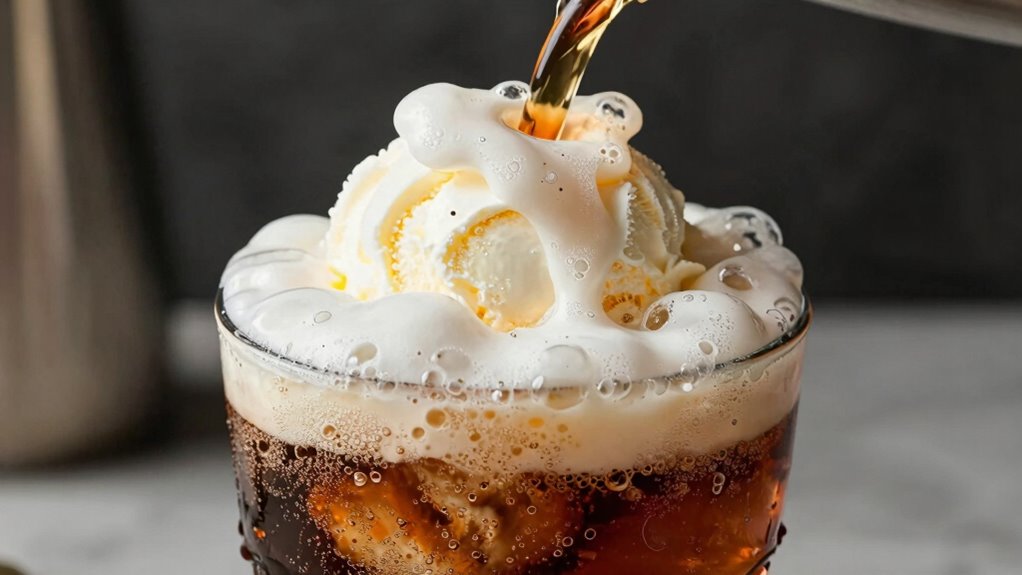
The temperature of the soda and the way you pour it directly influence how much foam is produced and whether it spills over. Cooler sodas tend to produce less foam because their carbon dioxide stays dissolved, reducing rapid bubble formation. Conversely, warmer soda releases CO2 quickly, creating more foam. Your pouring technique also matters; pouring slowly and at an angle minimizes agitation, resulting in less spillover. A quick, straight pour agitates the soda more, causing excessive foam and potential mess. To control foam and spillover, keep the soda cold and pour gently along the side of the glass. Understanding these temperature effects and pouring techniques helps you create a perfect float without the chaos.
How to Make a Perfect Ice Cream Float Without the Mess?

To make a perfect ice cream float without creating a mess, start by choosing the right glass that can handle the layers and fizz. Keep your ingredients cold to prevent overflowing and excessive foam. Finally, pour slowly and carefully to control the flow and avoid spills.
Choose the Right Glass
Ever wonder how the right glass can make or break your ice cream float experience? Choosing the right glass is essential for both functionality and aesthetic appeal. Opt for a sturdy, tall glass that can hold plenty of soda and ice cream without spilling. A clear glass allows you to showcase the vibrant colors and layered look of your float, enhancing its visual appeal. Consider a glass with a wide opening to make adding toppings easier and to prevent overflow when pouring soda. Avoid small or narrow glasses that might cause messes or make serving awkward. The right glass not only keeps your float neat but also elevates its presentation, making the experience more enjoyable from the first look to the final sip.
Use Cold Ingredients
Have you ever experienced a messy ice cream float that drips everywhere before you even take a sip? Using frozen ingredients and chilled beverages helps prevent this. When your ice cream is straight from the freezer, it melts more slowly in the soda, reducing overflow. Similarly, pouring cold soda from the fridge keeps the mixture stable and minimizes foaming. Before making your float, make sure your ice cream is well-frozen and your soda is cold—ideally chilled for a few hours. This way, the float maintains its structure longer and lessens the risk of spilling. Cold ingredients create a more controlled reaction, giving you a clean, satisfying float without the mess. Keep everything chilled, and you’ll enjoy a perfectly balanced, mess-free ice cream float.
Pour Carefully and Slowly
Pourting your soda slowly and carefully is key to avoiding spills and excessive foam. When you pour gently, you help maintain foam stability, preventing it from overflowing quickly. The way you pour affects how ingredient interactions unfold; a swift pour agitates the soda, causing more bubbles and foam. By controlling the speed, you minimize agitation, leading to a smoother, less frothy float. Make sure the soda hits the side of the glass at an angle, which helps reduce foam formation. This careful pouring process ensures the carbonation releases gradually, giving you a better balance of fizz and foam. With patience and precision, you’ll create a clean, perfectly layered ice cream float without a mess, all while preserving the foam stability of your soda.
Common Mistakes That Make Your Float Froth Over and How to Avoid Them?

One common mistake that causes your float to froth over is adding too much soda or syrup too quickly. When you pour too fast, the carbonation rushes to the surface, disrupting the float’s consistency and causing excessive foam. To prevent this, pour slowly and steadily, allowing the soda to settle gently. Also, avoid using a soda that’s too highly carbonated, which intensifies foaming. Another mistake is choosing an ice cream flavor that’s too soft or warm, which can make the foam rise more quickly and spill over. Keep the ice cream cold and firm before pouring. By controlling the pouring speed and selecting the right ice cream, you’ll maintain a stable float with minimal froth and enjoy a balanced flavor and texture.
Does the Type of Ice Cream Affect the Foam Level?

The type of ice cream you choose can considerably influence the foam level in your float. Different ice cream varieties have varying fat, air, and sugar content, which affect how much foam is produced. A rich, creamy ice cream with high fat content might create less foam, while lighter, airy varieties tend to foam more. The flavor influence is also significant — some flavors contain ingredients that promote or suppress foam formation. For example, vanilla ice cream often produces more foam than chocolate, due to ingredient differences.
- Light and airy ice cream varieties generate more foam
- Rich, dense ice creams tend to produce less foam
- Flavor ingredients like cocoa can influence foam levels
- Sugar and fat content directly impact foam stability
How to Customize Your Float for the Perfect Froth and Flavor?
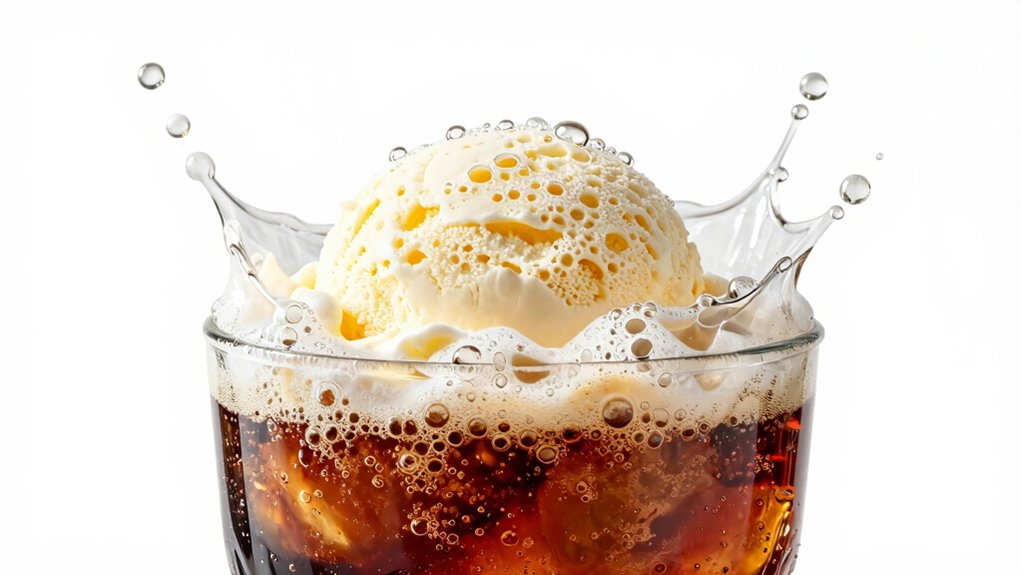
To achieve the perfect froth and flavor in your float, you can customize various elements to suit your taste preferences. Start by experimenting with flavor combinations—try pairing vanilla ice cream with root beer or cherry soda for unique tastes. Garnish options like whipped cream, maraschino cherries, or a sprig of mint can elevate your float’s presentation. Adjust the ice cream quantity or soda type to influence the foam level. For a richer flavor, add a splash of flavored syrup or extract. Here’s a quick guide:
| Flavor Combinations | Garnish Options |
|---|---|
| Vanilla & Root Beer | Whipped Cream |
| Chocolate & Cola | Maraschino Cherry |
| Strawberry & Lemon | Mint Sprig |
| Coffee & Cream | Chocolate Shavings |
| Banana & Pineapple | Fruit Slices |
Frequently Asked Questions
Can the Type of Glass Influence the Foam in a Float?
Yes, the type of glass can influence the foam in your float. Glass material, like whether it’s glass or plastic, affects how bubbles form and escape. The glass shape also plays a role; tall, narrow glasses tend to concentrate bubbles at the top, creating more foam, while wider glasses allow bubbles to disperse evenly, reducing foam. So, choose your glass carefully to enjoy the perfect float.
How Does Altitude Affect Foam Formation in Floats?
Think of altitude pressure as the air thinning out, like a balloon losing its bounce. At higher altitudes, lower pressure causes foam to form more easily and be less stable. This means your float might foam excessively and quickly lose its frothy crown. You’ll notice more vigorous bubbling because the reduced pressure makes it easier for carbon dioxide to escape, impacting foam stability and creating that frothy mountain on top of your float.
Does the Freshness of Soda Impact Its Foaming Ability?
Yes, the freshness of soda considerably impacts its foaming ability. Fresher soda has more carbonation, which creates more bubbles when poured over ice cream. As soda ages, it loses carbonation, reducing its ability to foam vigorously. So, if you want a frothy float, choose freshly opened soda. The carbonation level directly influences the amount of foam, making freshness a key factor for a perfect, bubbly float experience.
Can Adding Toppings Change the Foam Level of a Float?
Sure, adding toppings can totally mess with your foam levels. Topping effects, like whipped cream or sprinkles, introduce extra air and ingredients that might boost the fizz or cause it to collapse faster. Plus, they can alter flavor changes, making your float taste more like a candy shop than a soda fountain. So, go ahead—top it up, but don’t be surprised if your foam turns into a bubbly mess!
Is There a Way to Reduce Excessive Foam Without Losing Flavor?
To reduce excessive foam while preserving flavor, you can try pouring the soda slowly at an angle to minimize agitation. Using a chilled glass can also help. Stir gently instead of shaking or pouring quickly. These foam reduction techniques prevent too much froth from forming, so you enjoy the float’s flavor without losing the bubbly excitement. Just be gentle, and your float will stay flavorful and less foamy.
Conclusion
Now that you know the science behind soda foaming, you’re ready to craft the perfect float—like an artist painting a masterpiece. By choosing the right soda, ice cream, and pouring technique, you can avoid a chaotic mess and enjoy a velvety, frothy treat. Remember, with a little care, your float can become a delightful symphony of bubbles and flavor, turning every sip into a sweet, nostalgic voyage back to simpler times.
Fall Picks
fall essentials
As an affiliate, we earn on qualifying purchases.