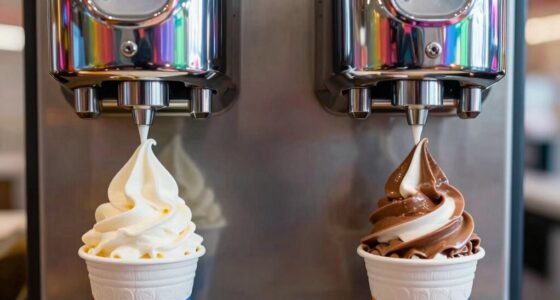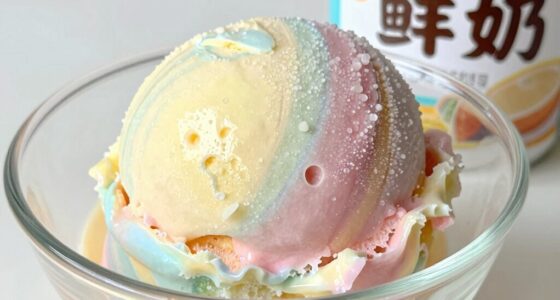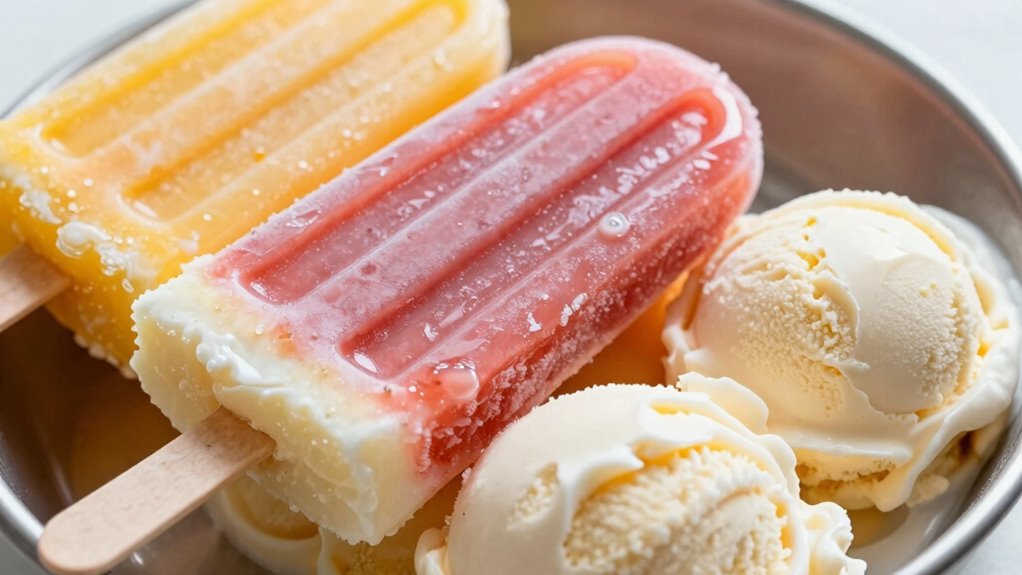

Frozen novelties use different formulas than scoopable ice cream because their packaging and serving style demand formulations that focus on stability, flavor retention, and easy handling. Novelties need coatings and wrappers to prevent freezer burn and keep their shape, while scoopable ice cream requires creamy textures and stabilizers to resist ice crystal growth. These specialized formulas help each type stay fresh and enjoyable over time—if you’re curious, there’s more to uncover about how science makes this happen.

Get baking supplies delivered free with Prime
- Fast, free delivery on millions of items
- Prime Video, Amazon Music and more included
- Member-only deals all year
Key Takeaways
- Frozen novelties require coatings for portability and protection, influencing their unique formulations.
- Scoopable ice cream emphasizes creaminess and requires stabilizers to prevent ice crystal growth during storage.
- Novelties are designed for quick consumption and long shelf life, impacting their ingredient choices and stability considerations.
- Packaging innovations for novelties focus on maintaining flavor and preventing freezer burn, affecting formula composition.
- Different formats and consumption methods demand tailored textures and stabilization techniques in each product type.
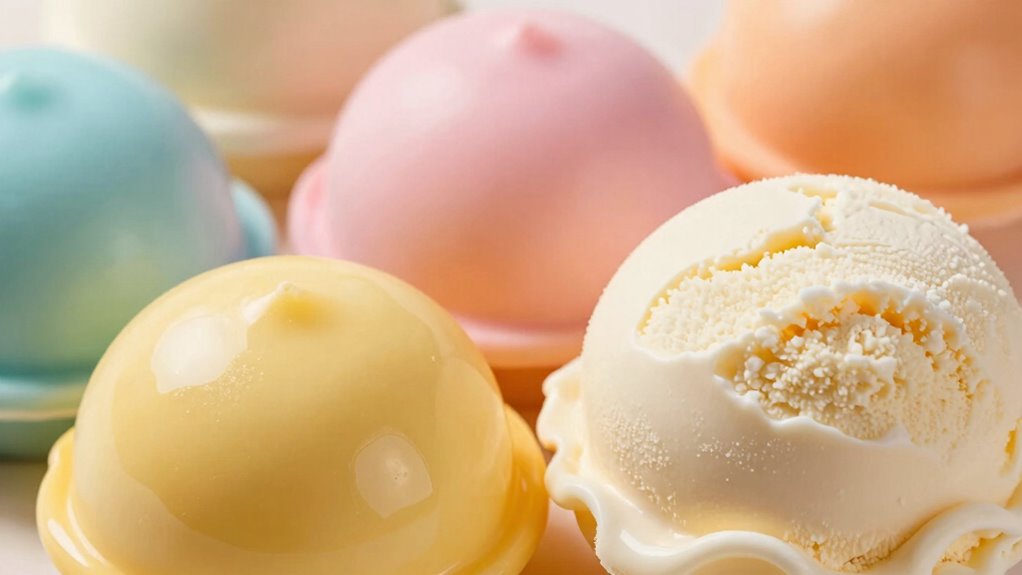
You might wonder why frozen novelties and scoopable ice cream taste and feel so different, even though they’re both frozen treats. The answer lies in their distinct formulas, crafted to serve different purposes and consumer preferences. Frozen novelties are designed to be portable and convenient, often encased in coatings like chocolate, yogurt, or fruit shells. These outer layers protect the ice cream inside from freezer burn and temperature fluctuations, helping to maintain flavor stability over time. Because they’re meant for quick consumption and often stored in freezers for extended periods, their formulas prioritize stability, ensuring each bite remains consistent and satisfying from the first to the last.
Frozen novelties are designed for portability, with coatings that protect and preserve flavor over time.
Scoopable ice cream, on the other hand, is crafted with a focus on creaminess and smooth texture. Its formula relies heavily on the right balance of fats, sugars, and stabilizers to create that melt-in-your-mouth experience. Unlike novelties, scoopable ice cream is usually stored in bulk, where it’s served from containers, making consistency and texture essential. The formulation must prevent ice crystal growth during storage and serve, which is why flavor stability and texture preservation are key concerns. This often means incorporating specific stabilizers that inhibit ice crystal formation, ensuring your scoop remains creamy and uniform. These stabilizers also help the ice cream resist melting too quickly, maintaining a desirable mouthfeel. Additionally, formulation techniques are continually evolving to further improve these properties, often incorporating innovative stabilizers to enhance texture and stability.
Packaging innovations play a crucial role in differentiating these two types of frozen treats. For novelties, manufacturers develop packaging that protects the product from external damage and temperature changes, often utilizing insulated wrappers or coatings that extend shelf life. This allows consumers to enjoy the treat anytime without worrying about melting or spoilage. Scoopable ice cream benefits from packaging that’s easy to open, resealable, and designed to minimize air exposure. Innovations such as airtight containers and easy-to-use scoops help preserve flavor stability, prevent freezer burn, and maintain the desired texture. These packaging advances also aid in reducing waste and making the product more accessible, ensuring that the ice cream’s quality is preserved from factory to freezer to spoon.
In essence, the different formulas behind frozen novelties and scoopable ice cream are tailored to their unique formats and consumption contexts. Whether it’s the protective coatings and packaging innovations that keep novelties fresh and stable or the stabilizers and formulation techniques that preserve the creamy texture of scoopable ice cream, each is optimized for a specific experience. These distinctions are what make each frozen treat special and cater to different cravings and convenience needs. Additionally, advancements in food science continue to improve both product types, ensuring better quality and enjoyment for consumers.
frozen novelty coating chocolate
As an affiliate, we earn on qualifying purchases.
As an affiliate, we earn on qualifying purchases.
Frequently Asked Questions
How Do Storage Requirements Differ Between Frozen Novelties and Scoopable Ice Cream?
You need to store frozen novelties and scoopable ice cream differently to maintain flavor stability and texture preservation. Frozen novelties usually require slightly higher temperatures to prevent melting and preserve their shape, while scoopable ice cream needs colder, stable temperatures to keep its creamy texture. Proper storage guarantees each product retains its unique qualities, preventing flavor loss or texture degradation, and extends shelf life.
Are There Specific Preservatives Used Exclusively in Frozen Novelties?
You’ll find that frozen novelties often boast exclusive preservatives, designed to keep their charming textures intact amidst the chaos of storage and handling. These preservatives, like certain preservatives types, guarantee ingredient stability, preventing melting or spoilage. Unlike scoopable ice cream, which relies on traditional stabilizers, frozen novelties use specialized preservatives to maintain their form and flavor, making each bite as delightful as the first—no matter how long they’ve been in your freezer.
Do Different Formulas Affect Allergen Content in These Treats?
Different formulas can impact allergen content in frozen novelties because they often involve varied ingredient sourcing and processing methods. You might encounter allergen cross contact during manufacturing, especially if facilities handle multiple ingredients. This means even small differences in recipes can change allergen presence. Always check labels carefully, especially if you have allergies, as the formulation influences allergen levels and the risk of cross contact in these treats.
How Do Manufacturing Processes Vary for These Two Types of Ice Cream?
Imagine a dance where each step must be precise; manufacturing processes follow this rhythm. For frozen novelties, they often involve quick freezing and molding, locking in flavor consistency and preserving texture. Scoopable ice cream, however, undergoes slower freezing, allowing air to incorporate, creating a smoother, creamier feel. These different techniques guarantee each treat maintains its unique charm, whether it’s a firm, handheld novelty or a velvety scoop.
Are There Environmental Impacts Linked to Their Distinct Ingredient Formulas?
You’ll find that frozen novelties generally have a lower environmental impact due to their ingredient formulas, often using fewer dairy and stabilizer components, which can reduce resource use. Focusing on ingredient sustainability, manufacturers might choose eco-friendlier ingredients for novelties, decreasing overall environmental impact. However, packaging differences can also influence sustainability, so consider both ingredient sourcing and packaging when evaluating eco-friendliness.
Conclusion
So, next time you enjoy a frozen treat, remember it’s like comparing a spicy salsa to a mild salsa—each is crafted differently to deliver the perfect experience. Frozen novelties and scoopable ice cream may share ingredients, but their formulas are tailored to their unique textures and purposes. Understanding these differences helps you appreciate why one melts quickly and the other holds its shape. It’s all about creating the ideal treat for every craving!
Fall Picks
fall essentials
As an affiliate, we earn on qualifying purchases.