Booza and dondurma are both legendary Middle Eastern desserts known for their unique stretchiness and cultural roots. Booza, from the Levant, features chewy, elastic textures with flavors like pistachio and rosewater, while Turkish dondurma offers a creamier, more elastic consistency flavored with mastic and vanilla. Although similar in their chewy nature, each has distinct preparations and cultural significance. continue exploring to discover the fascinating differences and traditions behind these beloved treats.
Key Takeaways
- Booza is a Levantine chewy ice cream flavored with rosewater and pistachio, while Dondurma is Turkish, known for its elastic, creamy texture.
- Both desserts use salep and mastic, but Booza emphasizes elasticity with a dense, chewy consistency; Dondurma is stretchier and creamier.
- Booza is traditionally served slightly softened and paired with fruits or nuts; Dondurma is enjoyed chilled with honey or coffee.
- Cultural origins: Booza reflects Middle Eastern heritage; Dondurma stems from Ottoman culinary traditions.
- Authenticity depends on regional ingredients and preparation methods, highlighting their roles in social and cultural celebrations.
What Are Booza and Dondurma? Exploring Their Origins and Unique Qualities

Booza and Dondurma are traditional ice creams known for their distinctive textures and rich histories. Their dessert history dates back centuries, reflecting deep cultural roots in the Middle East and Eastern Europe. Booza, originating in the Levant, is famous for its chewy, elastic texture and subtle sweetness, with flavor profiles that often include pistachio, rosewater, or lemon. Dondurma, hailing from Turkey, stands out with its stretchiness and creamy consistency, thanks to unique ingredients like salep and mastic. Its flavor profiles are similarly rich, often featuring vanilla, chocolate, or fruit infusions. Both desserts celebrate local ingredients and centuries-old techniques, offering a sensory experience that’s as much about tradition as it is about taste.
How Are Booza and Dondurma Made? Key Ingredients and Preparation Methods
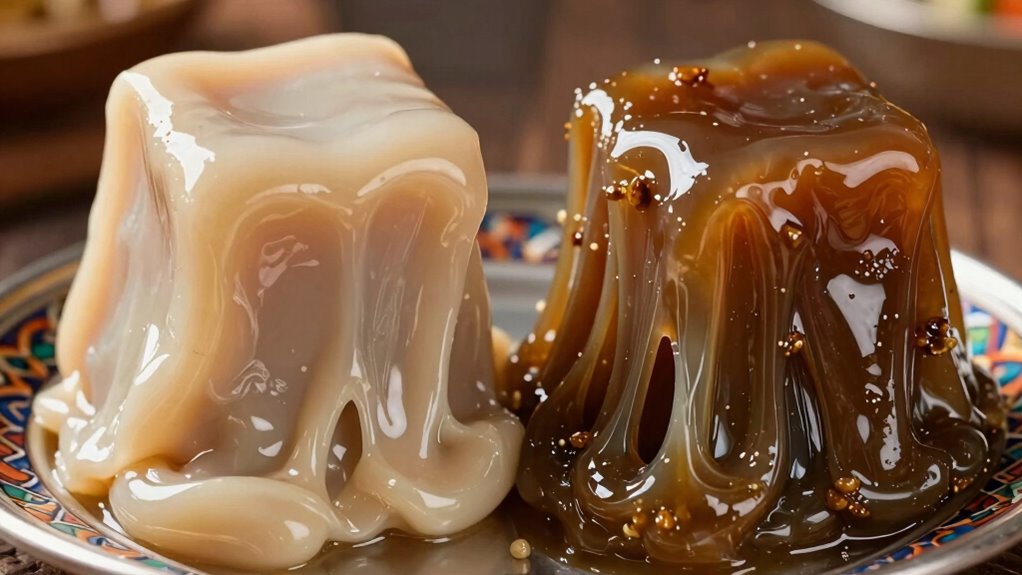
To create both Booza and Dondurma, skillful preparation and the right ingredients are essential, as their unique textures depend heavily on specific techniques. Booza uses milk, sugar, mastic, and salep, which gives it a chewy, elastic consistency. Dondurma combines milk, sugar, salep, and mastic as well, but its preparation involves slow churning and stretching, adding to its stretchiness. The differences in ice cream contrasts reflect cultural influences shaping each dessert’s texture. The table below highlights key ingredients and techniques:
| Ingredient | Role | Cultural Influence |
|---|---|---|
| Mastic | Adds flavor & elasticity | Middle Eastern tradition |
| Salep | Thickens & stretches | Ottoman culinary heritage |
| Churning | Incorporates air & texture | Turkish & Middle Eastern methods |
| Freezing Techniques | Determines firmness | Regional preferences |
Booza vs. Dondurma: Comparing Texture, Flavor, and Cultural Significance
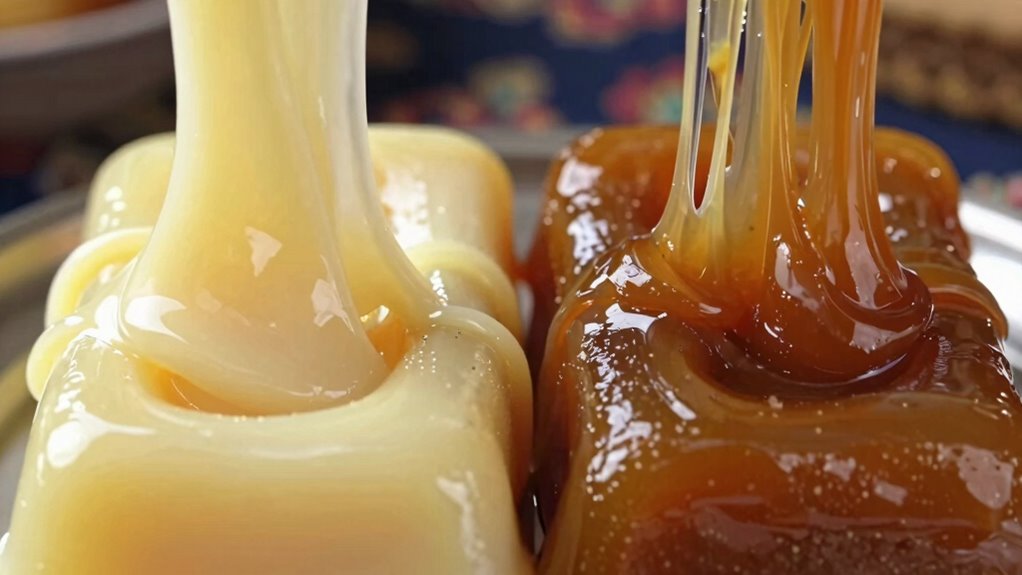
While both Booza and Dondurma are beloved frozen desserts from the Middle East, they offer distinctly different textures and flavors that reflect their unique cultural origins. Booza has a dense, chewy texture with a smooth, slightly sticky feel, thanks to its high gluten and salep content. Its flavor profile is mildly sweet with hints of milk and sometimes rosewater or pistachio. Dondurma, on the other hand, boasts a stretchy, elastic consistency because of its salep and mastic gum, giving it a chewy, almost rubbery texture. Its flavor profile tends to be richer and creamier, often with hints of vanilla or mastic. These textural differences make each dessert uniquely enjoyable, embodying their respective traditions and regional tastes. Salep content contributes significantly to the unique stretchiness and texture of both desserts.
Why Are These Desserts So Important in Their Regions? Cultural and Social Significance

These desserts hold deep cultural and social significance in their regions because they are more than just treats; they embody tradition, identity, and social bonds. Booza and Dondurma serve as powerful symbols of regional symbolism, representing local history and craftsmanship. They often appear at social gatherings, where sharing these desserts fosters community and connection. In Turkey and the Middle East, serving Dondurma reflects hospitality and celebration, while in Lebanon and Syria, Booza is a symbol of cultural pride. These sweets aren’t just about flavor—they’re about preserving heritage and strengthening social ties. By enjoying these desserts, you participate in a tradition that unites generations and reinforces regional identity, making them essential parts of cultural life. Additionally, the unique stretchy texture of these desserts is a testament to traditional culinary techniques that have been passed down through centuries, showcasing the importance of authentic preparation methods in maintaining authenticity. The cultural significance of these desserts also includes their role in festivals and special occasions, further emphasizing their importance beyond just taste. Preserving these traditional recipes is crucial for maintaining their cultural authenticity and heritage.
How Can You Enjoy Booza and Dondurma? Tips for Serving, Pairings, and Finding Authentic Versions

Wondering how to best enjoy Booza and Dondurma? Focus on serving tips and flavor pairings to enhance your experience. For authentic enjoyment, serve these desserts slightly softened, allowing their stretchiness to shine. Pair Booza with fresh fruits like figs or pistachios for a sweet contrast. Dondurma goes well with honey, walnuts, or Turkish coffee to deepen its flavor. To find genuine versions, visit reputable Middle Eastern or Turkish markets, or specialized ice cream shops. Keep in mind, the texture is key—serve them at the right temperature for maximum stretch and flavor. Additionally, understanding the authenticity of these desserts can improve your experience, as regional variations often influence their flavor and texture. Here’s a quick guide:
| Dessert | Serving Tips | Flavor Pairings |
|---|---|---|
| Booza | Slightly softened, scoop easily | Figs, pistachios, rose water |
| Dondurma | Chill but not frozen solid | Honey, walnuts, coffee |
Frequently Asked Questions
Are Booza and Dondurma Gluten-Free or Suitable for Specific Dietary Restrictions?
You’ll find that booza and dondurma are generally gluten-free, but it’s crucial to check ingredients for specific dietary accommodations. Booza’s traditional ingredients usually include milk, sugar, and mastic, which are gluten-free. Dondurma often contains milk, sugar, and salep, also gluten-free if no additives are used. Always verify with the vendor or manufacturer to ensure there’s no cross-contamination or hidden gluten content, especially if you have allergies or sensitivities.
What Are the Main Differences in Serving Styles Across Regions?
Imagine a bustling Turkish street corner or a quiet Middle Eastern café, where regional presentation and serving customs tell stories. In Turkey, you often see dondurma served in cones or slices, with street vendors stretching it theatrically. In Middle Eastern regions, booza is typically scooped into bowls, enjoyed with a spoon, emphasizing communal sharing. These regional styles reflect local traditions, shaping how you experience each dessert’s texture and cultural charm.
How Do Seasonal Variations Affect the Availability of These Desserts?
Seasonal variations considerably impact the availability of booza and dondurma. You’ll notice seasonal flavoring, like fruit or spice infusions, becomes more prominent during certain times. Ingredient availability also fluctuates, affecting how these desserts are made and served. In warmer months, they might incorporate fresh, seasonal ingredients, while colder seasons limit options, making the desserts less diverse. This seasonal shift influences both flavor profiles and serving styles.
Can Booza and Dondurma Be Made at Home Easily?
Yes, you can make booza and dondurma at home with homemade recipes. While traditional methods require specific ingredients, you can use ingredient substitutions like sticky rice or corn starch to mimic their stretchy texture. Follow step-by-step instructions and don’t worry if you don’t have authentic ingredients; improvising with available items still results in delicious, chewy desserts that capture the essence of these traditional treats.
Are There Any Health Benefits Associated With These Traditional Treats?
Ever wonder if these traditional treats offer health benefits? While they’re mainly enjoyed for their unique textures and flavors, booza and dondurma do have some nutritional content that can be beneficial. They contain calcium and probiotics that support bone health and digestion. However, they’re often high in sugar and fat, so moderation is key. Ultimately, indulging occasionally can bring some health perks without overdoing it.
Conclusion
If you thought these stretchy desserts were just about texture, think again. Some believe booza and dondurma hold secret cultural powers, bringing communities together and preserving traditions. Their unique qualities aren’t just culinary—they’re symbolic. So next time you enjoy a scoop, remember you’re tasting more than flavor; you’re experiencing centuries of history and belief. Immerse yourself with curiosity, and you might just discover a tradition that’s as rich as the desserts themselves.