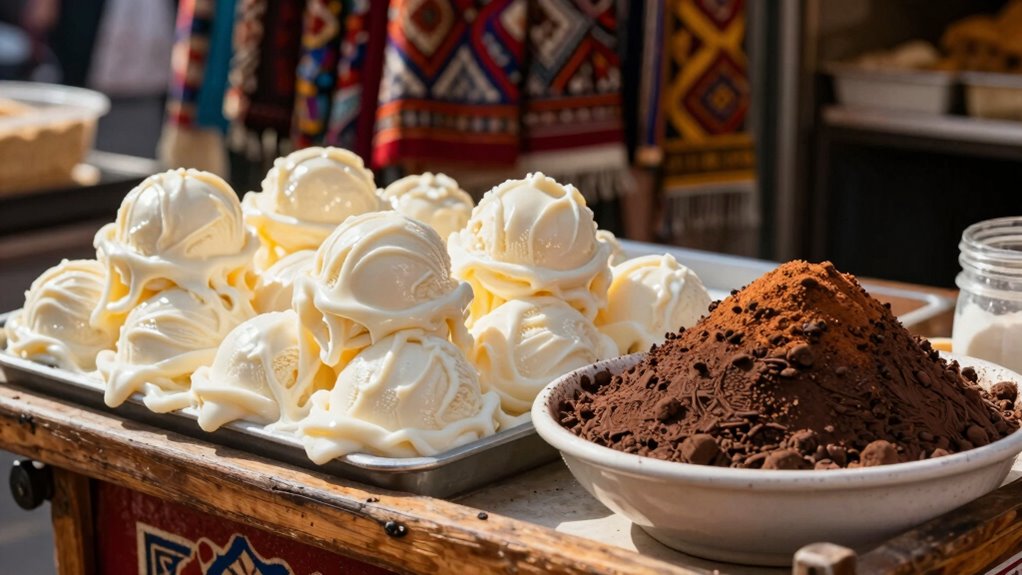

Salep is the key ingredient that transforms Turkish dondurma into a uniquely chewy and elastic treat. Made from wild orchid tubers, salep‘s natural gelling power gives the ice cream its signature stretchy texture and subtle floral flavor. This tradition-rich ingredient also connects to Turkish culture, history, and medicinal uses. If you want to discover how salep creates that irresistible stretch and explore modern variations, keep going to uncover all its secrets.

Get baking supplies delivered free — and shop member deals
- Fast, free delivery on millions of items
- Access to Prime Big Deal Days deals on October 6–7
- Prime Video, Amazon Music and more included
Key Takeaways
- Salep, made from wild orchid tubers, provides the unique elastic, chewy texture essential for authentic Turkish dondurma.
- Its natural gelling polysaccharides stabilize the ice cream, preventing melting and enhancing durability across climates.
- Salep’s subtle floral flavor enriches dondurma’s taste, connecting it to centuries-old Turkish culinary traditions.
- The gelling power of salep influences dondurma’s stretchiness, allowing it to be manipulated and served theatrically.
- Modern variations and creative recipes often incorporate salep for authentic texture, flavor, and cultural significance.
As an affiliate, we earn on qualifying purchases.
What Is Dondurma and Why Is It a Turkish Cultural Icon?
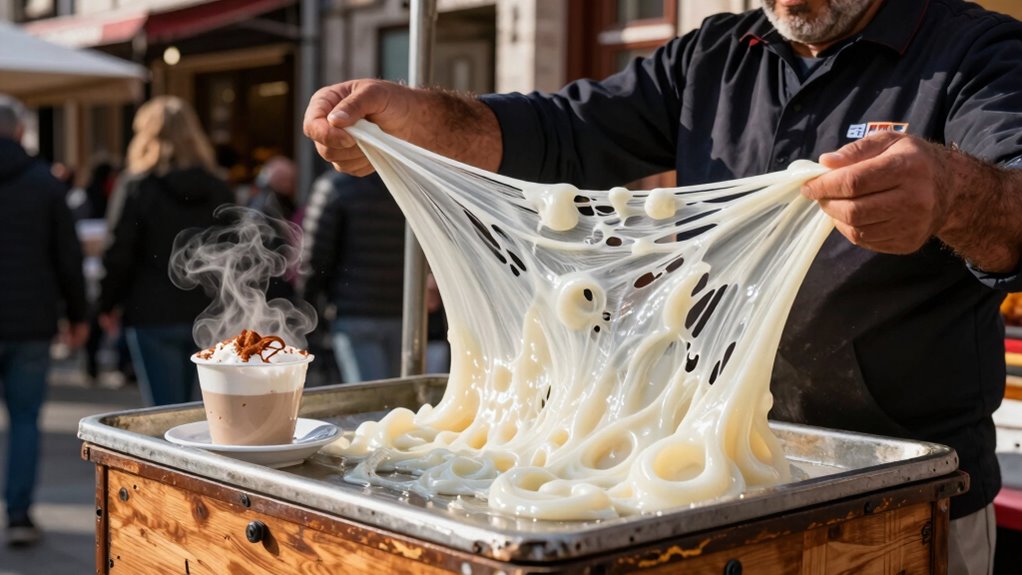
Ever wondered what makes dondurma a beloved symbol of Turkish culture? It’s more than just ice cream; it embodies deep cultural significance. Dondurma’s unique texture and flavor reflect centuries-old culinary traditions, showcasing Turkey’s innovative use of local ingredients like salep. Its playful elasticity and resistance to melting symbolize resilience and hospitality in Turkish society. Serving dondurma during festivals and gatherings highlights its role as a centerpiece of social life, making it a powerful culinary symbol. People don’t just enjoy it for taste; they experience a connection to history, community, and identity. This blend of tradition, artistry, and social meaning cements dondurma’s status as a true cultural icon across Turkey. Recognizing the sustainable and innovative use of ingredients behind dondurma demonstrates Turkey’s commitment to both cultural preservation and modern culinary advancements. Additionally, the artistic techniques involved in its preparation contribute to its cultural richness and appeal.
What Is Salep, and How Does It Make Dondurma Unique?
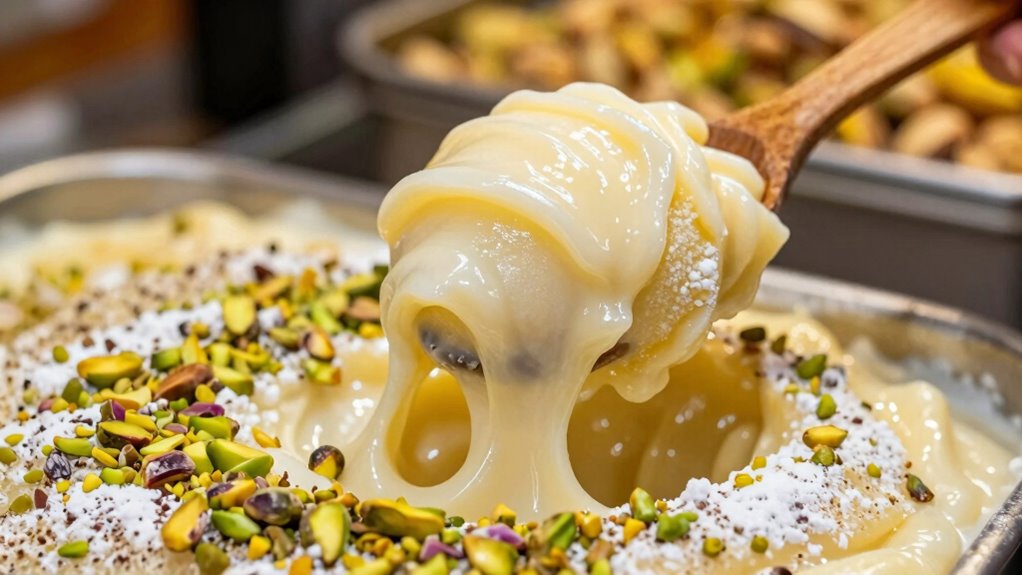
What exactly is salep, and why is it essential to the unique qualities of dondurma? Salep is a flour made from wild orchid tubers, giving dondurma its signature stretchy texture. Its unique properties come from the gel-forming compounds that create elasticity and chewiness. Here’s what makes salep special:
Salep, made from wild orchid tubers, provides dondurma its signature stretchy, chewy texture and subtle floral flavor.
- Salep health benefits: It’s rich in antioxidants and believed to aid digestion.
- Salep cultivation methods: Orchids are carefully harvested, often sustainably, to produce high-quality salep.
- Texture enhancer: Salep thickens the ice cream, making it irresistibly chewy.
- Flavor contribution: It adds a subtle floral taste, enhancing dondurma’s flavor profile.
This ingredient’s natural origins and health benefits contribute profoundly to dondurma’s distinctiveness and appeal.
Where Did Salep Come From? A Brief History of Its Use in Turkey

Salep has a long history in Turkey, dating back centuries as a traditional ingredient. People have used it not only for its flavor but also for its medicinal properties. Its cultural significance has helped preserve its popularity through generations. Additionally, salep is known for its nutritional benefits, which contribute to its enduring presence in Turkish cuisine. The preservation of culinary traditions has played a crucial role in maintaining its relevance today. Furthermore, the traditional preparation methods have ensured that salep remains a staple in Turkish households and festivities. Its enduring popularity also stems from its association with social gatherings and celebrations, reinforcing its cultural importance.
Historical Roots of Salep
Salep, a traditional Turkish delicacy, has deep roots that trace back centuries in the region. Its use stems from ancient herbal remedies, where the tuberous orchid root was valued for healing properties. During the Ottoman era, salep became an essential part of culinary traditions, often served as a comforting beverage. Its historical significance includes:
- Being a key ingredient in medicinal drinks for digestive health.
- Featured in Ottoman royal courts as a luxurious treat.
- Used as a thickening agent in soups and desserts.
- Symbolizing hospitality and cultural identity across generations.
- Its architectural significance reflects how traditional ingredients are intertwined with cultural heritage. Historically, the cultivation and preparation of salep were carefully maintained as part of regional heritage preservation efforts. These traditions highlight salep’s longstanding role in Turkish culture, blending health benefits with culinary artistry. Its culinary roots demonstrate how a simple ingredient can hold cultural and medicinal importance over centuries. Additionally, the agricultural practices involved in cultivating the orchid tuber have been preserved as part of regional biodiversity efforts, emphasizing the importance of maintaining traditional knowledge. Furthermore, sustainable harvesting methods have been developed to protect the wild orchid populations from overexploitation.
Traditional Uses in Turkey
In Turkey, salep has long been cherished not only for its comforting flavor but also for its deep cultural significance. Traditionally, it’s been used in warm beverages, especially during cold seasons, helping to preserve local customs. Over time, salep also played a role in ice cream innovations, inspiring the creation of Turkish dondurma with its unique texture. Today, these traditional uses help preserve Turkey’s culinary heritage amid modern influences. Salep’s importance extends beyond taste; it embodies a sense of cultural identity and history. By continuing to incorporate salep into traditional recipes, Turks maintain a crucial link to their past while innovating for the future of their cuisine. This balance of tradition and innovation keeps Turkey’s culinary scene vibrant and rooted in history. Traditional ingredients like salep are vital in maintaining the authenticity of regional dishes and ensuring cultural continuity, especially as culinary heritage evolves globally.
How Is Traditional Dondurma Made With Salep? a Step-By-Step Guide

To make traditional dondurma with salep, you start by gathering the key ingredients: salep powder, milk, sugar, and mastic. First, guarantee your salep is fresh from salep harvesting, which influences the flavor and texture. Next, follow these steps:
- Heat the milk in a saucepan over medium heat.
- Add salep powder gradually, stirring constantly to prevent lumps.
- Mix in sugar and continue stirring until the mixture thickens.
- Finally, incorporate crushed mastic, which adds aroma and elasticity.
- Maintaining the correct color accuracy during preparation ensures the authentic appearance of the final product.
Once combined, keep stirring until you achieve a stretchy, chewy consistency. This process highlights how salep is essential for authentic dondurma, contributing to its unique texture and diverse flavors.
Why Is Salep Essential for Dondurma’s Chewy, Stretchy Texture?
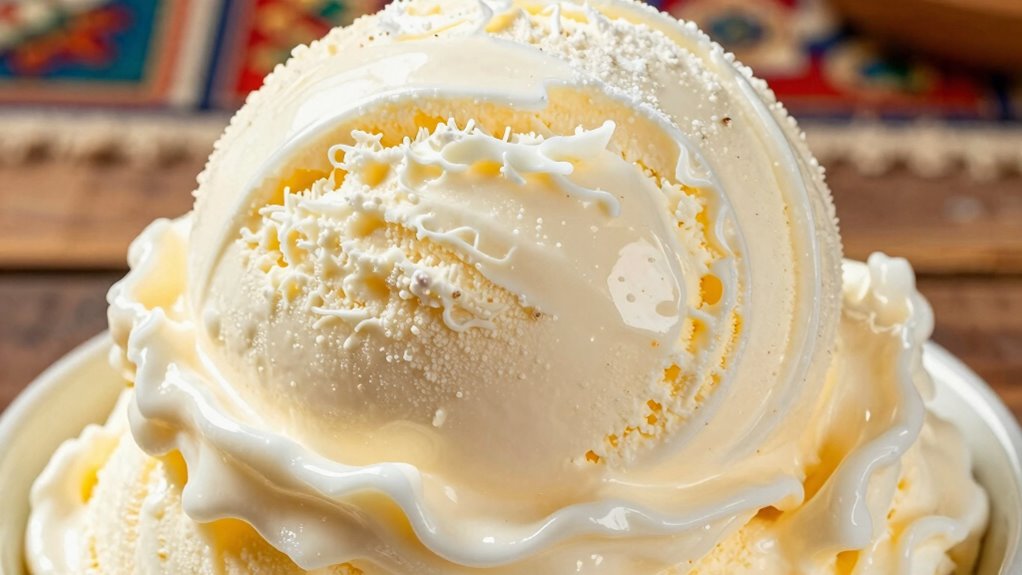
Salep’s natural gelling power is what gives dondurma its signature stretchiness. It enhances the ice cream’s elasticity, making each bite uniquely chewy. Without salep, dondurma wouldn’t have that distinct, firm texture you enjoy. Additionally, salep contributes to the unique flavors and aroma characteristic of traditional Turkish dondurma. Its natural thickening properties also help maintain the ice cream’s consistency in various climates, ensuring a delightful experience with every scoop. The technological properties of salep are crucial for preserving the desired texture during storage and serving. Furthermore, the essential oil properties of salep help stabilize the product’s quality over time, reflecting the importance of natural ingredients in maintaining product quality as seen in Youngster Choice.
Salep’s Natural Gelling Power
Salep, a natural flour made from wild orchid tubers, plays a crucial role in giving dondurma its signature chewy and stretchy texture. Its natural gelling power is what sets dondurma apart from other ice creams. Here’s why salep is essential:
- Thickening Agent: It naturally thickens the mixture, creating a firm, elastic consistency needed for dondurma.
- Gelling Properties: Salep’s unique polysaccharides form a gel, providing the chewy stretchiness.
- Flavoring Contribution: It imparts a subtle, floral flavor that enhances dondurma’s overall taste.
- Salep cultivation: The quality of salep depends on careful cultivation, affecting its gelling strength. Without it, achieving authentic dondurma’s texture would be impossible.
Enhances Dondurma’s Elasticity
Because of its unique polysaccharides, salep creates a natural gel that gives dondurma its signature elasticity. This gel forms a flexible network within the ice cream, allowing it to stretch without breaking. Salep’s medicinal properties have been valued in traditional medicine for centuries, highlighting its health-boosting qualities. When added to dondurma, salep enhances its chewy, stretchy texture, making each bite satisfying. Its ability to form a stable yet elastic structure keeps the ice cream smooth and resistant to melting too quickly. This natural thickening agent not only improves the texture but also adds a subtle flavor that complements the sweetness. Without salep, dondurma would lack its iconic chewiness, emphasizing why salep is essential for this unique dessert.
Key to Unique Chewiness
The unique elasticity of dondurma owes much to salep’s polysaccharides, which create a natural gel that acts as the ice cream’s backbone. This gel gives dondurma its signature chewiness and stretchiness, making it stand out. The key to this texture lies in salep cultivation, where the dried tubers are carefully harvested and processed. Here’s why salep is essential:
- It enhances the dondurma flavor, giving it a rich, earthy taste.
- Its polysaccharides form a strong, elastic network in the ice cream.
- It allows the ice cream to be manipulated without melting instantly.
- It ensures the chewy, stretchy consistency that customers love.
Without salep, dondurma would lose its distinctive character and appeal.
Modern Twists on Dondurma: Variations and Creative Recipes

Innovative chefs and home cooks alike are reimagining dondurma by experimenting with new flavors, textures, and presentation styles. Fusion flavors, like lavender honey or pistachio cardamom, add exciting twists to traditional recipes. Creative recipes incorporate vibrant ingredients, making dondurma both visually stunning and uniquely flavorful. Vegan adaptations, using plant-based milks and thickeners, make this icy treat accessible to more dietary preferences without sacrificing its signature chewiness. Some chefs infuse dondurma with herbs, spices, or even fruit purees, creating a playful contrast to its classic form. Presentation styles range from colorful layered cups to edible art on cones, elevating the experience for both casual snacking and gourmet dessert menus. These modern twists keep dondurma fresh, innovative, and irresistibly engaging. Understanding kitchen fundamentals ensures these creative approaches are executed safely and effectively, enhancing the overall culinary experience. Additionally, incorporating safety protocols during preparation is essential for maintaining quality and preventing accidents. To achieve consistent results, mastering proper techniques in handling ingredients and equipment is crucial. Proper technique also helps in maintaining the integrity of ingredients, ensuring each dish meets high standards.
Can You Make Authentic Dondurma at Home? Tips and Challenges

Making authentic dondurma at home is definitely achievable, but it requires attention to detail and patience. Using homemade techniques can help you get closer to the real texture and flavor. First, focus on ingredient substitutes like salep powder, which is essential for the stretchiness and chewiness. If you can’t find it, you might try a mix of cornstarch and rice flour, but results vary. Second, keep your heat low and stir constantly to prevent lumps and ensure proper thickening. Third, use a thermometer to monitor the temperature, aiming for about 70°C (158°F). Fourth, chill the mixture thoroughly before serving to enhance its elasticity. With these tips, you can overcome common challenges and create a delicious, authentic dondurma at home.
Frequently Asked Questions
Is Salep Used in Any Other Traditional Turkish Desserts?
Yes, you’ll find salep used in other traditional Turkish desserts beyond dondurma. It’s commonly added to puddings like muhallebi, giving them a smooth, creamy texture. You might also enjoy salep in beverages such as sıcak şarap (hot wine) or warm milk drinks, where it adds a subtle floral flavor and thickening quality. Its versatility makes it a beloved ingredient in many Turkish treats, enhancing both taste and consistency.
Are There Health Concerns Associated With Salep Consumption?
You should be aware that consuming too much salep can lead to a salep overdose, which may cause stomach discomfort or other health issues. If you have a salep allergy, you could experience allergic reactions like itching or difficulty breathing. Always check ingredient labels and consume salep in moderation to avoid potential health concerns, especially if you’re sensitive or allergic to it.
Can Salep Be Substituted With Other Ingredients in Dondurma?
Yes, you can substitute salep in dondurma with alternatives like orchid root powder, cornstarch, or rice flour. These Salep substitutes help achieve a similar chewy texture and consistency, making them popular dondurma alternatives. Keep in mind, though, that the flavor and elasticity might differ slightly. Experimenting with these options allows you to enjoy a tasty, dairy-based treat even if salep isn’t available or you prefer a different ingredient.
How Has Modern Technology Affected Salep Harvesting?
Imagine a future where salep cultivation blooms with the help of technology, transforming traditional harvesting into a more efficient, sustainable process. Modern technology improvements have revolutionized salep harvesting by automating plants’ collection and monitoring growth. These innovations minimize environmental impact, boost yields, and guarantee consistent quality. You benefit from this progress through better flavor, texture, and availability, making your favorite Turkish treats even more delightful and accessible than ever before.
What Are the Environmental Impacts of Salep Plant Harvesting?
You should know that harvesting salep plants can harm the environment if not done responsibly. Overharvesting threatens salep plant conservation, risking their decline in the wild. To protect these plants, adopt sustainable harvesting practices that allow populations to recover. By doing so, you help maintain biodiversity and ensure future availability, balancing demand with environmental health. Responsible harvesting is essential for preserving salep’s natural habitat and supporting ecosystem stability.
Conclusion
So, now you know the secret behind dondurma’s irresistible chewiness—salep. But here’s the question: will you dare to try making it yourself and unseal its true magic? The process is tricky, but the reward is worth it. Imagine crafting your own stretchy, flavorful treat, connecting to centuries of Turkish tradition. Are you ready to take that leap? The world of dondurma awaits—just one step away from delicious discovery.
Halloween Picks
halloween
As an affiliate, we earn on qualifying purchases.